Hitch

  • 2
    rock hudson’s best accessory was being enormous and gentle

    rock hudson’s best accessory was being enormous and gentle

    Rock Hudson’s romantic appeal was more than a jawline. Gentleness, clothing and screen performance did their share. Read more

    thirst, with footnotes · no. 2

    Rock Hudson had the kind of face that makes a studio publicity department look overstaffed. But a jaw is not a performance. The interesting part is what he did with the rest of the picture.

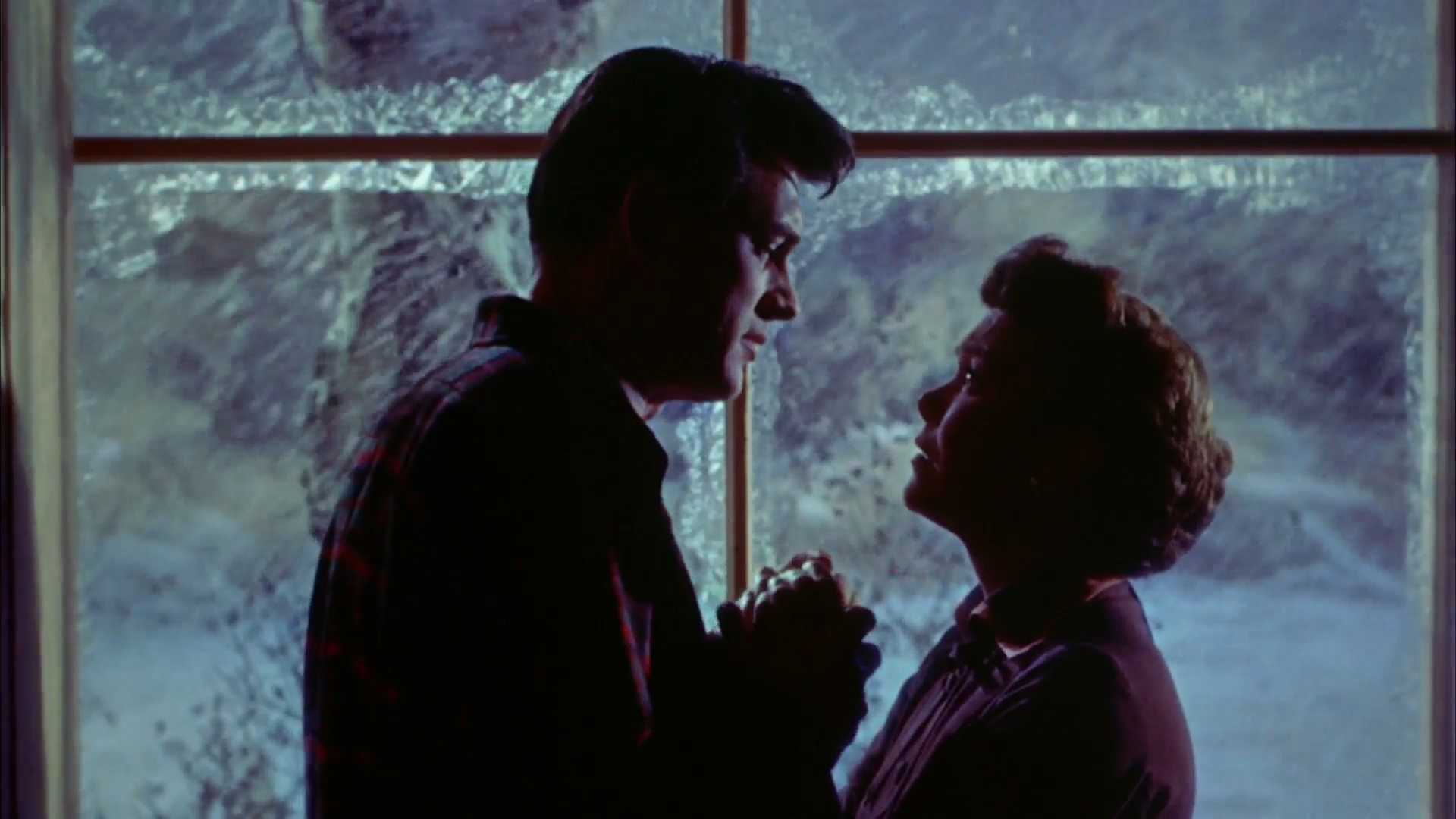
    In its account of Hudson’s 1950s melodramas, the BFI identifies a particularly potent combination: masculinity and gentleness. That is a better starting point than treating him as a walking monument. In Douglas Sirk’s All That Heaven Allows, his romantic appeal is not simply that he occupies considerable space. It is that his presence offers an alternative to the social world pressing in around Jane Wyman’s character.

    The film’s premise is easy to describe without spoiling its progress: a widow falls for her younger gardener, and other people develop an exhausting interest in the arrangement. The Criterion Collection’s synopsis places class and conformity at the heart of the opposition. Hudson’s body is therefore not neutral decoration. It belongs to the man the surrounding community would prefer she did not choose.

    That gives the clothes something to do. Relaxed, practical-looking clothing makes a different offer from the formal codes of respectability around the couple. The fantasy is not merely “handsome man.” It is a handsome man who seems capable of existing outside a committee. For a film filled with scrutiny, the possibility of not performing for the neighbors is practically an aphrodisiac.

    This is also why a publicity portrait cannot tell the whole story. Edward T. Estabrook’s 1953 photograph, published in Photoplay, gives us the controlled construction of a star: the face, the hair, the arrangement of light. It is an excellent object to look at. A movie adds duration, response and the possibility that the impressive-looking man might actually listen.

    Studio portrait of Rock Hudson photographed by Edward T. Estabrook in1953.

    There is a temptation to discuss Hudson entirely through the distance between his public screen image and his private life. His history matters, but making every performance a puzzle with one biographical solution diminishes the work. A gay audience does not need to pretend the heterosexual romances are secretly different plots in order to find pleasure in them. Looking at the leading man is already permitted. The camera has gone to some trouble to assist.

    The useful comparison is with Pillow Talk, his 1959 comedy with Doris Day. A different genre asks a different service from the same screen presence. The sculpted, reliable-looking exterior can carry romantic reassurance in one film and become part of a comic performance of confidence in another. The appeal is not a fixed property stored in the cheekbones. It is shaped by the scene.

    Doris Day and Rock Hudson in a frame from the 1959 Pillow Talk trailer.

    That is the enduring argument for Hudson as a heartthrob rather than a handsome historical document: beauty gets him into the frame; modulation makes him worth staying with.

    The shoulders are persuasive. The gentleness closes the deal.

    sources

    BFI: Hudson’s 1950s melodramas.

    Criterion: All That Heaven Allows.

    Universal: Pillow Talk.

    Edward T. Estabrook’s 1953 portrait and reuse record.

    Image credits: Featured: Universal Pictures, All That Heaven Allows trailer (1955), public domain in the United States (no copyright notice). Portrait: Edward T. Estabrook, Photoplay (December1953), public domain in the United States (copyright not renewed). Film image: Universal International, Pillow Talk trailer (1959), public domain in the United States (no copyright notice). Reproductions via Wikimedia Commons.

    Fediverse Reactions
  • the barefoot rabbit has better things to do than hide the countertops

    the barefoot rabbit has better things to do than hide the countertops

    a kayak planter, a kitchen full of snacks, and a very reasonable defense of enjoying the house you actually live in. a… Read more

    A home should be allowed to contain evidence that someone lives there. Apparently this remains a contentious design position. November tends to arrive with suggestions that every room needs a second career as a seasonal showroom, which makes The Barefoot Rabbit a useful tab to open instead.

    Jenn, who writes on the site as Rabbit, has built a small archive around gardening, food, and the work of making a home feel good to the people actually in it. There are personal essays alongside the practical bits. The through line is a willingness to begin with the space, materials, and life already available. The countertops do not have to audition first.

    the burrow does not need a rebrand

    Start with “Burrow Core,” her February essay about a home full of books, blankets, crafting supplies, and people who know where to get comfortable. She connects the idea to the Weasleys’ house and the little homes inhabited by clothed cartoon animals. A fairly compelling architectural committee.

    The interesting part is where she takes that comparison. She is comfortable with a house that has limitations and still does its job: making room for meals, company, and ordinary life. There is an actual argument underneath the cozy vocabulary about how much time and energy to exchange for a more impressive-looking home. The birthday-snack photograph makes the point without needing a mood board. Chips, flowers, drinks, somewhere to gather. The room is employed.

    A kitchen counter set with chips, dips, flowers, string lights, and drinks.
    Birthday snacks from “Burrow Core.” Image: The Barefoot Rabbit.

    the kayak has entered its gardening era

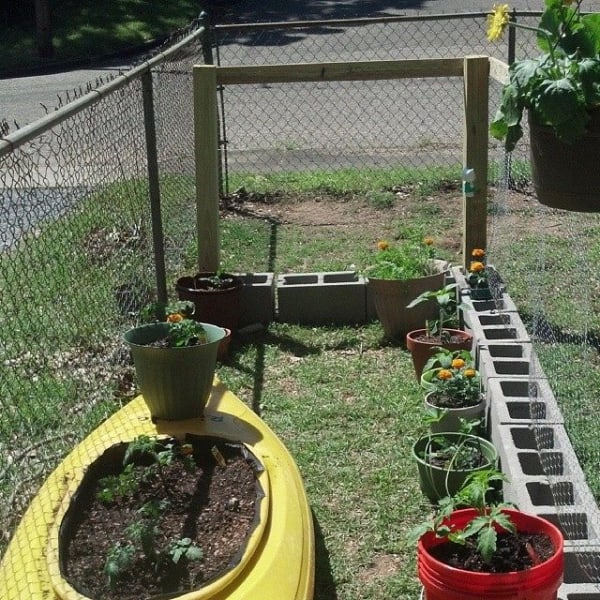
    Her early garden essay has the detail that sells the whole project: an old kayak used as a planter. The post looks back at a modest container garden and forward to a bigger backyard experiment, with more knowledge accumulating between the two. It leaves the learning visible. There is dirt, a mix of containers, and a person figuring out what to do next.

    She also points readers toward Jessica Sowards’ Roots & Refuge as an influence. Following that link leads to genuinely useful, small-scale ideas, including growing in bags of potting soil. It is a good companion read if the grand gardening plan keeps getting postponed until the arrival of a grander property. Apparently the existing bag of dirt is willing to take a meeting.

    A yellow kayak planted with seedlings beside buckets, flowerpots, and a cinder-block garden border.
    The container garden, including its repurposed kayak, in Rabbit’s garden essay. Image: The Barefoot Rabbit.

    some days you make bread. some days you coat cereal in chocolate.

    The kitchen side has a similarly useful range of ambition. There is a bread-making reel on her Instagram, a little window into a project in progress rather than a kitchen with all evidence of cooking removed. For the other end of the effort spectrum, her Christmas snack mix brings cereal, pretzels, peanuts, and candy together with white melting chocolate.

    The recipe gives the quantities and method, plus suggestions for changing the candy colors or adding other little bits. A useful holiday bookmark for anyone whose contribution needs to travel in a bag. The ingredient links on that original post are disclosed Walmart affiliate links; you can read the recipe without turning it into a shopping assignment.

    White-chocolate-coated cereal, pretzels, candy, and small cookies spread on parchment.
    The finished Christmas snack mix. Image: The Barefoot Rabbit.

    a few good places to start

    That is the appeal of this particular rabbit hole: a planter improvised from something that once belonged on the water, a snack that can become a small gift, and an essay defending the perfectly reasonable desire to enjoy your own house. You can take an idea away without acquiring an entirely new personality.

    Read “Burrow Core”, save the snack-mix recipe, and wander through the blog. Her Instagram has more of the work in motion. The kayak, at least, has found a productive second act.

    Featured photograph: The Barefoot Rabbit’s garden. Image: The Barefoot Rabbit.

  • 2
    baldur’s gate 3: flirting is not a character build

    baldur’s gate 3: flirting is not a character build

    There is a temptation to approach an RPG romance like equipment: find the preferred companion, make the correct selections, collect the reward.… Read more

    There is a temptation to approach an RPG romance like equipment: find the preferred companion, make the correct selections, collect the reward. Very efficient. Also a slightly bleak way to describe a boyfriend.

    In its early design explanation for Baldur’s Gate 3, Larian framed relationships around companions with their own motivations, opinions and responses to the player’s decisions. Its discussion of camp was especially useful: a place for conversation after the adventure, not just preparation for the next fight.

    Baldur’s Gate 3 character creation screen showing a blue dragonborn sorcerer and subclass options.

    That is a worthwhile lens for queer romance in games. Letting a male character pursue another man is the starting point. Giving both of them something to negotiate makes it a relationship rather than a checkbox.

    The promotional images make the distinction visible: the character creator offers neatly labeled choices, while Shadowheart’s close-up gives attention to a face and an object whose significance is not contained in a stat panel. The party vista supplies the other half of the fantasy: a journey shared with people, rather than a collection of bonuses.

    Shadowheart holds a glowing, angular artifact in both hands in Baldur’s Gate 3.

    The interesting question is not only whether a companion approves. It is what that approval asks the player to become. Do you keep a principle when it disappoints the person you fancy? Does attraction make an obviously bad suggestion sound unusually reasonable? A fantasy adventure has room for those small, embarrassing stakes alongside its large, expensive ones.

    This is not a route guide or a promise of a particular ending. It is an invitation to treat the conversation as more than a lock with a horny combination.

    Larian’s original romance and companionship design discussion (2020; a development-era source, not a current mechanics guide).

    Images: Baldur’s Gate 3 © Larian Studios and Wizards of the Coast; official promotional screenshots via Steam.

    Fediverse Reactions
  • another tiny dot, another large possibility

    Rubin’s 2026 ED138 is a dwarf-planet candidate. The images make the discovery tangible; confirmation still needs follow-up. Read more

    Diagram comparing dwarf-planet candidate 2026 ED138’s orbit with the outer planets.

    Read Rubin Observatory’s account of its first dwarf-planet candidate.

    (more…)
  • 2

    queer history needs an edit button

    The practical work of keeping queer history findable: sources, translations, pictures and metadata. Read more

    A hand picks up a Wiki Loves Pride sticker from a table of conference stickers and snacks.

    Read Jack Walker’s report on LGBTQ+ Wikipedia editors at Them.

    (more…)
    Fediverse Reactions
  • the crease comes with customer service

    Apple acknowledges iPhone Duo display problems. The missing number is how many. Read more

    Two iPhone Duo devices held side by side, one closed and one unfolded.

    The Register on the iPhone Duo’s display problems

    (more…)
  • visionquest’s robots have feelings; the plot is on hold

    A.V. Club’s episode 5–6 review asks whether VisionQuest’s conversations are moving the story forward. Spoilers at the source. Read more

    Vision tips his gray fedora on a cobblestone path in a surreal manicured park.

    Spoilers for episodes 5 and 6 at the link. Sam Barsanti reviews “Firewall” and “Deadlock” at The A.V. Club.

    (more…)
  • meet hitch. here’s how to use moots.

    meet hitch. here’s how to use moots.

    moots has a little mint gecko now. meet hitch, then take a practical look at account lookup, blocks sent and received, and… Read more

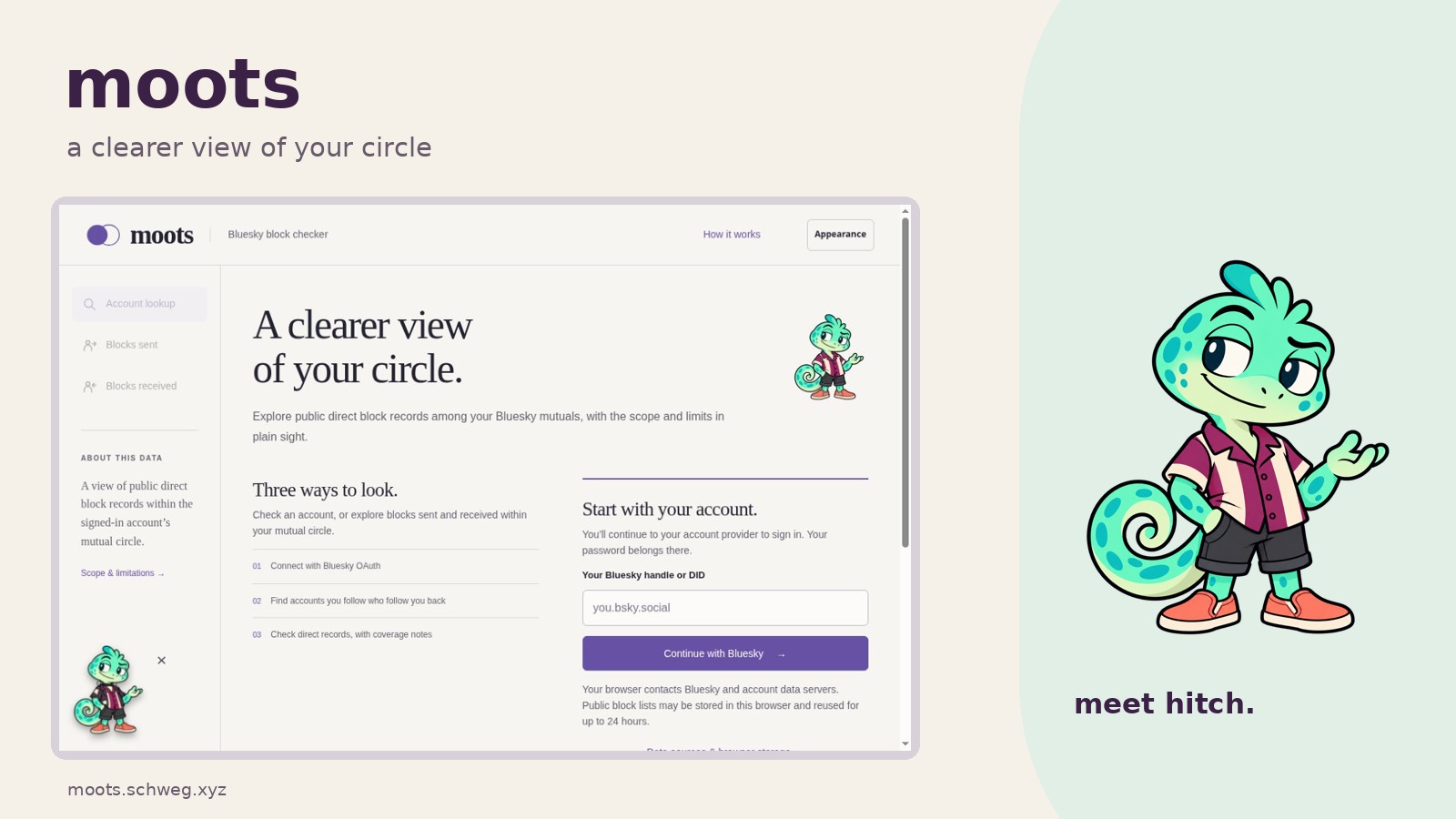
    moots has a little gecko now. his name is hitch. he’s mint green, wears a plum-and-cream shirt, and has apparently decided that coral slip-ons are appropriate footwear for looking through public records.

    he’s the new face of moots, my Bluesky block checker. this seems like a good excuse to explain what the tool actually does. the gecko will be supervising.

    first, whose moots?

    moots starts with the account you sign in with. your circle is the people you follow who follow you back. every view uses that circle, including when you look up somebody else.

    the tool reads public direct block records and lets you look at them three ways: which of your mutuals have a record blocking a particular account, which mutuals have sent blocks to others in your circle, and which have received them from others in that circle. those last two views stay inside your circle. nobody has been appointed commissioner of all of Bluesky.

    1. start with your account

    open moots.schweg.xyz, enter your full Bluesky handle, and choose Continue with Bluesky. a DID, the account’s persistent identifier, works too. most people can stick with their handle.

    Moots sign-in form with schwegler.lol entered in the handle field, above Continue with Bluesky.
    enter your full handle first. i’m using schwegler.lol here; use your own account for your own circle.

    you’ll continue to your account provider to sign in through OAuth. read the authorization screen before approving it. your password goes to your provider; moots doesn’t ask you to make an app password. the current OAuth setup uses the transitional atproto transition:generic scope; review the permissions your provider shows before continuing.

    Bluesky’s sign-in page for schwegler.lol, with an empty password field and the Sign in button. No login has been submitted.
    the next screen belongs to Bluesky. this example stops before entering a password or pressing Sign in.

    2. choose what you want to check

    Account lookup: enter the handle or DID of the account you want to check, then choose Check account. a matching row means someone in your mutual circle has a public direct block record naming that account. the direction is your mutual → the account you entered. entering somebody else’s handle doesn’t switch the scan to their mutuals.

    Blocks sent: choose Scan blocks sent to see which accounts in your circle have direct block records naming other accounts in that same circle. open a row to see the accounts on the receiving end.

    Blocks received: choose Scan blocks received to look in the other direction. a row’s count is how many other members of your circle have direct block records naming that account. open its details to see who those records came from.

    the sent and received views sort by observed count. you can filter the results or change the sort. a bigger number still only describes the records found within this particular circle.

    Moots’ How it works panel explains that account lookup uses the signed-in account’s mutual circle and shows the direction of direct block records.
    How it works is available before sign-in, if you want to check the three views and their limits first.

    3. read the coverage before the conclusion

    the results show how many mutuals were fully checked, how many were incomplete, and how many block lists came from the browser’s cache. a server can time out or hit a rate limit. an incomplete scan can miss matches, and counts may be lower than the full picture.

    use Retry incomplete to try the unfinished accounts again, or Refresh circle & records to request a fresh circle and fresh records. cached lists can be reused for up to 24 hours; the results flag them and show the oldest cached list’s fetch time.

    “nothing found” means nothing matched in the records available for that snapshot. list-based blocks and mutes are outside the scan. records can also change after you check.

    the browser storage bit

    the analysis happens in your browser, which contacts Bluesky, identity services, and the servers holding account data. those services may log requests. moots can’t promise an anonymous lookup.

    successful block lists are stored in the browser and remain until overwritten or cleared, even after their 24-hour reuse window ends. the mutual-circle cache is reused for up to 15 minutes. signing out clears that circle cache, but leaves the stored block lists.

    to remove cached scan data, open Data sources & browser storage or Scope & limitations and choose Clear cached scan data. clearing it leaves your OAuth session unchanged, so use Sign out separately when you’re finished.

    Moots’ data and browser storage panel, including the Clear cached scan data button and notes about cache retention and public records.
    the storage panel explains what stays in this browser and gives you a button to clear cached scan data.

    a record has limits

    a block record doesn’t tell you why it exists. it doesn’t establish a block in the reverse direction, explain a relationship, or give you a reason to hassle somebody. people get to set boundaries without providing a footnote.

    moots is an independent tool, unaffiliated with Bluesky. if you want to look under the hood, the source is on GitHub. otherwise, start here. hitch is already dressed.

  • visionquest’s robots would rather talk about feelings

    The VisionQuest cast discusses humanity, grief and connection. Spoilers through episode 4 in the linked interview. Read more

    Vision tips his gray fedora on a cobblestone path in a surreal manicured park.

    Spoilers through episode 4 in the linked interview. Read Katie Campione’s October 23 cast interview at Deadline.

    (more…)
  • chore games have excellent boundaries

    chore games have excellent boundaries

    the dirt comes off, the game acknowledges your contribution, and nobody walks in holding a bowl of cereal. chore games have an… Read more

    the least realistic thing in a game about cleaning is that the job can be finished. the dirt comes off, the game acknowledges your contribution, and nobody walks into the room holding a bowl of cereal. an extraordinary piece of speculative fiction.

    the joke about chore games is usually that somebody has paid money to do imaginary work. fair. the yard-work simulator situation remains very funny. but the more interesting part is the contract. these games can tell you what needs doing, show you that it is getting done, and agree on a point at which you may leave. actual housework has historically been evasive about all three.

    the van is eleven percent clean

    From my media collectionPowerWash SimulatorDeveloper: FuturLab • Publisher: FuturLab • Platform: windows • Year: 2022View on Trove

    look at the featured PowerWash Simulator screenshot. the blue van is partly filthy, partly blue, and the display says eleven percent cleaned. there is even a separate bar for the body of the vehicle. the evidence of effort is sitting right next to the effort. you do not have to remember what it looked like before, explain how much you did, or defend the decision to start with that particular patch.

    the game’s store description explicitly offers cleaning without time pressure or a final score, alongside separate challenge modes for anyone who wants those constraints. that distinction matters. the basic appeal can survive without a supervisor. the van has a problem; you have a hose; this relationship has excellent communication.

    a real clean surface is mostly an absence. nothing happened here today, visually speaking, because somebody made sure nothing remained. a game can turn that invisible maintenance into a visible event. every newly blue strip of van is a tiny before-and-after photograph that you are operating.

    the drawer has agreed to terms

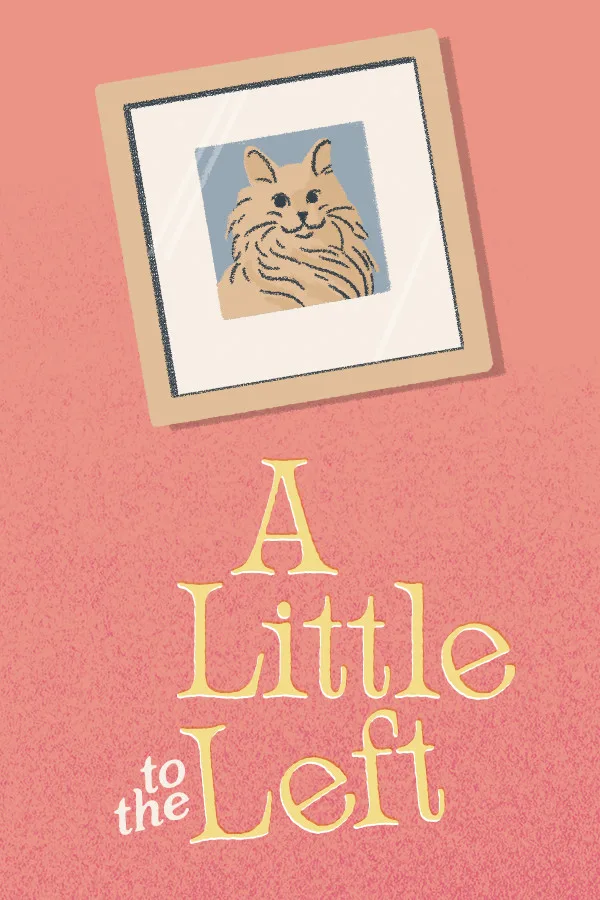
    From my media collectionA Little to the LeftDeveloper: Max Inferno • Publisher: Secret Mode • Platform: windows, mac • Year: 2022View on Trove
    A compartmented junk drawer in A Little to the Left, with batteries, crayons, scissors and other objects waiting to be arranged.
    Somebody has already designed a place for the batteries. Screenshot: Max Inferno / Secret Mode.

    A Little to the Left makes the agreement smaller. here is a drawer. here are its objects. there is a satisfying arrangement to discover, sometimes more than one. the screenshot’s compartments practically advertise their intentions. scissors and batteries have been invited into a world where the available space is somebody else’s design problem.

    an actual junk drawer contains an unlabelled key and a cable that might still be important. putting them away requires decisions about an entire household’s past and possible future. the puzzle gets to edit that down to shape, size, order. a little rectangle of solvable confusion. its cat can interfere, but at least the cat is credited as part of the game.

    there is a useful limit to this theory: the game also offers a daily puzzle. even fictional tidying can become an appointment. the appeal depends on which part you choose to engage with. a finite drawer is a lovely proposition. an obligation to maintain a streak is a separate negotiation.

    please let the box stay empty

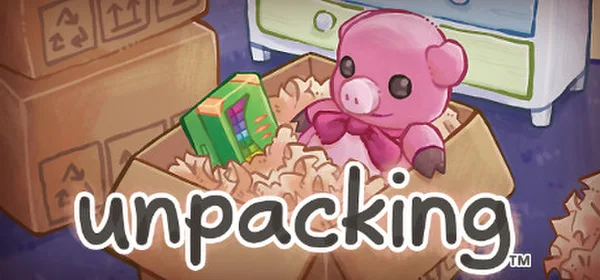
    From my media collectionUnpackingDeveloper: Witch Beam • Publisher: Balor Games • Platform: windows, mac, linux • Year: 2021View on Trove
    A pixel-art bedroom in Unpacking with cardboard moving boxes, a computer desk, hanging shirt and pink stuffed pig.
    A move reduced to one room at a time. Screenshot: Witch Beam / Unpacking.

    Unpacking stretches the idea across eight moves. possessions come out of boxes and find places in rooms, with no timers or scores. the objects also carry a life through those moves. a shirt, a toy, a book: ordinary belongings get enough attention to become the story.

    it even offers an “allow items anywhere” option that removes the placement puzzle. the player can decide how much judgment belongs in this particular household. imagine the possibilities if a cupboard had a setting.

    none of this requires turning leisure into self-improvement. the game library still isn’t homework. you can abandon the fictional cleaning too. but for a while, these games offer work with unusually legible boundaries: an object, a manageable mess, a response. the room fits on the screen. the box can become empty. somebody has finally written a definition of done that does not include checking the laundry.

    Featured screenshot: FuturLab / PowerWash Simulator, via Steam.