when a poor person takes from a rich institution, we call the police. when a rich institution takes from a worker, we… Read more →
I reblogged a post this morning that gets at one of capitalism’s better magic tricks: poor people are expected to conduct an ethics seminar before taking anything from the rich, while rich people can take money from workers repeatedly, call it a payroll issue, and make everyone wait two pay periods for an update.
The point is not that every act of theft becomes morally pure when the victim owns a boat. The point is that we use the word theft very selectively. If somebody walks out of a store with laundry detergent, local television has security footage by six. If an employer edits timecards, withholds tips, demands unpaid work before clock-in, misclassifies employees, or simply does not pay overtime, the language becomes soft enough to nap on.
It is an “error.” A “discrepancy.” A “compliance matter.” Possibly an exciting opportunity to contact a human-resources portal that replies from an address named NOREPLY.
A historical comparison using 2012 FBI and Economic Policy Foundation data. Chart by Guest2625, via Wikimedia Commons, licensed CC BY-SA 3.0.
the crime becomes paperwork when the thief owns the paperwork
Wage theft covers a lot of ordinary employer behavior: paying less than minimum wage, denying overtime, making people work off the clock, taking tips, using illegal deductions, or labeling somebody an independent contractor because payroll discovered a fun costume for an employee. None of this requires a dramatic heist. Usually it requires a manager, a scheduling system, and confidence that the worker cannot afford to fight back.
The scale is not theoretical. The U.S. Department of Labor’s Wage and Hour Division says it recovered more than $259 million in back wages for 176,957 workers in fiscal year 2025. That is only what one federal division recovered through enforcement. It is not an estimate of everything taken, and it does not include every worker who never knew, never reported it, or decided losing the job would be worse than losing the money.
The average recovery was $1,465 per worker. For somebody living paycheck to paycheck, that is not an abstract line on a labor economist’s spreadsheet. It is rent, medication, groceries, a car repair, or the small emergency fund that keeps one bad week from becoming six bad months.
Fast food workers striking in Saint Paul in 2016. Photo by Fibonacci Blue, via Wikimedia Commons, licensed CC BY 2.0.
we moralize downward and administrate upward
Our cultural response is upside down. Petty theft by poor people becomes a referendum on social collapse. Theft from workers becomes a seminar about how difficult it is to run a small business. Apparently the moral seriousness of taking money decreases as the quality of the accounting software improves.
This is why the original post lands. The wealthy do not need to snatch cash from your hand. They can take fifteen minutes from every shift, deny a break, shave a commission, hold a final paycheck, or write a policy that makes the theft look automatic. The money still leaves one person and benefits another. It has merely passed through a respectable interface.
And when a worker objects, the burden reverses immediately. Did you document it? Do you have the schedule? Did you save the messages? Can you prove the manager knew? Are you prepared to keep working beside the person you reported? The employer controls the records, the workplace, and the paycheck, but the employee is assigned a side quest called Evidence.
The Department of Labor explains that workers may be able to recover back pay, liquidated damages, attorney’s fees, and court costs under federal law. Those remedies matter. So do unions, stronger state enforcement, meaningful penalties, and treating retaliation as the threat it actually is. A right that can only be exercised by somebody with spare time, legal knowledge, and another job lined up is less sturdy than the brochure suggests.
We do not have to settle every philosophical question about property before noticing the obvious hierarchy. When a poor person takes from a rich institution, we call the police. When a rich institution takes from a poor person, we ask whether they have opened a ticket.
some fandoms are things you enjoy. others quietly become part of the structure holding every version of you together. Read more →
I reposted a Bluesky post tonight that said, “X-Men has been the most consistent interest in my life.” It is a very efficient sentence. Nine words, and suddenly I am thinking about the strange little handful of interests that stop being things you like and become part of the load-bearing structure of your personality.
X-Men has been the most consistent interest in my life.
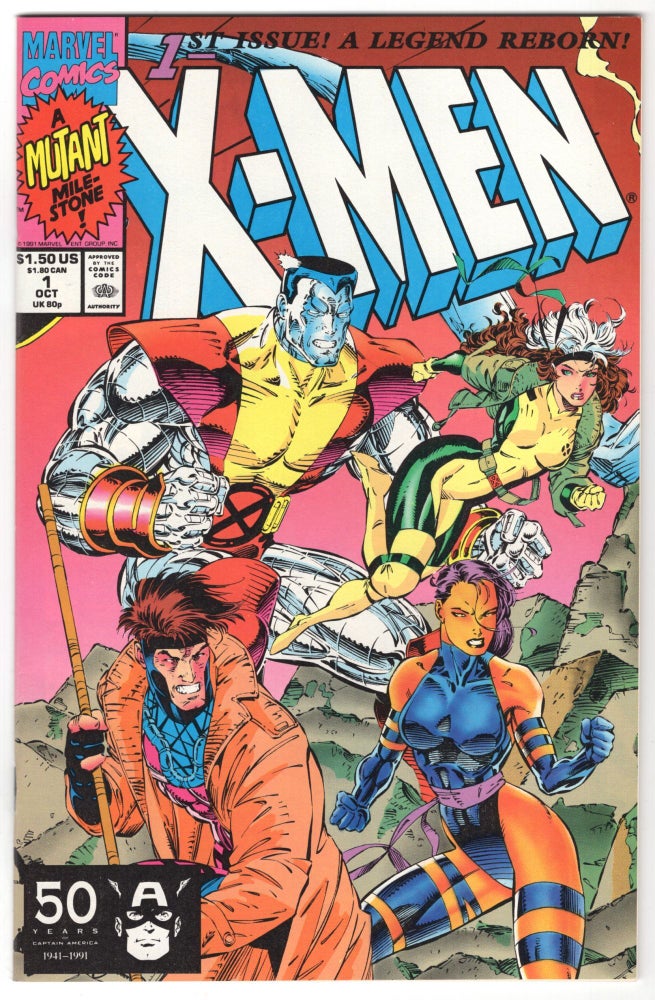
The X-Men are unusually good at becoming that kind of interest. They are less a single story than a municipal transit system: enormous, occasionally unreliable, redesigned every few years, and somehow still able to take you back to the same place.
continuity is not the point
Trying to explain X-Men continuity is how normal conversations become hostage situations. There are alternate timelines, cloned people, cloned people who did not initially know they were clones, children who are older than their parents, deaths that function more like extended vacations, and at least one island that is also a person. The official history is technically knowable, in the same sense that the tax code is technically knowable.
But continuity is not really what keeps people around. The return is. You can disappear for five years, come back through a cartoon, a movie, a comic run, or one extremely specific Tumblr gifset, and the essential machinery is still there. A group of people has been told that something fundamental about them makes them dangerous. They respond by building a home together, putting on coordinated outfits, and developing interpersonal problems of almost military complexity.
That premise travels. It can be a civil-rights allegory, a queer text, a family drama, a workplace comedy in which the workplace keeps exploding, or an excuse for Wolverine to stand in a forest looking like someone has interrupted the worst cigarette break of his life. Sometimes it is all five before lunch.
the story changes when you do
The durable childhood interests are rarely the ones that remain frozen. Usually, they survive because you keep discovering a different entrance.
When you are young, the X-Men can be about powers, costumes, giant robots, and the objectively correct belief that Storm is the coolest person in any room. Later, the same stories start looking like arguments about respectability, chosen family, assimilation, political exhaustion, and what people owe a society that keeps announcing its intention to destroy them.
As a gay person, none of that requires particularly strenuous decoding. The franchise has never mapped neatly onto one real minority experience, and it gets clumsy whenever it tries to behave as though it does. Still, the emotional grammar is familiar: disclosure as risk, family as something you may have to assemble yourself, public acceptance that vanishes the second people become frightened, and the endless demand that the marginalized person remain calm enough to deserve survival.
You can meet that story before you have language for yourself, then return after you do. The characters have not necessarily become more sophisticated. You have. They were simply patient enough to wait.
Long-running fiction accumulates versions of its audience along with versions of its characters. A particular theme song stores the room where you first heard it. A costume design stores the age when you decided someone looked impossibly cool. A revival stores the slightly unsettling discovery that your childhood is now an intellectual property strategy.
X-Men ’97 understood this better than most nostalgia projects. It did not merely put the old action figures back on the shelf and wait for applause. It returned to the visual and emotional vocabulary people remembered, then allowed time to have happened. The result felt familiar without pretending familiarity was sufficient. This is apparently a radical concept in franchise management.
Marvel Animation’s official X-Men ’97 trailer.
That matters because consistency does not mean consuming every issue, seeing every movie opening weekend, or maintaining a working knowledge of which body Professor Xavier currently occupies. There are years when an interest is central, and years when it sits quietly in the background. It still becomes a way of keeping track of yourself.
I think that is what made the skeet land. “Most consistent” does not mean unchanged. It means the thing kept finding a version of you who could use it.
the things that stay are allowed to be messy
A lifelong fandom is not an endorsement of every choice made under its logo. God knows the X-Men have supplied enough bad movies, baffling retcons, aborted metaphors, and stories where nobody appears to have asked whether women should be allowed one uninterrupted afternoon.
The affection survives because it is bigger than approval. You can love the basic proposition, argue with its execution, ignore an era entirely, and come back when somebody remembers why the whole thing worked. That is a healthier relationship to culture than the modern demand that everything you enjoy also function as a flawless public statement about your moral character.
Some interests are favorites. Some are phases. A few become personal infrastructure: not always visible, not always fashionable, but still quietly holding up part of the building.
The X-Men are especially suited to that job. Reinvention is already built into the premise. The roster changes, the school relocates, the dead return, the future becomes terrible in a slightly different way, and everyone tries again.
Honestly, there are worse things to carry forward.
loving what a story meant to you does not require an eternal pipeline of purchases, reboots, merchandise, and increasingly strained excuses. Read more →
I never got into Harry Potter. This was not an act of moral courage. I read some of the first book as a kid, did not like it, and stopped. The Sorting Hat failed to assign me a house because I had already wandered off to look at the X-Men again.
That means I do not have the same nostalgia to untangle that a lot of people do. I understand why the books matter to them. They found the series at exactly the age when a fictional world can become load-bearing, and it followed them through childhood, adolescence, midnight release parties, movies, friendships, and the period when every personality quiz on the internet needed to know whether you were a Hufflepuff.
i never got into Harry Potter because I didn’t like the first book and never finished it as a kid. BUT, even if I did like it back then it’s not that hard to just not consume media that directly pays for the creator’s bigoted activism to continue to do massive harm
But “this mattered to me” and “I must continue buying every new thing made from it” are two different sentences. They have been stapled together by an entertainment industry that would very much prefer nobody notice the seam.
Photo by Mo HH92, via Wikimedia Commons, licensed CC BY-SA 3.0.
the old books are not asking for more money
Nobody is coming into your house to confiscate the battered paperbacks you already own. Nobody can retroactively remove the friends you made through fandom, the comfort you found in the story, or the fan fiction that was probably doing more interesting things with the premise anyway. Memory is not a subscription service. It does not stop working when you decline to purchase the reboot.
The current franchise, however, is a business. New books, games, licensed merchandise, theme-park trips, and television adaptations are transactions. J.K. Rowling remains publicly connected to the Wizarding World, and her own website describes her as a campaigner on sex and gender issues. It also promotes her privately funded legal organization, which finances cases intended to establish and enforce “sex-based rights.” That is not an inference assembled from a haunted corkboard. The fund says what it does on its own website.
So the familiar defense that buying one game or watching one new series is too indirect to matter feels increasingly unserious. Of course one purchase does not single-handedly finance a court case. That is how mass consumer products work. No individual soda purchase builds an entire bottling plant either, but Coca-Cola has somehow managed to acquire several.
Photo by the UK Foreign and Commonwealth Office, via Wikimedia Commons, licensed CC BY 2.0.
there are ways to keep the memory without feeding the machine
Keep the books you have. Borrow them from the library. Buy a used copy if you absolutely need one. Read old fanfic. Rewatch the DVD that has been sitting in a storage tote since the Obama administration. Those choices are materially different from preordering the newest deluxe edition and then explaining that your money is merely symbolic.
More importantly, let the fondness be historical. We already do this with thousands of things. A childhood restaurant closes, a television show ends, a band breaks up, or a website disappears because somebody forgot to renew the domain. We are capable of loving what something was without demanding an eternal pipeline of branded content. In fact, adulthood is mostly discovering that everything you loved has either ended or been purchased by private equity.
I do not think people have to perform a public ritual of shame because they once loved Harry Potter. I do think the insistence that a beloved childhood property must remain an active consumer identity forever is a little bleak. The story already happened. You got what you needed from it. The memories are yours, and the corporation cannot repossess them.
spoilers for Big Brother 28, obviously. Haley “Thog” Thogmartin’s exit press arrived this morning, several days after the feeds spoiled her medieval-twist… Read more →
spoilers for Big Brother 28, obviously.
Haley “Thog” Thogmartin’s exit press arrived this morning, several days after the feeds spoiled her medieval-twist elimination and one night after CBS finally allowed the television audience to catch up. this is an extremely normal way to evict somebody from a social-strategy game: make her spend roughly seven hours outside in a heavy dress, lose four competitions in a row, disappear without a vote, and then wait half a week before asking how she feels about it.
Thog’s answer was mostly: fair enough. this is to her credit, although “did not blame a foam castle after losing four competitions” is not quite the redemption arc her exit press occasionally seems eager to assemble.
Everyone is so preoccupied about people lying to them in the lying game, go talk to people instead #bb28
i posted this last week because the entire house was becoming personally offended that people had lied to them in the lying game. Thog’s interviews are interesting because she has now reached basically the same conclusion, only after being physically removed from the lying game by a man dressed like he was guarding a Renaissance fair parking lot.
the twist was miserable, but she does not blame the twist
in both Mike Bloom’s Parade interview and Dalton Ross’s Entertainment Weekly interview, Haley said she would have preferred a traditional eviction. she wanted the opportunity to campaign, say goodbye, make jury, and, yes, continue trying to win $750,000. all very reasonable complaints about being deleted from the house by Big Brother: Dark Ages Edition.
still, she did not call the result unfair, and she does not regret asking Dee to send her into the first safety competition. with Dee and Devens already safe, and Angela next in their plan, Haley correctly assumed nobody was likely to save her for her. going in first gave her the maximum number of chances to protect herself. the strategy was sound. the competitions simply said absolutely not.
Haley Thogmartin on Big Brother 28. Photo: CBS, via Parade; used for commentary.
the EW interview adds the bleak production detail that the whole sequence took about seven hours. she was given water and allowed to sit, but she did not go back inside between rounds. by the end, she was hot, sweaty, exhausted, and wearing a thick medieval dress. “expect the unexpected” is one thing. “expect to become a damp tapestry” feels like a separate waiver.
her feelings were real; her monopoly on victimhood was not
Bloom opens by asking how rough her week has been, and Haley answers, “My week’s been perfect!” honestly, good start. no notes.
then he presses her on one of the season’s stranger recurring claims: Haley repeatedly described her first several weeks as extraordinarily difficult even though she was protected by Red Corner and Toolshed, never touched the block, and won an HOH. Melody and Mallory, who spent that period repeatedly fighting for their lives, understandably did not enjoy hearing about it.
Haley’s answer is revealing because she can now separate her emotional experience from her strategic position. game-wise, she admits she was safe and set up well. personally, she felt overwhelmed almost immediately, took comments and conflicts very personally, and was less mentally prepared for the house than she expected. that is useful context. it is not a defense.
the problem was never that Haley had feelings. the problem was that she treated her feelings as objective evidence, then expected people with far less protection to manage them for her. “i have had seven rough weeks” remained absurd when delivered to people who had been nominated four times before lunch. worse, ordinary resistance from Taylor, Lala, and others repeatedly became proof that Haley had been attacked, while her own coded dismissiveness, tone-policing, and microaggressive behavior got filed under stress. she was playing from inside the feeling, and only her feelings were granted full citizenship.
the apology is better than denial. the bar remains underground
both interviewers asked Haley directly about her behavior toward Taylor and her accusation that Lala had bullied her. good. those were not stray comments floating loose from an otherwise lovely summer. they were part of the ugliest pattern in Haley’s game: she could be dismissive and cruel, especially when someone outside her comfort circle asserted herself, then quickly reframe the resulting conflict as something being done to Haley.
on Taylor, Haley said she had seen some of the online reaction, regretted what she said, understood that it was hurtful, and wanted to apologize directly. she also acknowledged that she inserted herself into the argument after overhearing her name, then refused the difficult conversation Taylor tried to have the next day because Haley did not want another heavy exchange. Taylor was expected to absorb Haley’s interruption, Haley’s assumptions, and Haley’s refusal on Haley’s preferred schedule. this was the pattern in miniature.
Haley says this is an explanation, not an excuse, but the explanation still occupies most of the available real estate: pressure, exhaustion, overstimulation, and what she was personally experiencing. meanwhile, Taylor experienced the actual comments. owning harm after seeing the online reaction is better than denying it, but it is also the first item on the checklist. the microphones did not misunderstand her, the audience did not invent a tone, and a stressful house did not distribute the same behavior evenly among everyone inside it.
on Lala, Haley retracts the bully label, as she should. she still returns to exchanges that hurt her feelings and an apology that did not feel sincere enough in the moment. this is the recurring asymmetry: Haley’s interior life arrives with footnotes, weather reports, and an appeals process; everyone else’s arrives as a threat assessment. calling a Black woman a bully for confronting you is not made harmless because the house was tense. the tension is part of why checking that reflex mattered.
Haley Thogmartin during post-eviction press. Image via Parade; used for commentary.
exit press is not absolution, and viewers are not obligated to convert one morning of consequence-assisted reflection into retroactive affection. Haley named specific people and admitted specific behavior, which makes this sturdier than the passive-voice mist reality contestants usually release when they discover the feeds had sound. it does not make it especially brave. she was terrible to people in that house, the pattern was visible long before eviction night, and “i own it” is the beginning of accountability, not its deluxe finale package.
Dee played Big Brother; Haley kept checking the rules of real life
the funniest strategic revelation is that Dee’s role in flipping the vote from Melody to Lyric went completely over Haley’s head. once told the full story, she immediately gives Dee credit. in EW, she says “it went right over my head,” then explains that she kept judging moves by what someone would do to a friend in real life. she now understands that this was, apparently, not the game.
apparently!
this is the entire Haley Thogmartin experience in one answer. she had enough social structure to dominate the opening month, enough competition ability to win power, and enough loyalty to be useful. what she did not have was the ability to treat information as information once it touched an emotion. every lie became a betrayal, every tense exchange became a moral event, and every person who challenged her risked becoming mean, unsafe, or a bully. that was bad strategy, but it was also simply bad behavior. the distinction matters because the people on the receiving end were not game pieces in Haley’s personal-growth montage.
even after learning that the icons engineered the flip that destroyed her position, Haley says she would have remained loyal to them if she survived. there is logic there: they had become her only viable path, and resentment is not a strategy. there is also the lingering sense that “loyalty” was the one tool she trusted after the rest of the toolbox caught fire.
her winner pick may have a very short shelf life
Haley names Dee as the person playing the best hidden strategic game. she also praises Devens, says “his social game is immaculate,” and picks him as the person she wants to win.
this is especially funny timing because Devens is currently on the block after volunteering to be Drew’s replacement nominee, a sentence constructed entirely from decisions i would not personally make. Haley believes his connections to Barrett and Drew give him room to survive even as the icons come under attack. we will know tonight whether her first postgame read is sharper than her in-house ones. no pressure.
watch the full Parade interview
the rapid-fire ending supplies one final tiny character study. Haley calls Angela nurturing, Barrett slick, Dee strong, Devens safe, and Lala fierce. asked about Taylor, she pauses, then calls her beautiful, says she has a beautiful heart, and describes her as an overall great person. it reads partly as a peace offering, partly as somebody choosing every word with oven mitts, and partly as the clearest indication that she knows exactly which conversation waits outside the studio.
the verdict
Haley’s exit press does not rewrite her season. she was unnecessarily cruel, repeatedly microaggressive, remarkably self-focused, and strategically unable to separate hurt feelings from useful facts. she helped create an ugly house dynamic, then narrated herself as one of its primary victims. a competent apology cannot make that footage unaired.
the exit interviews improve my opinion of her from “incapable of self-reflection” to “capable of it once the consequences and press questions arrive.” that is movement. it is not redemption. she left understanding the twist that evicted her, the mistake that blinded her to Dee, and at least some of the harm she caused Taylor and Lala. the postgame download installed successfully. the operating system remains deeply suspicious.
Featured image: Haley Thogmartin cast portrait, CBS/Paramount; used for commentary.
i reblogged this because it is a good joke in the very specific modern genre of “the public service announcement has returned… Read more →
i reblogged this because it is a good joke in the very specific modern genre of “the public service announcement has returned to clarify that the public service was laid off.”
unfortunately, the joke has excellent timing. as of September 2, California’s Plaskett Fire had grown to 27,580 acres with 1% containment, making it the state’s second-largest wildfire of 2026. nearly 1,000 people were assigned to it. the nearby Timber Fire had already burned more than 25,000 acres. together, suppression costs had reached roughly $80 million.
meanwhile, the people who actually do the prevention, logistics, science, maintenance, dispatching, and suppression have spent the year explaining that a fire response system is more than the visible person holding a hose.
“frontline” is doing a lot of work here
the Forest Service says it exceeded its operational-firefighter hiring target for 2026, expanded premium pay, and issued more than 22,000 red cards authorizing personnel for fire assignments. that is important, and it is better than failing to hire firefighters. it also does not make the larger staffing problem imaginary.
the National Federation of Federal Employees says the administration cut the Forest Service budget by $438 million, or 24%, in March. conservation groups have estimated that the agency lost 5,860 employees by January 2026, including staff with fire qualifications. those numbers include people outside dedicated suppression crews, which is precisely the point: you cannot run a national emergency operation using only the employees whose job title looks dramatic in a press release.
Bureau of Land Management firefighter during a prescribed-fire operation. Photo by Colby Neal/BLM, via the U.S. Department of the Interior.
wildfire prevention depends on prescribed burns, fuel treatments, weather and fire-behavior research, equipment, road and trail crews, aviation, communications, grants, local coordination, and enough administrative capacity to move all of it where it needs to go. the Forest Service’s own research arm says wildfire losses exceed $40 billion annually and estimates a seven-dollar return for every dollar spent on fuel treatments and forest management informed by fire research.
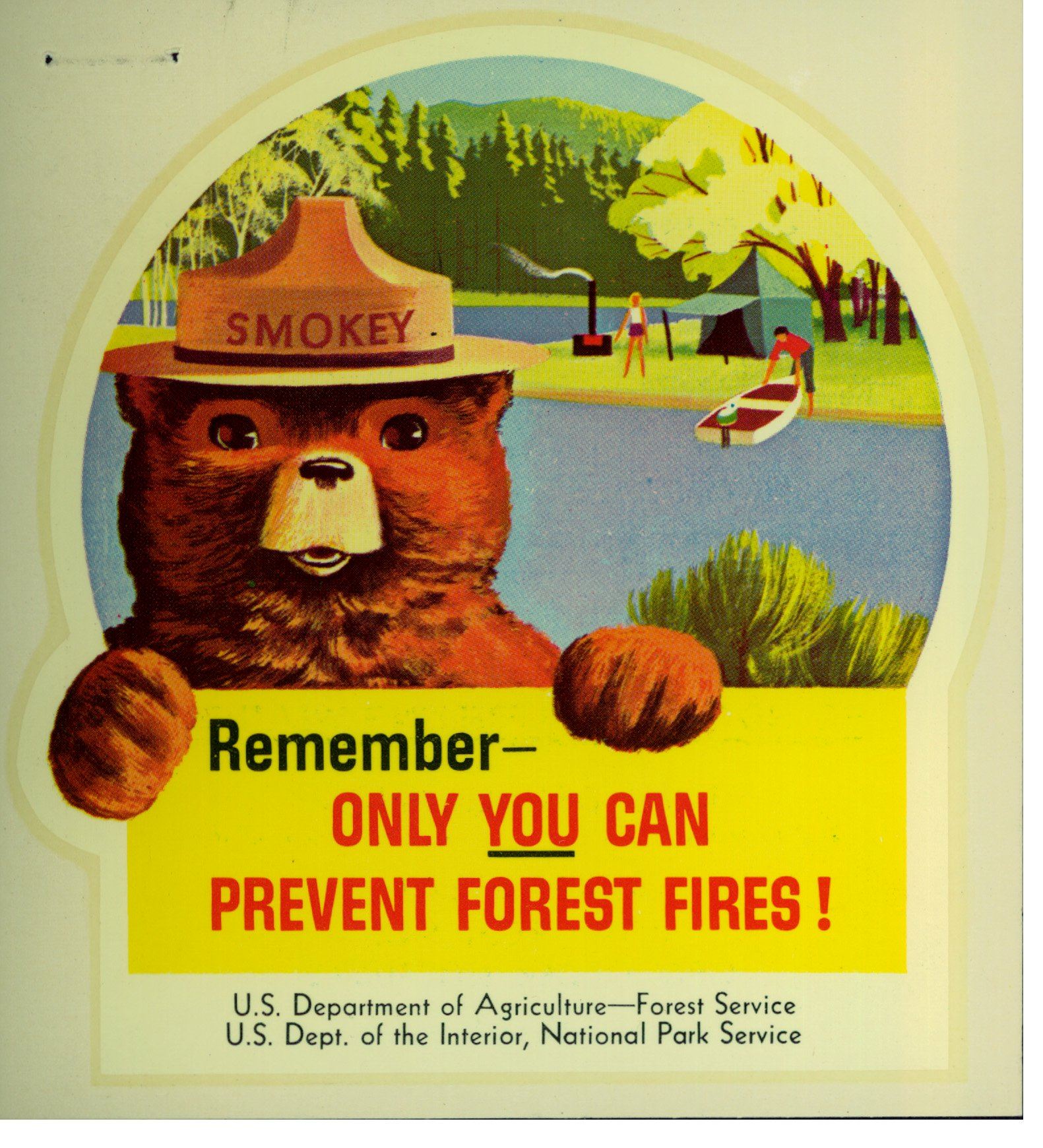
this is why the old Smokey Bear slogan has always been a little strange. yes, please extinguish the campfire. do not launch fireworks into crispy grass. personal responsibility remains available at no additional charge. but “only you” was never literally true. preventing a landscape-scale disaster is collective work, performed by public institutions before, during, and long after the flames appear.
the bleak version of the slogan is not that individual choices do not matter. it is that government can cut the system, point at the individual, and call the transfer of risk “responsibility.” Smokey is still wearing the hat. apparently he is also covering three vacancies, processing his own travel voucher, and waiting for procurement to approve a shovel.
Erin Reed’s 2023 and July 2026 trans legal-risk maps show more than a bad legislative season. They show ordinary travel becoming a… Read more →
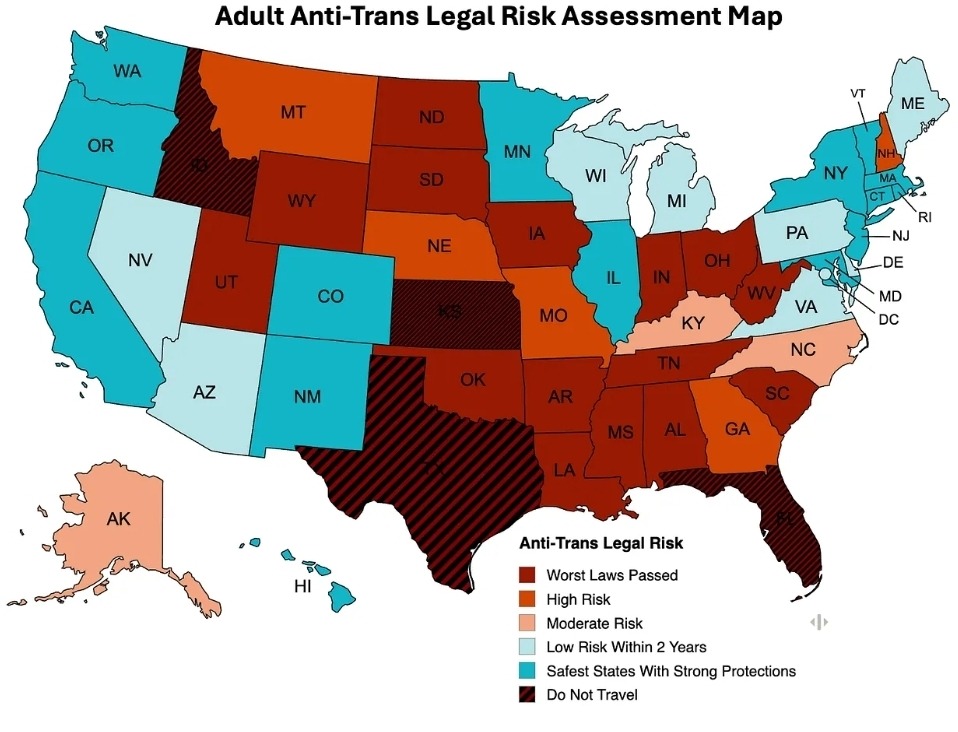
i reblogged a comparison between Erin Reed’s 2023 anti-trans risk map and her July 2026 update because sometimes a picture does exactly what a hundred individual headlines cannot: it shows the direction of travel.
the map is not an official travel advisory, and it should not be treated like one. Reed describes it as a qualitative legal-risk assessment built from five years of tracking bills, hearings, court fights, executive actions, and reports from organizers in each state. that distinction matters. so does the fact that people need this kind of map at all.
the colors did not merely move
Erin Reed’s Adult Anti-Trans Risk Assessment Map, 2023. Source: Erin in the Morning; used for commentary and historical comparison.
in the 2023 version, Florida stood alone in the map’s striped “Do Not Travel” category. the July 2026 adult map puts Florida, Idaho, Kansas, and Texas there. South Carolina moves into “Worst Laws Passed.” Reed’s accompanying report, published July 13, says Idaho’s new bathroom law can expose a trans person to a felony and a prison sentence of up to five years, while South Carolina expanded its bathroom restrictions to colleges and universities.
this is what makes the comparison more useful than treating each new restriction as a discrete piece of bad news. laws do not arrive alone. they stack. a bathroom ban sits beside restrictions on identity documents, health care, schools, public employment, and legal recognition. eventually “can i use this restroom?” becomes “can i safely cross this state?” which is a deranged question for a person to have to answer before filling the gas tank.
and then there is the map for kids
Erin Reed’s Youth Anti-Trans Legal Risk Assessment Map, July 2026. Source: Erin in the Morning; used for commentary and comparison.
the youth map is the one that stops me. there is no low-risk category left anywhere in the country. Reed writes that federal policy, pressure on schools and hospitals, and the broader spread of state restrictions have pushed every state to at least moderate risk for trans youth.
another useful check is the Movement Advancement Project, which tracks more than 50 LGBTQ-related laws and policies in real time. its current gender-identity policy scores put 22 states, plus three territories, in the negative category. it is a different methodology answering a different question, but the broad shape is familiar: protections are concentrated, penalties are spreading, and geography increasingly decides how much of your ordinary life the government considers negotiable.
maps like these are practical tools, but they are also records of policy failure. the country is being recolored in ways that turn moving, traveling, going to school, getting a prescription, or using a public building into legal-risk calculations. we have somehow rebuilt the trip planner as a civil-rights document. very efficient. extremely normal.
the legal landscape changes quickly. check the dated methodology and state details in Erin Reed’s July 13, 2026 report, and consult qualified local counsel or advocacy organizations for legal advice.
an ancient mapping service declined one pointless authoritarian branding exercise and discovered that “no” is still a very popular feature. Read more →
MapQuest, a website I associate primarily with printing six pages of directions and then immediately missing the second turn, is suddenly the most politically relevant mapping service in America.
President Trump ordered Lake Ontario renamed “Lake America.” Google and Apple changed the label for users in the United States. MapQuest said no, kept the familiar name, and watched people download its app in numbers normally reserved for products they remembered existed before that morning.
MapQuest is now the No. 1 U.S. app after bucking Trump’s ‘Lake America’ renaming
TechCrunch reported on August 31 that MapQuest had reached No. 1 in the U.S. Navigation category, No. 4 among non-game apps, and No. 8 across the entire App Store. The company said usage had jumped to 50 times its normal level. By September 2, the Associated Press reported that it had topped the free-app charts in both the United States and Canada.
MapQuest app promotional screenshot, via the Apple App Store; reproduced for commentary.
the ancient texts foretold this
I remember MapQuest as infrastructure from the era when going somewhere new required a printer, a passenger willing to read aloud, and a solemn family agreement that nobody would mention the missed exit until Dad had finished being mad at the interstate. You did not “reroute.” You performed a three-point turn in a bank parking lot and hoped geography eventually forgave you.
Google Maps made all of that feel prehistoric. Apple Maps arrived later, initially with the confidence of a person who had never personally encountered a bridge. MapQuest remained alive in the background, apparently waiting for the exact moment that declining to participate in a pointless act of nationalist branding would qualify as product innovation.
Map by Phizzy, via Wikimedia Commons, licensed CC BY-SA 3.0.
sometimes “no” is a feature
The funny part is that MapQuest says it is not trying to make a grand political statement. General manager Doug Berger framed the decision as keeping the names users already know. This is technically customer service, which now counts as resistance because the baseline is apparently “change the map whenever the president invents a new noun.”
There is a useful lesson here for brands, institutions, and the many Democrats who react to every absurd demand by assembling a committee to determine how quickly they should comply. People are desperate to see somebody say no. It does not need to be delivered from a barricade. It can be a mapping app calmly declining to pretend that one of the Great Lakes received a patriotic software update.
MapQuest also released a tool that lets users give the lake their own joke names. This is both clever marketing and an appropriate response to governance by novelty merchandise. If the federal government is going to operate like a novelty T-shirt kiosk, the least the rest of us can do is make better jokes.
I do not know whether everybody downloading MapQuest will keep using it. Protest downloads are easy, and changing a default navigation app is harder than people admit. But even a temporary surge matters. It demonstrates that refusing to normalize something stupid can be popular, useful, and, most offensive to conventional wisdom, good for business.
Thirty years after helping America get lost with a stack of warm printer paper, MapQuest has found the route back to relevance. It was apparently just “continue straight past the authoritarian branding exercise.”
in 2009, (500) Days of Summer felt precision-engineered for being 20. revisiting it now means seeing both the movie and the person… Read more →
there are two ways to answer “what was your favorite movie when you were 20?”
you can name the movie from that year you currently believe is the best, after another seventeen years of watching films, acquiring opinions, and becoming the sort of person who knows when a director is “interrogating” something. or you can answer honestly and identify the movie that got you then.
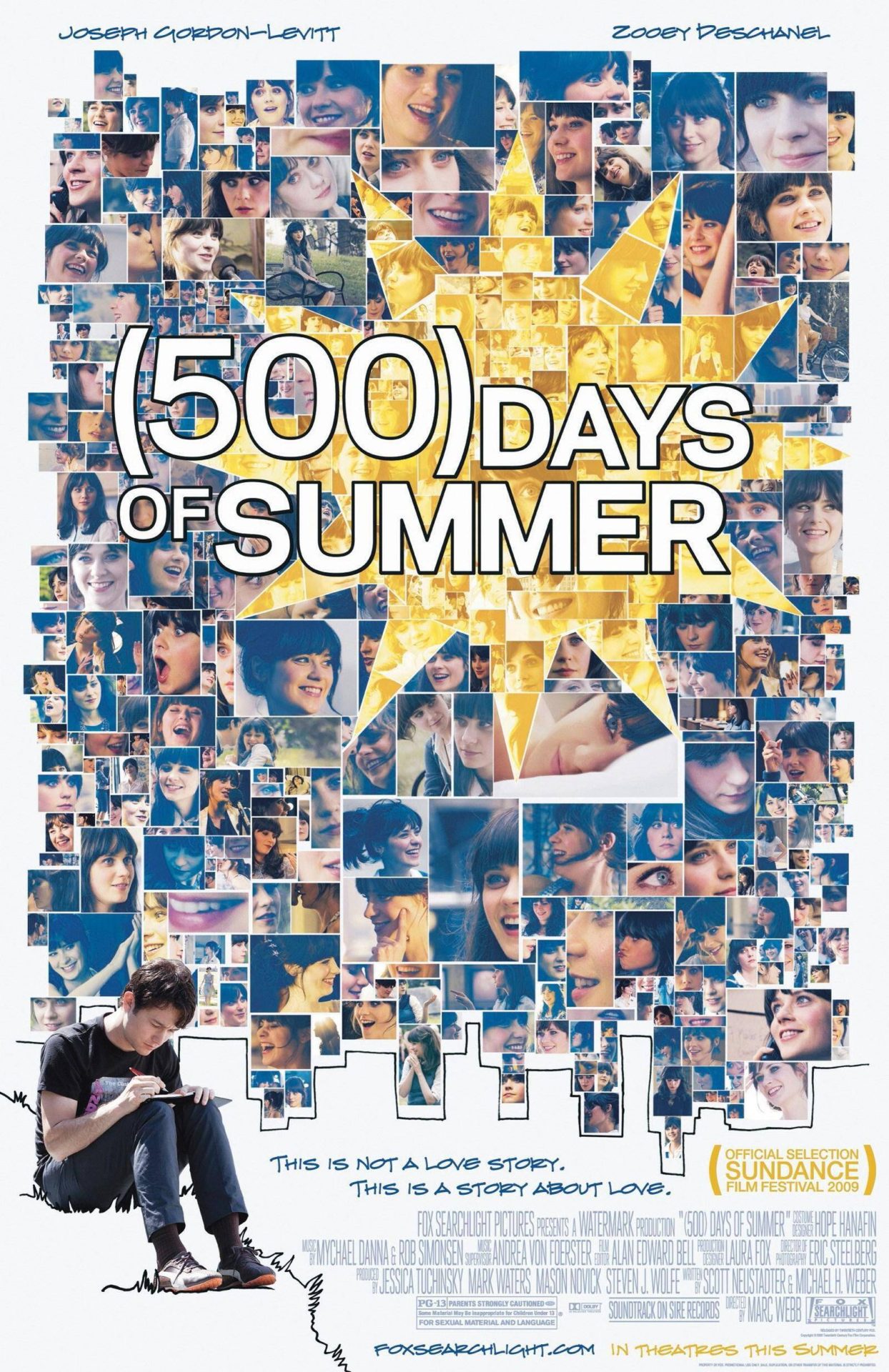
for me, in 2009, that movie was (500) Days of Summer.
Without saying your age, what is your favorite movie that came out when you were 20 years old?
the question was “favorite movie released when you were 20,” not “please submit your revised adult canon after several rounds of peer review.”
a movie precision-engineered for being 20 in 2009
(500) Days of Summer arrived carrying nearly every signifier that could activate a 20-year-old in 2009: the Smiths, greeting-card melancholy, architecture as an abandoned dream, Zooey Deschanel’s bangs, Joseph Gordon-Levitt in narrow ties, nonlinear editing, and an elaborate Hall & Oates dance number presented as an emotional weather report.
it did not merely have a soundtrack. it had a soundtrack that seemed designed to be imported into iTunes, burned onto a CD for somebody you were pretending not to be in love with, and then listened to while staring out the passenger-side window like your suburb had been photographed by an unusually sympathetic cinematographer.
the movie understood that being 20 means your feelings are both completely ordinary and, somehow, the first time they have ever occurred in human history. everybody has been rejected. nobody has been rejected with this particular Regina Spektor song playing.
the embarrassing luxury of identifying with tom
the first time through, it is remarkably easy to accept Tom’s version of events. he is sad, he has excellent taste according to a very specific 2009 rubric, and the movie is literally assembled from his memories. the camera gives his disappointment production design. even his depression has an aesthetic department.
but the film tells you, repeatedly, that he is unreliable. Summer says what she wants. Tom hears what he hopes she will eventually want after enough exposure to his personality. he mistakes shared music taste for metaphysical compatibility, which is a deeply 20-year-old error and, regrettably, not one that expires automatically at 21.
watching it now, the “expectations versus reality” sequence feels less like a clever formal trick and more like the whole thesis arriving with labels. Tom is not devastated because Summer secretly promised him a future. he is devastated because he treated his imagined future like a contract she had failed to honor.
your favorite then does not have to be your favorite now
this is where the social-media prompt became more interesting than a simple list of 2009 releases. there are movies from that year I may rank higher now. that is not quite the same question.
a favorite movie is sometimes a time capsule with a runtime. it preserves who you were when you encountered it: which jokes landed, which clothes looked aspirational, which flaws in a protagonist still read as romantic damage instead of a warning label, and which songs could make an ordinary elevator ride feel like destiny had finally started paying attention.
revisiting that movie is not a test you pass by having the correct updated opinion. you are allowed to notice what aged badly, what you misunderstood, and what remains annoyingly effective. critical distance is useful, but it does not need to arrive carrying bolt cutters.
the film survived its own aesthetic
late-aughts indie culture has become easy to parody because it was already halfway to parody while it was happening. there were birds on things. every apartment had a vintage typewriter owned by someone who did not type. men believed that liking the Smiths qualified as emotional availability.
(500) Days of Summer contains all of that, but it has lasted because its structure is smarter than its accessories. memory is nonlinear. heartbreak is an editor who keeps cutting back to the scene that supports its preferred argument. eventually, if you are lucky, the footage gets recut.
at 20, I saw a stylish movie about the devastation of wanting someone who did not want the same thing. now I see a movie about the danger of confusing your narration with reality. both readings were sitting there. I was simply seated closer to one of them.
the official Searchlight trailer, featuring enough late-aughts romantic fatalism to power several American Apparel stores.
so, yes: my answer is still (500) Days of Summer. not necessarily because it would win a carefully administered ranking today, but because “favorite movie when I was 20” belongs partly to the 20-year-old who answered it first.



.jpg)




.jpg)