Hot takes, wrestling rabbit holes, free-streaming deep dives & life on the open web. Welcome to taco ‘bout it—Schwegler’s corner for TV commentary, chaotic internet culture, and fediverse experiments.
November 7: public broadcasting gets a mandate, Marie Curie collects qualifications, and Doctor Who’s future is built from tape. Tune in & read →
a few things worth knowing · november 7, 2026
Today’s small pile of useful knowledge: a law that gave educational broadcasting more room, a scientist with an unreasonable number of Nobel Prizes, and a television theme assembled the hard way.
on this day: television got a public-service assignment
On November 7, 1967, Lyndon B. Johnson signed the Public Broadcasting Act, creating the Corporation for Public Broadcasting and providing support for educational radio and television. His signing remarks imagined music, drama, and serious reporting sharing the airwaves. Television was being asked to have range, which remains a reasonable request of a rectangle that occupies that much of the living room. Read the signing remarks.
on this day: marie curie began an overachieving résumé
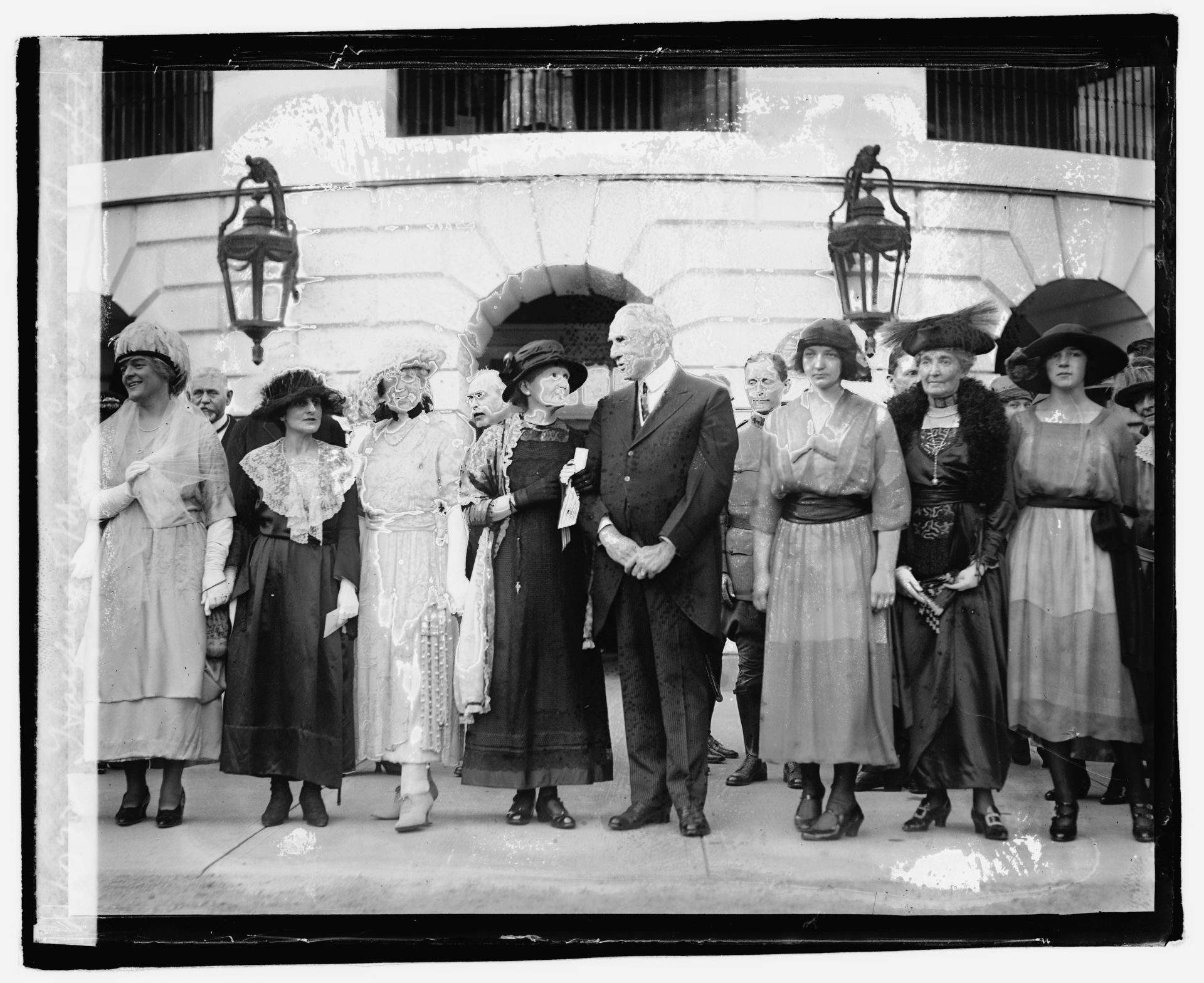
Marie Skłodowska Curie was born in Warsaw on November 7, 1867. She shared the 1903 Nobel Prize in Physics and received the 1911 Nobel Prize in Chemistry for work involving radium and polonium. One Nobel would have been a perfectly adequate answer to “so, what do you do?” Two in different fields makes the question feel poorly researched. National Park Service biography.
evergreen curiosity: the doctor who theme required actual cutting and pasting
Ron Grainer wrote the original Doctor Who theme; Delia Derbyshire realised its electronic sound at the BBC Radiophonic Workshop in 1963. She cut, spliced, and manipulated tape recordings of white noise, a test-tone oscillator, and a plucked string. Before a timeline could be dragged around on a screen, the future had to be assembled with physical pieces of tape. That familiar unearthly noise is also an excellent argument for crediting the person who made the thing sound like the thing. Hear about the recording at Australia’s National Film and Sound Archive.
image credits
Featured photograph: Marie Curie with President Warren G. Harding and the reception party, May 20, 1921, National Photo Company Collection / Library of Congress, npcc.04183, no known restrictions on publication. Body photograph: Frank Wolfe / LBJ Presidential Library, C7317-5A, public domain.
Crown Jewel changes the tag-title picture, Stranger Things heads backward, Netflix renews Nobody Wants This, and Xbox lends out Rome for the… Tune in & read →
Telly’s afternoon briefing · Saturday, November 7, 2026. New champions, another trip into the Upside Down, and a weekend in which governing Rome does not require buying it.
Crown Jewel has new tag champions
Penta and Je’Von Evans defeated Bron Breakker and Austin Theory for the World Tag Team Championship at Crown Jewel. Netflix’s official event update also confirms Cody Rhodes beat Randy Orton in their Last Man Standing match. The tag division gets a new pairing at the top, which is a more consequential souvenir than the event’s ornamental gold. Official results and updates.
WWE’s October 26 clip below sets up the tag-title match; it is the build-up, not footage of today’s finish.
Stranger Things finds an earlier decade to inconvenience
Netflix has announced Other Worlds: A Stranger Things Adventure, a live-action prequel from the Duffer Brothers and longtime series writer Kate Trefry, planned for 2028. It is set in the 1950s, before both the original show and the 1959 events of The First Shadow, with a new setting and new characters. Apparently the franchise’s next frontier is supernatural trouble before the good synthesizers arrive. Netflix’s announcement.
Somebody clearly wants more Nobody Wants This
Nobody Wants This is officially renewed for season four, with filming remaining in Los Angeles. Netflix has not announced a release date. Kristen Bell and Adam Brody’s romantic comedy now has the luxury of continuing past the initial attraction, where television relationships must confront their true enemy: several more seasons of decisions. Renewal announcement (includes season-three spoilers).
Rome is a rental this weekend
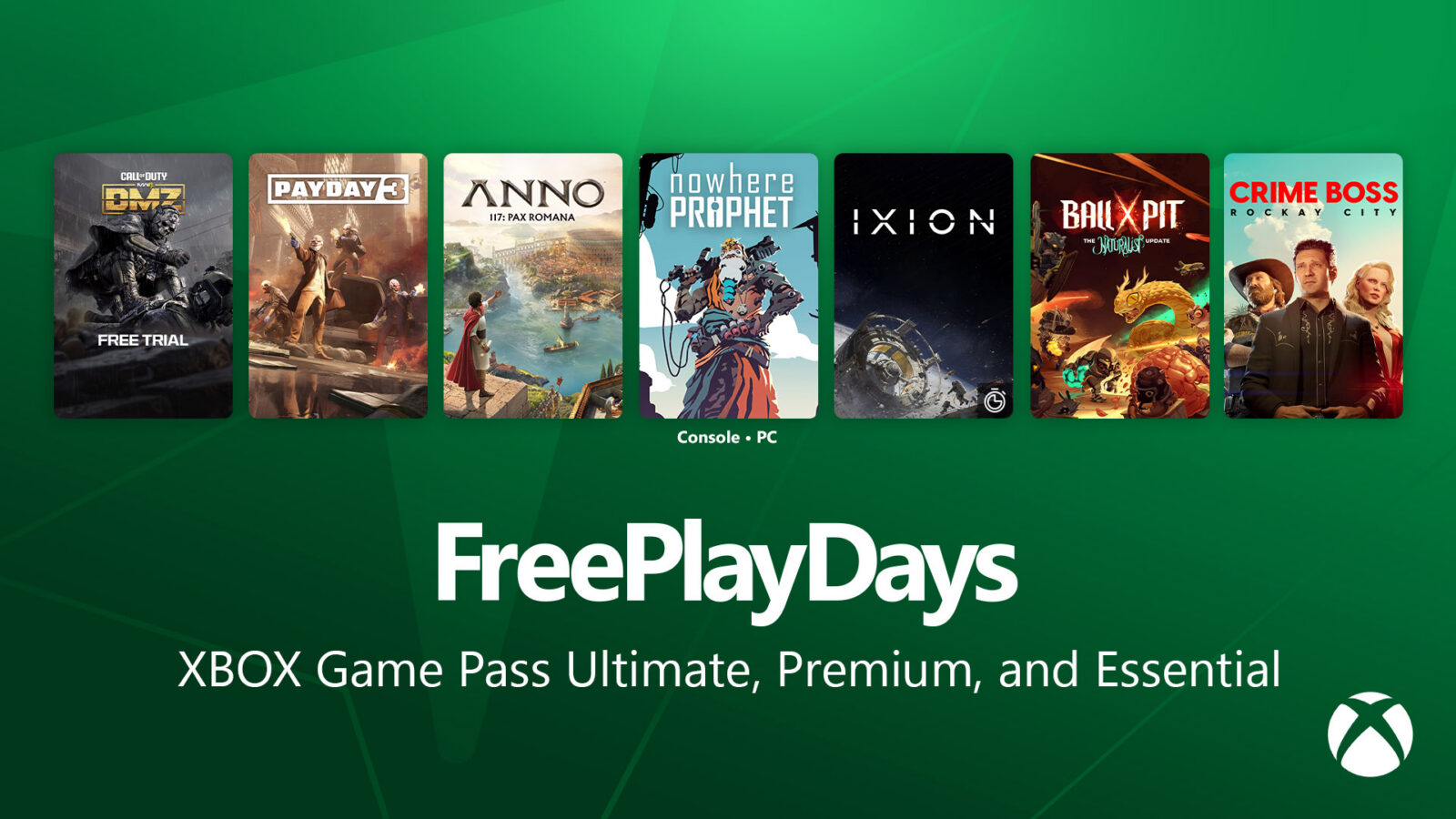
Xbox’s current Free Play Days window runs through November 8, with Anno 117: Pax Romana and Crime Boss: Rockay City available to try without Game Pass membership. BALL x PIT, PAYDAY 3, Deceive Inc., Age of Wonders 4, and Nowhere Prophet require an eligible Ultimate, Premium, or Essential membership for their trials. These are temporary play windows, not permanent giveaways; the sensible move is to test the game before adding another obligation to the backlog. Xbox’s official dates and eligibility.
Featured artwork: Microsoft/Xbox and the respective game publishers, via the linked Xbox Wire announcement. Other Worlds promotional image: Netflix, via the linked Tudum announcement. Images accompany editorial coverage of those announcements. Embedded video: WWE’s official YouTube channel, October 26, 2026.
Tonight: Holiday Unplugged at 8/7c, Druski hosting SNL at 11:30/10:30c, and a 30 Rock fallback with excellent mouthfeel. Tune in & read →
Facet’s watchlist for Saturday, November 7, 2026. Tonight’s choices: a Christmas movie with an unusually credible technical disaster, live sketch comedy, or 21 minutes of Jenna Maroney. One of these involves fewer incident reports.
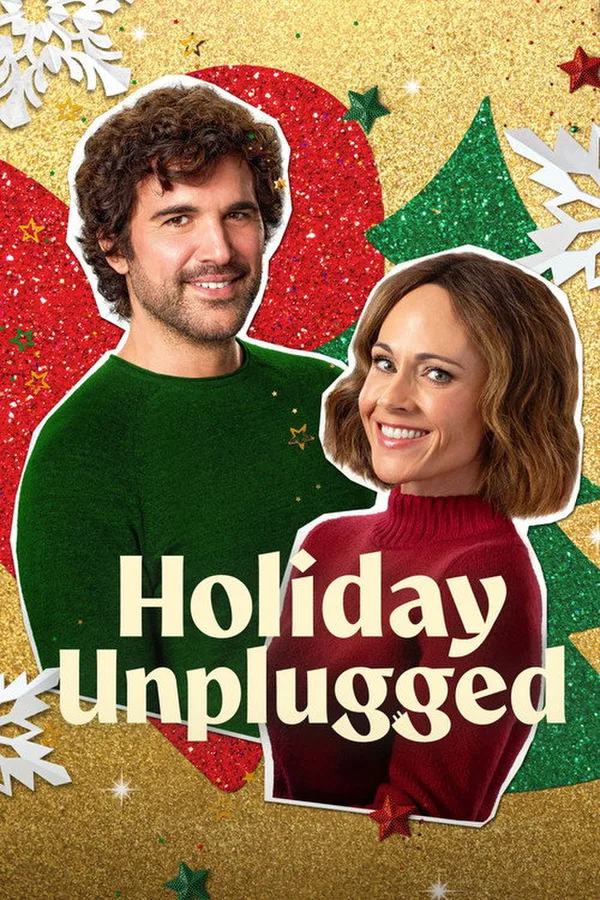
Nikki DeLoach plays an art teacher whose family videos disappear during a server migration. Her screen-free Christmas is partly a cover for finding the original tapes, with Juan Pablo Di Pace playing the former colleague who joins the search. Romance is lovely, but an offline backup would also have helped.
Druski hosts tonight’s live show. For anyone curious about the distance between online sketch comedy and the machinery of a live television production, this is the evening’s most interesting format change. The studio still gets the final say about when the joke ends.
Official announcement and airtime. YouTube’s announcement also points to SNL’s official channel for sketches and the monologue after the broadcast.
Already streaming • Peacock • on demand • season 1, episode 10.
Jenna awaits the release of her independent film while Tracy looks for something to endorse. It is a compact fallback for a night when a whole movie feels like an administrative commitment: 21 minutes, entertainment-industry vanity, and a title that puts your mouth through a performance review.
a christmas eve snowstorm gives a group of teenagers time to say what the ordinary week keeps swallowing. Tune in & read →
at the end of school, a familiar town can start to feel like something you are already leaving. every ordinary place becomes a candidate for the last time you do a thing. that is a slightly unreasonable amount of pressure to put on a waffle restaurant.
in let it snow (2019), a christmas eve storm tangles the friendships and romances of a group of high school seniors. there is a stranded pop star, an ambitious party and enough intersecting plans to make staying home look administratively sensible.
the ensemble format means some connections have more room than others. it also catches the peculiar scale of teenage uncertainty, when a conversation that an adult might forget before dinner can rearrange the whole map. attraction and embarrassment keep interrupting everybody’s idea of the evening.
this is a modest pleasure rather than a grand seasonal revelation. its place in the countdown comes from letting young people occupy the holiday on their own terms. christmas does not belong exclusively to parents trying to rescue it, or adults returning home to reconsider a career. sometimes the event is simply getting through the room to the person you wanted to see.
why christmas matters
the snow interrupts the usual exits, while christmas eve adds the suggestion that something ought to happen before morning. the town briefly becomes a shared waiting room. that is a useful setting for people who have not yet agreed on what comes next.
the right evening
an easy ensemble-romance evening when you want a little longing without an emotional demolition. let the coincidences accumulate. number 48 is for the small possibility that an inconvenient night might give somebody a necessary opening.
A new essay revisiting Andrew Schwegler’s “DRM and Copyright in the 21st Century,” published on Pale Panda February 11, 2009, after an… Tune in & read →
A new essay revisiting Andrew Schwegler’s “DRM and Copyright in the 21st Century,” published on Pale Panda February 11, 2009, after an earlier appearance in StandUp Magazine. This is not a republication of its legal claims or software instructions. Sources checked October 24, 2026.
A collection ought to survive an evening when the internet is down. That seems like a modest requirement. Somehow, it still needs explaining.
Pale Panda’s 2009 DRM essay was angry about a familiar bargain: pay for culture, then discover that using it depends on somebody else’s permission machinery. Its software recommendations have aged. So have some of its legal assertions. The underlying question is worth keeping: after you pay, what do you actually have?
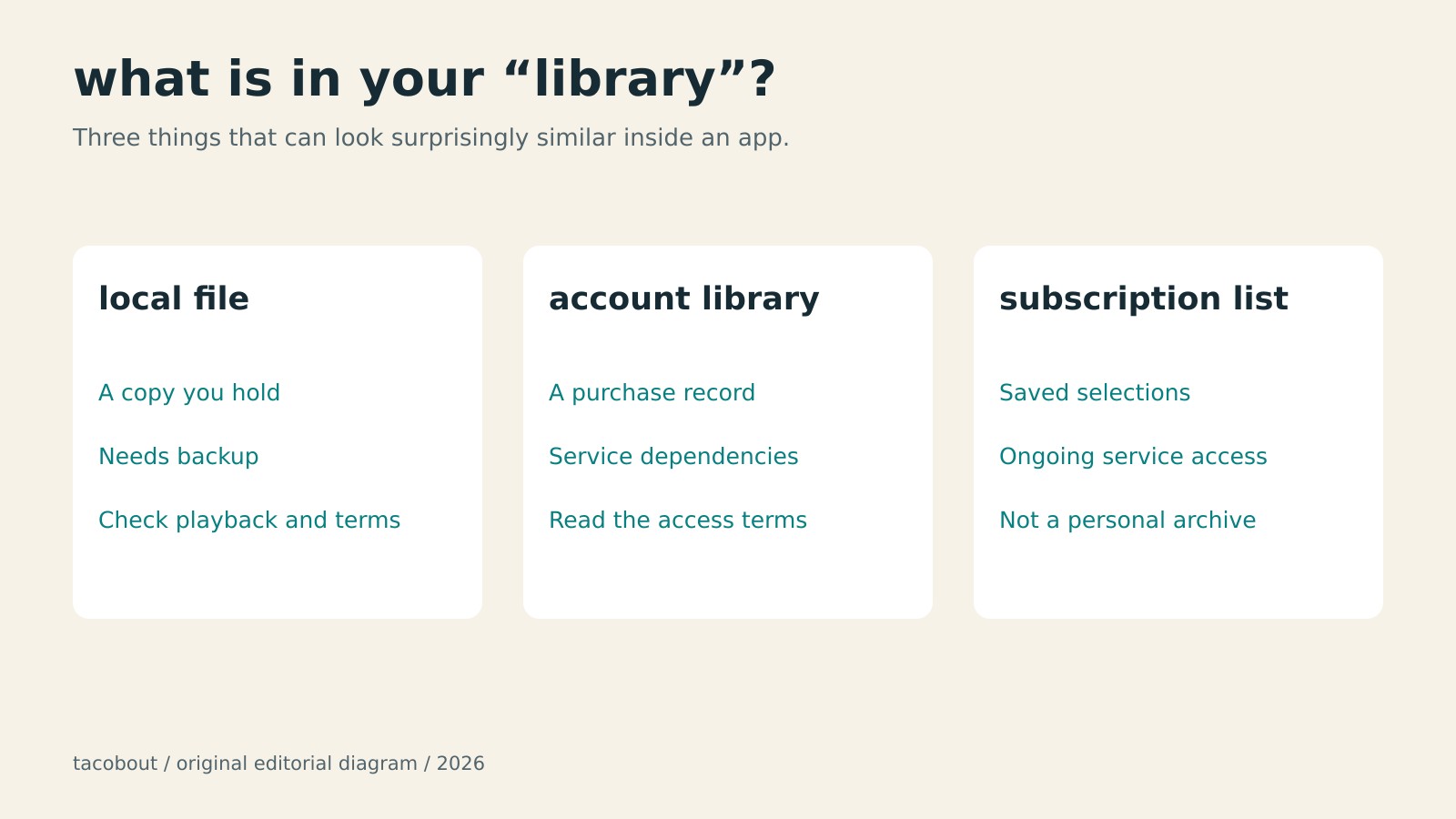
The word “library” is doing an impressive amount of work. It can mean files on a drive, a shelf of discs, a list of purchases attached to an account, or a subscription’s saved-items screen. These may look similar in an app. They have very different failure modes.
start with the file, not the button
Before buying something you want to keep, ask a few boring questions. Does the transaction include a downloadable file? Can an ordinary player open it? Does playback need a particular app, an active subscription, or another authorization check? What does the seller say happens if access changes?
A download button alone does not answer those questions. An app’s offline feature can be useful without providing an independently usable copy. Likewise, having an account entry marked as purchased is different from having the media saved somewhere you control. Check the actual product and terms rather than assuming a familiar interface means a familiar deal.
There are straightforward alternatives. Bandcamp says its downloaded audio files are DRM-free. That is a specific technical promise about the downloads, not a transfer of the artist’s copyright. The distinction matters: fewer playback restrictions do not give you permission to republish somebody’s album.
keep the boring part
Once you have legitimately obtained files you are permitted to retain, actually save them. Keep a second copy separately from the first. Check that the files open. Save the credits, artwork supplied with the purchase, and any accompanying license information. A folder called “Downloads” is a location, not a preservation strategy.
Cloud convenience can coexist with that small amount of maintenance. It just should not be mistaken for the maintenance. Apple explicitly says Apple Music is not a backup service. Its support guidance also accounts for songs becoming unavailable in the catalog. A service can be very good at playing music today without being your personal archive.
Physical media has its own chores: storage, working equipment, damage, missing pieces. The point is to know which dependencies you have accepted. Replacing a shelf with an app does not make dependence disappear. It moves it somewhere less visible.
the legal shortcut is not a shortcut
The old article treated personal copying much too categorically. In the United States, fair use requires a fact-specific assessment; buying a work does not create a blanket fair-use permission for whatever copying you would find convenient.
There is a separate complication around bypassing access controls. Section 1201 addresses circumvention, with statutory exceptions and periodically reviewed exemptions. “I paid for it” does not settle that question either. This essay is about choosing and maintaining a collection, not a set of instructions or legal clearance to defeat restrictions.
Creative Commons also needs a less magical description than it received in 2009. CC licenses work through copyright, granting permissions under stated conditions. They do not simply erase it. Check the particular license: attribution, commercial reuse, and adaptations are separate questions. DRM-free, openly licensed, and public domain describe different things.
None of this requires giving up streaming or turning leisure into a records-management job. Use the convenient service for discovery. For the small corner of culture you would be annoyed to lose, pay attention to the format, the terms, and the copies you actually hold.
Keeping things takes a little work. So does rebuilding a collection from a screen full of unavailable titles. Only one of those chores lets you choose the timing.
credits
Source essay: Andrew Schwegler, DRM and Copyright in the 21st Century, Pale Panda, February 11, 2009; the original credits an earlier StandUp Magazine appearance. Original editorial diagrams created for tacobout. Linked product and legal sources checked October 24, 2026; legal discussion is limited to general U.S. context.
Originally published by The Conversation on 7 January 2026. Sarah Earle, Nottingham Trent University Until relatively recently, children and young people with… Tune in & read →
Until relatively recently, children and young people with life-shortening conditions were not expected to survive into adulthood.
Conditions such as cancer, cystic fibrosis and Duchenne muscular dystrophy were widely understood, particularly in the late 20th century and early 2000s, as diagnoses that would likely result in death during childhood or adolescence. Today, there are more than 400 recognised life-shortening conditions, and many infants and children with these diagnoses still do not reach adulthood.
However, advances in medical treatment, specialist care and assistive technologies have begun to change this picture. Increasing numbers of children and young people with life-shortening conditions are now living into adulthood, sometimes well beyond what clinicians and families were originally told to expect.
Although most young adults with these conditions still face shorter lives, increased life expectancy has made new aspects of social and family life possible. This includes the opportunity to think about sexual relationships, intimacy and reproduction.
For the past 15 years, I have worked with colleagues in the Sexuality Alliance, which advocates for the sexual and reproductive rights of disabled young people living with life-shortening conditions.
Leah and Lewis Leyland, co-researchers and members of the Sexuality Alliance.Alison Cooke, CC BY
Our research, which was co-produced with disabled young people, shows that many feel unsupported and overlooked when it comes to their sexual and reproductive lives. Families and carers often report feeling unprepared.
In many cases, they had been told that their child would die, only to find that they were continuing to live, becoming teenagers and then adults. Professional staff, including nurses, doctors and therapists, were often unaware of these issues or felt anxious about addressing them.
The risk of death remains a constant presence in the lives of young adults with life-shortening conditions. Uncertainty shapes everyday experience, but it is not always at the forefront of how young people understand themselves.
The young people we interviewed told us that they want to live life to the full, and that this includes exploring sexual intimacy and forming romantic relationships. They described this as a normal part of growing up, and many saw it as a rite of passage. They also explained how important intimacy can be for both physical and emotional wellbeing.
One participant said that being in a relationship gave him a reason to live. Another said it helped him stay healthy by reducing loneliness and depression. For many participants, taking part in our research was the first time they had ever been able to talk openly about this part of their lives.
Addressing the sexual and reproductive citizenship of disabled young people who were not expected to live into adulthood is sensitive work because it confronts longstanding taboos around sexuality, youth and death. Disabled people frequently reported feeling marginalised, infantilised and treated as asexual. Many participants felt they were seen primarily as vulnerable rather than as people with desires, agency and rights.
They also told us that safeguarding practices, which are intended to protect vulnerable people and the organisations that support them, could sometimes unintentionally reinforce silence. Many had little or no access to sex education.
One young person explained that she had been removed from sex education at school. This was not only because she was expected to die, but also because staff believed the topic might distress her or be inappropriate. The result was the same: exclusion from information that her peers received.
Families, carers and professionals are well placed to support young people in realising their sexual and reproductive citizenship, but many report lacking the training or confidence to do so. A starting point is to challenge everyday disablist assumptions that presume disabled people cannot, should not, or do not want to have sex or children.
As part of our work, we co-produced resources to help young people and carers talk openly about sex and intimacy.
These resources encourage carers to reflect on their own attitudes and beliefs. They also provide a clear legal overview of issues such as consent and mental capacity, helping professionals feel more confident. Young people are supported to understand their rights and responsibilities, and to develop the skills needed for honest conversations about their sexual and reproductive wishes.
Despite the risks and uncertainties they face, many young people see intimacy and relationships as central to their wellbeing and identity. This work highlights the need to challenge disablist assumptions, improve access to inclusive sex education, and equip carers and professionals with the tools to support young people in realising their sexual and reproductive rights.
From the Pale Panda archive: a new essay built from Andrew Schwegler’s “The Social Media Underdogs,” published October 13, 2009, with background… Tune in & read →
From the Pale Panda archive: a new essay built from Andrew Schwegler’s “The Social Media Underdogs,” published October 13, 2009, with background from “Virb Gives Up On Trying to be Facebook,” 2010. The original observations belong to those dates; the preservation discussion below is new.
In 2009, Pale Panda surveyed Yahoo! Meme, Posterous, Vox, Virb and Hi5. The question was familiar: surely there had to be something beyond the handful of sites everybody already used.
Read the roundup now and the interesting part is how many different jobs those sites were supposed to do. Posterous was described as a way to publish once and distribute the result elsewhere. Vox offered a more selective audience. Virb was the promising home for artists whose friends, inconveniently, had other plans. Yahoo! Meme’s limits on customization mattered enough to complain about. A profile was somewhere you put things, arranged things and sometimes expected those things to stay.
That last expectation deserves more attention than it generally gets during signup.
the pivot is somebody else’s moving day
The follow-up on Virb makes a useful companion piece. In 2010, the old blog described a move away from social networking toward a website-building service. The new themes looked good. A portfolio tool sounded useful. The problem was that a useful new product did not necessarily preserve what people had come for.
The post also raised a much less glamorous concern: getting the old content out. That was Andrew’s contemporary assessment, not a retrospective audit of every export option Virb ever offered. It still points to the right question. If a service changes its purpose, what happens to the work that fitted the previous one?
“We’re excited about our next chapter” can mean a considerable amount of unpaid administrative work for the people in the last chapter.
A homepage can survive while its original purpose disappears. A brand can carry on while the conversations, layouts and reasons to visit no longer fit. Counting which companies survived misses that quieter kind of loss.
Posterous illustrates a different distinction. In the 2009 roundup, its appeal was getting a post onto several services at once. That is distribution. Preservation asks whether the copies remain usable independently, with their photographs and context intact. Publishing everywhere sounds wonderfully permanent until you have to establish what every version actually contains.
the file is not the website
Even an export button needs a follow-up question: what, exactly, came out?
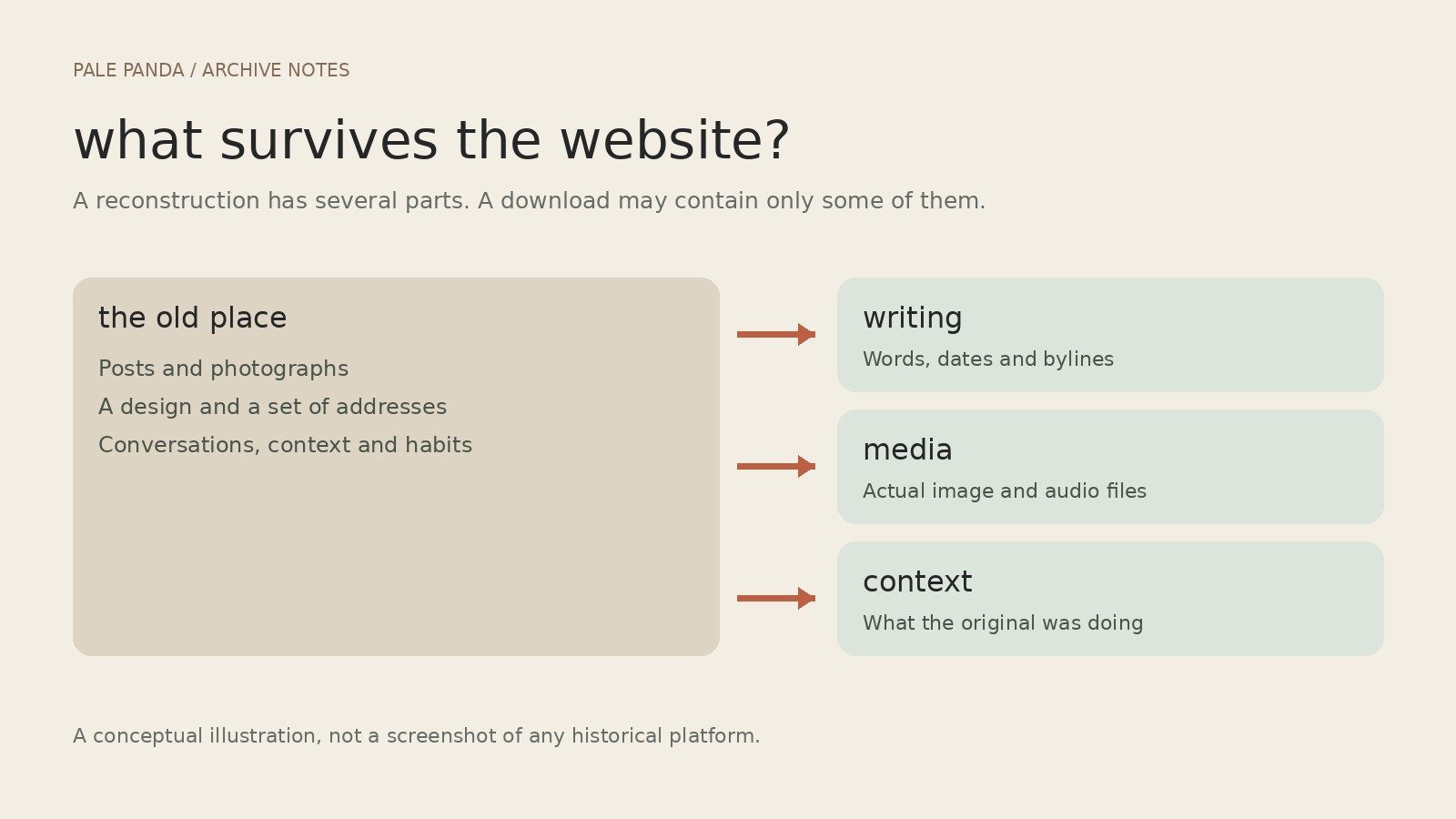
WordPress.com’s export documentation, checked in October 2026, gives a useful concrete example. Its content export contains posts, pages, comments and references to media. It does not contain the actual image files, the theme or design customizations. Images must be copied separately or fetched during the import while the source remains accessible. A successful download can therefore be one part of a recovery, rather than proof that everything is safe. The distinction is spelled out in WordPress.com’s export guide.
It is easy to understand how this gets missed. A file called an export feels reassuringly complete. Open it and the sentences are there. The photograph may be there only as an address. If the address stops working, the file has preserved a very precise description of where the photograph used to be.
The same problem applies to a post built around somebody else’s embedded video. Saving the surrounding paragraph does not put the video in a box with it. Links and embeds are useful connections, but they are also dependencies.
save the boring parts
A sensible archive keeps more than the prose: original media where you have the rights, publication dates, bylines, source addresses and enough notes to distinguish a missing file from something deliberately removed. Then someone has to open the recovered pages and check them. Particularly the pages with images. Particularly the page you assumed would be fine.
There is a limit to restoration. A download cannot reconstruct every conversation around a post, or make an old recommendation current. It should not quietly turn somebody’s 2009 opinion into their latest position, either. Dates are part of the writing.
That is a useful standard for bringing Pale Panda into this blog. Keep the authorship. Keep the historical context. Let a new essay be visibly new rather than sanding the year off the old one. Repair what can be repaired without pretending the original room is still there.
The underdogs roundup was looking for the next good place to put things. Its more durable question is what you can take with you when that place changes its mind.
sources & credits
Original writing: Andrew Schwegler, The Social Media Underdogs (Pale Panda, October 13, 2009; recovered post 2301) and Virb Gives Up On Trying to be Facebook (2010; recovered post 2309). Technical reference: WordPress.com, “Export your website’s content”, checked October 24, 2026. This is a new adaptation, not a verbatim restoration. Illustrations: original editorial diagrams prepared for tacobout; these are explanatory graphics, not historical website screenshots.
In The Talented Mr. Ripley, attraction comes with an excellent travel budget. Anthony Minghella’s 1999 film places Tom Ripley beside Dickie Greenleaf,… Tune in & read →
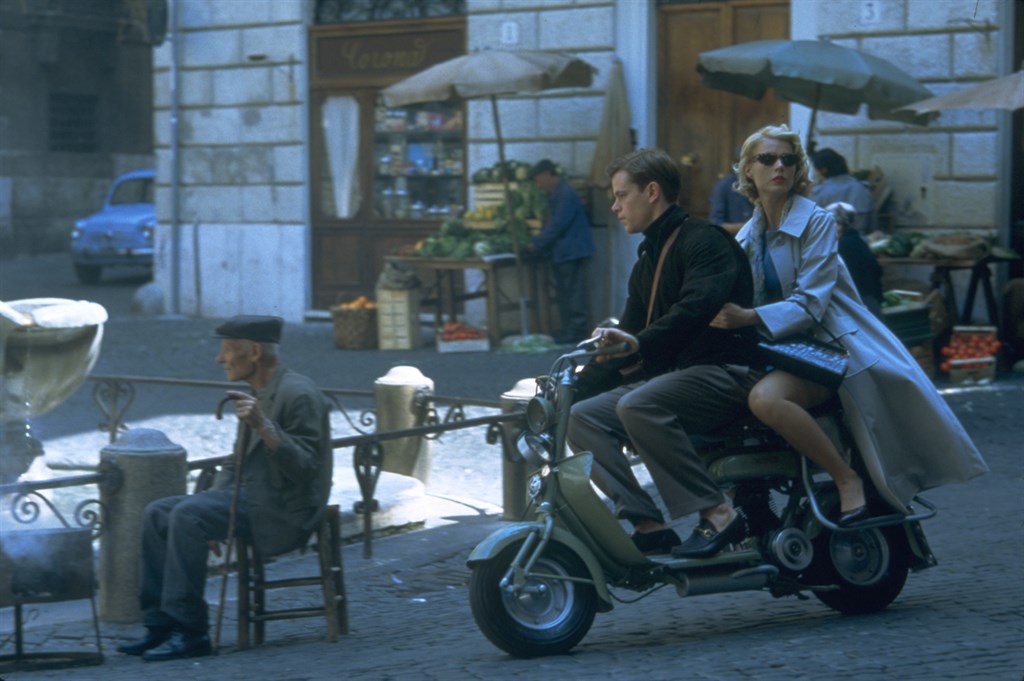
In The Talented Mr. Ripley, attraction comes with an excellent travel budget. Anthony Minghella’s 1999 film places Tom Ripley beside Dickie Greenleaf, a wealthy American enjoying Italy on his father’s money. Tom wants Dickie. He also wants the life in which being Dickie appears so effortless.
That overlap is more unsettling than a simple unrequited crush. Wanting someone and wanting to be someone can look remarkably similar from a distance: study his clothes, learn his tastes, arrange to be where he is. The difference becomes harder to ignore when admiration starts behaving like a claim of ownership.
Paramount’s synopsis explicitly identifies both Tom’s attraction and his envy. Neither needs to be reduced to a diagnosis of queer desire. The film’s useful discomfort is more specific: what happens when intimacy is confused with admission to a better class of life?
Jude Law’s Dickie is the invitation; Matt Damon’s Tom is the person reading the fine print. The seduction includes beauty, but also leisure, money and the apparent freedom not to explain yourself.
The poster makes that imbalance visible before the story begins: Tom’s face dominates the foreground while Dickie and Marge occupy the warmer, apparently easier world behind him. It sells proximity and separation in the same image.
A handsome man is one thing. A handsome man who seems exempt from consequences is a considerably more dangerous sales pitch.
Drag Race UK’s BBC farewell, a faster Xbox app, Netflix’s record-label family drama, and Latino voters who were not a permanent acquisition. Tune in & read →
A television institution changes addresses, a game launcher remembers it is supposed to launch games, and a record-label drama arrives with three generations of management problems. Friday is keeping itself occupied.