

Tom of Finland: drawn, not discovered
The Tom of Finland Foundation identifies the artist as Touko Laaksonen and traces his public byline to 1957. His muscular men are constructed fantasies, not neutral descriptions of what gay men should look like. That distinction makes the work more interesting: exaggeration becomes something to read, not a body standard to pass. The foundation’s history is a better doorway than an unattributed crop circulating online.
The foundation’s biography contains adult sexual material.
No Straight Lines
Queer comics did not begin when a mainstream publisher discovered an inclusive marketing opportunity. No Straight Lines: Four Decades of Queer Comics, edited by Justin Hall, is a route into the work that was already happening.
The Fantagraphics anthology brings decades of LGBTQ cartooning into one collection. Its value is not just historical reassurance that queer people were there. It gives different voices and drawing styles space beside one another instead of asking one agreeable image to stand in for everybody.
That is also the pleasure of an anthology as a discovery tool. You do not have to turn a first encounter into an exhaustive syllabus. Follow the line, the joke or the way a page addresses its reader. Then learn the name of the person who made it.

For a companion route, Vivian Kleiman’s documentary No Straight Lines focuses on five artists, including Alison Bechdel, Jennifer Camper, Howard Cruse, Rupert Kinnard and Mary Wings. The book and film are related projects, not interchangeable editions.

The documentary’s press photographs put faces beside the ink: the 1993 OutWrite group includes Jennifer Camper, Diane DiMassa, Alison Bechdel, Rob Kirby, Joan Hilty and Howard Cruse. The separate Cruse-and-Gay Comix image also makes a useful visual argument. A closet literally watches a man outside it; the page knows exactly what it is doing.
This is an after-dark shelf pick with a little ink under its nails: less about finding a respectable origin story, more about noticing how many people built their own space to speak.
The anthology at Fantagraphics · Documentary information at PBS.
Scissor Sisters: I Don’t Feel Like Dancin’
A small comic contradiction for the closing track: a dance-pop song whose title declines the invitation. I Don’t Feel Like Dancin’ is listed on the band’s official site and has an official artist-channel video, with Polydor credited. Put it beside the comics as another example of presentation refusing to sit quietly behind the message. The title says no. You can take that under advisement.
Official Scissor Sisters video.
image credits
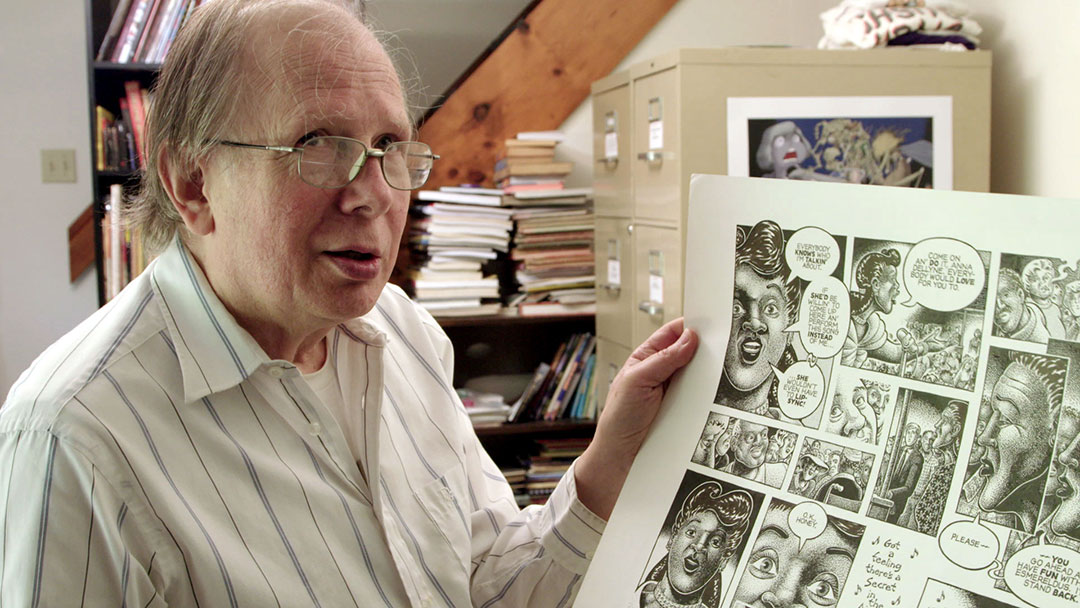
Featured: Howard Cruse with a Stuck Rubber Baby page. Body: Howard Cruse and Gay Comix no. 1 (cover illustration ©1980 Rand Holmes); OutWrite conference, 1993. All three are publicity images for the documentary No Straight Lines, courtesy Compadre Media Group / The Film Collaborative’s web press pack, not pages reproduced from the anthology.


leave a reply