


the least realistic thing in a game about cleaning is that the job can be finished. the dirt comes off, the game acknowledges your contribution, and nobody walks into the room holding a bowl of cereal. an extraordinary piece of speculative fiction.
the joke about chore games is usually that somebody has paid money to do imaginary work. fair. the yard-work simulator situation remains very funny. but the more interesting part is the contract. these games can tell you what needs doing, show you that it is getting done, and agree on a point at which you may leave. actual housework has historically been evasive about all three.
the van is eleven percent clean
 From my media collectionPowerWash SimulatorDeveloper: FuturLab • Publisher: FuturLab • Platform: windows • Year: 2022View on Trove
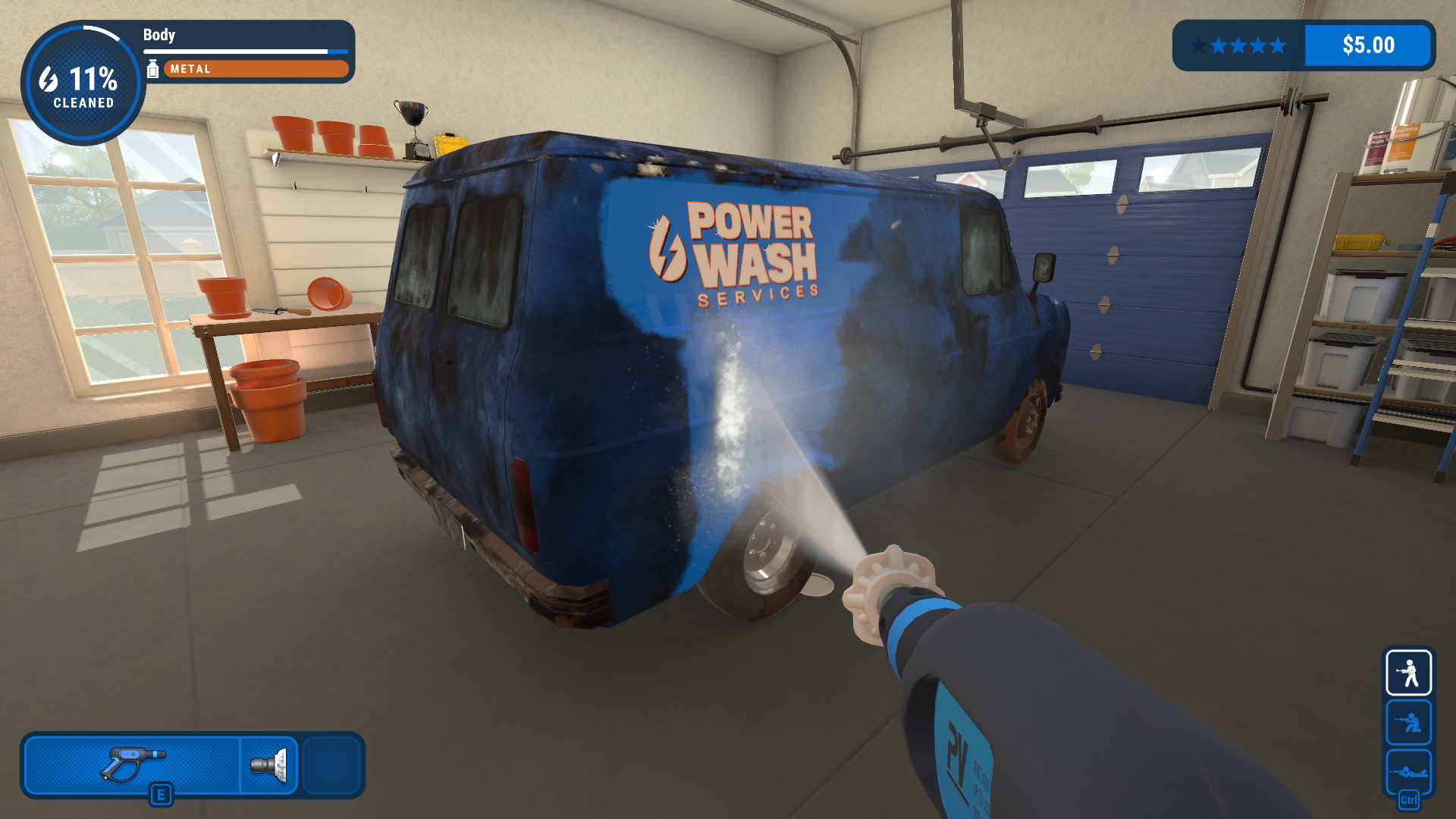
look at the featured PowerWash Simulator screenshot. the blue van is partly filthy, partly blue, and the display says eleven percent cleaned. there is even a separate bar for the body of the vehicle. the evidence of effort is sitting right next to the effort. you do not have to remember what it looked like before, explain how much you did, or defend the decision to start with that particular patch.
the game’s store description explicitly offers cleaning without time pressure or a final score, alongside separate challenge modes for anyone who wants those constraints. that distinction matters. the basic appeal can survive without a supervisor. the van has a problem; you have a hose; this relationship has excellent communication.
a real clean surface is mostly an absence. nothing happened here today, visually speaking, because somebody made sure nothing remained. a game can turn that invisible maintenance into a visible event. every newly blue strip of van is a tiny before-and-after photograph that you are operating.
the drawer has agreed to terms
 From my media collectionA Little to the LeftDeveloper: Max Inferno • Publisher: Secret Mode • Platform: windows, mac • Year: 2022View on Trove

A Little to the Left makes the agreement smaller. here is a drawer. here are its objects. there is a satisfying arrangement to discover, sometimes more than one. the screenshot’s compartments practically advertise their intentions. scissors and batteries have been invited into a world where the available space is somebody else’s design problem.
an actual junk drawer contains an unlabelled key and a cable that might still be important. putting them away requires decisions about an entire household’s past and possible future. the puzzle gets to edit that down to shape, size, order. a little rectangle of solvable confusion. its cat can interfere, but at least the cat is credited as part of the game.
there is a useful limit to this theory: the game also offers a daily puzzle. even fictional tidying can become an appointment. the appeal depends on which part you choose to engage with. a finite drawer is a lovely proposition. an obligation to maintain a streak is a separate negotiation.
please let the box stay empty
 From my media collectionUnpackingDeveloper: Witch Beam • Publisher: Balor Games • Platform: windows, mac, linux • Year: 2021View on Trove

Unpacking stretches the idea across eight moves. possessions come out of boxes and find places in rooms, with no timers or scores. the objects also carry a life through those moves. a shirt, a toy, a book: ordinary belongings get enough attention to become the story.
it even offers an “allow items anywhere” option that removes the placement puzzle. the player can decide how much judgment belongs in this particular household. imagine the possibilities if a cupboard had a setting.
none of this requires turning leisure into self-improvement. the game library still isn’t homework. you can abandon the fictional cleaning too. but for a while, these games offer work with unusually legible boundaries: an object, a manageable mess, a response. the room fits on the screen. the box can become empty. somebody has finally written a definition of done that does not include checking the laundry.
Featured screenshot: FuturLab / PowerWash Simulator, via Steam.


leave a reply