CHANNEL ARCHIVE

Culture

Dispatches, commentary, and media logs from the open web.

  • android made an entrance; artoo supplied the voice

    android made an entrance; artoo supplied the voice

    November 5 brings Android’s announcement anniversary, the organizer behind the Gunpowder Plot, and the surprisingly human half of R2-D2. Read more

    A few things worth knowing · November 5, 2026

    A mobile platform’s birthday, a conspiracy with misleading top billing, and the human behind a very opinionated robot.

    on this day: android made the announcement before the apps

    Google’s current green Android robot head with two antennae and black eyes.

    Android™ was announced on November 5, 2007, nineteen years ago today. Google’s Dan Morrill later recalled hearing Andy Rubin and Eric Schmidt introduce it, with the first early-look software development kit still a week away. This anniversary belongs to the platform’s announcement, not the arrival of a finished handset in stores. Even its birthday comes with a version distinction. Source: Android Developers.

    on this day: guy fawkes was not the project manager

    The Gunpowder Plot targeted the opening of Parliament on November 5, 1605, but Robert Catesby was its central organizer. Guy Fawkes was guarding the explosives beneath the House of Lords when the plot was uncovered the night before. He had been posing as a servant under the name John Johnson. History kept the better stage name, while Catesby’s leadership became the part that needs explaining. Source: UK Parliament’s account of the plot and Fawkes biography.

    evergreen: artoo was half synthesizer, half man making noises

    Ben Burtt’s first attempts at R2-D2 sounded too electronic to convey much feeling. The solution was a roughly equal blend of synthesizer sounds and Burtt’s own vocal inflections, giving the droid a performance rather than just a collection of beeps. Chewbacca took the opposite route: Burtt assembled animal recordings, including bears, badgers and walruses, into emotionally organized pieces. One character needed a human; the other needed a small zoo. Source: StarWars.com.

    Burtt explains the Chewbacca process in the official archive interview:

    Image credits: current Android robot artwork, Google, via Android Developers; it is not a 2007 illustration. The Android robot is reproduced or modified from work created and shared by Google and used according to terms described in the Creative Commons 3.0 Attribution License. Artwork unmodified. Android is a trademark of Google LLC. Video: Lucasfilm/Star Wars, linked from its official sound-effects feature.
  • 2
    kinect turns sixteen; the comet supplied its own special effects

    kinect turns sixteen; the comet supplied its own special effects

    November 4: Kinect reaches its sixteenth anniversary, EPOXI visits a very active comet, and Nintendo’s playing-card years stretch much further back than… Read more

    a few things worth knowing · wednesday, november 4, 2026

    November 4, 2010 was busy: Xbox asked people to become the controller, and a spacecraft visited a comet with excellent stage presence. Two anniversaries, followed by an evergreen detour into Nintendo’s considerably less electronic beginnings.

    today in history: kinect turns sixteen

    Kinect for Xbox 360 launched in the United States on November 4, 2010. Microsoft’s pitch was controller-free play: the sensor tracked body movements and gestures, with voice commands joining the performance. The living room had acquired a motion-capture department.

    Microsoft Research’s first-anniversary account credits work on audio, skeletal tracking, and facial recognition. That is the interesting engineering underneath the waving: the system had to turn a person’s movements into something software could use. Sixteen years later, “be the controller” still sounds like a job description that should come with breaks. Microsoft’s anniversary account · the original launch announcement.

    today in history: the comet supplied its own special effects

    On the same date in 2010, NASA’s EPOXI mission flew past comet Hartley 2. This was the reused Deep Impact spacecraft, which had already visited Tempel 1 in 2005. A second comet was a fairly ambitious encore.

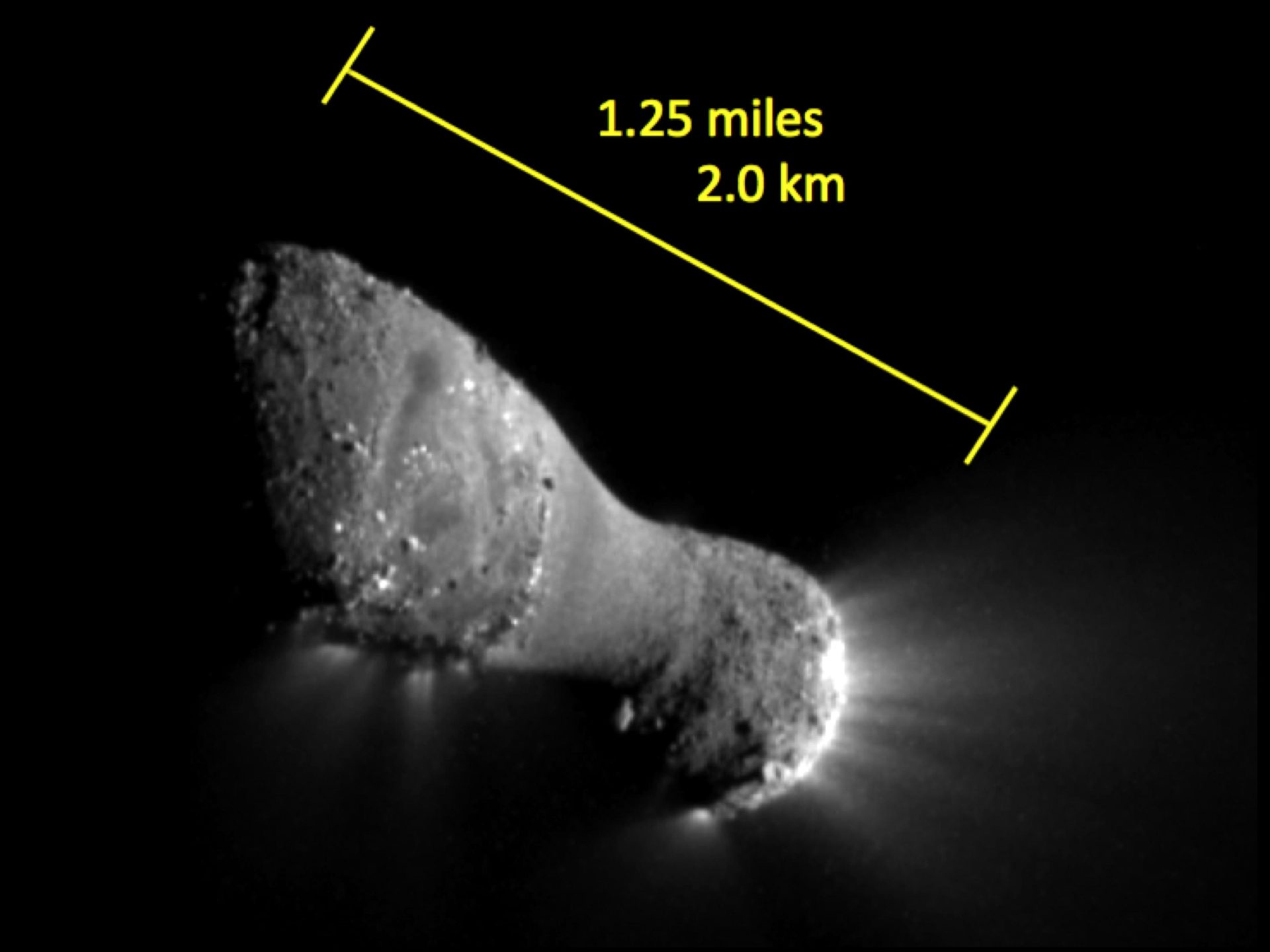
    Hartley 2’s nucleus is roughly two kilometers long, with rough ends and a smoother, narrower middle. The mission found carbon dioxide driving icy grains out into the surrounding cloud. A small object could put on a surprisingly elaborate production. NASA/JPL’s mission account · the full-nucleus photograph.

    Enhanced close-up of one end of comet Hartley 2, with bright jets streaming from its surface and a half-mile scale marker.

    The close-up above was enhanced by the mission team to make the jets easier to see. They emerge from both the sunlit and dark sides, and along the boundary between them. The comet did not need an effects budget. NASA’s image explanation.

    evergreen detour: nintendo’s first hardware was a deck of cards

    This one has no November 4 anniversary attached. Nintendo’s company history begins in 1889, when Fusajiro Yamauchi started making and selling hanafuda playing cards in Kyoto. The business was already decades old when it began selling Disney-character cards in 1959.

    Its first home video-game machines, TV Game 15 and TV Game 6, arrived in 1977; the Family Computer followed in 1983. That is 94 years between the first cards and the Famicom. A long development cycle, even allowing for the change in medium. Nintendo’s company timeline.

    Image credits: Hartley 2, PIA13575 (featured), and the enhanced jet detail, PIA13574, NASA/JPL-Caltech/UMD. Both photographed November 4, 2010; displayed at reduced size with the mission’s scale markers retained. Used editorially under JPL’s image-use policy. No endorsement implied.

    Fediverse Reactions
  • 1
    venus handled the connection; dorothy took television

    venus handled the connection; dorothy took television

    November 3: Mariner 10 launches toward two planets, The Wizard of Oz reaches television, and Venus takes longer to spin than to… Read more

    a few things worth knowing · november 3 edition, published november 4, 2026

    A spacecraft borrows a planet, Dorothy gets a television audience, and Venus makes a perfectly ordinary calendar difficult. Two November 3 anniversaries, followed by one evergreen detour.

    november 3 in history: venus provided the connection

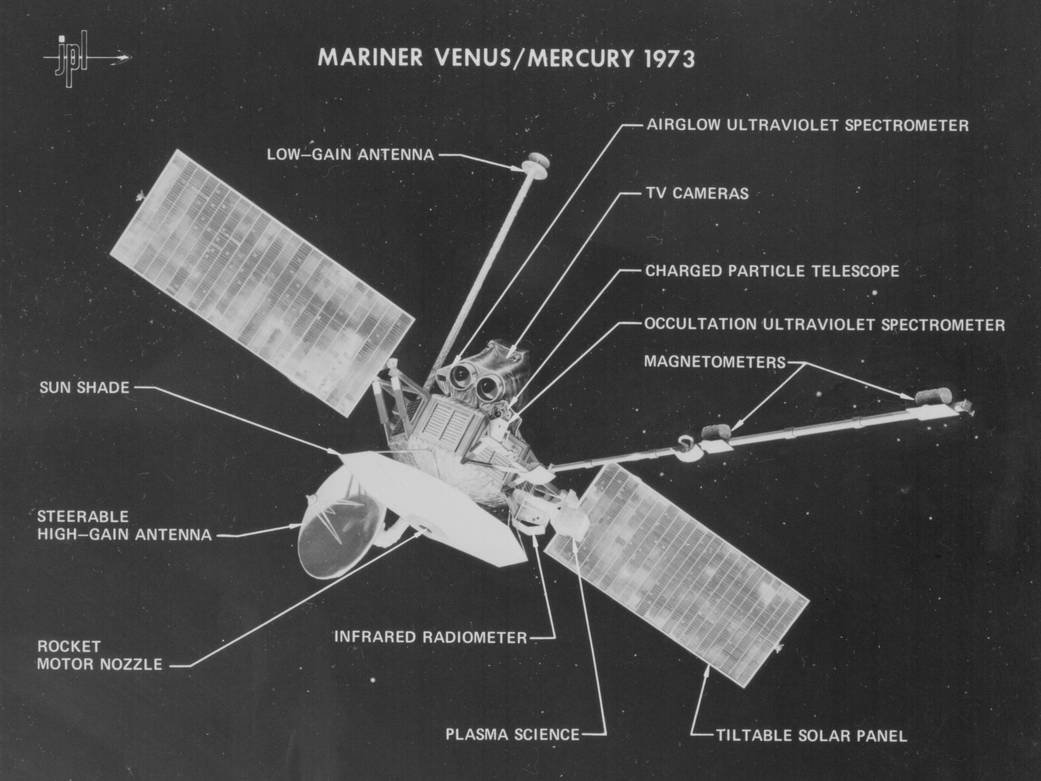
    On November 3, 1973, Mariner 10 launched from Cape Canaveral toward Venus and Mercury. Its route used the gravitational pull of Venus to redirect the spacecraft toward Mercury, saving the mission from needing a larger rocket and more fuel. A connecting flight with unusually good orbital mechanics.

    It became the first spacecraft to use one planet’s gravity to reach another. After its February 1974 Venus encounter, it passed Mercury three times in 1974 and 1975. The destination was new; the spacecraft still came back for another look. Mission history · Smithsonian’s spacecraft record.

    november 3 in history: dorothy moved into the living room

    The Wizard of Oz had its first television broadcast on November 3, 1956. PBS’s American Experience documentary traces how repeated television airings helped make the story a household ritual.

    That is a different anniversary from the film’s theatrical debut. The yellow brick road had acquired a route through the living room, with considerably less travel involved. Seventy years later, the distinction between a movie and the way people first encountered it still matters. American Oz, opening transcript.

    evergreen detour: venus takes its time turning around

    Color-enhanced ultraviolet view of Venus showing sweeping blue-white cloud bands against black space.
    Venus photographed by Mariner 10 on February 5, 1974, with color enhancement of ultraviolet imagery. NASA.

    This has no November 3 anniversary attached. Venus takes about 243 Earth days to rotate once, but roughly 225 Earth days to orbit the Sun. Its spin takes longer than its year.

    The careful wording matters: a full rotation is not the same interval as one sunrise to the next. Venus also spins in the opposite direction to Earth, so the Sun would rise in the west. The calendar committee would like a word. Venus facts and rotation.

    Image credits: Mariner 10 instrument diagram, NASA/JPL; color-enhanced ultraviolet image of Venus from February 5, 1974, NASA. Editorial use under NASA’s media guidelines. No endorsement implied.

    Fediverse Reactions
  • 1
    the space station got roommates and a hot-water dispenser

    the space station got roommates and a hot-water dispenser

    November 2: the space station welcomes its first resident crew, the Morris worm overwhelms early internet computers, and an octopus puts three… Read more

    a few things worth knowing · monday, november 2, 2026

    Two November 2 anniversaries: moving into an orbiting laboratory, and discovering that a network can have a very bad evening. Then an octopus contributes some unusually thorough plumbing.

    today in history: the space station got roommates

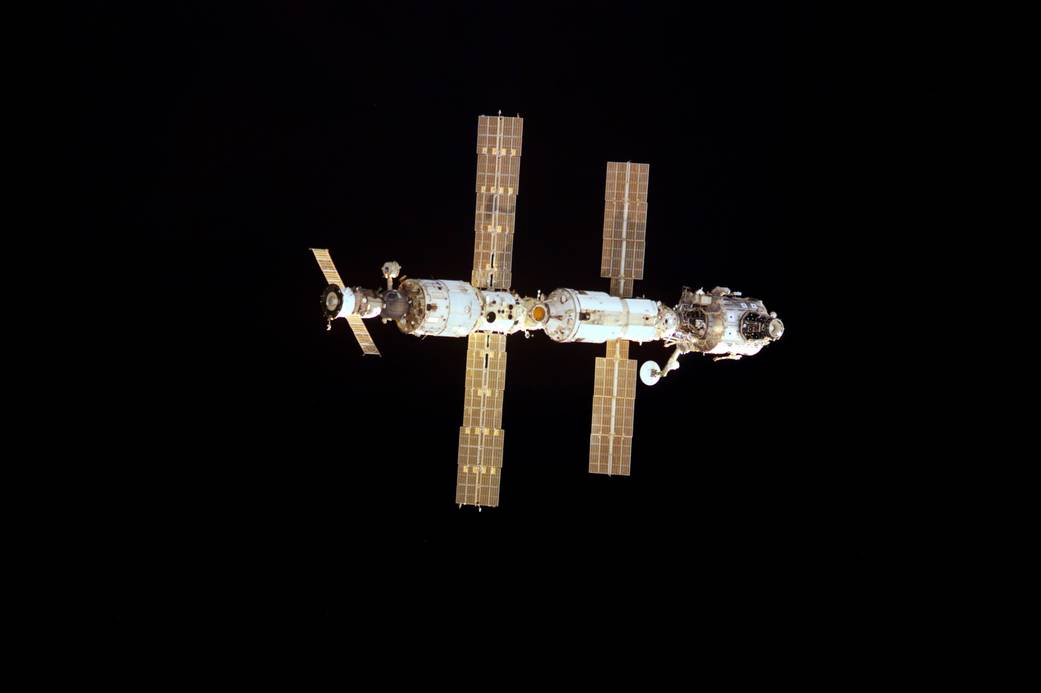
    On November 2, 2000, NASA astronaut Bill Shepherd and Russian cosmonauts Yuri Gidzenko and Sergei Krikalev arrived at the International Space Station as its first resident crew. Twenty-six years ago today, Expedition 1 began turning a construction project in orbit into a working home.

    The early to-do list included activating the hot-water dispenser and the toilet. Oxygen generation and carbon-dioxide removal followed over the next few days. Even a historic arrival needs someone to sort out the utilities. NASA’s account of the crew’s arrival.

    The featured photograph shows the station on December 2, 2000, a month into that first expedition. It was taken from shuttle Endeavour during its approach, before the station grew into the sprawling structure familiar from later photographs. NASA’s image record.

    today in history: the network had a very bad evening

    On November 2, 1988, the program now known as the Morris worm began spreading from a computer at MIT. It overwhelmed vulnerable computers on the early internet. The FBI estimates that about 6,000 of the roughly 60,000 connected machines were affected within 24 hours.

    The worm did not need to destroy files to cause trouble. Systems slowed, mail was delayed, and some institutions disconnected from the network. All of this happened before the World Wide Web. The internet had already developed a troubleshooting backlog. The FBI’s history of the Morris worm.

    one evergreen detour: the octopus has assigned each heart a job

    Close view of a pale purple octopus on the seafloor near Shallop Canyon, with curled arms and rows of suckers visible.

    This one has no November 2 anniversary attached. An octopus has three hearts: two push blood through the gills, while the third circulates oxygenated blood around the body.

    Its oxygen-carrying protein, hemocyanin, contains copper rather than the iron in our hemoglobin, giving the blood its blue color. Three hearts and eight arms is quite a lot of equipment for an animal that can still look mildly inconvenienced by a camera. Smithsonian Ocean’s explanation of cephalopod circulation.

    Image credits: International Space Station, photographed December 2, 2000, NASA; used editorially under NASA’s media guidelines. Octopus near Shallop Canyon, NOAA, via U.S. Fish & Wildlife Service, public domain. Images shown at reduced display size without creative alteration. No claim to original U.S. Government works.

    Fediverse Reactions
  • 3
    hockney, weekend and a party worth remembering

    hockney, weekend and a party worth remembering

    David Hockney: a splash without a swimmer Start with David Hockney’s A Bigger Splash. His foundation’s 1967 chronology places the painting alongside… Read more

    David Hockney: a splash without a swimmer

    Start with David Hockney’s A Bigger Splash. His foundation’s 1967 chronology places the painting alongside his continuing experiments with water, light and reflection. The absent swimmer is a useful prompt: desire can be suggested by a trace rather than a body placed in the middle of the frame. A pool, a disturbance, somebody just out of sight. Not every invitation needs to introduce itself.

    David Hockney’s A Bigger Splash: a white splash breaks a blue swimming pool beside a diving board and a modern house.

    Explore Hockney’s 1967 work.

    Weekend

    A one-night stand is often an ending, a joke or a complication. Andrew Haigh’s Weekend uses it as the beginning of a conversation.

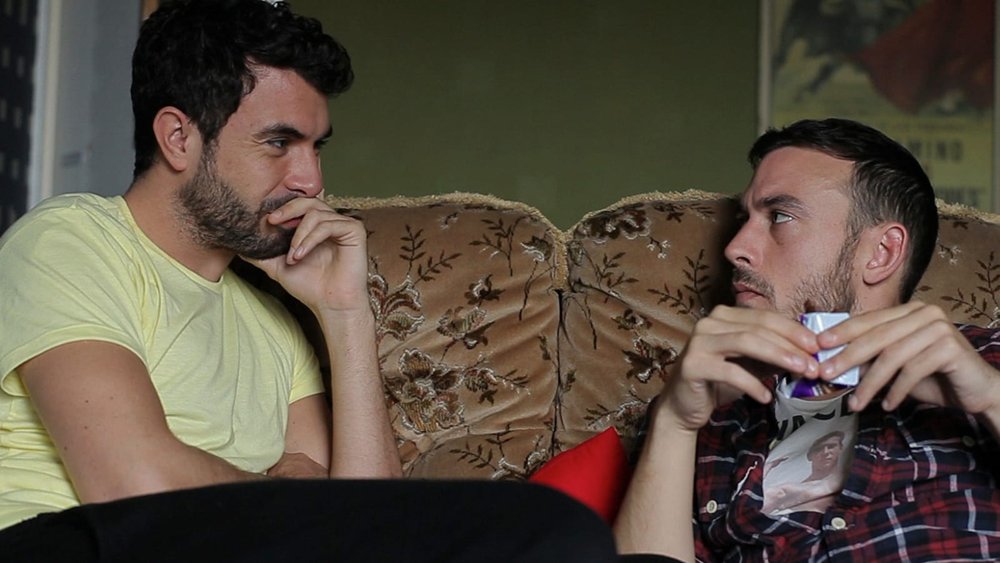
    The 2011 film follows Russell and Glen, played by Tom Cullen and Chris New, through a brief encounter that extends across a weekend. Its scale is small enough to make the question of what comes next feel very large.

    That is the reason to put it on an after-dark list. Not because a hookup needs romance to become respectable, but because physical intimacy and emotional disclosure do not necessarily arrive in the same order. A stranger can know one part of you before he knows anything else.

    The useful thing to notice is what the premise refuses to rush past: the time after attraction has done its opening work. What can two people ask each other? Which version of themselves do they offer? How much can be said before the available time runs out?

    Criterion’s edition includes a conversation with Haigh specifically about the sex scenes, giving the curious viewer somewhere to take that discussion beyond the film. No grand claim about the definitive gay experience is necessary. Two men and a short stretch of time are plenty.

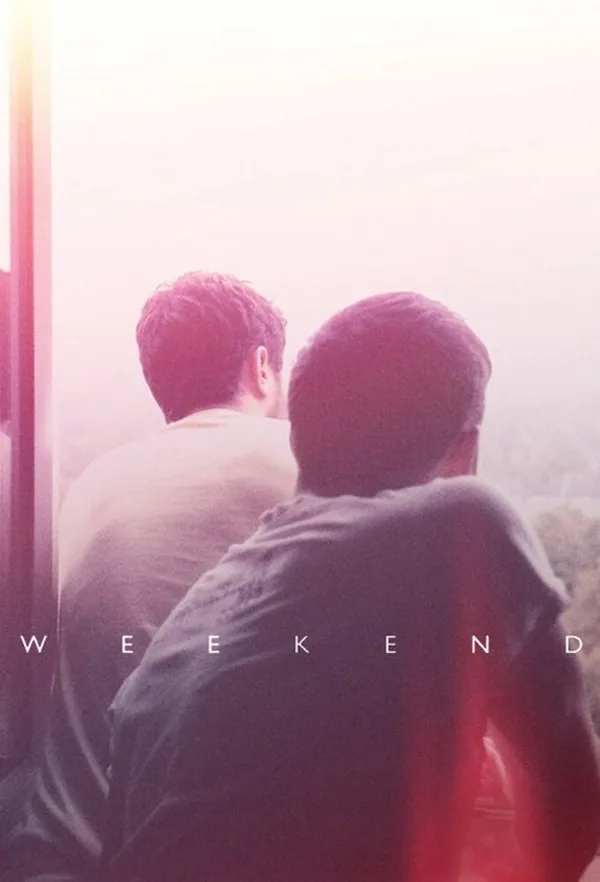
    Criterion’s Weekend cover shows two men resting together in bed beneath the film’s title.

    Explore Weekend at Criterion. Adult themes; this is an evergreen film pick, not a claim of free streaming access.

    From my media collectionWeekend (2011)Director: Andrew Haigh • Genre: Drama, Romance • Year: 2011Andrew Haigh’s film on Trove.View on Trove

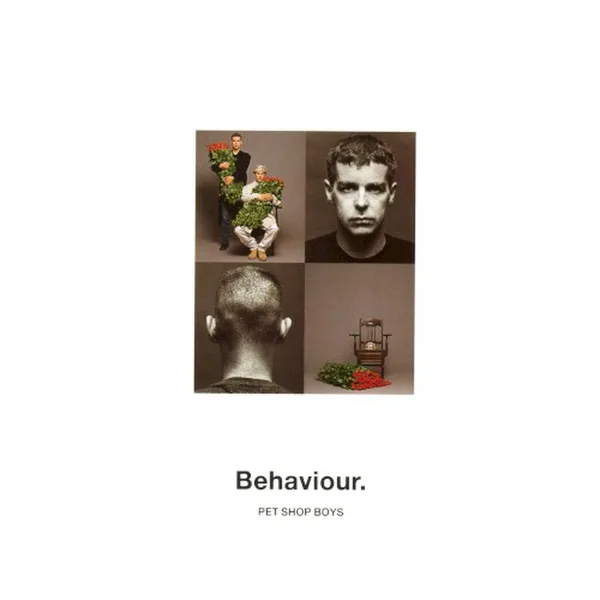
    Pet Shop Boys: Being Boring

    Finish with Being Boring. The band’s own site points to the corrected HD version of its official video, replacing an American edit that had been uploaded by mistake. That is a good reason to follow the artist’s link rather than whichever reupload turns up first. Pair it with Weekend as an invitation to think about time spent with other people, not a demand to produce a life lesson before the music ends.

    Watch through the official Pet Shop Boys page.

    From my media collectionPet Shop Boys — Behaviour (1990)Artist: Pet Shop Boys • Year: 1990The original album featuring Being Boring.View on Trove

    Image credits: David Hockney, A Bigger Splash, 1967, Tate, via The David Hockney Foundation; © David Hockney. Weekend still and edition cover by Jason Hardy via The Criterion Collection. Limited contextual images of the works discussed; no endorsement implied.

    Fediverse Reactions
  • 5
    the original pride flag made room for sex

    the original pride flag made room for sex

    The original eight-stripe Pride flag included pink for sex. Its material history is more interesting than a corporate rainbow. Read more

    gay by design · no. 1

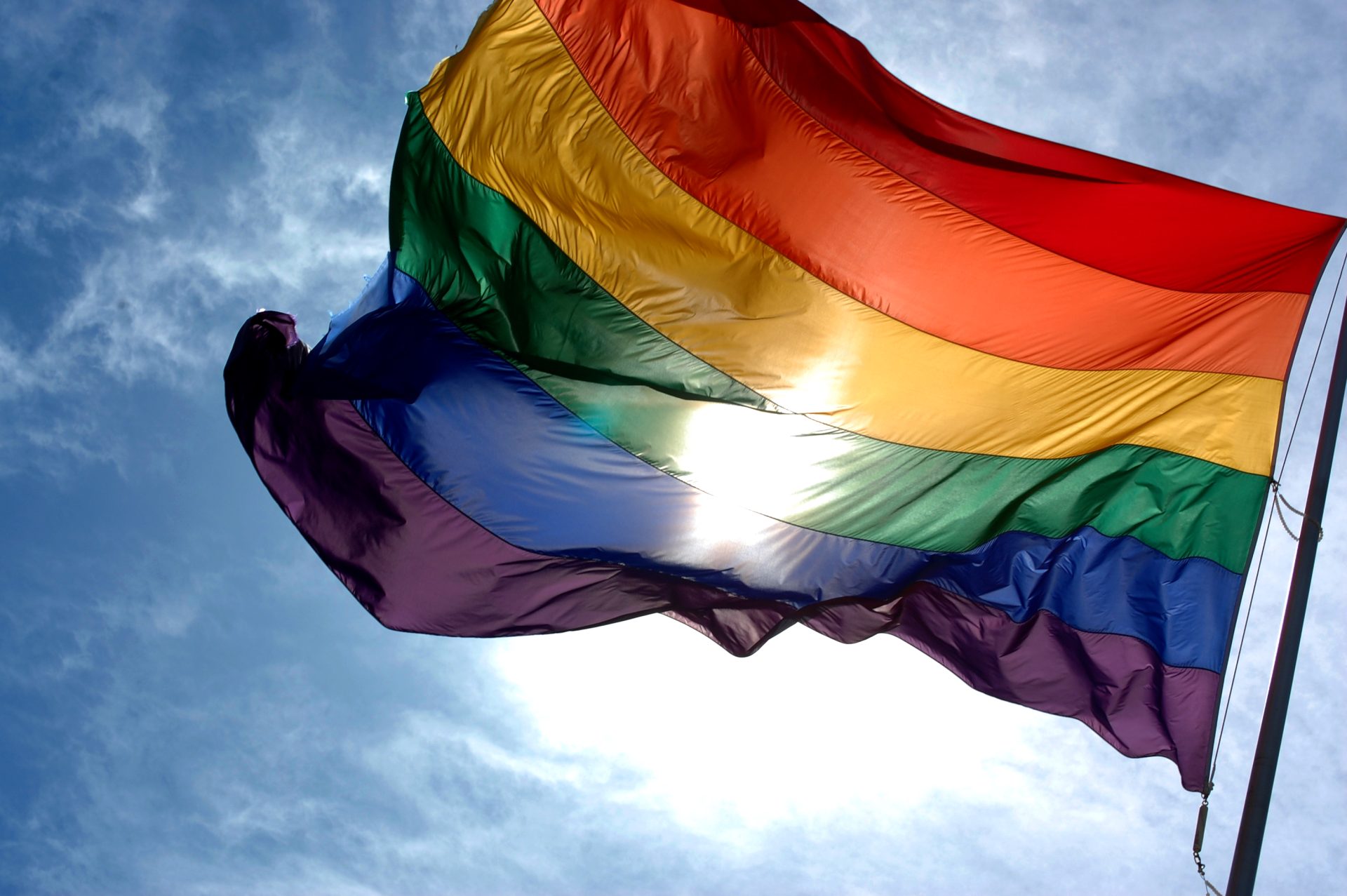
    The original rainbow Pride flag had eight stripes. Pink stood for sex. That seems worth remembering whenever the rainbow gets treated as a particularly cheerful corporate filing system.

    Eight horizontal rainbow stripes, including pink at the top and turquoise above blue.

    The GLBT Historical Society’s exhibition on Gilbert Baker preserves the practical history behind the symbol. The flags made for San Francisco’s 1978 Gay Freedom Day celebrations were handmade, collective undertakings. The archive credits collaborators as well as Baker, including Lynn Segerblom’s distinctive hybrid of rainbow and American-flag designs. This was not a logo that arrived fully formed in a conference room.

    The eight-stripe design assigned meanings across the spectrum: sex, life, healing, sunlight, nature, art and magic, serenity, and spirit. Pink and turquoise subsequently disappeared amid production and display considerations. The familiar six-stripe version is therefore also a story about making and using an object, not simply refining a mood board.

    The familiar six-stripe rainbow flag: red, orange, yellow, green, blue and violet.

    That is what makes the flag a satisfying piece of design. It has to survive outside the drawing. Fabric must be sourced, dyed, cut, sewn, carried and seen at a distance. It must remain legible when the wind folds half of it away. The physical demands are not an unfortunate interruption of the concept. They are where the concept becomes public.

    The horizontal bands give it unusual flexibility. There is no face to reproduce badly, no small lettering to disappear across a street, no elaborate emblem demanding a specialist printer. A child’s drawing and an enormous sewn banner can remain recognizably related without being identical objects. The design can move between scales and materials without losing its central gesture.

    Its usefulness also comes from what it does not insist on specifying. A flag can announce presence before it explains a position. That is different from a policy document, and it is not a defect. In a crowd, on a balcony or in a shop window, the first message is often simply that someone is here and willing to be seen.

    The original pink stripe keeps the history from becoming too antiseptic. Queer identity is not only a suitable sentiment for an annual brand calendar. Desire belongs in the picture. Remembering that does not require pretending one stripe could capture everybody’s relationship to sex. It means refusing to tidy the actual design history into something more comfortable for a sponsor.

    Baker’s own account connects the flag to community, liberation and the possibilities of a shared symbol. The object has since acquired many uses its makers could not control. That is the strange success of public design: people take it somewhere else.

    Looking back at the eight-color version is not a demand to choose one flag forever. It is a reminder that these objects have makers, materials and arguments inside them. The rainbow did not begin as a decorative background. People had to sew it, raise it and stand underneath it.

    Pink was not there by accident.

    sources

    GLBT Historical Society: Gilbert Baker online exhibition.

    Gilbert Baker Foundation: Rainbow Flag origin story.

    National Archives: Gilbert Baker and the Rainbow Flag.

    Image credits: Photograph: Ludovic Bertron, Rainbow flag and blue skies, CC BY 2.0. Eight-stripe flag: Gilbert Baker design, vector by Fibonacci, public domain. Six-stripe flag: Guanaco and subsequent Wikimedia Commons editors, unrestricted reuse. Designs shown as distinct historical versions, not archival photographs.

    Fediverse Reactions
  • 1
    eugen sandow understood the assignment before film had sound

    eugen sandow understood the assignment before film had sound

    Eugen Sandow, the early movie camera, and the surprisingly long career of a well-positioned shoulder. Read more

    thirst, with footnotes · no. 1

    Eugen Sandow did not need a dialogue coach. The shoulders were already making a statement.

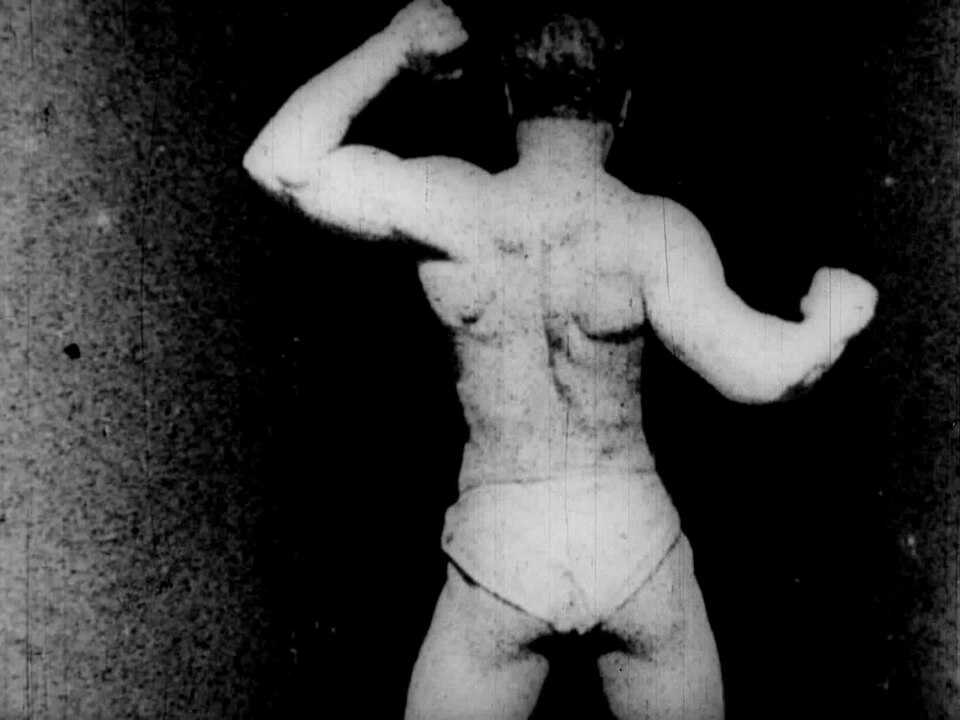
    The Library of Congress holds an American Mutoscope film of the strongman, dated approximately 1896, in which the entire attraction is a man presenting his physique to a camera. The catalogue gives its running time as 24 seconds at 16 frames per second. That is enough time to establish a remarkably durable screen genre: an attractive adult man turns slightly, and everybody agrees the technology was worth inventing.

    There is a useful distinction here between strength and its presentation. Lifting something proves that a body can do work. Posing makes that body an image. One is a demonstration; the other is an invitation to look. Sandow could supply both, but a camera is particularly good at the invitation.

    Look at the period photographs alongside the film. Benjamin J. Falk’s 1894 portrait places Sandow in a classical-looking pose, wearing a fig leaf. Napoleon Sarony’s cabinet portraits similarly turn the performer into a carefully arranged silhouette. Neither photographer is merely recording the circumference of a biceps. The angle of an arm, the distribution of weight and the outline against the background are the product.

    Eugen Sandow holds a classical bodybuilding pose in a full-length 1894 studio portrait.
    Eugen Sandow in a full-length posed portrait by Napoleon Sarony, approximately 1893.

    The classical reference performs a wonderful little administrative task. A nearly naked man can be introduced as an ideal of physical culture, a study in proportion, a living sculpture. Those descriptions do not make the attraction disappear. They give it a respectable hat. Occasionally the hat is the only substantial garment involved.

    That is the point worth keeping from the archive, rather than another argument about who invented the thirst trap. Desire does not arrive after lighting, posture and framing, like an inappropriate guest at an educational event. The arrangement of the image helps produce it. A body becomes a public spectacle through a sequence of choices about how it should be seen.

    The vaudeville advertising makes the other half of the business plain. An 1894 Strobridge lithograph promotes Sandow performing a “human dumbell” lift. There is a show to sell, not just an anatomical specimen to admire. The still photographs and the stage poster offer different versions of the same performer: ideal body and extraordinary act.

    An 1894 illustrated vaudeville poster advertises Sandow performing a human dumbbell lift.

    None of this requires assigning Sandow a sexuality, or pretending every member of his audience looked at him for the same reason. A queer reading belongs to the viewer; it is not a forged entry in the subject’s biography. The pleasure is in noticing how much room the pictures make for looking, despite all the industrious language around them.

    The technology has changed. The turn of the shoulder has had a very long career.

    look closer

    Sandow, American Mutoscope Company, approximately 1896 — Library of Congress. This is not the separate 1894 Edison film.

    Falk’s 1894 portrait — Library of Congress image and rights record via Wikimedia Commons.

    Sarony’s approximately 1893 portrait.

    The Sandow Trocadero Vaudevilles, 1894.

    Image credits: Featured image: frame from Sandow (1894), William Kennedy Laurie Dickson / Edison, Library of Congress, public domain. This is the earlier Edison film, not the c.1896 American Mutoscope film discussed above. Body images: Benjamin J. Falk, Eugen Sandow, 1894, Library of Congress, public domain; Strobridge Lithographic Company, The Sandow Trocadero Vaudevilles, 1894, Library of Congress, no known restrictions on publication. Napoleon Sarony, Eugen Sandow, approximately 1893, Library of Congress, public domain in the United States. Original compositions retained.

    Fediverse Reactions
  • 1
    the internet got two letters out before crashing

    the internet got two letters out before crashing

    October 29: ARPANET says LO, Galileo visits Gaspra, a ballpoint pen draws a crowd, and bats demonstrate what hands can do. Read more

    a few things worth knowing · thursday, october 29, 2026

    The internet’s ancestor gets two letters out, a spacecraft stops by a very lumpy rock, and a department store discovers that people will queue for a pen. Three October 29 anniversaries, followed by a bat fact with no calendar obligations. Halloween can have one useful contribution.

    today in history: october 29

    1. the internet’s ancestor crashed halfway through hello

    At 10:30 p.m. on October 29, 1969, UCLA programmer Charley Kline tried to log in to a computer at Stanford Research Institute, where Bill Duvall was at the other end. They were testing ARPANET, a predecessor of the modern internet. The intended command was LOGIN. The receiving system got LO, then crashed.

    Leonard Kleinrock’s account includes a scan of UCLA’s handwritten log. The full login worked about an hour later. Fifty-seven years on, “something historic happened, then we had to troubleshoot it” remains a convincing technology story. Kleinrock’s account and the original log.

    2. galileo’s jupiter trip included an asteroid appointment

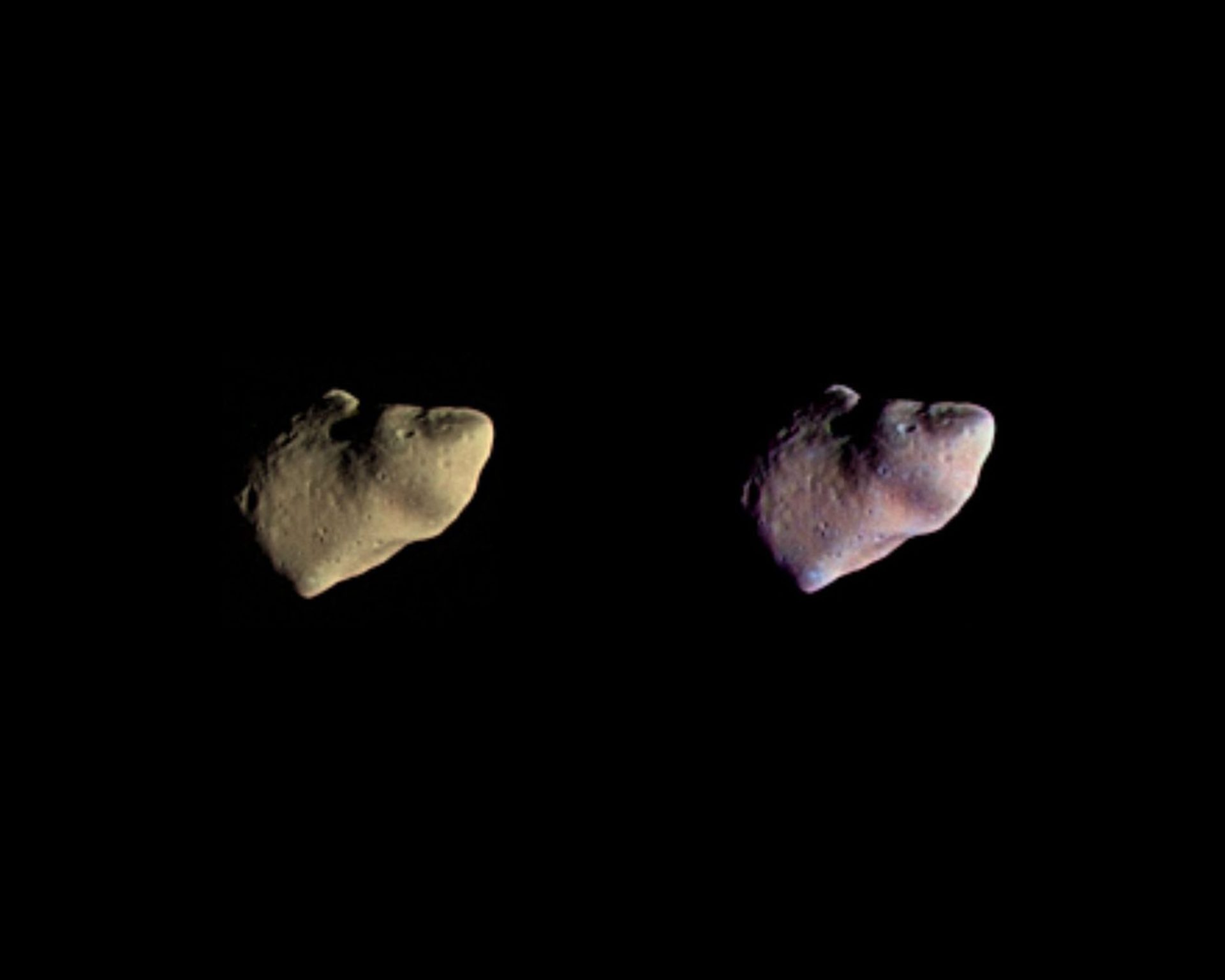
    On October 29, 1991, NASA’s Galileo made the first spacecraft flyby of an asteroid, passing roughly 1,600 kilometers from Gaspra. That was 35 years ago today. Jupiter was the main destination; the route still had room for an extremely consequential roadside attraction. NASA’s Galileo mission history.

    The two views at the top of this post show the same asteroid. The left is approximately true color; the right has been enhanced to make subtle differences easier to see. Both were assembled from images taken through violet, green and infrared filters during that encounter. Gaspra did not change outfits between photographs. NASA’s explanation of the image.

    3. a ballpoint pen once needed crowd control

    Macro photograph of the metal tip and tiny writing ball of a modern ballpoint pen.

    On October 29, 1945, Gimbels in New York began selling Milton Reynolds’s ballpoint pen. Thomas Whiteside’s 1951 account in The New Yorker describes 5,000 people waiting outside and 50 extra police officers sent to manage the crowd. The pen had a much more eventful retail debut than the one currently loose in your bag.

    That date marks the Gimbels launch, not the invention of the ballpoint itself. It is a useful reminder that the object we now borrow and forget to return once arrived with launch-day hype. Whiteside’s account, “The Amphibious Pen”.

    one evergreen detour: a bat wing is a very ambitious hand

    A Mexican free-tailed bat in flight with its wings spread against a black background.

    This one is not an October 29 anniversary. Bats belong to the order Chiroptera, a name meaning “hand wing.” Their wing membrane stretches between elongated finger bones, with movable joints that let them change its shape in flight. The National Park Service’s side-by-side anatomy diagram makes the family resemblance to a human arm unusually clear.

    Bats are also the only mammals capable of true powered flight. Flying squirrels glide; bats supply their own propulsion. The NPS page includes short footage of bats pursuing moths, which is a better demonstration of their agility than any plastic decoration presently hanging over a doorway. NPS: how bats fly, with diagram and videos.

    Image credits: Gaspra in approximately true and enhanced color, NASA/JPL/USGS, PIA00125, photographed October 29, 1991. UCLA Interface Message Processor, FastLizard4, CC BY-SA 3.0. Modern Bic Cristal tip (illustrative, not the 1945 Reynolds model), Stefan and Richard Hollos / Exstrom Laboratories LLC, CC BY 4.0. Mexican free-tailed bat, B.T. Hamilton / National Park Service, via USGS, public domain. Images displayed at reduced size; no creative alterations. No claim to original U.S. Government works.

    Fediverse Reactions
  • 2

    queer history needs an edit button

    The practical work of keeping queer history findable: sources, translations, pictures and metadata. Read more

    A hand picks up a Wiki Loves Pride sticker from a table of conference stickers and snacks.

    Read Jack Walker’s report on LGBTQ+ Wikipedia editors at Them.

    (more…)
    Fediverse Reactions
  • 1
    the gateway arch finished the group project

    the gateway arch finished the group project

    October 28: the Gateway Arch joins up, Lady Liberty turns 140, animation gets its day, and Venus refuses to hurry. Read more

    a few things worth knowing · wednesday, october 28, 2026

    An arch gets its final piece, a very large copper woman celebrates an anniversary, and animation predates the screen currently demanding your attention. Four useful detours for October 28; the last one leaves the calendar behind altogether.

    today in history: october 28

    1. the gateway arch finishes the group project

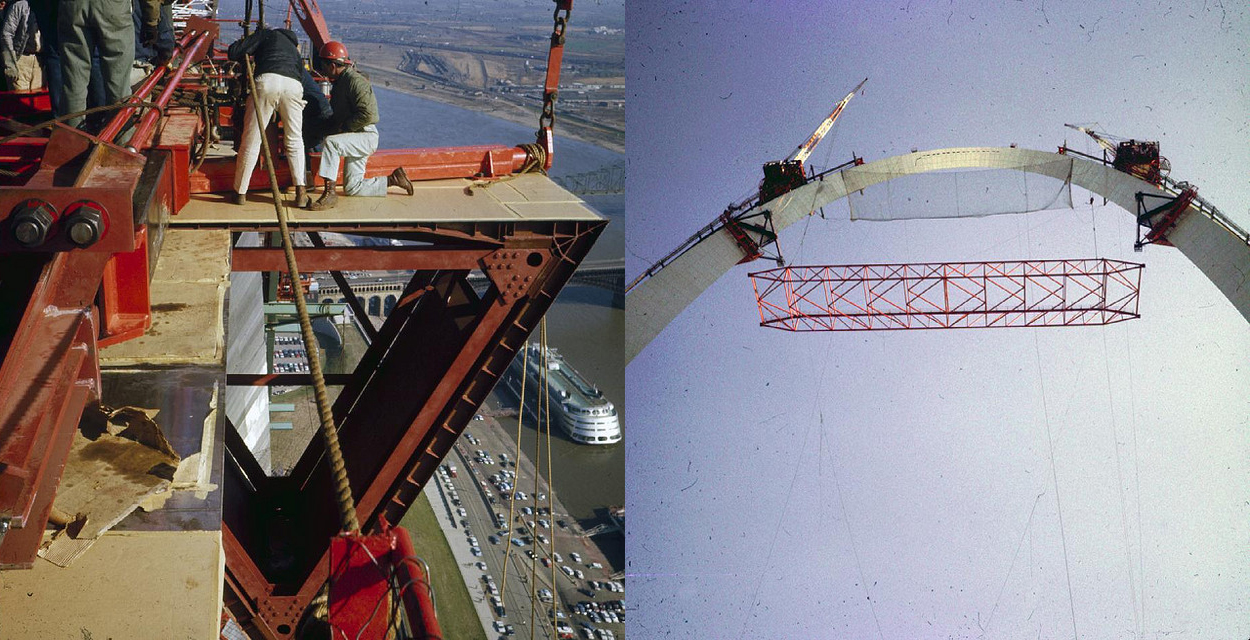
    On October 28, 1965, the Gateway Arch’s final section went into place, completing its exterior. Today marks 61 years since the two sides became one continuous monument. The archival photographs above make the last step look considerably less relaxing than the finished skyline suggests.

    Eero Saarinen’s design is 630 feet tall and 630 feet across at ground level. That tidy equality is easily missed when you are busy thinking about how someone had to join the top. National Park Service construction photographs · dimensions and history.

    2. lady liberty’s copper is surprisingly thin

    The Statue of Liberty and its pedestal silhouetted against an orange sunset.

    The Statue of Liberty was inaugurated on October 28, 1886, making this its 140th dedication anniversary. Its copper skin is only 3/32 of an inch thick—roughly 2.4 millimeters. Monumental presence; surprisingly economical outerwear.

    The familiar green is a patina formed as the copper oxidized, not the original paint job. The National Park Service notes that this coating helps protect the copper beneath it. Sometimes leaving the finish alone is the maintenance plan. NPS dedication history · materials and patina.

    3. animation’s big day began with an optical theatre

    On October 28, 1892, Émile Reynaud presented his Théâtre Optique in Paris. The international animation association ASIFA chose that anniversary for International Animation Day, which it established in 2002. The art form’s annual celebration points back to an inventor making projected pictures move, rather than a studio franchise.

    ASIFA’s definition makes room for clay, puppets, sand, paper and computers. “Animated” describes a way of making images, not a promise that the resulting film will babysit anyone. ASIFA on the anniversary and the medium.

    one evergreen detour: venus does not respect your calendar

    Bands of pale clouds cover Venus in a Mariner 10 spacecraft image.

    This is a bonus fact, not an October 28 anniversary: Venus takes about 243 Earth days to rotate once, but about 225 to orbit the Sun. One complete spin takes longer than its year. That is the precise version of the familiar “a day is longer than a year” fact; a rotation and a sunrise-to-sunrise day are different measurements.

    Venus also spins in the opposite direction from Earth, so the Sun would rise in the west and set in the east. A science-fiction setting can sound made up and still be the planet next door. NASA’s Venus facts.

    Image credits: Gateway Arch construction, JNEM Archives / National Park Service; Statue of Liberty sunset, National Park Service. No claim to original U.S. Government works. Venus, NASA/JPL-Caltech, Mariner 10.

    Fediverse Reactions