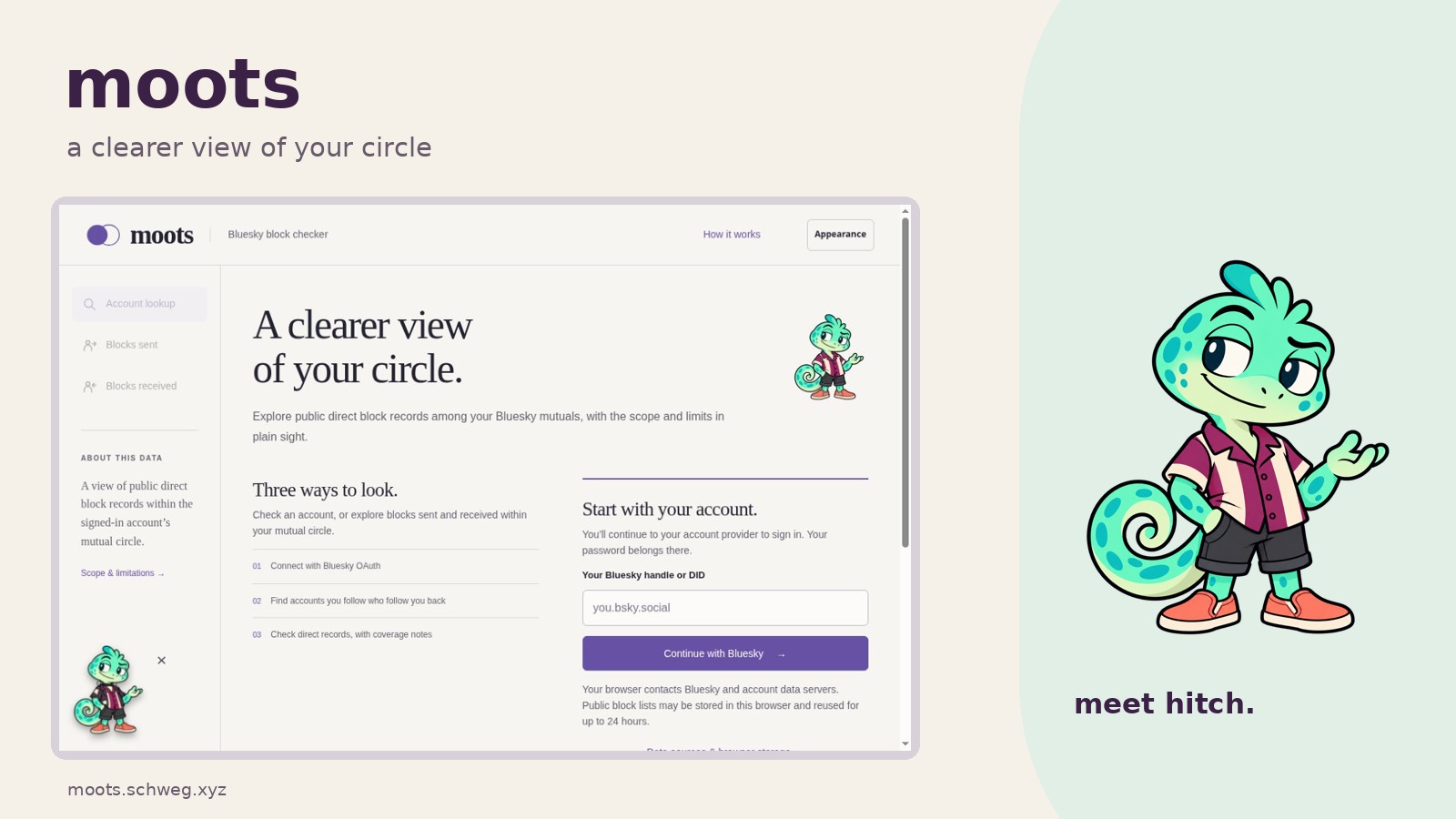

moots has a little gecko now. his name is hitch. he’s mint green, wears a plum-and-cream shirt, and has apparently decided that coral slip-ons are appropriate footwear for looking through public records.
he’s the new face of moots, my Bluesky block checker. this seems like a good excuse to explain what the tool actually does. the gecko will be supervising.
first, whose moots?
moots starts with the account you sign in with. your circle is the people you follow who follow you back. every view uses that circle, including when you look up somebody else.
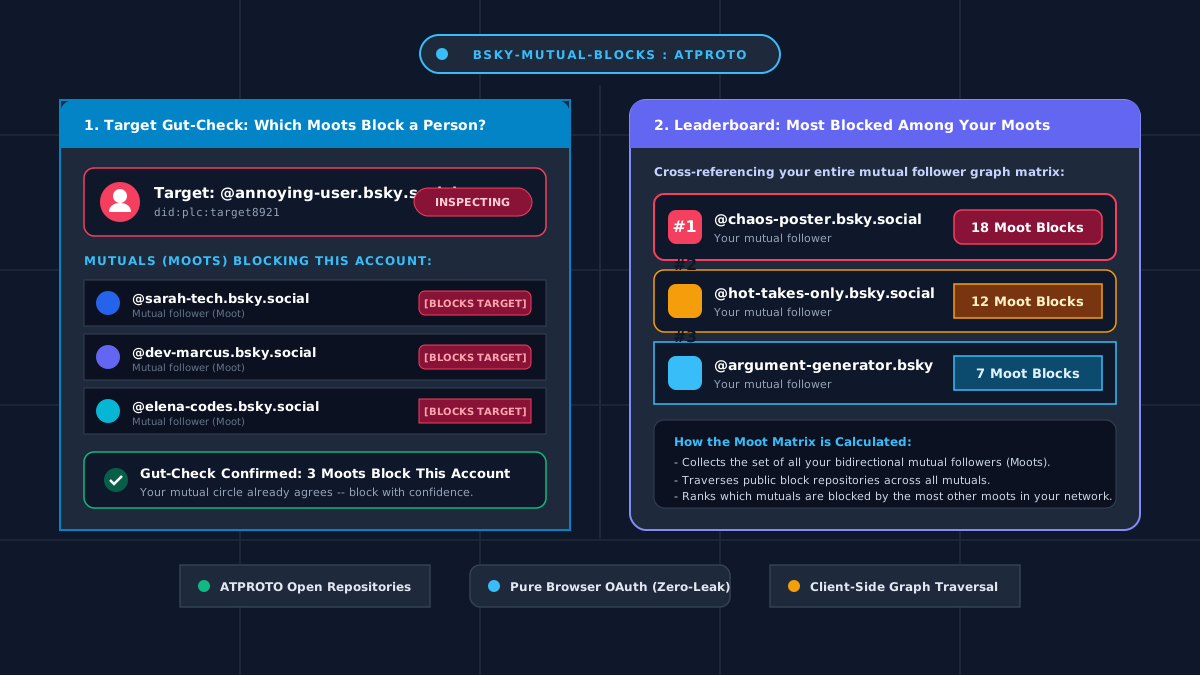
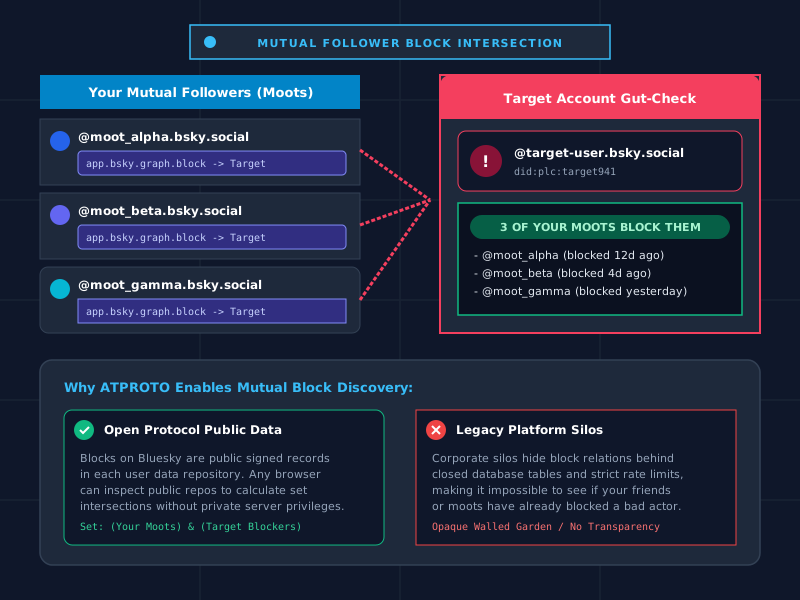
the tool reads public direct block records and lets you look at them three ways: which of your mutuals have a record blocking a particular account, which mutuals have sent blocks to others in your circle, and which have received them from others in that circle. those last two views stay inside your circle. nobody has been appointed commissioner of all of Bluesky.
1. start with your account
open moots.schweg.xyz, enter your full Bluesky handle, and choose Continue with Bluesky. a DID, the account’s persistent identifier, works too. most people can stick with their handle.

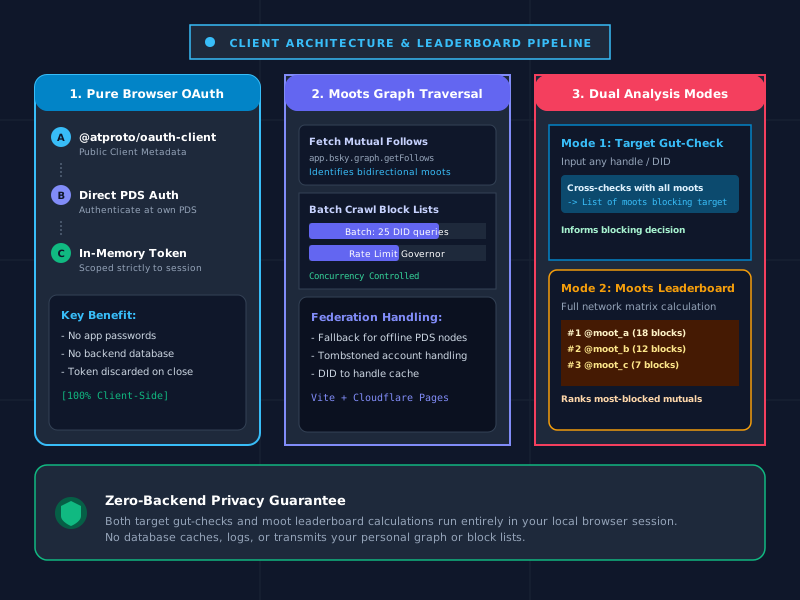
you’ll continue to your account provider to sign in through OAuth. read the authorization screen before approving it. your password goes to your provider; moots doesn’t ask you to make an app password. the current OAuth setup uses the transitional atproto transition:generic scope; review the permissions your provider shows before continuing.

2. choose what you want to check
Account lookup: enter the handle or DID of the account you want to check, then choose Check account. a matching row means someone in your mutual circle has a public direct block record naming that account. the direction is your mutual → the account you entered. entering somebody else’s handle doesn’t switch the scan to their mutuals.
Blocks sent: choose Scan blocks sent to see which accounts in your circle have direct block records naming other accounts in that same circle. open a row to see the accounts on the receiving end.
Blocks received: choose Scan blocks received to look in the other direction. a row’s count is how many other members of your circle have direct block records naming that account. open its details to see who those records came from.
the sent and received views sort by observed count. you can filter the results or change the sort. a bigger number still only describes the records found within this particular circle.

3. read the coverage before the conclusion
the results show how many mutuals were fully checked, how many were incomplete, and how many block lists came from the browser’s cache. a server can time out or hit a rate limit. an incomplete scan can miss matches, and counts may be lower than the full picture.
use Retry incomplete to try the unfinished accounts again, or Refresh circle & records to request a fresh circle and fresh records. cached lists can be reused for up to 24 hours; the results flag them and show the oldest cached list’s fetch time.
“nothing found” means nothing matched in the records available for that snapshot. list-based blocks and mutes are outside the scan. records can also change after you check.
the browser storage bit
the analysis happens in your browser, which contacts Bluesky, identity services, and the servers holding account data. those services may log requests. moots can’t promise an anonymous lookup.
successful block lists are stored in the browser and remain until overwritten or cleared, even after their 24-hour reuse window ends. the mutual-circle cache is reused for up to 15 minutes. signing out clears that circle cache, but leaves the stored block lists.
to remove cached scan data, open Data sources & browser storage or Scope & limitations and choose Clear cached scan data. clearing it leaves your OAuth session unchanged, so use Sign out separately when you’re finished.

a record has limits
a block record doesn’t tell you why it exists. it doesn’t establish a block in the reverse direction, explain a relationship, or give you a reason to hassle somebody. people get to set boundaries without providing a footnote.
moots is an independent tool, unaffiliated with Bluesky. if you want to look under the hood, the source is on GitHub. otherwise, start here. hitch is already dressed.