

a few things worth knowing · wednesday, november 4, 2026
November 4, 2010 was busy: Xbox asked people to become the controller, and a spacecraft visited a comet with excellent stage presence. Two anniversaries, followed by an evergreen detour into Nintendo’s considerably less electronic beginnings.
today in history: kinect turns sixteen
Kinect for Xbox 360 launched in the United States on November 4, 2010. Microsoft’s pitch was controller-free play: the sensor tracked body movements and gestures, with voice commands joining the performance. The living room had acquired a motion-capture department.
Microsoft Research’s first-anniversary account credits work on audio, skeletal tracking, and facial recognition. That is the interesting engineering underneath the waving: the system had to turn a person’s movements into something software could use. Sixteen years later, “be the controller” still sounds like a job description that should come with breaks. Microsoft’s anniversary account · the original launch announcement.
today in history: the comet supplied its own special effects
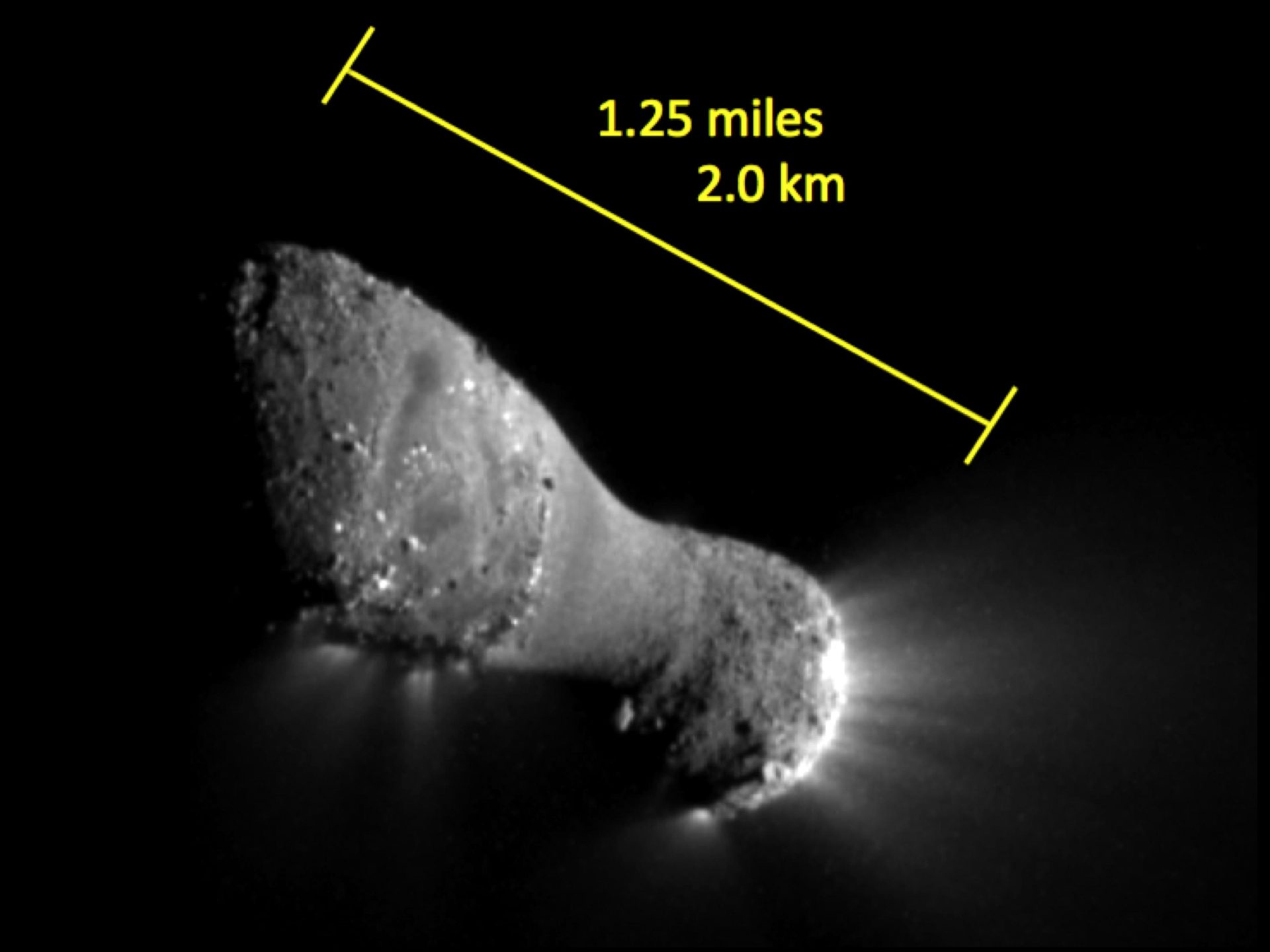
On the same date in 2010, NASA’s EPOXI mission flew past comet Hartley 2. This was the reused Deep Impact spacecraft, which had already visited Tempel 1 in 2005. A second comet was a fairly ambitious encore.
Hartley 2’s nucleus is roughly two kilometers long, with rough ends and a smoother, narrower middle. The mission found carbon dioxide driving icy grains out into the surrounding cloud. A small object could put on a surprisingly elaborate production. NASA/JPL’s mission account · the full-nucleus photograph.

The close-up above was enhanced by the mission team to make the jets easier to see. They emerge from both the sunlit and dark sides, and along the boundary between them. The comet did not need an effects budget. NASA’s image explanation.
evergreen detour: nintendo’s first hardware was a deck of cards
This one has no November 4 anniversary attached. Nintendo’s company history begins in 1889, when Fusajiro Yamauchi started making and selling hanafuda playing cards in Kyoto. The business was already decades old when it began selling Disney-character cards in 1959.
Its first home video-game machines, TV Game 15 and TV Game 6, arrived in 1977; the Family Computer followed in 1983. That is 94 years between the first cards and the Famicom. A long development cycle, even allowing for the change in medium. Nintendo’s company timeline.
Image credits: Hartley 2, PIA13575 (featured), and the enhanced jet detail, PIA13574, NASA/JPL-Caltech/UMD. Both photographed November 4, 2010; displayed at reduced size with the mission’s scale markers retained. Used editorially under JPL’s image-use policy. No endorsement implied.


leave a reply