


a few things worth knowing · sunday, october 25, 2026
Windows XP is old enough to have opinions about the next generation of computers. One of Saturn’s moons has been keeping two very different faces for considerably longer. Welcome to a few things worth knowing: a daily handful of curious facts, starting with what actually happened on this date, then wandering off somewhere useful.
today in history: october 25
1. windows xp turns 25, and regis was there
Microsoft made Windows XP available worldwide on October 25, 2001. The New York launch included Bill Gates, an appearance by Regis Philbin, and a Microsoft-sponsored Sting concert in Bryant Park. An operating-system launch with a daytime-TV personality and a pop star feels like an artifact from a different civilization. It was also only 25 years ago, which is rude.
The letters stood for “Experience,” according to the Computer History Museum. XP also brought Microsoft’s NT architecture to its consumer Windows line. Behind the friendly name was a substantial change to the machinery. Microsoft’s launch announcement · Computer History Museum.
2. saturn’s two-tone moon has a 355-year discovery anniversary
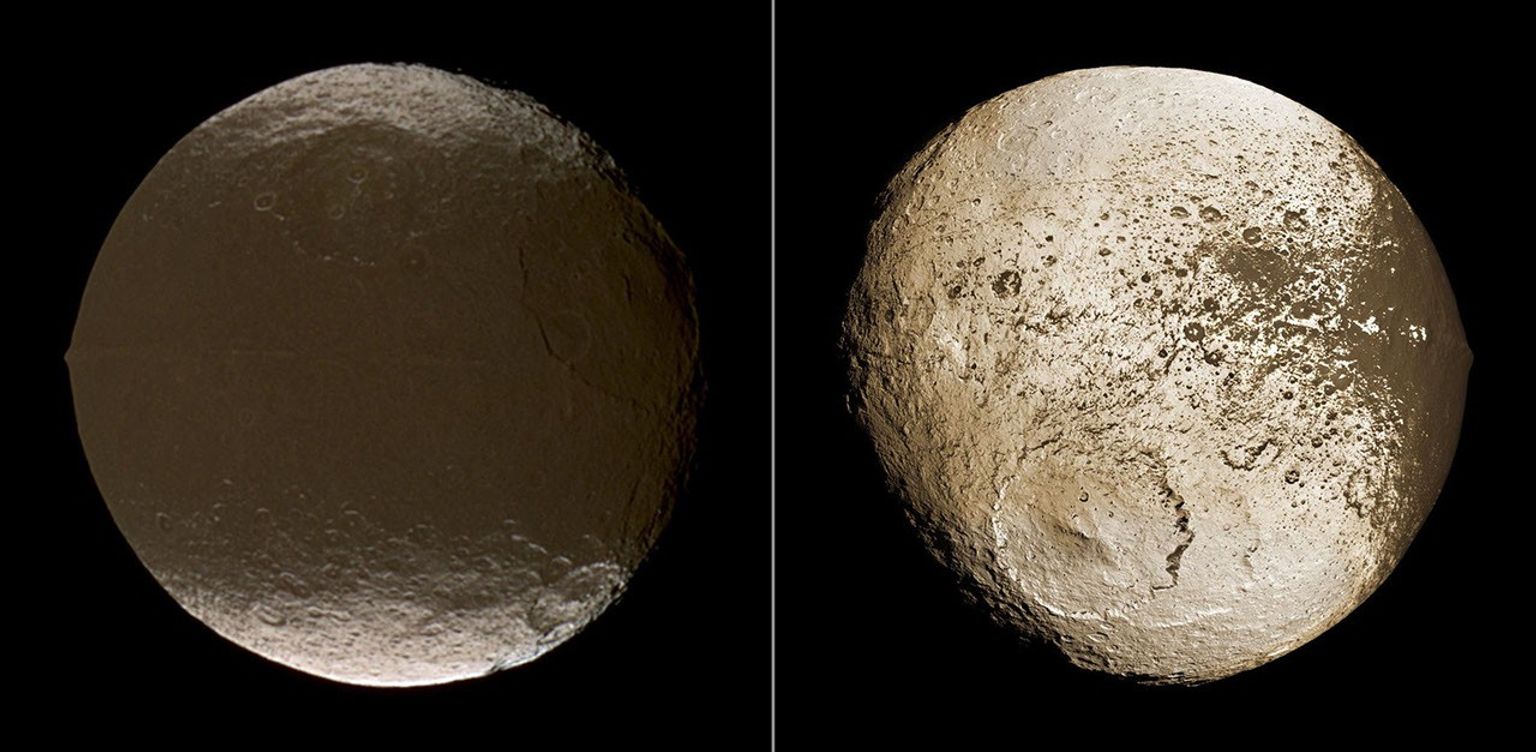
Giovanni Cassini discovered Iapetus on October 25, 1671. The moon’s leading hemisphere is strikingly dark, while much of its trailing hemisphere is bright. In the Cassini spacecraft views at the top of this post, those are two sides of the same moon, not a before-and-after cleaning demonstration.
The contrast is so strong that NASA compares the dark terrain to charcoal and the bright terrain to snow. Iapetus supplies an unusually literal answer to “have you tried looking at it from the other side?” NASA’s Iapetus overview · The two-hemisphere image explained.
three more for the collection
These next three are bonus facts, not October 25 anniversaries. The calendar has done its part.
3. an early tennis game let you change planets

Tennis for Two debuted at Brookhaven National Laboratory on October 18, 1958, using an analog computer and a five-inch oscilloscope screen. The photograph shows that original setup. The 1959 upgrade added a larger display and a delightful option: tennis with the Moon’s low gravity or Jupiter’s high gravity.
Before home consoles became ordinary furniture, somebody had already decided Earth tennis needed additional settings. Calling it the unquestioned “first video game” would start an argument; Brookhaven itself explains why that title is complicated. Planetary tennis is plenty impressive without it. Brookhaven’s history of Tennis for Two.
4. alabama’s famous meteorite took the indoor route

On November 30, 1954, a meteorite came through the roof of a house near Sylacauga, bounced off a console radio, and struck Ann Hodges while she was napping on a couch. The Alabama Museum of Natural History preserves both the meteorite and the radio.
That second object is a particularly good museum detail: a piece of ordinary living-room furniture that became part of an astronomical event. The rock did not merely arrive in Alabama. It made a connection. The museum’s account · Its exhibits.
5. the first pride flags had eight stripes
The original rainbow flags flown in San Francisco in 1978 had eight colors, including pink and turquoise. Gilbert Baker helped create them with Lynn Segerblom, James McNamara, and volunteers. The familiar symbol has a collaborative history, right down to the making.
There is also a useful connection between the flag and the rest of queer culture: Baker had learned to sew to make his own drag costumes. A practical skill acquired for one kind of self-expression helped produce another. Smithsonian’s history of the rainbow flag · SFO Museum on Baker’s life and work.
Image credits: Iapetus, NASA/JPL/Space Science Institute, PIA11690. Tennis for Two (1958), Brookhaven National Laboratory, public domain. Hodges meteorite, Kai NeSmith, cropped version, CC BY 4.0.