

a few things worth knowing · monday, november 2, 2026
Two November 2 anniversaries: moving into an orbiting laboratory, and discovering that a network can have a very bad evening. Then an octopus contributes some unusually thorough plumbing.
today in history: the space station got roommates
On November 2, 2000, NASA astronaut Bill Shepherd and Russian cosmonauts Yuri Gidzenko and Sergei Krikalev arrived at the International Space Station as its first resident crew. Twenty-six years ago today, Expedition 1 began turning a construction project in orbit into a working home.
The early to-do list included activating the hot-water dispenser and the toilet. Oxygen generation and carbon-dioxide removal followed over the next few days. Even a historic arrival needs someone to sort out the utilities. NASA’s account of the crew’s arrival.
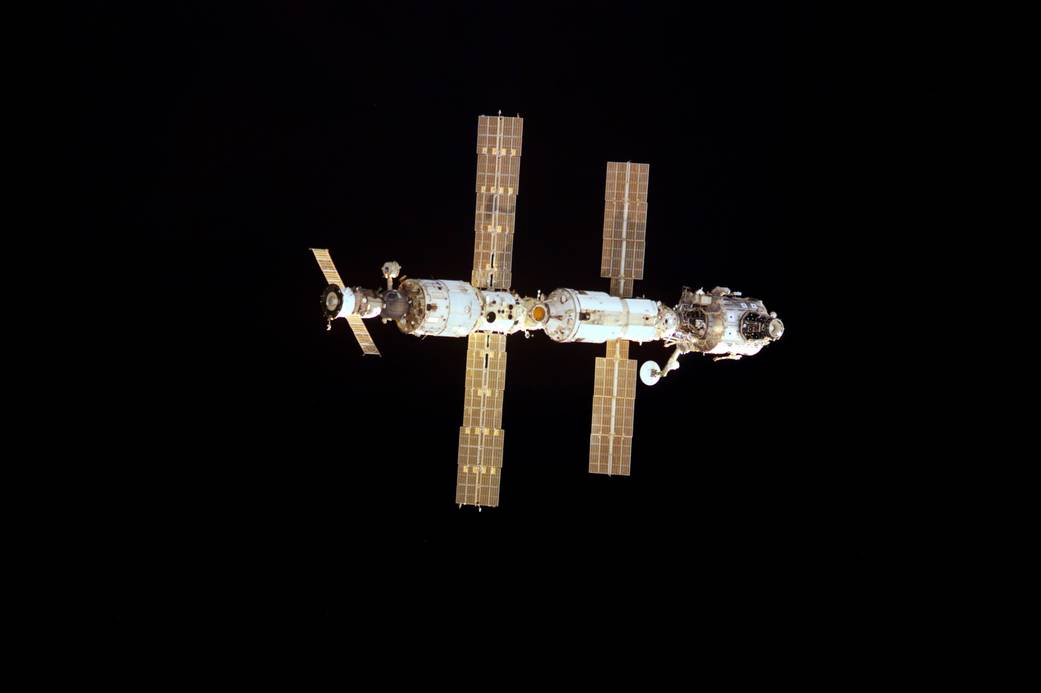
The featured photograph shows the station on December 2, 2000, a month into that first expedition. It was taken from shuttle Endeavour during its approach, before the station grew into the sprawling structure familiar from later photographs. NASA’s image record.
today in history: the network had a very bad evening
On November 2, 1988, the program now known as the Morris worm began spreading from a computer at MIT. It overwhelmed vulnerable computers on the early internet. The FBI estimates that about 6,000 of the roughly 60,000 connected machines were affected within 24 hours.
The worm did not need to destroy files to cause trouble. Systems slowed, mail was delayed, and some institutions disconnected from the network. All of this happened before the World Wide Web. The internet had already developed a troubleshooting backlog. The FBI’s history of the Morris worm.
one evergreen detour: the octopus has assigned each heart a job

This one has no November 2 anniversary attached. An octopus has three hearts: two push blood through the gills, while the third circulates oxygenated blood around the body.
Its oxygen-carrying protein, hemocyanin, contains copper rather than the iron in our hemoglobin, giving the blood its blue color. Three hearts and eight arms is quite a lot of equipment for an animal that can still look mildly inconvenienced by a camera. Smithsonian Ocean’s explanation of cephalopod circulation.
Image credits: International Space Station, photographed December 2, 2000, NASA; used editorially under NASA’s media guidelines. Octopus near Shallop Canyon, NOAA, via U.S. Fish & Wildlife Service, public domain. Images shown at reduced display size without creative alteration. No claim to original U.S. Government works.


leave a reply