

A few things worth knowing · November 8, 2026
Today: a discovery that made flesh less opaque, the beginning of HBO, and a vampire novel with an unusually serious filing system.
1895: the mysterious ray gets an appropriately vague name
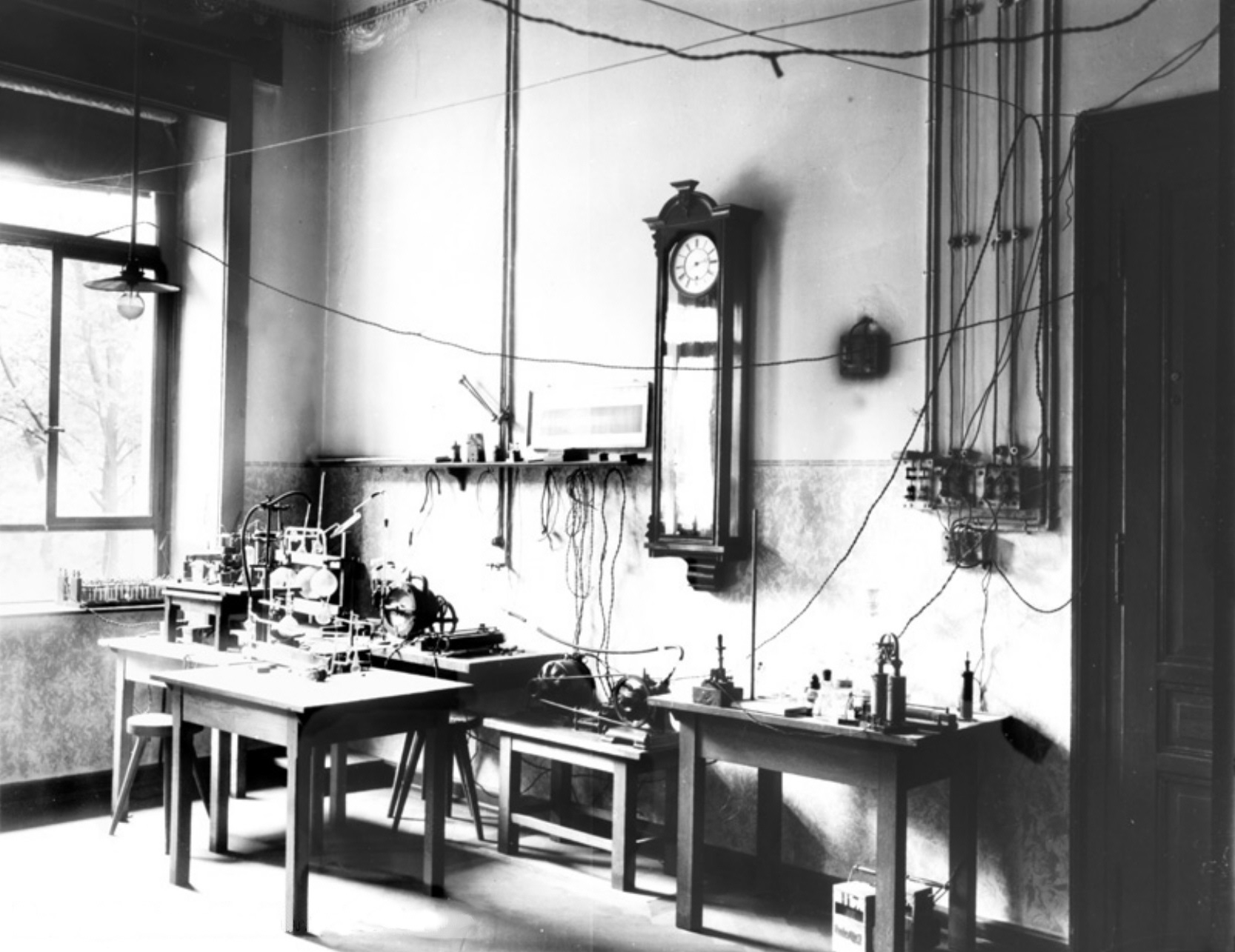
On November 8, Wilhelm Conrad Röntgen discovered previously unknown rays while working with cathode-ray tubes at the University of Würzburg. The “X” was the mathematical unknown, not an early attempt at edgy branding. His discovery earned the first Nobel Prize in Physics in 1901.
There is something satisfying about a name that admits the scientist still has questions. “X-ray” has considerably more staying power than most placeholder names. Source: ETH Zurich.
1972: before prestige television, there was hockey
HBO launched on November 8, 1972, with opening-night programming that included the Vancouver Canucks against the New York Rangers. Its early proposition centered on commercial-free films and live events; the landmark scripted series came later.
A useful corrective to the idea that a network arrives fully formed with a leather sofa and a complicated antihero. Sometimes the first order of business is a puck. Source: NCTA’s HBO anniversary history.
evergreen: dracula is a paperwork problem

Bram Stoker’s Dracula is assembled from journals, letters, newspaper material and other records rather than told by one all-knowing narrator. Even Dr. Seward’s phonograph diary appears in the chapter headings. The vampire is supernatural; the information-management problem is painfully recognizable.
That patchwork makes the reader compare accounts and piece together the threat. Horror, with receipts. Read the original novel at Project Gutenberg.
Image credits: Featured photograph of Röntgen’s laboratory, unknown photographer, 1895–1900, Deutsches Röntgen-Museum via Wikimedia Commons, public domain. Dracula binding image imitates the 1897 first-edition design; Wikimedia Commons, public-domain reproduction.


leave a reply