Hot takes, wrestling rabbit holes, free-streaming deep dives & life on the open web. Welcome to taco ‘bout it—Schwegler’s corner for TV commentary, chaotic internet culture, and fediverse experiments.
A portrait capturing an extraordinary moment between an adult seahorse and two newly born juveniles in French Polynesia has been crowned the… Tune in & read →
A portrait capturing an extraordinary moment between an adult seahorse and two newly born juveniles in French Polynesia has been crowned the overall winner of the Ocean Photographer of the Year 2026 competition.
a parrot got a bob haircut and for one beautiful moment i believed in something Tune in & read →
this morning i saw a video of a parrot getting a bob haircut.
this is, objectively, exactly what the internet was invented for. not banking. not work email. not whatever LinkedIn is doing. a parrot sitting patiently while somebody gives it a tiny, immaculate little bob.
i was delighted for approximately the amount of time it took my brain to remember that it is 2026.
even more devastated that my gut reaction to amazing animal videos is now to google if it's AI or not
and that is the part i hate more than the fake parrot.
the fake parrot is fine. honestly, she looked incredible. whoever generated her understood the assignment. the problem is that my first reaction to something delightful online has quietly changed from oh my god look at this to okay but did this happen.
now an animal does something implausibly charming and there is a tiny forensic investigator in my head checking the feathers. counting toes. watching the background. wondering why the barber’s hand briefly became an assortment of seafood.
Photo by ANBARASU THIRAVIYAM, via Wikimedia Commons, CC BY-SA 4.0.
this is obviously not the largest problem created by generative AI. somewhere a lawyer is currently explaining to a judge why the case citations in his brief lead to Narnia. democracy has several concerns. artists have approximately seven thousand concerns.
but this smaller thing still sucks.
the internet used to have an informal bargain with me: if you showed me a baby elephant interrupting a television reporter, a raccoon stealing somebody’s phone, or a bird saying something with suspiciously good comedic timing, i was allowed to simply enjoy it until somebody in the replies explained that the video was actually from 2014.
that was manageable misinformation. i could live like that.
now every extremely good animal video arrives with homework.
Photo by Rayhan Rashid, via Wikimedia Commons, CC BY 2.0.
and i don’t even particularly want to become good at detecting AI video, because that feels like learning to identify counterfeit money when all i wanted was to buy a little treat. i would prefer for the treat economy to contain fewer counterfeit dollars.
mostly i am mourning the loss of being an easy mark for a talented bird.
i want to see a parrot with a bob and think, good for her.
“i’m so hungry i could eat the gap between what i said and what i meant” appeared on my Tumblr dashboard, and approximately thirteen thousand people recognized the meal. this is because human communication is less like sending a document and more like handing someone three receipts, a weather report, and a look that made perfect sense at the time.
language has always required unpaid interpretive labor
there is a proper philosophical term for some of this: implicature. the Stanford Encyclopedia of Philosophy describes it as meaning or implying one thing by saying something else. we do it constantly. “it’s getting late” may mean “i should leave,” “you should leave,” or “please acknowledge that time has continued while neither of us made a decision.”
conversation works because people usually cooperate in filling that space. context, tone, facial expression, shared history, and the fact that you have heard me use “interesting” as a death sentence all help.
then we moved a large portion of human intimacy into little gray bubbles and acted surprised when the infrastructure began producing ghosts.
texting preserves the words and invents the weather
a text message removes most of the cues that normally carry the rest of the sentence. it keeps the punctuation, which is unfortunate, because punctuation immediately accepted a second job as emotional telemetry.
“okay” is neutral. “okay!” is enthusiastic. “Okay.” means i need to review the previous six months of our relationship with outside counsel. none of these rules are written down, universally agreed upon, or stable across age groups, which is exactly how we prefer to run critical infrastructure.
dating makes the translation layer worse because everyone is trying to communicate interest without appearing to possess interest. you say “no worries” while manufacturing several worries locally. somebody says “we should do this again,” and the word should enters evidence. a reply takes forty minutes, and your brain produces a limited series about what happened during minutes thirty-two through thirty-seven.
the problem is not only that other people can misunderstand us. it is that we can misunderstand them with incredible production values.
anxiety takes a message with two possible readings, selects the one that causes the most administrative work, and marks it final. now the gap between what they said and what they meant has been furnished, zoned, and given a small municipal government.
sometimes the subtext is real. people are indirect, conflict-avoidant, flirtatious, scared, or simply hoping to retain plausible deniability. “maybe” has buried entire civilizations. pretending language contains no subtext would be its own kind of illiteracy.
but subtext is not telepathy. silence is not a signed affidavit. response time is evidence mostly of response time. if the answer matters, eventually somebody has to ask the embarrassing direct question and allow the other person to give an actual answer. this is terrible news for those of us who had prepared twelve excellent theories instead.
the appeal may proceed
i would like every message to arrive with expandable fields labeled WHAT I SAID, WHAT I MEANT, and WHAT I AM AFRAID YOU WILL THINK I MEANT. this feature has not shipped.
until then, communication remains a collaborative draft. we say something incomplete, somebody interprets it through the entire haunted library of their experience, and, if we are lucky, both parties stay long enough to compare notes.
the gap is not food, but i have spent a lot of time chewing it.
a follow-up to the world’s most racist snack: chocolate, nostalgia, and the people making solidarity purchases on behalf of a confectionery label. Tune in & read →
There are two kinds of posts on this website: the ones I labored over like they were going to be taught in a seminar someday, and the ones where I embed a strange little video with a title that looks like it was generated by a haunted search bar.
Guess which one Google decided it had opinions about.
In July, I posted a short video about the chocolate-covered marshmallow treats that have, in different places and at different times, been sold under names built out of racist caricatures. It was mostly a “huh, that is bleak” drive-by. Then it started showing up in the site’s search data next to queries like most racist snack, racist snack name, and the world’s most racist snack. Not huge numbers, exactly, but it is now one of the little site’s more persistent visitors. Apparently this is what the people need from taco ’bout it: snack-based colonial hangovers.
it’s a marshmallow, not an archival document
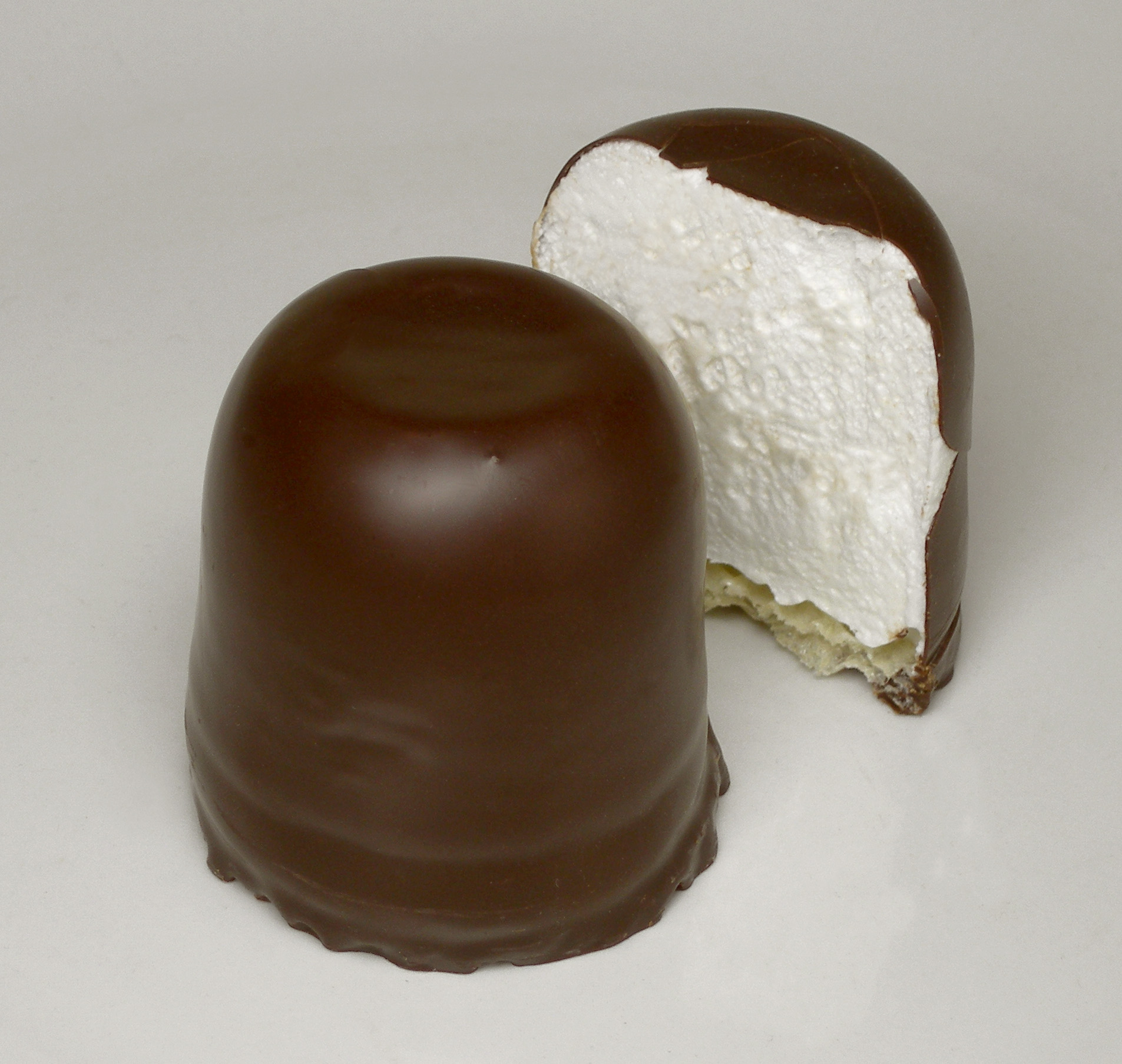
The treat itself is straightforward: a biscuit or wafer base, a whipped marshmallow-ish center, and a chocolate coating. Depending on where you are, a perfectly normal name exists for it: Schokokuss (“chocolate kiss”), Schaumkuss (“foam kiss”), or simply chocolate-coated marshmallow treat.
That is why the usual defense of “it’s just tradition” never quite works for me. Tradition is not a force of nature. It is a series of choices that people keep making because nobody has bothered to make a different one. We managed to put a marshmallow on a wafer and enrobe it in chocolate. Surely we can also call it a chocolate kiss without acting like someone has confiscated grandmother’s entire kitchen.
But the older names that linger in parts of Europe are where it gets ugly. Variants translated to “Moor’s head,” “Negro’s kiss,” and other terms that turn an actual racial category—or an old colonial fantasy of one—into a cute little product description. The point was not just “it’s brown because chocolate.” The imagery attached to those names did the rest: Blackness reduced to a cartoon head, a dark coating, a novelty.
Photo: Tiia Monto / Wikimedia Commons, CC BY-SA 4.0.
the weird part is how small the fix is
No one is asking anyone to stop eating the thing. This is not a campaign against snacks, which would be both doomed and personally offensive to me. It is a request to stop using a name that makes a person’s identity into the punchline and then demanding everybody else treat the discomfort as an overreaction.
And the replacement names are not even bad. “Chocolate kiss” is kind of sweet. “Foam kiss” has the energy of a discontinued 1980s perfume, but it is still leagues better than making a confectionery aisle reenact colonial racism. The food is the same food. The recipe has not been silenced. Nothing has been erased except the part nobody needed.
There is a particular kind of nostalgia that mistakes familiarity for innocence. You grew up hearing a word, so it feels harmless; someone else hears the history packed into it, and suddenly the word is political. But it was already political. It just had the advantage of being old enough to pass as décor.
anyway, congratulations to the algorithm
So yes: the original video is a weirdly effective little piece of internet detritus. It points at something real, it has a title people are apparently compelled to type into a search engine, and now it has earned itself a follow-up post in which I get to say the obvious part out loud.
If you want the snack, have the snack. Just call it a snack. We are all capable of surviving a product rename, even if the internet’s search habits suggest we may never stop being fascinated by the phrase “racist marshmallow.”
grief is not a loyalty program. there are no points for starting early, and no discount for suffering efficiently. Tune in & read →
there is a specific kind of emotional efficiency where you begin grieving something before it has actually left. the relationship is still technically happening. the dog is still asleep in the sun. the apartment still has your furniture in it. the television show has three episodes left. none of this stops your brain from dimming the lights and beginning the memorial slideshow.
i reblogged this because “holy shit i love grieving things before they’re gone” is funny in the way that an accurate diagnosis becomes funny when somebody puts it in lowercase. the addition — “and grieving things that never even happened” — turns it from a personal habit into a complete operating model.
the farewell tour begins immediately
anticipatory grief is a real term. Cleveland Clinic describes it as grief that begins before a loss, often when someone knows a death or major change is coming. that is the serious, useful definition. the less clinical version is that the human brain sees an ending on the horizon and starts pre-sadness as if tickets might sell out.
sometimes this prepares us. sometimes it lets us say what needs saying, pay attention, take pictures, or notice the ordinary details we would otherwise allow to pass without ceremony.
sometimes it simply means we spend the final good month of something acting like its widower.
the cruel little trick is that grief feels productive. worry feels like vigilance, and sadness feels like proof that we understood the stakes. if i rehearse the loss thoroughly enough, perhaps the actual loss will arrive, review my preparation, and waive the fee.
it never does. you can pay grief in advance, and it will still send the full invoice.
the museum of things that never happened
then there is the second category: grieving a future that existed entirely in draft form. a relationship that almost became something. a job you nearly got. the version of yourself who was definitely going to learn a language, move somewhere interesting, and own the correct number of plants.
these losses are especially irritating because there is no clean object to mourn. nothing ended because nothing officially began. you are standing at the funeral of a hypothetical, and the hypothetical did not even have the courtesy to leave photographs.
that does not make the feeling fake. imagined futures can occupy real space. we arrange decisions around them, furnish them, and begin living beside them. when they disappear, the vacancy is real even if the tenant never moved in.
i would love to claim that recognizing this habit has cured it. unfortunately, self-awareness is often just anxiety wearing a small employee badge. now i can grieve prematurely while also providing live commentary.
the only useful correction i know is embarrassingly simple: if the thing is still here, let it be here. do not convert every good moment into future evidence that good moments once existed. do not force a person, place, pet, season, or version of yourself to become a memory while it is still trying to have lunch.
and if the future you wanted never arrives, you can mourn it without arguing yourself into court over whether an imaginary event counts as a loss. the feeling already showed up. it has established residency. denying it will not make it return the keys.
grief is not a loyalty program. there are no points for starting early, no discount for suffering efficiently, and no premium tier where you become immune to the ending. we may as well stop trying to beat it to the address.
the thing is here until it is not. this is both the problem and, inconveniently, the whole gift.
a complete record of the human experience, if the human experience had three coffees, a sandwich, and absolutely no room for feedback. Tune in & read →
a complete record of the human experience, if the human experience had three coffees, a sandwich, and absolutely no room for feedback.
a joke about yard-work simulators became an unfortunately complete survey of gaming’s most specific genre, just before the free prologue arrives. Tune in & read →
i reposted this because it is, technically, a joke, and also, technically, an accurate status report on where the simulator genre currently stands.
The Simpsons predicted that we would have Yard Work Simulators, but they didn’t predict that we would go Beyond Yard Work Simulators.
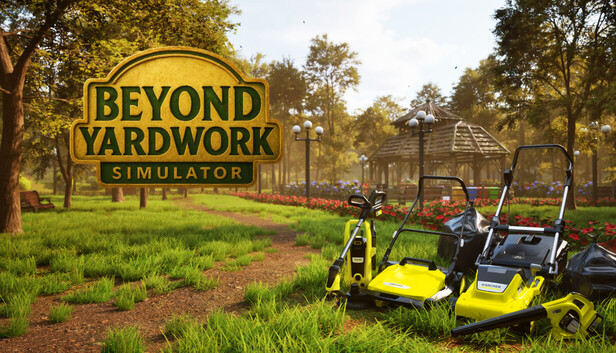
Beyond Yardwork Simulator is a real, upcoming Steam game from developer JoyDev and publisher PlayWay, a studio whose back catalog reads less like a release slate and more like a to-do list nobody ever crossed items off of. you mow, pressure-wash, weed, and sort trash in exchange for cash you then spend renovating your own house, one increasingly specific chore at a time, per the official Steam page.
a free prologue covering the first three jobs arrives Sep 9, per the Prologue’s Steam listing. the full game does not have a date beyond “2026,” which, generously, leaves PlayWay all the runway it needs to eventually announce Beyond Beyond Yardwork Simulator.
Screenshot: Beyond Yardwork Simulator, via Steam; used for commentary.
i say all of this as someone who has spent measurable years of my one life running a digital farm in Story of Seasons and Harvest Moon without once, personally, touching a lawnmower that exists in three dimensions. Beyond Yardwork Simulator is aimed at exactly my demographic: people who will lovingly manage a fictional flower bed for forty hours and describe an actual flower bed as not my problem. the genre understands its audience. it is not judging me. it is, at most, gently billing me two thousand imaginary dollars per job.
and it is a genre, not a one-off bit. Beyond Yardwork Simulator is arriving into a field that already has Lawn Mowing Simulator, whose real sequel, Lawn Mowing Simulator 2, lands Sep 23 with licensed Kubota, SCAG, and STIGA equipment, per its own Steam page. PC Gamer, surveying the field, noted there is also a separate game called Lawn Care Simulator, and that it exists twice, which the outlet delivered with exactly the tired disbelief the situation deserves, per PC Gamer’s coverage.
Screenshot: Beyond Yardwork Simulator, via Steam; used for commentary.
somewhere there was a pitch meeting that ended with the sentence “we have done the yard, now let us transcend it,” and somebody funded it, and here we are, well over a thousand likes into a joke about the Simpsons being insufficiently prescient. i will be downloading the free prologue the day it exists, not because my actual yard needs anything, but because it does not have one to need anything about, and that, per the entire thesis of the genre, is exactly the point.