CHANNEL ARCHIVE

Books

Dispatches, commentary, and media logs from the open web.

  • the new press secretary cured my imposter syndrome

    the new press secretary cured my imposter syndrome

    watching someone walk up to the most famous lectern on earth and treat it like an unprepared oral report is a profound… Tune in & read →

    I spent years believing that imposter syndrome was a sophisticated personal affliction. You treat it like a delicate psychological tax on ambition: you read books about quiet confidence, you practice pausing before answering questions in meetings, and you spend twenty minutes drafting a three-sentence email because you are convinced that using the wrong preposition will reveal to the entire department that you have been faking your career since 2018.

    Imposter syndrome relies entirely on a foundational assumption of general competence. For you to feel like a fraud, you have to believe that the room is full of people who are not frauds. You have to picture the other participants as people who received the secret memo, mastered the enterprise software without consulting YouTube tutorials, and earned their chairs through rigorous intellectual superiority.

    Then, yesterday, the new White House press secretary walked up to the podium for her debut briefing.

    I think the new press secretary cured my imposter syndrome?

    — schweg, 🦇 (@schwegler.lol) 2026-10-14T01:43:42.315Z

    It was not merely a rough day at work. It was an interpretive dance of institutional malfunction. Dubbed the “Zachbot” across social media within roughly eighteen minutes of taking the lectern, Katie Zacharia stood before the White House press corps with a massive three-ring binder, visibly short-circuited on basic procedural questions, and radiated the specific, unmistakable panic of an eighth-grader giving an oral book report on a novel they only read the jacket copy for during homeroom.

    Watching it in real time was deeply, spiritually restorative.

    the competence myth requires someone to have done the reading

    There is a moment in every high-stress job where you freeze. Your pulse spikes, your throat gets dry, and your brain offers up the helpful suggestion that you should perhaps fake your own death and move to an unincorporated township in Idaho. That fear is driven by the belief that high-stakes environments demand flawless, encyclopedic mastery.

    The White House press briefing is supposed to be the apex predator of high-stakes environments. It is a small theater in the West Wing designed entirely to project imperial authority. You have the blue backdrop, the Great Seal, forty hardened political reporters whose mortgage payments depend on catching you in a contradiction, and a bank of cameras beaming your pores to foreign embassies in twenty-four time zones.

    A battery of microphones clustered together at a press conference table
    A battery of microphones arranged for someone who theoretically has an answer. Photo: Unsplash.

    If competence were the baseline barrier to entry for holding that microphone, no human being would ever take the job without six advanced degrees, a photographic memory, and a nervous system made of tempered steel.

    Instead, we watched a woman who is theoretically the voice of the executive branch of a nuclear superpower flip through a binder like someone frantically looking for a dry cleaner receipt at the bottom of a tote bag. She dodged softballs, stared blankly at straightforward follow-ups, and treated the entire briefing like a hostage negotiation between her notes and her vocal cords.

    It was glorious. It was the single most liberating piece of workplace therapy available without a co-pay.

    authority is mostly just not leaving the room

    The dirty secret of institutional authority is that confidence is almost never downstream of competence. It is downstream of access.

    The people who run things—the people who sign off on company-wide reorgs, approve enterprise software migrations that ruin everybody’s Thursday, and represent national governments on cable news—are rarely the people who stayed up until 2 a.m. making sure the spreadsheet was formatted correctly. They are simply the people who did not flinch when someone handed them a lanyard.

    Half of growing up is realizing that the “adults in the room” do not exist. There is no shadowy council of experts reviewing your work against a grand master rubric. There are only people who walked through a door, realized nobody was checking badges with any real enthusiasm, and decided to keep standing near the water cooler.

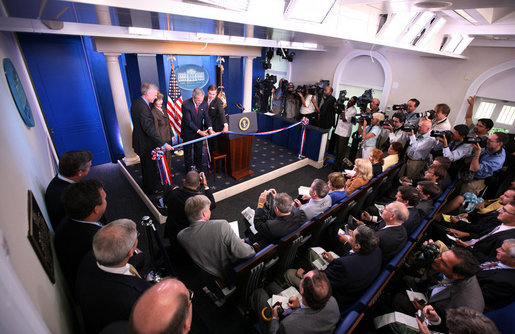
    Journalists gathered in the White House press briefing room facing the lectern
    Reporters in the James S. Brady Press Briefing Room waiting for the official version of reality. Photo: Kellerbn / Wikimedia Commons (CC BY 2.5).

    When you struggle with imposter syndrome, you constantly audit yourself against an impossible standard that nobody in power is actually meeting. You worry that you don’t know enough about the budget forecast to speak during the Q3 planning call, while the person chairing the meeting is currently trying to remember whether Q3 comes before or after July.

    go ahead and send the email

    I am not suggesting that preparation is useless or that doing your job well is a sucker’s game. Excellence is great. Knowing what you’re talking about is a polite courtesy to everyone who has to listen to you.

    I am suggesting that you lower the emotional stakes of your daily existence.

    If someone can walk into the James S. Brady Press Briefing Room, face fifty hostile journalists, stumble through fifteen minutes of pre-scripted evasion without reading the room, and still collect a federal paycheck on Friday, you are entirely qualified to unmute yourself on Zoom. You can pitch the project. You can apply for the job even if you only meet six of the eight arbitrary bullet points on the listing. You can send the email without asking three trusted friends to proofread the greeting.

    The bar is not hovering in the upper stratosphere. The bar is lying flat on the linoleum, and somebody just tripped over it on live television.

    Pick up your binder. You’re going to do fine.

    Featured image: The James S. Brady Press Briefing Room. Photo: White House / Wikimedia Commons.
  • Watch Revry Free: Drag Competitions, Queer Comedy, and More

    Watch Revry Free: Drag Competitions, Queer Comedy, and More

    Revry’s free network offers Unconventional, King of Drag, Drag Latina, and ballroom programming—with live channels as well as on-demand viewing. Tune in & read →

    queer television does not have to be one rainbow row near the bottom of somebody else’s app. Revry is a network built around it. scripted comedy, drag competition, ballroom, films, and music can occupy the same programming identity without a corporate interface asking whether we meant “LGBTQ+ interest.”

    the official Revry viewing page offers both a live route and on-demand viewing. that combination is the point: pick the thing you want, or let a queer network make the next choice. here are the shows and formats I would use to start exploring it.

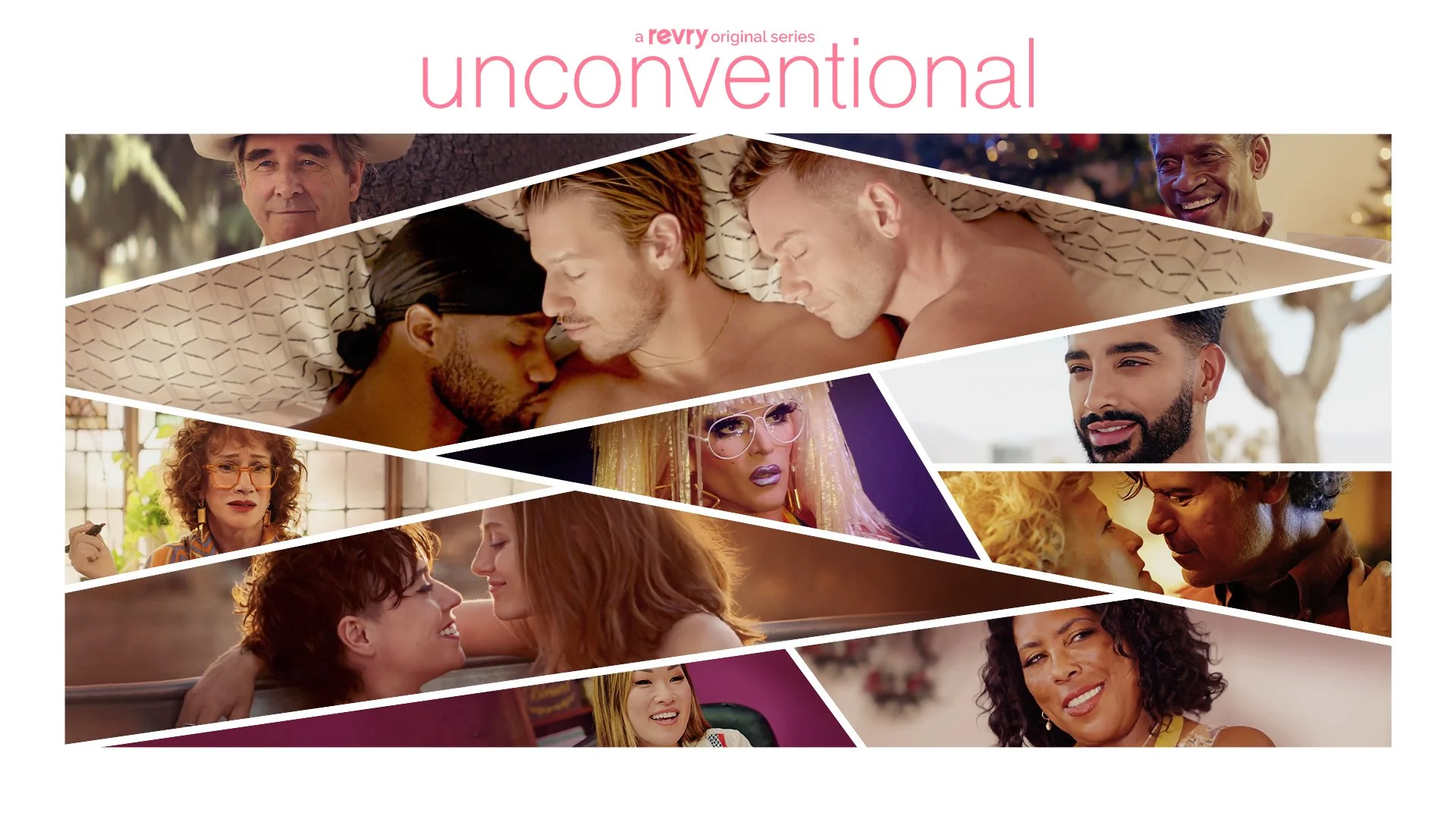
    Unconventional: queer adults get a sitcom

    Unconventional is Kit Williamson’s nine-episode comedy about Noah Guillory, whose marriage, possible parenthood, academic life, and sperm-donor arrangement overlap in increasingly complicated ways. Revry identifies it as its first full-length original scripted series and lists free viewing through its distribution partners.

    Official Unconventional trailer. Video: Revry.

    the premise appeals to me because gay adulthood has more available subjects than coming out and being killed to develop somebody else’s character. marriage can be weird. families can be structurally complicated. academia can make any situation worse by adding a committee.

    a network that starts with queer viewers has room to assume those lives are the story. it does not have to spend the opening act requesting permission to include them.

    King of Drag: a different part of drag gets the stage

    King of Drag puts drag kings at the center of a reality competition. Revry’s season-two announcement names Cameron Esposito as host, with Gottmik, Vico Ortiz, and Damian Pelliccione as regular judges. the eight-episode season began September 20, 2026, at 9 p.m. ET.

    for Drag Race viewers, the appeal is not simply another competition to monitor. it is the chance to see performers and approaches to drag that have had far less television space. a genre gets healthier when its definition of who belongs on the stage gets wider.

    Drag Latina and ballroom broaden the menu

    Drag Latina brings a bilingual, Latine focus to drag competition. Revry’s season-two page features Carmen Carrera and Fedro as hosts. it is another reminder that drag television has more possible centers of gravity than one American franchise.

    Drag Latina season two logo in bright pink and gold
    Promotional image: Revry; used for commentary.

    Revry also has Halloween Ball programming from ballroom culture. the available event is a useful seasonal starting point, but it is an existing broadcast, not an announcement of a new 2026 event.

    A performer in a black and green costume at Revry's Halloween Ball
    Promotional image: Revry; used for commentary.

    drag competition and ballroom are different performance traditions. I appreciate a channel where they can both exist without being squeezed into one miscellaneous category labeled “fabulous.”

    how to watch Revry without paying

    start with Revry’s viewing guide or the originals directory, and choose a free live or title-specific route available on your device. Revry also advertises a subscription with additional viewing options, so a paid button somewhere in the ecosystem does not mean the live network requires payment.

    check your live guide when you want a particular premiere. timing can vary among partner apps; choose an on-demand option when you want a specific episode after it has aired.

    the bigger appeal is having a channel whose default audience includes us. sometimes that is enough reason to see what is on next.

    previously in this series

    This is part 3 of Stuff You Can Watch Free. The series covers original shows on free networks and channels that recreate cable’s put-it-on-and-leave-it-on experience.

  • Tastemade Free Streaming: Cooking Shows Beyond the Reruns

    Tastemade Free Streaming: Cooking Shows Beyond the Reruns

    Kitchen Glow Up, Worth the Hype, and Forking Delicious show why Tastemade’s free channels deserve more than background-rerun status. Tune in & read →

    a free food channel could easily spend the rest of eternity showing somebody chop an onion in an episode from 2009. Tastemade has decided it can also make new television. this is an encouraging development for both television and the onion.

    Tastemade’s free streaming channels carry food, travel, and home programming. they are also homes for original shows, with scheduled premieres rather than just an endless supply of rescued reruns. here are three starting points for figuring out whether that particular variety of television belongs on your screen.

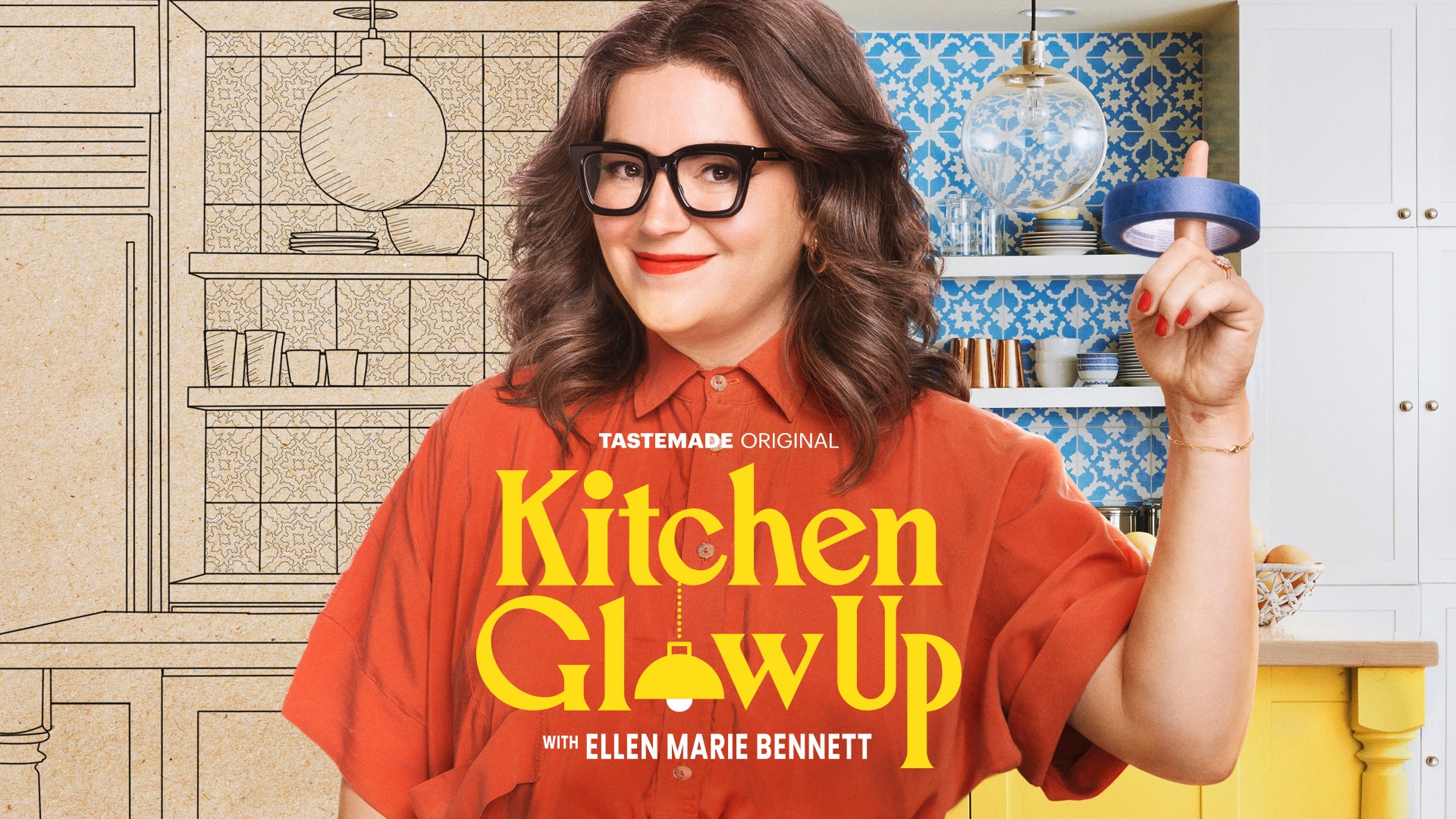
    Kitchen Glow Up: renovation through a cook’s eyes

    Kitchen Glow Up pairs Ellen Bennett’s cooking and design perspective with homeowners whose kitchens need to function better. its first two episodes premiered on Tastemade’s streaming channel on May 28, 2024. the current show page lists two seasons.

    Ellen Bennett smiling in a bright kitchen in promotional artwork for Kitchen Glow Up
    Promotional image: Tastemade; used for commentary.

    the premise is appealing because a kitchen has actual work to do. there is a difference between a room that photographs well and a room where you can drain pasta without performing a minor obstacle course. renovation television is much more interesting when that difference makes it into the brief.

    this is the first stop if you want home television with a specific point of view. a useful counter needs to survive contact with dinner, not merely an arrangement of lemons.

    Worth the Hype: let somebody else investigate lunch

    Worth the Hype sends Frankie Celenza around cities to explore restaurants, dishes, and the people making them. Tastemade’s show page now lists three seasons, with recent stops including Charleston, San Antonio, New Jersey, and San Francisco.

    Frankie Celenza holding a taco in promotional artwork for Worth the Hype
    Promotional image: Tastemade; used for commentary.

    food travel is an excellent television format because the stakes are comprehensible. somebody made a thing, somebody else would like to eat it, and we might learn something about a place in the process. no cinematic universe needs to be consulted.

    choose this one if your preferred background television occasionally becomes foreground television because a sandwich has appeared. I respect the sandwich’s ability to secure an audience without a season-long mystery.

    Forking Delicious: food opinions become the show

    Forking Delicious turns an audience-ranked list of 100 dishes into a discussion among comedians and food personalities. Tastemade’s launch announcement names Margaret Cho, Dulcé Sloan, Eric Wareheim, and Nyesha Arrington among the participants. the first two episodes aired in a double premiere on February 25, 2025.

    this is food television for the part of the internet that can turn a completely ordinary lunch into a constitutional dispute. the comedy comes from giving people something concrete to disagree about. finally, a panel discussion where the subject might improve my afternoon.

    how to watch Tastemade free

    use Tastemade’s where-to-watch page to find a free channel on your platform, then check that channel’s guide for the show. the network also sells ad-free, on-demand access. its subscription help page explains those paid options; they are not required to watch the free linear feed.

    the practical distinction is selection versus price. the free schedule chooses what is on now. a paid on-demand option may make selecting a particular episode easier. you can decide whether that convenience is worth anything to you.

    I like that Tastemade has a recognizable purpose. food, places, and homes are broad enough to provide variety, but related enough that leaving the channel on does not feel like a programming accident.

    previously in this series

    This is part 2 of Stuff You Can Watch Free. The series covers original shows on free networks and channels that recreate cable’s put-it-on-and-leave-it-on experience.

  • Free Streaming Originals: What to Watch Without a Subscription

    Free Streaming Originals: What to Watch Without a Subscription

    free television has actual original shows, not just reruns. a guide to Tastemade, Revry, Tubi, and Samsung TV Plus—and the channels where… Tune in & read →

    somewhere along the way, watching television became maintaining a small portfolio of recurring payments. you subscribe for one show, forget which service has the second show, and discover the third show belongs to a company that has changed its name since lunch.

    meanwhile, free streaming networks are making their own television. cooking shows. queer sitcoms. drag competitions. horror movies. actual originals you can start watching without deciding whether this is the month you reactivate another account.

    this is Stuff You Can Watch Free, a series about that corner of television. the focus is original programming from free networks with a linear channel involved, whether you watch on that channel or choose an episode on demand. the final installment will look at free cable replacements for those evenings when choosing an individual episode is already too much work.

    free streaming originals are more than a rerun library

    a FAST channel is a scheduled, free, ad-supported television feed. the schedule keeps moving whether you are there or not. on-demand viewing lets you pick a particular episode or movie. a network can offer both, which seems like a reasonable arrangement television should have been allowed to keep.

    Tastemade makes cooking, travel, and renovation programming for its streaming channels. Revry puts queer stories at the center of its original lineup. these are networks with an identity, rather than a miscellaneous shelf somebody found while clearing a licensing warehouse.

    Frankie Celenza holding a taco in promotional artwork for Worth the Hype
    Promotional image: Tastemade; used for commentary.

    that matters because a channel can be a destination. you might arrive for one show and encounter another without conducting a second search. it is a modest service, but streaming has managed to make modest services feel revolutionary.

    four places to start watching

    Tastemade: start with Kitchen Glow Up for renovation or Worth the Hype for food travel. its free streaming channels coexist with paid, ad-free on-demand options.

    Revry: start with Unconventional for scripted queer comedy, or look for its drag and ballroom programming. the official viewing guide points to its live and on-demand routes.

    The cast of Unconventional gathered in a colorful room
    Promotional image: Revry; used for commentary.

    Tubi: its originals include the drag-vampire comedy Slay and workplace sitcom The Z-Suite. Tubi has documented a Tubi Originals linear channel, alongside its much larger on-demand catalog. that does not mean every original is airing in the live guide tonight.

    Samsung TV Plus: Unlikely Romances and Hooligans: The ARCH Racing Project had scheduled original premieres on Samsung’s channels. access depends on a supported device.

    what “free” means here

    free means a legitimate viewing option without a paid subscription. ads may be involved. a paid version may exist. availability and schedules vary by country and device; this series is written for U.S. viewers. it is not a promise that a show can never be purchased somewhere else.

    I do not want to replace a streaming bill with a spreadsheet of fine print. the useful question is simply: can I watch this, legally, without adding another monthly charge?

    I have already written about YouTube becoming an extremely strange television service. this is the neighboring development: television networks growing inside the free part of streaming, with shows of their own and something resembling a schedule.

    apparently we can still have television. somebody just needs to tell the subscription management screen.

    follow this series

    This is part 1 of Stuff You Can Watch Free. The series covers original shows on free networks and channels that recreate cable’s put-it-on-and-leave-it-on experience.

  • the cowboy lost his hat. we do not need to make this complicated.

    the cowboy lost his hat. we do not need to make this complicated.

    what did the cowboy say when he lost his hat? where’s my hat. a complete story with no unnecessary stakeholders. Tune in & read →

    “what did the cowboy say when he lost his hat?”

    pause. southern drawl. “where’s my hat?”

    I contributed this to a Bluesky discussion about favorite bad jokes, and I stand by it. there is a cowboy. he has experienced a problem. he communicates the problem clearly. the audience may now return to its life.

    “What did the cowboy say when he lost his hat?” … **southern drawl** “where’s my hat?”

    — schweg, 🦇 (@schwegler.lol) 2026-10-04T16:45:47.944Z

    the joke is that you were expecting a joke. you heard cowboy, then hat, and your brain began preparing a small committee to evaluate possible puns. something about a ten-gallon hat. something about being a little horse. perhaps a sheriff would arrive with a jurisdictional concern. instead, the man wants his hat.

    the setup has filed for an exemption

    I love a joke that makes the machinery visible. a normal setup teaches you how to listen: keep these details available, expect a turn, reward the clever connection. an anti-joke lets the expectation build and then declines to deliver the package. it is funny because you can feel yourself waiting for something that has already ended.

    A black microphone waiting on its stand
    A microphone is available if the cowboy has further questions. Photo: Zack Xavier / Unsplash.

    the southern drawl is important to my preferred version. not because an accent makes a person stupid, but because it supplies theatrical commitment to an answer with absolutely no theatrical ambition. you can stretch the pause, lower the voice, and create the sense that a very old frontier wisdom is about to be revealed. the wisdom is that an object is missing.

    this is also why explaining the joke makes it worse and, somehow, a little better. I have now devoted several paragraphs to a man noticing a hat problem. the disproportion has become another part of the joke. the cowboy has moved on. I am still at the podium.

    some jokes would like you to do less

    a lot of online humor asks for increasingly specialized equipment. know the meme. recognize the screenshot. remember which celebrity said the thing, which other celebrity answered, and which apology made it worse. I enjoy that too. I am not going to pretend I have never understood an image that would require a museum wall label for anyone outside my particular feed.

    but there is a pleasure in a joke whose entire archive is the sentence you just heard. no homework. no cast list. no declaration that understanding this makes you the right sort of person. the cowboy has not been canceled, redeemed, or recontextualized. he simply needs to locate his hat.

    Rows of empty theater seats face a stage across a central aisle
    An audience assembled at considerable expense could have received this information by text. Photo: ARTO SURAJ / Unsplash.

    the bad joke also gives everybody an easy role. the teller commits to it. someone groans. someone says that is terrible while smiling. nobody has to reveal anything painful or win an argument. for a moment, the whole social exchange is a tiny agreed-upon waste of time.

    I have written about the group chat as a municipal service. these jokes are part of the maintenance budget. not every message needs to carry news or ask for support. sometimes you just need to establish that everyone is still in the room and capable of being mildly irritated together.

    the hat is still missing

    I do not think every joke should be this dumb. the world contains satire, elaborate wordplay, and people who can tell a story for ten minutes before making the first sentence funny retroactively. good for them. I would like all of those things to continue.

    I also want room for a cowboy whose emotional journey begins and ends with inventory.

    where’s my hat?

    excellent question. somebody help this man.

    Featured image: Photo: KyneWynn Kind / Unsplash. https://unsplash.com/photos/brown-cowboy-hat-FbPUnMP_158

  • the universe got bigger because someone checked the paperwork

    the universe got bigger because someone checked the paperwork

    Hubble’s VAR! plate is a wonderful discovery story. it is also a reminder that the person with the telescope is not the… Tune in & read →

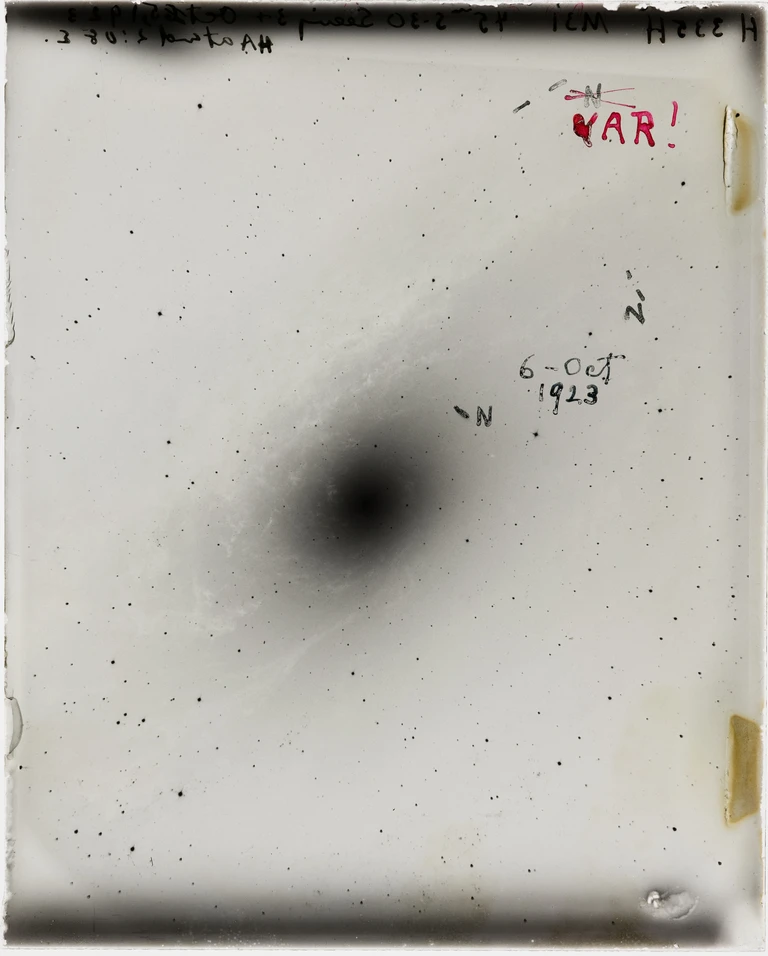
    one of the history posts I re-skeeted this week was a glass photographic plate with an excited “VAR!” written on it. astronomical evidence, but also the energy of somebody discovering that a spreadsheet cell has been wrong for years.

    VAR!In the early morning hours #OTD in 1923, Edwin Hubble took a photo plate of M31 that showed a Cepheid variable star.Using Henrietta Swan Leavitt’s distance-luminosity relationship, Hubble concluded that M31 is another galaxy outside the Milky Way. 🧪 🔭 ⚛️Image: Carnegie Observatories

    — Robert "The Bobby Yaga" McNees (@mcnees.bsky.social) 2025-10-06T14:58:51.668Z

    the plate came from Edwin Hubble’s observations of Andromeda at Mount Wilson in October 1923. the important object was a Cepheid variable star: a star whose brightness changes in a way that can help measure distance. the resulting work established that Andromeda lay beyond our Milky Way. the universe had considerably more real estate than the neighborhood map suggested.

    Carnegie Science preserves the plate and its history. the annotation is irresistible. a neat heroic discovery story can fit in three letters and an exclamation point. man looks through telescope. man notices star. cosmos expands. roll credits.

    the credits should be longer

    except the measurement depended on work Henrietta Swan Leavitt had already done. she established the relationship between the periods of Cepheid variables and their luminosities. that supplied the basis for using them as distance markers. Carnegie’s account explicitly credits that contribution.

    Edwin Hubble and James Jeans beside the 100-inch telescope at Mount Wilson
    The visible machinery: Hubble and James Jeans at Mount Wilson’s 100-inch telescope. Photo: Carnegie Science archives.

    I like the discovery better with that part left in. not because Hubble needs to be demoted or because every achievement is secretly a theft. the actual story is more interesting than the one-man version. one person establishes a relationship. another applies it to an observation made possible by a huge instrument, a collection of records, and people who keep the whole operation functioning.

    the telescope is an impressive object. the method is less photogenic. you can pose next to the telescope. you cannot pose next to a relationship between a star’s pulsation period and its intrinsic brightness without somebody arranging a deeply unfortunate PowerPoint.

    that imbalance follows us around. public credit gravitates toward the moment with a face, a date, and a dramatic verb. the enabling work is easier to reduce to background. a discovery becomes something that happened to a great man instead of something he could do because other people had made it possible.

    maintenance does not arrive with an exclamation point

    I spend my working life around databases. this probably explains why an old plate with an annotation activates the same part of my brain as an unusually informative audit record. it is a physical trace of someone noticing that the previous description no longer fits the evidence. keep the record. change the interpretation. do not pretend you always knew.

    Edwin Hubble examining an astronomical glass photographic plate
    Hubble examining a glass plate: the revelation also involved looking carefully at records. Photo: Carnegie Science archives.

    most useful work has a much less cinematic version of that structure. somebody kept the data. somebody made it comparable. somebody established what a value meant before somebody else used it to announce an insight. the final presentation may contain one name and a very nice chart. that does not mean the chart generated its own evidence.

    this is not an argument against celebrating discoveries. please celebrate discoveries. I would much rather have the internet get excited about an astronomical plate than another executive describing a chatbot as a new species of colleague.

    it is an argument for noticing what the celebration leaves outside the frame. precision takes work. records take care. a method can outlive the person who developed it and become the quiet foundation for something enormous. that is an achievement even when nobody puts an exclamation point beside your name.

    keep the wonder. improve the attribution.

    the comforting part of this story is not that one extraordinary person had the right idea. it is that knowledge can accumulate across people and time. the first contribution does not have to finish the entire project to matter. the next person can do something with it that the first person never had the chance to see.

    I want the glass plate, the telescope, the excited annotation, and the woman whose work made the measurement possible in the same story.

    the universe got bigger. our account of how that happened can manage to get a little bigger too.

    Featured image: VAR! plate: Carnegie Science / Carnegie Observatories. https://carnegiescience.edu/about/history/archives/plate-archives/m31var

  • 1

    Margaret Hamilton, computing pioneer who led software development for the Apollo program, dies at 90

    “To say Margaret Hamilton was a pioneer — to say she was ahead of her time — would be a dramatic understatement.… Tune in & read →

    Her life’s work was recognized with many awards and honors, including the 2016 Presidential Medal of Freedom from President Barack Obama, whose citation noted: “Hamilton defined new forms of software engineering and helped launch an industry that would forever change human history. Her software architecture led to giant leaps for humankind, writing the code that helped America set foot on the moon.”

    “To say Margaret Hamilton was a pioneer — to say she was ahead of her time — would be a dramatic understatement. She was a software engineer at a time when that field was in its infancy, and she not only developed advanced code herself but also led a team in using that nascent technology to develop one of the most complex systems humanity had ever achieved,” says Olivier de Weck, the Apollo Program Professor and interim head of the MIT Department Aeronautics and Astronautics.

    Source: MIT News | Massachusetts Institute of Technology

  • the duolingo owl has a personality. your bank’s purple people do not.

    the duolingo owl has a personality. your bank’s purple people do not.

    flat shapes are not the crime. asking the same cheerful purple person to represent a language lesson, a mortgage, and a layoff… Tune in & read →

    I asked whether the Duolingo characters count as Corporate Memphis, and then immediately wondered whether they would get a makeover now that the look feels a little passé. this is what happens when your brain turns a language app into an unsolicited design meeting.

    do the Duolingo characters count as Corporate Memphis designs?

    — schweg, 🦇 (@schwegler.lol) 2026-10-04T02:22:42.912Z

    you know the look. friendly people assembled from shapes, improbable limbs, colors selected by a committee that has heard of diversity but would prefer not to discuss anybody’s actual life. a cheerful person reaches toward a floating rectangle. the rectangle may be a mortgage application, a productivity dashboard, or your termination paperwork. the person is thrilled.

    Duolingo clearly lives in the same visual neighborhood. but I think the distinction matters: the owl has a personality. the people on your bank’s landing page usually have a responsibility to avoid having one.

    a circle is not a moral failure

    “Corporate Memphis” is useful shorthand for an overfamiliar corporate illustration aesthetic. it becomes less useful when it means every flat cartoon with rounded edges. that definition would allow us to arrest half of children’s television. occasionally a shape is just a shape, even when it has accepted venture capital.

    Duolingo’s explanation of its shape language describes a deliberate system built around simplifying forms and exaggerating important details. its character-design history ties the human cast to Duo’s visual world. these are choices made to build something recognizable, not evidence that a circle has committed fraud.

    Duolingo’s illustration guide breaks a cat into geometric shapes
    A cat reduced to geometric forms: the technique itself is not the problem. Artwork: Duolingo, reproduced for design criticism.

    my test is embarrassingly simple. remove the logo. can I still tell whose people these are? better yet, can I tell which person is which without looking at their shirt? Duolingo clears that bar. Lily looks like she would rather be somewhere else. a corporate illustration person usually looks like they have never been allowed to consider somewhere else.

    the difference is not whether the design is commercial. of course it is commercial. the bird has a job. the difference is whether the design permits a character to feel anything that might complicate the sales pitch.

    personality requires the possibility of being annoying

    a mascot you can dislike is doing more character work than a silhouette you cannot remember. Duo can be overbearing. the app’s whole motivational presence can feel like a tiny supervisor who lives in your phone. that irritation is still a relationship. you recognize the source of it. you can make a joke about it that would not work with every other logo substituted in.

    meanwhile, the generic corporate person floats through a world without friction. no unflattering posture. no boredom. no suspicion about the floating rectangle. everybody has apparently read the privacy policy and found it spiritually nourishing.

    Vikram’s older and redesigned Duolingo character models side by side
    A redesign can address a specific character rather than replace the entire world. Artwork: Duolingo’s Vikram redesign, reproduced for design criticism.

    Duolingo has already reworked Vikram, describing consultation about representation alongside changes to his shapes. that is a much more interesting reason to adjust a character than “the internet has decided rounded people are cringe.” it asks what this particular design communicates and to whom.

    please do not give the owl a tasteful beige era

    my worry is that recognizing a trend’s exhaustion becomes an instruction to erase everything built with its tools. a company decides flat illustration is out and trades the familiar cast for glossy gradients, vaguely handmade scribbles, or whatever the next mood board calls human. six months later, every landing page has the new version of the same problem.

    I have a standing interest in websites being allowed to have a personality. the same permission should extend to their little inhabitants. consistency does not have to mean interchangeability. polish does not have to mean removing every visible opinion.

    keep the shapes if they serve the characters. change the shapes if they stop serving them. but do not make the owl less weird because your bank hired a purple woman to hold an enormous credit card.

    she is not his fault.

    Featured image: Artwork: Duolingo. https://blog.duolingo.com/building-character/ — reproduced for design criticism.

  • homer steals one doughnut and activates the municipal apocalypse

    one missing doughnut, several angry advertising mascots, and absolutely no respect for the zoning process. Tune in & read →

    homer steals one giant doughnut and activates a citywide mascot emergency. this is why the seasonal decorations need a risk assessment.

    Source: Out of Context Simpsons Treehouse of Horror on Bluesky. Clip from The Simpsons, © 20th Television.

    (more…)
  • the cw gives you six months between high school and somebody’s dad

    the cw gives you six months between high school and somebody’s dad

    the worst part about your late thirties is not aging. it’s getting recast from high schooler to somebody’s complicated dad between seasons. Tune in & read →

    the worst part about entering your late thirties is not the back pain or realizing every useful household object has become an acceptable birthday gift. it is knowing the CW may finally stop believing you attend high school and immediately cast you as somebody’s suspiciously young father.

    worst part about being in your late thirties is knowing that you’re almost too old to play a high schooler on a CW show

    — schweg, but spooky (@schwegler.lol) 2026-10-04T11:17:32.982Z

    this is obviously a joke. I am 37, and nobody has asked me to lean against a locker while explaining that the homecoming dance has changed everything. but television has spent decades teaching us that high school is not an age. it is a lighting package.

    give an adult a backpack, remove one day of beard growth, and place him beside a painted cinder-block wall. congratulations: this man has algebra after lunch. he may have a mortgage. he may have strong opinions about lumbar support. none of that matters once the bell rings.

    high school is a set of props

    teen dramas need teenage problems but adult performers. there are practical reasons for that. adults can work longer hours, handle heavier material, and arrive on set without an actual school day competing with the fictional one. the practical decision eventually became an aesthetic: television teenagers are adults with excellent skin who have never been permitted to own a sensible jacket.

    An empty classroom with rows of desks facing a large chalkboard
    High school on television is less an age than a room everybody agrees to recognize. Photo: Ivan Aleksic / Unsplash.

    this distorts the scale at both ends. actual teenagers look unfinished because they are. television teenagers arrive assembled. they have adult faces, adult bodies, adult confidence, and a plot that requires them to run a nightclub after chemistry. viewers learn to accept 25 as 16 because the show has supplied lockers and one deeply overfunded school dance.

    then the lockers disappear.

    one reply to my post got the transition exactly right: “then you immediately become the designated adult.” there is no television category for a person who has stopped passing for fictional high school but does not yet feel like the person who should cancel the field trip. you are either sneaking out of the house or standing in the kitchen waiting for your child to sneak back in.

    the dad role has already read your résumé

    this is how popular culture likes age: sorted, visible, and useful to the plot. youth means possibility. parenthood means authority, disappointment, or a secret that will be revealed during sweeps. the middle is narratively inconvenient. a 37-year-old can spend an entire real day being competent at work, confused in a grocery store, attracted to somebody inappropriate, and worried about an elderly relative. television would prefer to know whether he is going to prom or forbidding it.

    A person holding a clapperboard outdoors on a film set at sunset
    The industry can change your entire age bracket between “action” and the next audition. Photo: Jakob Owens / Unsplash.

    gay culture has its own version of this sorting problem. the internet will let a man remain a “twink” until one birthday causes an emergency board meeting. dating apps ask for an age and convert a gradual human process into a filter boundary. a person does not become fundamentally different at midnight, but the menu needs somewhere to put him.

    I have already written about why I would not let 20-year-old me conduct my performance review. he had more hair, worse judgment, and no idea how often a body can hurt because it slept in a slightly ambitious position. he is not the standard. neither is a casting director deciding whether my face says “senior year” or “principal who knows more than he admits.”

    real adulthood does not have a time jump

    the useful thing about getting older is discovering how little actually changes on schedule. there is no episode where everyone returns after summer and your role has been reassigned. you accumulate knowledge, prescriptions, good pans, bad knees, old jokes, and people who remember previous versions of you. occasionally you look in the mirror and notice the costume department has made an adjustment without consulting you.

    I may be approaching the end of my CW high-school eligibility. fine. I was never prepared for the homework. but I reject the premise that the only available promotion is “hot dad with a secret second family.” television can keep its age brackets.

    I am going to stand beside these lockers until somebody brings me a backpack or a chair with proper lumbar support.