
schwegler

  • 1
    drawing spirited away, one impossible room at a time

    drawing spirited away, one impossible room at a time

    The Art of Spirited Away offers production drawings, designs, and a different question: how did anyone decide this should look like that? Read more

    As an Amazon Associate I earn from qualifying purchases.

    An art book is a useful way to spend more time with a movie without asking it to become a franchise. No sequel announcement required. Just let somebody explain how the rooms got there.

    The Art of Spirited Away is the production-art option: VIZ’s 240-page hardcover gathers paintings, designs, sketches, storyboards, commentary and a complete English-language script. It is a book about the film’s visual construction, rather than another adaptation to follow through the same plot.

    That distinction is the reason to consider it. A finished animated scene makes hundreds of design decisions look inevitable. A room has a particular shape, a character occupies it a particular way, and somehow the whole thing feels like a place that existed before the camera arrived. Looking at the preparatory work changes the question from “what happens next?” to “how did anyone decide this should look like that?”

    Chihiro and her parents stand on a deserted street lined with colorful, ornate buildings in Spirited Away.

    The finished film gives those rooms and streets a life of their own. The book goes back to the drawings that built them.

    Hayao Miyazaki at the 2008 Venice Film Festival.

    VIZ has a preview and edition details. Try that first. Choose this for an interest in drawing, environments or filmmaking; skip it if what you want is a new story. The book includes the script, so it is better saved until after the film if you want to avoid plot details.

    The linked edition is the English-language Studio Ghibli Library hardcover, ISBN 9781569317778. Check that number rather than treating every cover with Chihiro on it as the same book. Apparently even a trip to a spirit bathhouse benefits from checking the paperwork.

    The Art of Spirited Away

    English-language Studio Ghibli Library hardcover · VIZ · 240 pages · ISBN 9781569317778.

    For the drawings, environments and decisions behind the finished film.

    For the finished film, here is GKIDS’ official trailer. Spirited Away on Trove keeps the film alongside the rest of the collection.

    Image credits: featured photograph, Ghibli Museum exterior, lumoplank, CC0; Hayao Miyazaki at the 2008 Venice Film Festival, Thomas Schulz, CC BY-SA 2.0. Images resized for display; no other changes. The museum is contextual photography, not a location depicted in the book or film; the portrait is editorial, not an endorsement.

    Additional image: Spirited Away film still, © 2001 Hayao Miyazaki/Studio Ghibli, NDDTM, via Studio Ghibli’s official still gallery. This is a finished-film image, not a page from the book. Resized for display; no crop.


    Fediverse Reactions
  • 2
    lestat dresses like subtlety owes him money

    lestat dresses like subtlety owes him money

    Lestat does not dress to blend in. The red velvet and wolf fur are doing precisely the opposite job. In AMC’s season-two… Read more

    Lestat does not dress to blend in. The red velvet and wolf fur are doing precisely the opposite job.

    In AMC’s season-two interview, Sam Reid connects those extravagant clothes to Lestat’s refusal to hide. The same instinct drives his theatricality: being looked at is not an unfortunate side effect of immortality. It is part of the attraction.

    That makes the wardrobe more interesting than a collection of expensive vampire outfits. It turns confidence into a visible surface. Before Lestat explains himself, his clothes have already announced that his presence deserves an audience. A quieter man might bring flowers. This one brings production values.

    Costume designer Carol Cutshall gives the elegance a more precise lineage. In her AMC interview about season one, she describes Lestat’s modern suits as retaining a restrictive, almost corseted fit. She also identifies J. C. Leyendecker’s menswear illustrations as a reference for Louis and Lestat’s early coordinated looks.

    Lestat wears a dark pinstripe suit over a striped shirt and patterned tie.

    That is a more revealing design idea than simply putting beautiful actors in beautiful clothes. A close fit can make the body seem controlled even when the personality is not. Coordinated outfits can present a couple as a composed unit before the relationship has earned that apparent stability. The wardrobe offers an attractive picture of order; the drama can then pull it apart.

    The publicity stills offer a useful close look at the tailoring: Lestat’s dark pinstripes and layered shirt-and-tie combination keep the torso formally contained; Louis’s lighter pinstripe suit and crisp rounded collar produce a related, but not identical, outline. Even seated in a waistcoat, Lestat looks arranged rather than relaxed. The clothes keep performing composure while the characters do anything but.

    Jacob Anderson as Louis wears a gray pinstripe suit, white rounded collar and patterned tie.

    The useful distinction is between charisma and kindness. Costume can make a fictional monster magnetic without making his behavior defensible. In fact, the gap is the point: the more persuasive the presentation, the easier it is to see how desire and judgment can travel in opposite directions.

    For a costume-minded look at Interview with the Vampire, follow the fabric before the fangs. Red velvet promises warmth. The man wearing it is another matter.

    Read Sam Reid’s AMC interview (season-two spoilers).

    Image credits: Interview with the Vampire publicity stills via AMC and its Carol Cutshall costume interview. Limited visual excerpts for costume criticism; original image credits preserved.

    Fediverse Reactions
  • buying criterion 4k? check the blu-ray extras, too

    buying criterion 4k? check the blu-ray extras, too

    A handsome collector’s edition still has to work in your player. Check the feature, the extras, and the region rules before buying. Read more

    As an Amazon Associate I earn from qualifying purchases. The Amazon links below are affiliate links.

    Buying a movie ought to end with watching the movie. Physical media occasionally inserts a small administrative hearing between those two events. You have the film, a handsome box, possibly a booklet, and a player that would prefer you had read the back more carefully.

    Before buying a collector’s edition, check every disc in the box, not just the large format logo on the front. The feature and the extras can have different compatibility rules. That matters most when importing a set or buying one for somebody whose home theater is a mystery.

    three checks before the little plastic ceremony

    Panasonic DMP-BD60 Blu-ray player with its remote resting on top.
    • format: a standard Blu-ray player cannot play a 4K UHD disc. A “4K restoration” on a regular Blu-ray still means an HD disc; the restoration describes the source, not a secret player upgrade.
    • region: Criterion’s U.S. Blu-rays are generally Region A, while its UHD discs are region-free. Its UK Blu-rays are a separate Region B line. Check the accompanying Blu-rays even when the UHD feature will play.
    • display: getting the UHD picture requires a UHD player, UHD display and suitable HDMI connection. HDR support also needs to match. A new television does not teach an old disc player a new format.

    Criterion’s technical FAQ explains the distinctions. Check your player’s model number and manual against the specific edition before ordering.

    Close-up of a male HDMI cable connector.

    The payoff for doing this boring part is being able to choose the interesting part. Here are two U.S. Criterion combos where the extras give you a reason to care about that second format.

    repo man: the television version is part of the joke

    Repo Man sends Emilio Estevez and Harry Dean Stanton into Los Angeles car repossession, punk music and a Chevy Malibu with an extremely inappropriate secret. Choose it when the evening needs science fiction with dirty fingernails rather than another committee deciding the fate of the galaxy.

    Criterion’s edition contains the film on one Dolby Vision UHD disc and on a Blu-ray with special features. Among those extras: Alex Cox’s cleaned-up television version, deleted scenes, commentary and interviews with Iggy Pop and Keith Morris.

    The TV version is an especially good reason to look past the resolution badge. There is an additional editorial curiosity here: what happens when a movie with this temperament gets dressed for broadcast? The set gives that question somewhere to go after the credits.

    Repo Man — Criterion

    US 4K UHD + Blu-ray · Film and supplements across two formats

    Repo Man, Criterion 4K UHD + Blu-ray on Amazon (paid link)

    brazil: the paperwork has an alternate ending

    Terry Gilliam’s Brazil puts a daydreaming bureaucrat inside a system that has made being alive look like a clerical error. Pick this one for elaborate dystopian absurdity, with considerably more machinery than anyone seems capable of managing.

    Criterion’s three-disc edition includes the director’s cut on Dolby Vision UHD, plus two Blu-rays carrying the film and supplements. It also includes the studio’s shorter “Love Conquers All” version with commentary, and The Battle of “Brazil,” a documentary about the release dispute.

    That makes this a particularly useful collector’s edition for somebody interested in how movies get altered on their way to an audience. The alternate cut is evidence you can watch, rather than another paragraph assuring you that Hollywood was difficult. Allow time for the director’s 143-minute film first; the administrative dispute can have its own evening.

    Brazil — Criterion

    US three-disc edition · One 4K UHD + two Blu-rays

    Brazil, Criterion 4K UHD + Blu-ray on Amazon (paid link)

    Both sets make the same practical case: choose the movie, then check the edition. A booklet looks lovely on a shelf. Playable extras are better.

    Image credits: featured image, “1, Blu-ray, Backside”, Kent Madsen, CC BY-SA 2.0; player photograph, JulianVilla26, CC BY-SA 4.0; HDMI photograph, D-Kuru/Wikimedia Commons, CC BY-SA 3.0. Images resized for display; no other changes. Hardware and disc photographs illustrate the format discussion; they do not depict either recommended edition.

  • 1
    eugen sandow understood the assignment before film had sound

    eugen sandow understood the assignment before film had sound

    Eugen Sandow, the early movie camera, and the surprisingly long career of a well-positioned shoulder. Read more

    thirst, with footnotes · no. 1

    Eugen Sandow did not need a dialogue coach. The shoulders were already making a statement.

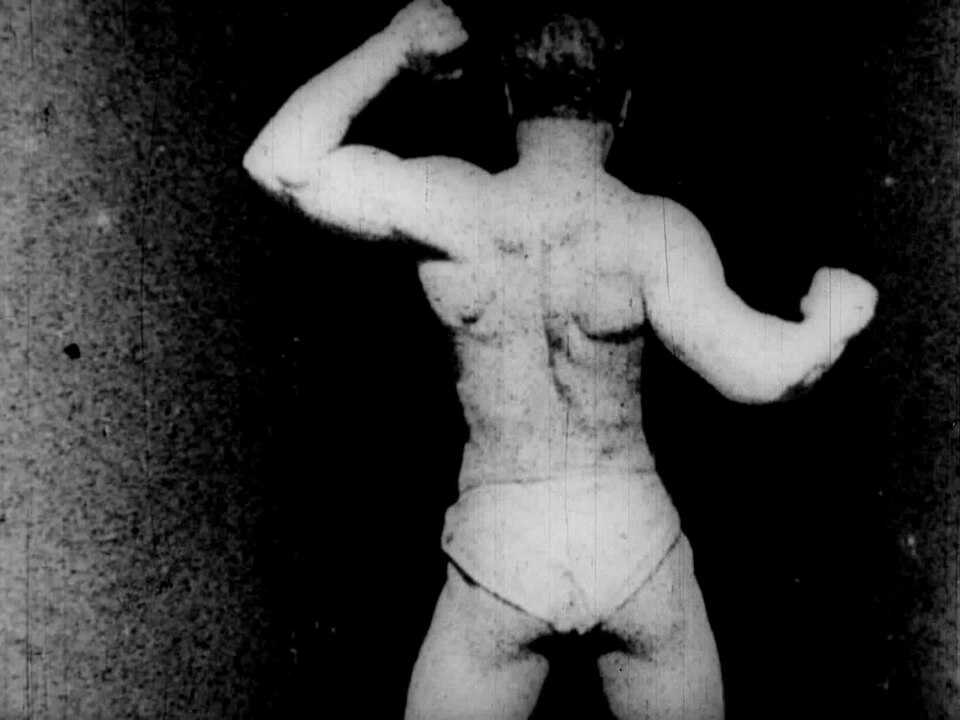
    The Library of Congress holds an American Mutoscope film of the strongman, dated approximately 1896, in which the entire attraction is a man presenting his physique to a camera. The catalogue gives its running time as 24 seconds at 16 frames per second. That is enough time to establish a remarkably durable screen genre: an attractive adult man turns slightly, and everybody agrees the technology was worth inventing.

    There is a useful distinction here between strength and its presentation. Lifting something proves that a body can do work. Posing makes that body an image. One is a demonstration; the other is an invitation to look. Sandow could supply both, but a camera is particularly good at the invitation.

    Look at the period photographs alongside the film. Benjamin J. Falk’s 1894 portrait places Sandow in a classical-looking pose, wearing a fig leaf. Napoleon Sarony’s cabinet portraits similarly turn the performer into a carefully arranged silhouette. Neither photographer is merely recording the circumference of a biceps. The angle of an arm, the distribution of weight and the outline against the background are the product.

    Eugen Sandow holds a classical bodybuilding pose in a full-length 1894 studio portrait.
    Eugen Sandow in a full-length posed portrait by Napoleon Sarony, approximately 1893.

    The classical reference performs a wonderful little administrative task. A nearly naked man can be introduced as an ideal of physical culture, a study in proportion, a living sculpture. Those descriptions do not make the attraction disappear. They give it a respectable hat. Occasionally the hat is the only substantial garment involved.

    That is the point worth keeping from the archive, rather than another argument about who invented the thirst trap. Desire does not arrive after lighting, posture and framing, like an inappropriate guest at an educational event. The arrangement of the image helps produce it. A body becomes a public spectacle through a sequence of choices about how it should be seen.
    The vaudeville advertising makes the other half of the business plain. An 1894 Strobridge lithograph promotes Sandow performing a “human dumbell” lift. There is a show to sell, not just an anatomical specimen to admire. The still photographs and the stage poster offer different versions of the same performer: ideal body and extraordinary act.

    An 1894 illustrated vaudeville poster advertises Sandow performing a human dumbbell lift.

    None of this requires assigning Sandow a sexuality, or pretending every member of his audience looked at him for the same reason. A queer reading belongs to the viewer; it is not a forged entry in the subject’s biography. The pleasure is in noticing how much room the pictures make for looking, despite all the industrious language around them.

    The technology has changed. The turn of the shoulder has had a very long career.

    look closer

    Sandow, American Mutoscope Company, approximately 1896 — Library of Congress. This is not the separate 1894 Edison film.

    Falk’s 1894 portrait — Library of Congress image and rights record via Wikimedia Commons.

    Sarony’s approximately 1893 portrait.

    The Sandow Trocadero Vaudevilles, 1894.

    Image credits: Featured image: frame from Sandow (1894), William Kennedy Laurie Dickson / Edison, Library of Congress, public domain. This is the earlier Edison film, not the c.1896 American Mutoscope film discussed above. Body images: Benjamin J. Falk, Eugen Sandow, 1894, Library of Congress, public domain; Strobridge Lithographic Company, The Sandow Trocadero Vaudevilles, 1894, Library of Congress, no known restrictions on publication. Napoleon Sarony, Eugen Sandow, approximately 1893, Library of Congress, public domain in the United States. Original compositions retained.

    Fediverse Reactions
  • 5
    rip patrick stewart, my professor x and an amazing human

    rip patrick stewart, my professor x and an amazing human

    Remembering Patrick Stewart: my Professor X, and a voice that mattered beyond the screen. Read more

    Patrick Stewart was my Professor X. That is the simplest way to say what feels enormous today.

    Stewart died on October 28 at his home in Los Angeles, aged 86, according to his spokesperson. The Associated Press reported his death today.

    There will be plenty of room to remember the Shakespeare, the captain’s chair, the extraordinary voice. But Professor Charles Xavier is the part that belongs in this goodbye. Stewart made a school for people the world feared feel like somewhere you might actually be safe.

    His Xavier had authority without needing to fill every silence. He could make patience feel powerful; make the idea of choosing understanding over fear feel worth taking seriously. In a franchise full of spectacular abilities, the willingness to see a person before seeing a threat was one of the most important.

    And the man mattered, too.

    The International Rescue Committee credits Stewart with more than a decade of raising awareness and funds for its work supporting people affected by humanitarian crises. Refuge’s own annual report records his work as a patron and his willingness to speak publicly about growing up around domestic violence. That is something concrete to remember alongside the performances: using a voice people would listen to on behalf of people who needed to be heard.

    An actor is not the same person as the characters he plays. But it means something when the person behind a beloved character gives you reasons to admire him beyond the screen.

    Rest in peace, Patrick Stewart. My Professor X, and an amazing human. Thank you.

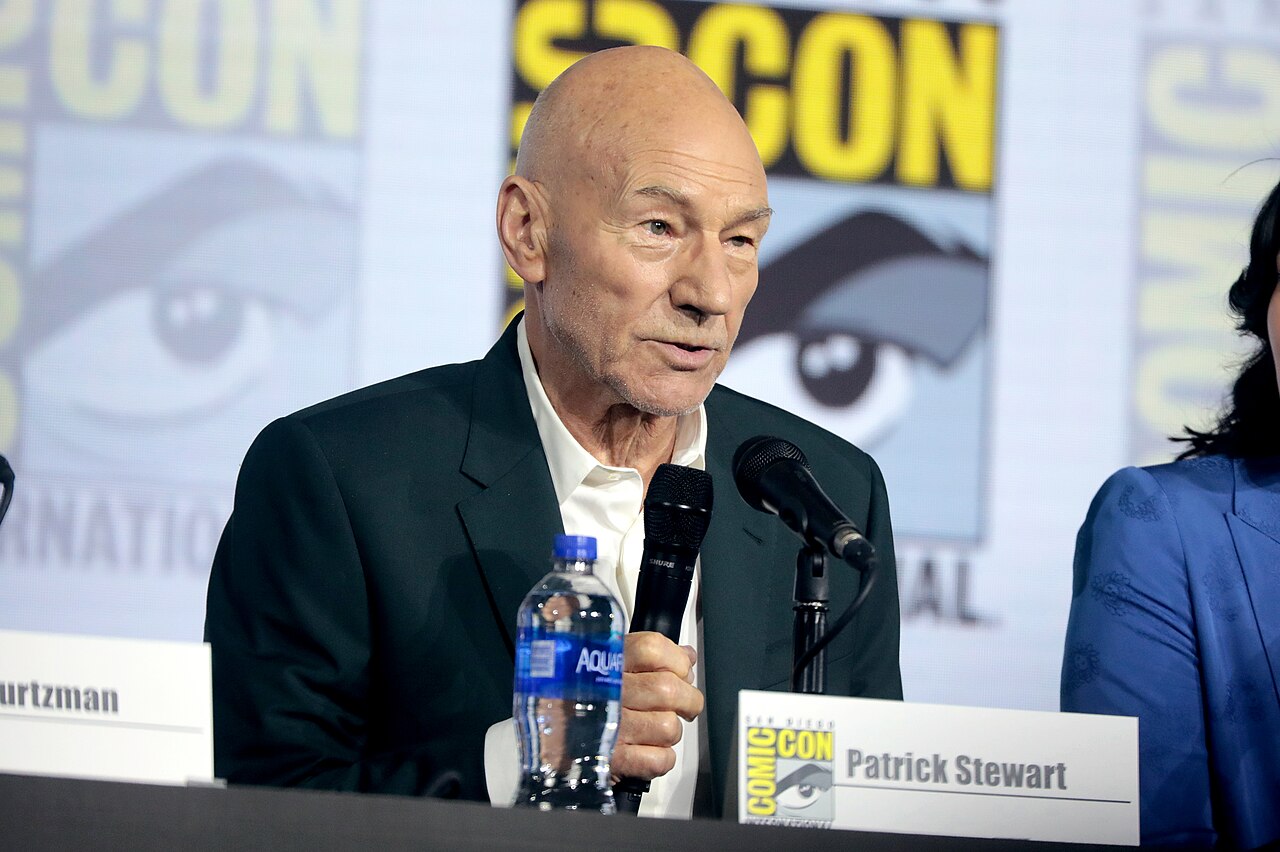
    Featured photo: Patrick Stewart at San Diego Comic-Con in July 2019, by Gage Skidmore, CC BY-SA 2.0. Resized; the photograph remains under the same license.

    Fediverse Reactions
  • 1
    queer sci-fi: love letters or found family?

    queer sci-fi: love letters or found family?

    Two queer science-fiction paperbacks, two different evenings: enemy agents exchanging letters, or a spaceship crew learning to live together. Read more

    As an Amazon Associate I earn from qualifying purchases. The Amazon links below are affiliate links.

    “Queer science fiction” is a useful shelf label and a fairly unhelpful description of the evening you are about to have. Do you want two enemy agents flirting through a war across time, or a spaceship full of people trying to live together without becoming everybody else’s problem?

    Both are available. They are not interchangeable moods.

    These two paperbacks make good entry points because each has a clear human reason to keep turning pages. You can follow a relationship before you understand every piece of the machinery. The machinery will survive being second on the agenda.

    if you want the correspondence to become a security incident

    Amal El-Mohtar and Max Gladstone’s This Is How You Lose the Time War starts with rival agents and a letter. The exchange becomes a romance, which is inconvenient for two people employed by opposing sides in a struggle over history. Their employers would prefer considerably less chemistry.

    Amal El-Mohtar outdoors with blue sunglasses resting on her head.

    The attraction here is the form: letters carrying a relationship through a setting that keeps shifting beneath it. Choose this if you like language to be part of the pleasure, rather than a transparent delivery system for the next explosion. The publisher’s excerpt is worth trying before buying; it makes the intensity of the prose clear immediately.

    Short does not necessarily mean breezy. This is a concentrated, standalone story, with war and danger around its central romance. It suits the reader who wants to pay attention to the sentence, not just find out which faction has the better equipment.

    This Is How You Lose the Time War

    Amal El-Mohtar & Max Gladstone · Trade paperback · Standalone

    This Is How You Lose the Time War — trade paperback on Amazon (paid link)

    if you would rather meet the crew

    Becky Chambers’s The Long Way to a Small, Angry Planet follows Rosemary Harper onto the Wayfarer, a working spaceship with a mixed-species crew. Their big opportunity is a job building a hyperspace tunnel. The route goes through dangerous territory; the living arrangements remain intimate.

    Becky Chambers at the 2017 Utopiales festival in Nantes.

    Choose this when the appealing part of a space adventure is finding out who lives on the ship. The publisher’s setup spends time introducing its pilot and engineers for a reason. Personalities, relationships and different ways of being a person are central to the trip. Queer relationships belong in that everyday social world rather than arriving as a separate syllabus.

    It is an ensemble space opera, not a romance with everyone else standing politely outside the door. It is also the first Wayfarers novel. Start here if you want the beginning of a larger reading option; choose Time War if the lack of a series commitment is part of the appeal. The Amazon link is to the US Harper Voyager paperback, ISBN 9780062444134, rather than the UK edition on the synopsis page.

    The Long Way to a Small, Angry Planet

    Becky Chambers · US Harper Voyager paperback · ISBN 9780062444134 · First Wayfarers novel

    The Long Way to a Small, Angry Planet — US paperback on Amazon (paid link)

    choose the company, then the spacecraft

    One offers the intimacy of a letter addressed to exactly the wrong person. The other offers the intimacy of sharing a ship with people who cannot all have the same idea of normal. That is a more useful buying decision than trying to find the single correct gateway into an entire genre.

    Pick the relationship you want to spend time with. Space is already doing quite enough expanding.

    Image credits: Andromeda composite: NASA/JPL-Caltech/K. Gordon (Univ. Of Arizona) & GALEX Science Team, public domain; Amal El-Mohtar: SouthernNights, CC BY-SA 4.0; Becky Chambers: Colibrette44, CC BY-SA 4.0. Images resized; portrait orientation corrected where needed. The galaxy image is illustrative, not artwork from either book. CC BY-SA portraits remain under that license.

    Fediverse Reactions
  • 2
    your music collection does not need a dress code

    your music collection does not need a dress code

    CDs, vinyl, and a two-album starting point for owning the music without acquiring a second job. Read more

    CDs, vinyl, and a two-album starting point for owning the music without acquiring a second job. As an Amazon Associate I earn from qualifying purchases. The Amazon links below are affiliate links.

    There is a particular trap in deciding to own music again: somehow, before you have bought one album, you are researching furniture.

    Vinyl can be lovely. The sleeve is large enough to appreciate without a magnifying glass. Putting a record on gives listening a beginning, a middle, and a small intermission in which you stand up. If that ritual appeals to you, excellent. A hobby is allowed to have props.

    But wanting to keep an album and wanting to become a turntable person are two different desires. The compact disc remains an extremely reasonable answer to the first one. It does not need to win a lifestyle contest first.

    start with the player, not the personality

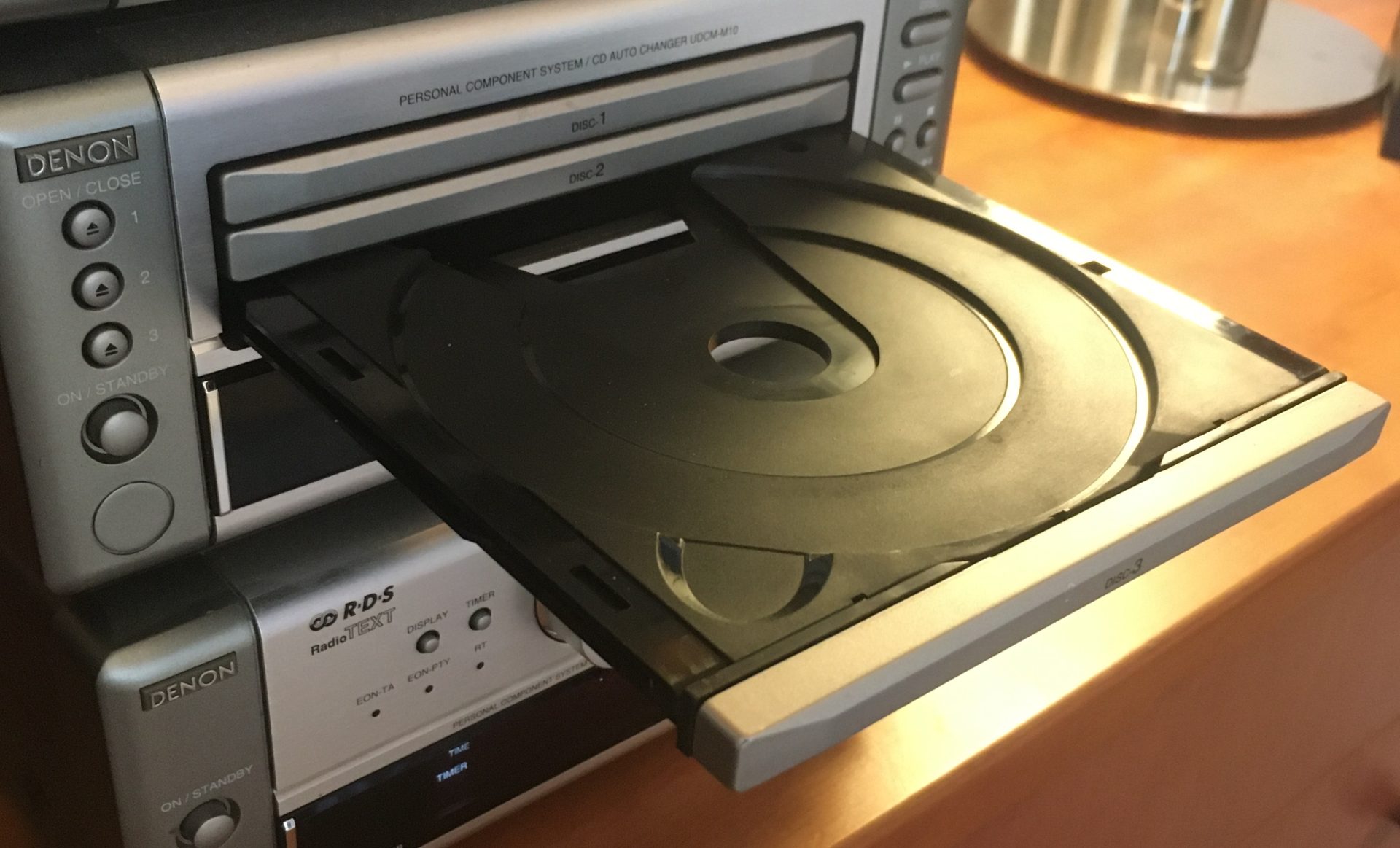
    Before buying anything, identify where the disc will actually play. A CD player is the obvious answer. Another device may work, but check its manual for audio-CD support rather than assuming every machine with a slot has the same ambitions. Confirm the connection to your speakers or headphones, too. A bargain is less impressive when its next sentence begins “you’ll also need.”

    If you already have a working CD setup, try buying one album you repeatedly return to. Not ten canonical records that a stranger says will improve your character. One album you want to hear all the way through.

    A reflective compact disc catches rainbow-colored light beside other discs.

    Owning a physical copy makes a very modest promise: you have that copy. You still need compatible, working equipment and a disc that has survived your household. It is not immortality, and it does not include every future remaster. It is simply a recording on an object you can keep, without needing a streaming subscription to play that disc.

    let vinyl be something you want

    A black vinyl record with a red center label spins beneath a turntable’s stylus.

    Choose vinyl because handling records, looking at sleeves, and sitting through a side are things you enjoy. Choose CD because you want the physical album with less ceremony. Neither decision needs a speech about how the other people are listening incorrectly.

    Also, do not let the format name stand in for the edition. Check the artist, album, track list, disc count, and whether the listing is a remaster or an expanded set. “Deluxe” is not a synonym for “the one you meant.” Sometimes it means an extra disc you genuinely want. Sometimes your favorite album has been appointed chair of a large committee.

    These two releases offer a useful distinction.

    grace jones: the album is enough

    Nightclubbing is the compact choice: an album with a very clear sense of its own atmosphere. The title track, “Walking in the Rain,” and “Pull Up to the Bumper” give you plenty to return to without assigning a bonus-material syllabus.

    Universal’s uDiscover retrospective traces the 1981 album’s combination of Jamaican rhythms and post-punk, with Sly Dunbar and Robbie Shakespeare central to the sound. The attraction here is the whole sequence, not merely owning the familiar song.

    Nightclubbing — Grace Jones

    Single-CD remaster · Not the deluxe two-CD package

    The linked edition is the single-CD remaster, not the separate deluxe two-CD package or Blu-ray Audio release. See Grace Jones’ Nightclubbing remastered CD on Amazon (paid link).

    pet shop boys: the extra room has a purpose

    Actually supplies a different reason to buy a disc: the album plus an organized look around it. “Shopping,” “Rent,” and “It’s a Sin” make a particularly appropriate soundtrack for thinking carefully about what goes in the cart.

    The 2018 Actually / Further Listening 1987–1988 two-CD edition keeps the original album on disc one and puts the additional material on disc two. The band’s official edition page lists mixes, B-sides, and versions of “Always on My Mind” there. That last song is not part of the original ten-track album; the packaging distinction matters.

    Actually / Further Listening 1987–1988 — Pet Shop Boys

    2018 two-CD edition · Original album + additional material

    This is the pick if exploring alternate versions sounds enjoyable rather than administrative. See Pet Shop Boys’ Actually / Further Listening two-CD edition on Amazon (paid link).

    a shelf is not an entrance exam

    Check the selected format and edition before ordering, especially when a retailer groups several versions on one page. Compare the total and the seller’s condition description; this is a listening project, not a timed event.

    Buy one. Play it. Decide whether you want another.

    The collection can become a wall later. It does not need planning permission on day one.

    Image credits: featured image, “CD player with open tray” by Jberkel, CC BY-SA 4.0, unchanged. Body images: “Compactdisc” by Sarahginny, public domain, unchanged; “Record Player 33RPM” by The People’s Internet, CC0 1.0, unchanged. Equipment photographs illustrate the formats, not the linked album editions.

    Video: Pet Shop Boys — It’s a Sin, official Parlophone music video. The video illustrates the song, not the mastering or contents of the linked CD edition.

    Fediverse Reactions
  • 1
    these comics have an exit

    these comics have an exit

    Three complete graphic novels for readers who would like an ending rather than another universe to manage. Read more

    As an Amazon Associate I earn from qualifying purchases. The Amazon links below are affiliate links.

    Sometimes the most attractive thing a comic can offer is a last page. An actual last page, after which nobody needs to explain that the good part continues in three different books called volume one.

    These three graphic novels give you a complete story in one paperback. That gets them through the door. The drawings are the reason to stay: a life assembled from memories, a city rendered in impossible colors, and a spacecraft that looks like it might need feeding.

    daytripper: a whole life in the margins

    Daytripper cover: a man and dog beneath a city, typewriter and memories rising through a silhouetted profile.

    Fábio Moon and Gabriel Bá’s Daytripper follows Brás de Oliva Domingos, an aspiring novelist who writes obituaries. Each chapter visits a different moment in his life, finding an ending and then asking you to reconsider the life around it. Work, family, love and disappointment give that structure its weight.

    Look at the cover’s scale. Brás and a dog sit beneath an enormous profile filled with a typewriter, buildings and objects. The individual is small; the accumulated stuff of a life fills the page. Its shift from dark brown through pink into blue gives those memories a physical shape, rather than leaving the premise to a blurb.

    That is a more useful invitation than simply calling it a comic about death. The 256-page collected paperback makes room for the ordinary things that an obituary compresses. This is the pick for human-scale drama, with grief and mortality built into the structure. DC’s edition listing has the collection details.

    Daytripper

    Fábio Moon & Gabriel Bá · Collected paperback · 256 pages

    Daytripper — paperback on Amazon (paid link)

    the many deaths of laila starr: death has been made redundant

    Filipe Andrade’s Laila Starr cover, with a turquoise figure floating over a densely drawn orange city.

    Humanity is approaching immortality, which creates a staffing problem. In Ram V and Filipe Andrade’s The Many Deaths of Laila Starr, Death is sent to Mumbai to live as a mortal woman. She knows where the person who will make her obsolete is about to be born.

    Opening page of The Many Deaths of Laila Starr: coral and lavender Mumbai towers above blue streets and a curving elevated road.

    Andrade’s opening city page makes the setting an immediate attraction. Coral and lavender towers rise over a dense blue foreground; a curving elevated road pulls the eye across the lower half. The buildings are carefully drawn, but their colors refuse to behave like an architectural photograph. Before the divine office politics get going, Mumbai already has its own visual presence.

    The cover pushes that palette harder, setting a turquoise figure against a hot orange city. If the premise sounds abstract, these pages supply texture and a place to get lost. The 128-page paperback collects all five issues, making this the shortest of the three. BOOM!’s first-look announcement introduces the book and its creators.

    The Many Deaths of Laila Starr

    Ram V & Filipe Andrade · Paperback collection of #1–5 · 128 pages

    The Many Deaths of Laila Starr — paperback on Amazon (paid link)

    on a sunbeam: the spaceship is a fish

    On a Sunbeam cover by Tillie Walden: a young woman at a spacecraft window beneath a black starfield.

    Tillie Walden’s On a Sunbeam moves between a crew restoring ruined structures in space and two girls falling in love at boarding school. The two timelines lead into a search for a lost love. It is the young-adult selection here, with queer romance and found family at its center.

    On a Sunbeam’s opening page: a face in a spacecraft window and a fish-shaped ship beside a floating building, drawn in lavender, black and white.

    The opening page gives the journey a wonderfully unhurried shape. Broad panels leave room for black space and scattered stars. A face in a cockpit window gives way to a fish-shaped craft beside a tall, floating building. Lavender, black and white do most of the work; the intricately drawn architecture makes this universe feel handmade rather than clinically futuristic.

    At 544 pages in the First Second paperback, it is the long stay. You can also read the complete webcomic free on Walden’s official site, starting with chapter one. That is a much better way to see whether its rhythm suits you than taking anyone’s word for it.

    On a Sunbeam

    Tillie Walden · First Second paperback · 544 pages

    On a Sunbeam — paperback on Amazon (paid link)

    Three different kinds of room to inhabit, and none requires a continuity chart. Start with the artwork that makes you want to turn the page.

    Image credits: Daytripper cover, Fábio Moon and Gabriel Bá, DC/Vertigo, via Penguin Random House Comics; The Many Deaths of Laila Starr cover, Filipe Andrade, BOOM! Studios, via PRH Comics. Laila Starr opening-page preview: art Filipe Andrade, lettering AndWorld Design, ©2021 Ram V, BOOM! Studios; publisher preview via Comicsblog, original credit footer retained. On a Sunbeam cover via First Second/Macmillan; opening page from Tillie Walden’s official webcomic, ©Tillie Walden. Covers and brief page excerpts accompany discussion; rights remain with their respective owners. Featured library photograph: Davide Cantelli, CC0; illustrative, not a photograph of these books.

    Fediverse Reactions
  • 1
    your xbox controller does not need a snack budget

    your xbox controller does not need a snack budget

    Four rechargeable AAs, one compatible charger, and a useful reminder: the controller’s USB port won’t charge those cells. Read more

    As an Amazon Associate I earn from qualifying purchases.

    An Xbox controller should not need a recurring snack budget. If yours is a standard Xbox Wireless Controller with an AA compartment, four rechargeable AAs make a simple rotation: two in the controller, two charged and waiting.

    The Panasonic eneloop K-KJ17MCA4BA kit pairs four AA cells with a BQ-CC17 charger. That is enough for the rotation without buying a drawer full of batteries. Panasonic explains the charger’s individual charging slots.

    A Panasonic eneloop retail package containing two white AA rechargeable batteries.

    The photograph shows a two-cell AA pack, not the four-cell-and-charger kit linked below.

    One catch matters: the AAs charge in the external charger. Plugging a USB cable into the controller does not recharge AA batteries. Xbox’s battery guidance distinguishes replaceable AAs from its rechargeable battery pack.

    Skip this if your controller has a built-in battery, or if you already own suitable rechargeable AAs and a compatible charger. Check the exact kit number before buying; a battery-only pack is a different purchase. The useful upgrade is having a spare pair ready, not collecting more charging accessories.

    Panasonic eneloop K-KJ17MCA4BA

    Four AA rechargeable cells + BQ-CC17 external charger.

    Two in the controller, two ready for the next round. Check that your controller takes replaceable AAs.

    Image credit: Xbox Wireless Controllers, AlexZade, CC BY-SA 4.0. Resized for display; no other changes. Contextual controller photograph, not a product photograph of the charger kit.

    Additional image: PanasonicEneloop, SergeSF, CC0. Resized for display; packaging illustrates AA cells, not the linked kit.

    Fediverse Reactions
  • 3
    twenty-one years of scrobbles, zero genre supervision

    twenty-one years of scrobbles, zero genre supervision

    Twenty-one years of Last.fm: indie foundations, theatrical singles, and an all-time bangers playlist with very few quiet transitions. Read more

    My two most-scrobbled albums on Last.fm are separated by one play. Skeletal Lamping has 417; Hissing Fauna, Are You the Destroyer? has 416. Both are by of Montreal. After all this time, apparently there is still an internal election.

    That is the useful surprise in looking through my public listening history. The singles chart has Käärijä, Lorde, Britney Spears and Kim Petras. The albums still have a substantial indie-rock foundation. The collection has acquired more entrances without demolishing the original building.

    This account goes back to high school. Last.fm gives the joining date as October 23, 2005, and the profile showed 66,955 scrobbles across 5,589 artists when checked on October 26, 2026.

    the 2006 evidence is still there

    The oldest accessible page of loved tracks supplies something more specific than nostalgia by release date. In September 2006, the marked favorites include Clap Your Hands Say Yeah’s “The Skin of My Yellow Country Teeth,” the New Pornographers’ “Twin Cinema,” and the Decemberists’ “Bandit Queen.” Weird Al’s “White & Nerdy” is there too. The filing system was never especially strict.

    October adds of Montreal’s “Happy Yellow Bumblebee,” Jump, Little Children’s “B-13,” and Ben Folds’ “Zak and Sara.” By November, the Mountain Goats’ “This Year” and Silversun Pickups’ “Lazy Eye” appear. They establish an actual early trail: distinctive voices, busy songs, and room for a joke.

    Kevin Barnes sings into a microphone, wearing glittering eye makeup and a red ruffled top.

    The middle of the archive makes the overlap clearer. By 2012–13, the loved tracks include The Book of Mormon’s “Hasa Diga Eebowai,” Scissor Sisters’ “It Can’t Come Quickly Enough,” and Icona Pop’s “I Love It,” featuring Charli XCX. Jump, Little Children and of Montreal appear in that same stretch. The pop and theatre were already sharing the room with the bands.

    the albums stayed; the singles got louder

    Across the account’s recorded history, of Montreal leads the artist chart with 2,124 scrobbles. Lady Gaga follows with 1,285, then Jump, Little Children with 1,207, RuPaul with 1,039, and Charli xcx with 904. That top five is a fairly efficient rebuttal to the idea that a listening history needs one genre.

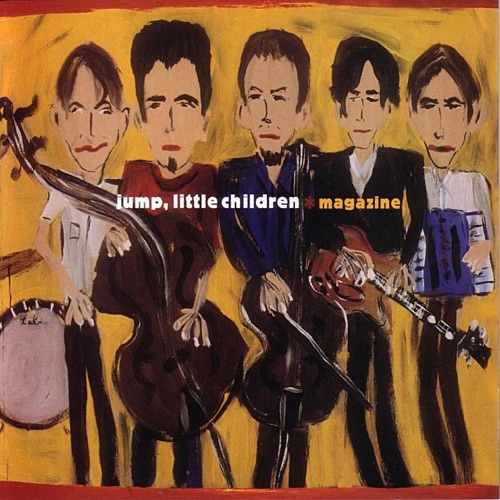
    Below the nearly tied of Montreal albums sits Jump, Little Children’s Magazine, followed by Gaga’s Chromatica and Alaska Thunderfuck’s Anus. Album totals count individual track scrobbles, so they are not counts of complete album listens. Even with that limitation, the company is revealing. The art-pop, the band records, and the very large pop gestures have all accumulated substantial repeat business.

    The lifetime track chart puts “Cha Cha Cha” first at 98 recorded plays, with “Royals” at 96. “Work,” “Die Young,” “My Queer Teenage Anthem,” and “There Will Be Blood” follow. Then Rilo Kiley’s “With Arms Outstretched” turns up in the top ten, keeping a seat for the guitars. This is a persuasive argument for a playlist with very few quiet transitions.

    Lady Gaga plays a sculptural piano under blue light, with her face projected on the screen behind her.

    the newer window has its own cast

    The past-365-days artist chart, checked on the same date, is led by Charli xcx, followed by Ke$ha and Kim Petras tied, then Nemo and Robyn. That is a different emphasis from the lifetime totals. It does not establish a clean break with the older music: the current loved-tracks pages still put of Montreal, the Postal Service and Rilo Kiley alongside Gaga and RuPaul.

    The interesting pattern is accumulation. The early indie favorites remain visible while dance-pop and theatrical singles gain more space.

    all-time, no snooze

    The accompanying all-time bangers playlist turns that combination into something playable: a selection informed by the history, rather than a mechanical countdown of the highest totals. The brief is a commute with some momentum. The scrobbles can handle the paperwork.

    Open “all-time, no snooze” in Spotify: 50 tracks, about 2 hours 44 minutes. Seven selections are editorial picks from heavily scrobbled albums; the rest have direct track-level evidence in the public history.

    Last.fm isn’t the whole story, but twenty-one years of scrobbles still leave a pretty good paper trail.

    Photo credits: featured, Käärijä at the Eurovision 2023 final rehearsal by Michael Doherty, CC BY-SA 4.0. Body: Kevin Barnes in Gothenburg, 2005 by Jonas Riise Hamre, public domain; Lady Gaga at The Chromatica Ball, 2022 by Sjoerd van der Schaaf, CC BY 2.0. Resized for display; no other changes. Concert photographs illustrate the artists, not events attended by the author.

    Fediverse Reactions