dating apps reward us for turning ourselves into instantly legible archetypes. unfortunately, metaphors are package deals. Read more
the funniest thing about calling yourself a golden retriever on a dating app is that you are asking strangers to take a metaphor seriously, but only in the flattering directions.
you would like us to picture loyal, upbeat, affectionate, and delighted to see us. sure. lovely. but dogs also bark, need supervision, eat things that are not food, and occasionally have to be told to get off the furniture. metaphors are not à la carte.
dating profiles are tiny branding exercises
a dating profile gives you a few photographs, a handful of prompts, and just enough room to construct a version of yourself that can be understood before someone’s thumb gets impatient. naturally, we reach for shorthand. adventurous. sarcastic. fluent in movie quotes. golden retriever.
the phrase usually means a partner who is warm, loyal, social, and openly enthusiastic. The Knot’s definition emphasizes supportiveness and devotion, while a 2024 TIME essay puts the trope in a larger family of internet labels that try to describe men by how they orient themselves toward a partner. both are nicer than “i own three quarter-zips and become emotionally unavailable during football season,” which is presumably why the dog won.
the trouble starts when a label stops describing a vibe and begins functioning as a character reference. “golden retriever” can become a way to announce that you are safe, uncomplicated, and emotionally available without demonstrating any of those qualities. it is the dating-app equivalent of a restaurant describing itself as a neighborhood institution before the neighborhood has had a chance to vote.
maybe you really are cheerful and affectionate. excellent. the world needs more of that. but if your entire self-description rests on being playfully doglike, you cannot act scandalized when somebody playfully uses a dog verb. you opened this kennel.
every archetype comes with terms and conditions
internet dating archetypes are appealing because they make personality feel sortable. the golden retriever goes with the black cat. the extrovert adopts the introvert. one person talks to the waiter, and the other knows when it is time to leave the party. a relationship becomes a two-panel comic that can be understood without anyone having to explain their actual needs.
sometimes that shorthand is accurate, and sometimes it is just a costume with good search-engine optimization. real people do not remain on brand. the sunny one gets tired. the mysterious one wants reassurance. the allegedly low-maintenance one has, in fact, developed several maintenance requirements.
that does not make the labels useless. it just means they are introductions, not warranties. “golden retriever energy” can tell me that you aspire to be kind, enthusiastic, and present. wonderful. now comes the part where you have to behave that way when you are bored, annoyed, embarrassed, or asked to bark.
the reblog works because it completes the transaction. if you put a dog breed in the brochure, somebody is eventually going to test the product. sit. stay. communicate directly about your feelings. apparently one of these commands is much harder than the others.
there are celebrity birthdays, and then there are holidays with choreography. September 4 belongs in the second category. you do not need decorations. you do not need a themed cocktail. you need the extended mix, enough floor space to make one or two irresponsible choices, and the willingness to follow instructions delivered at club volume.
this year the observance is unusually tidy: Beyoncé turned 45 on September 4, 2026, while B’Day turned 20. the album was released on her 25th birthday, because even in 2006 Beyoncé understood that the cleanest way to receive a present is to give everybody else homework.
Beyoncé on the Formation World Tour, May 16, 2016. Photo by Kevin Edwards, CC BY 2.0, via Wikimedia Commons.
the extended mix is not optional
the regular album version of “Get Me Bodied” is very good. this is not its day.
the extended mix is the version that turns the song from a single into a municipal event. it keeps finding more song after a normal song would have politely gone home. Beyoncé calls out moves, the room becomes a line dance with better posture, and Kelly Rowland, Michelle Williams, and Solange appear in the video like the world’s most overqualified birthday committee.
six minutes is exactly the correct length because the point is not efficiency. the point is escalation. “Get Me Bodied” begins as a request and ends as a small government with mandatory physical education.
Beyoncé’s official “Get Me Bodied (Extended Mix)” video, featuring Kelly Rowland, Michelle Williams, and Solange.
it is also a nearly perfect summary of B’Day: urgent, percussive, slightly bossy, and entirely uninterested in behaving like background music. the album sounds as though every instrument has been told there are only ten minutes left before the venue charges overtime. even the slower moments feel like somebody is about to kick open a door.
twenty years later, the album is still yelling correctly
the 20th anniversary arrived with a new 31-track deluxe edition, including previously unreleased material and several versions of “Get Me Bodied.” People reported the release on September 4, along with Tina Knowles’s birthday tribute to her daughter. it is a very Beyoncé solution to an anniversary: do not merely remaster the old thing; make the old thing expand until it requires its own filing system.
Beyoncé performing in Vancouver during the I Am Tour. Photo by Jenn Lowther, CC BY 2.0, via Wikimedia Commons; cropped and brightness adjusted by J.ébey.
anniversary editions can feel like archival housekeeping: here are the demos, here is the booklet, please purchase the object again in a slightly more rectangular box. B’Day does not really lend itself to tasteful archival distance. the album is still too sweaty. “Déjà Vu” still arrives already in motion. “Ring the Alarm” still sounds like the alarm has developed a personal grievance. “Upgrade U” remains a performance review delivered over horns.
and “Get Me Bodied” still works because it never pretends dancing is spontaneous. it gives you the instructions. pat your weave. tick. fight the feeling. tick. do the Naomi Campbell walk. the song knows that sometimes freedom requires a checklist.
so, happy Beyoncé day. if you listened to the short version, the holiday board has reviewed your paperwork and found it incomplete. please report to the extended mix, where attendance will be taken by name, birthday, and ability to drop down low and sweep the floor with it.
professional wrestling is at its best when the entire story can be explained to a child in one sentence and the child… Read more
professional wrestling is at its best when the entire story can be explained to a child in one sentence and the child is already furious before you finish.
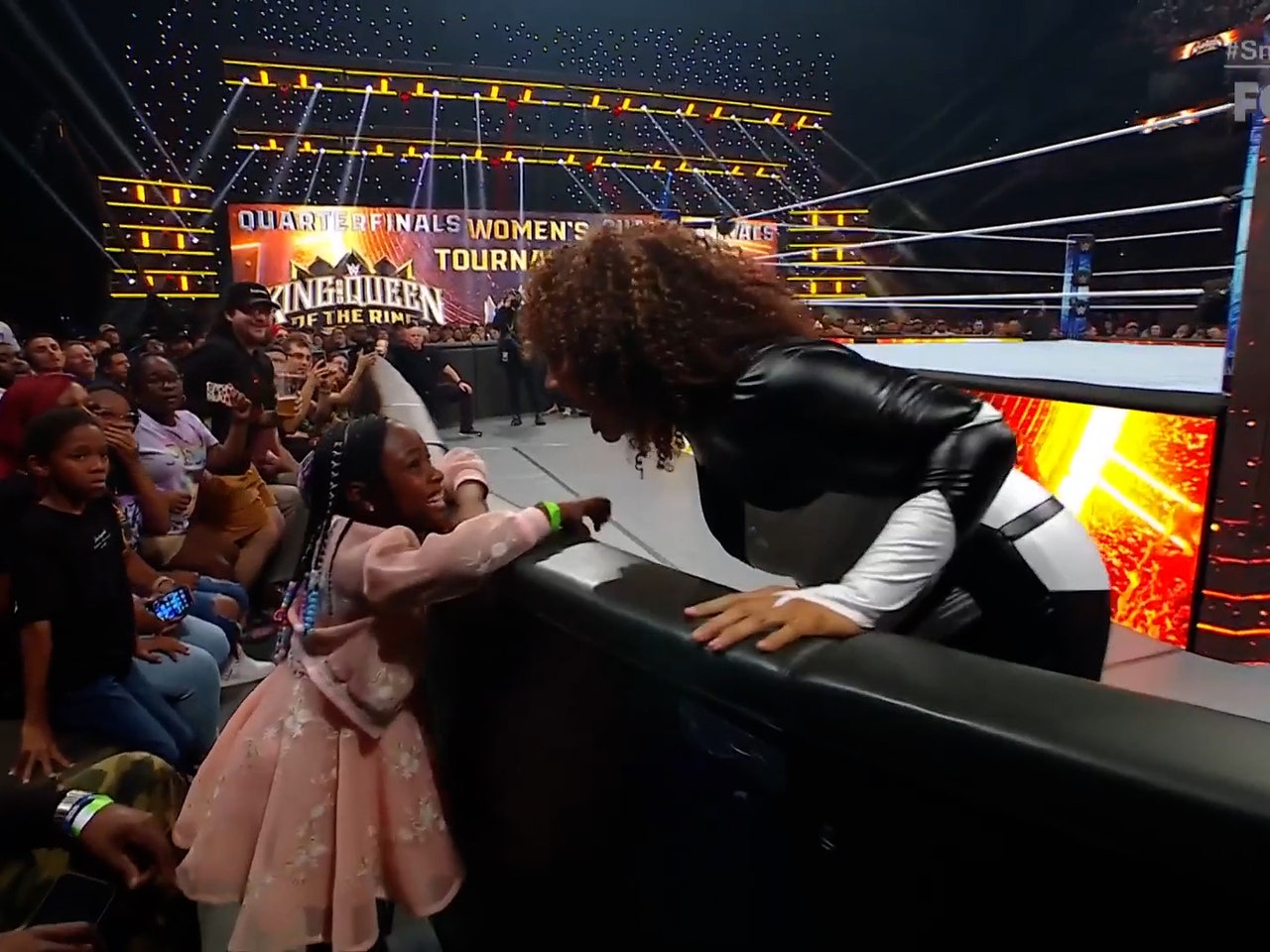
this clip from the May 17, 2024 SmackDown is eleven seconds long. Nia Jax walks over to Jade Cargill’s daughter, Bailey, and tells her that her mom sucks. Bailey objects, correctly. Jade gets off the floor and superkicks Nia. we have a villain, a victim, a personal stake, a comeback, and a cathartic act of violence. prestige television has spent eight episodes accomplishing less.
Nia Jax tells Bailey that her mom sucks; Jade Cargill responds. WWE SmackDown, May 17, 2024, preserved via ruinedchildhood on Tumblr; used for commentary.
the barricade is not a wall
the thing I love is that Bailey does not look like a performer who has been inserted into an angle. she looks like a kid who has just received inaccurate information about her mother and would like the record corrected immediately. Nia understands the assignment, because the assignment is being mean enough to make a child hate you without making the child actually afraid of you.
Reaction post preserved in the originating Tumblr reblog; used for commentary.
wrestling crowds are not audiences in the normal sense. the barricade separates them from the match physically, but the whole art form depends on pretending it does not separate them narratively. people boo, chant, argue with referees, warn wrestlers about someone sneaking up behind them, and occasionally discover that their mother is now part of the show.
most entertainment asks you to sit quietly while trained professionals manufacture a feeling. wrestling gives you a folding chair, sells you a foam finger, and asks you to help. the audience is the laugh track, the Greek chorus, the focus group, and, on the right night, an unpaid supporting cast with excellent seats.
your mom’s enemy has been superkicked
Reaction post preserved in the originating Tumblr reblog; used for commentary.
the reply calling this a top-five moment in Bailey’s life is probably right. children rarely get such clean emotional bookkeeping. somebody insults your mom, your mom stands up, and that person is immediately kicked in the face while several thousand people cheer. there is no waiting for HR, no carefully worded group text, and no six-month process of realizing that the best revenge is living well. the revenge is a superkick. it arrives before the sentence has fully cleared the air.
Jade was disqualified from the Queen of the Ring match, which is also perfect. the rules say she lost. every other available form of human judgment says she won. the tournament continued, Nia eventually became Queen of the Ring, and Bailey got permanent evidence that her mother will abandon a bracket to defend her honor.
this is why I keep coming back to wrestling even when the booking is nonsense and the weekly shows are approximately nine hours long. occasionally, the enormous corporate production machine stumbles into something so small, legible, and human that it becomes the whole point: a heel says “your mom sucks,” a kid says “no,” and mom handles it.
the match and ringside confrontation took place during Jade Cargill vs. Nia Jax in the Queen of the Ring quarterfinal on WWE SmackDown, May 17, 2024. FOX Sports has the match highlight.
I bought Oblivion Remastered on Switch 2 for the soothing combination of open-world wandering and half-watching television. The game responded by misplacing… Read more
i bought The Elder Scrolls IV: Oblivion Remastered on Switch 2 because it was on sale, and because an open-world game is ideal for the deeply sophisticated activity of playing a video game while also half-watching television.
Cyrodiil is big, familiar, and pleasantly indifferent to whether i am paying full attention. i can wander into a cave, pick up seventeen objects i do not need, forget why i entered the cave, and still feel as though i accomplished something. this is basically wellness.
playing the oblivion remaster and, there’s a quest-breaking bug in one of the mage guild recommendation quests? lovely
then i reached the Cheydinhal Mages Guild recommendation quest, which asks you to recover the Ring of Burden from Vidkun’s body at the bottom of a well. simple enough, except the body was not there.
the game had misplaced its corpse.
Official Bethesda promotional screenshot for the Nintendo Switch 2 version of Oblivion Remastered, used for commentary.
please allow three business days for the dead man to regenerate
apparently the proposed cure is to leave town and sleep or wait for three in-game days so the environment can reset. this is less a quest solution than an instruction to take a short vacation until the deceased remembers his appointment.
**apparently** the body in the well shows up if I go into another town and sleep or wait for 3 days so it regenerates the environment but I skipped it and hope by the time I come back the body is there 🤞
i skipped the recommendation for now. i am hoping that when i return, Vidkun will be in the well, the ring will be on Vidkun, and the Mages Guild will stop evaluating my application through a scavenger hunt run by a broken municipal coroner.
the best part is that this is not fresh 2026 jank. it is heritage jank. players were documenting the disappearing-body problem back in 2006, when a Nexus forum thread traced it to the game cleaning up Vidkun’s corpse after several days because it was not marked as permanent. the UESP discussion likewise notes that the body may disappear after three in-game days.
Bethesda’s own support page says the missing Vidkun and Ring of Burden problem was addressed in patch 1.1 for the original game. two decades later, players of the remaster have reported the same basic failure again. the new version restored the textures, lighting, foliage, and apparently the corpse’s right to vanish without notice.
Official Bethesda promotional screenshot for the Nintendo Switch 2 version of Oblivion Remastered, used for commentary.
on pc, reality has an edit button
if i were playing on PC, i could probably use a console command, edit a save, or install a mod built by somebody who got tired of waiting for Bethesda to put the dead man back. on Switch 2, i have portability, suspend mode, and the pure console experience of being trapped inside the official version of reality.
this is where the famous Bethesda charm stops being charming for a minute. a guard walking into a wall is atmosphere. an apple vibrating itself off a table is environmental storytelling. a required quest object ceasing to exist is the game turning to you and saying, with total confidence, “have you considered not advancing?”
i still love Oblivion. that is part of why this is funny, and part of why it is annoying. the game’s instability has always been tangled up with its enormous ambition: every person has a schedule, every object has physics, and every corpse apparently has somewhere else to be. remastering it without fully taming that chaos may be faithful, but there is faithful, and then there is reissuing the same administrative error in high definition.
Nintendo’s official trailer for Oblivion Remastered on Switch 2.
for now, i will go do other quests and let Cheydinhal marinate. perhaps three days from now, the well will repopulate. perhaps the ring will return. perhaps i will become the only Mages Guild applicant rejected because the dead guy missed his appointment.
when a poor person takes from a rich institution, we call the police. when a rich institution takes from a worker, we… Read more
I reblogged a post this morning that gets at one of capitalism’s better magic tricks: poor people are expected to conduct an ethics seminar before taking anything from the rich, while rich people can take money from workers repeatedly, call it a payroll issue, and make everyone wait two pay periods for an update.
The point is not that every act of theft becomes morally pure when the victim owns a boat. The point is that we use the word theft very selectively. If somebody walks out of a store with laundry detergent, local television has security footage by six. If an employer edits timecards, withholds tips, demands unpaid work before clock-in, misclassifies employees, or simply does not pay overtime, the language becomes soft enough to nap on.
It is an “error.” A “discrepancy.” A “compliance matter.” Possibly an exciting opportunity to contact a human-resources portal that replies from an address named NOREPLY.
A historical comparison using 2012 FBI and Economic Policy Foundation data. Chart by Guest2625, via Wikimedia Commons, licensed CC BY-SA 3.0.
the crime becomes paperwork when the thief owns the paperwork
Wage theft covers a lot of ordinary employer behavior: paying less than minimum wage, denying overtime, making people work off the clock, taking tips, using illegal deductions, or labeling somebody an independent contractor because payroll discovered a fun costume for an employee. None of this requires a dramatic heist. Usually it requires a manager, a scheduling system, and confidence that the worker cannot afford to fight back.
The scale is not theoretical. The U.S. Department of Labor’s Wage and Hour Division says it recovered more than $259 million in back wages for 176,957 workers in fiscal year 2025. That is only what one federal division recovered through enforcement. It is not an estimate of everything taken, and it does not include every worker who never knew, never reported it, or decided losing the job would be worse than losing the money.
The average recovery was $1,465 per worker. For somebody living paycheck to paycheck, that is not an abstract line on a labor economist’s spreadsheet. It is rent, medication, groceries, a car repair, or the small emergency fund that keeps one bad week from becoming six bad months.
Fast food workers striking in Saint Paul in 2016. Photo by Fibonacci Blue, via Wikimedia Commons, licensed CC BY 2.0.
we moralize downward and administrate upward
Our cultural response is upside down. Petty theft by poor people becomes a referendum on social collapse. Theft from workers becomes a seminar about how difficult it is to run a small business. Apparently the moral seriousness of taking money decreases as the quality of the accounting software improves.
This is why the original post lands. The wealthy do not need to snatch cash from your hand. They can take fifteen minutes from every shift, deny a break, shave a commission, hold a final paycheck, or write a policy that makes the theft look automatic. The money still leaves one person and benefits another. It has merely passed through a respectable interface.
And when a worker objects, the burden reverses immediately. Did you document it? Do you have the schedule? Did you save the messages? Can you prove the manager knew? Are you prepared to keep working beside the person you reported? The employer controls the records, the workplace, and the paycheck, but the employee is assigned a side quest called Evidence.
The Department of Labor explains that workers may be able to recover back pay, liquidated damages, attorney’s fees, and court costs under federal law. Those remedies matter. So do unions, stronger state enforcement, meaningful penalties, and treating retaliation as the threat it actually is. A right that can only be exercised by somebody with spare time, legal knowledge, and another job lined up is less sturdy than the brochure suggests.
We do not have to settle every philosophical question about property before noticing the obvious hierarchy. When a poor person takes from a rich institution, we call the police. When a rich institution takes from a poor person, we ask whether they have opened a ticket.
some fandoms are things you enjoy. others quietly become part of the structure holding every version of you together. Read more
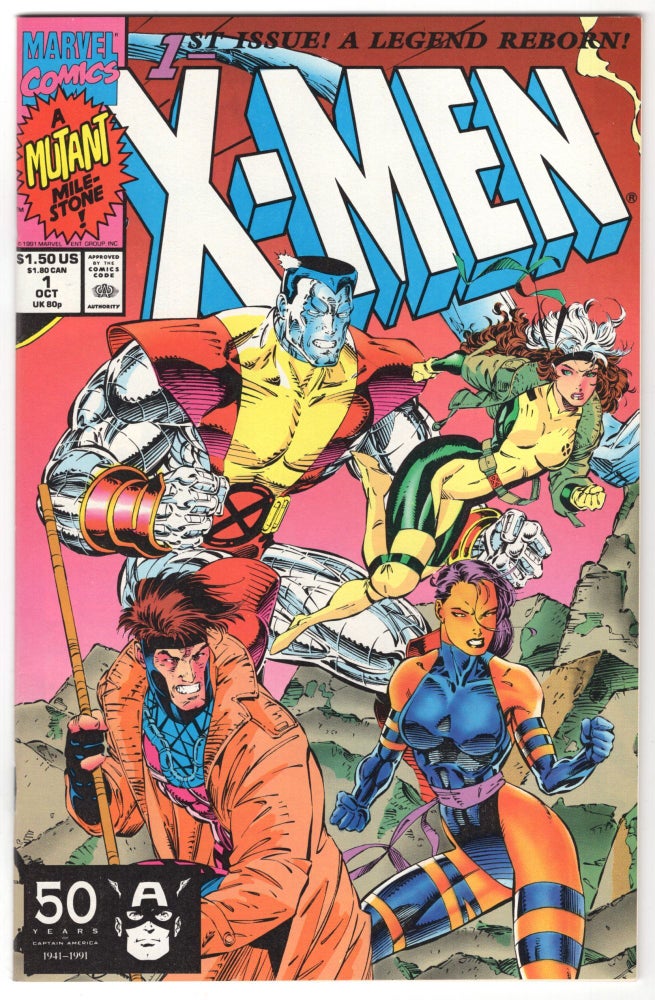
I reposted a Bluesky post tonight that said, “X-Men has been the most consistent interest in my life.” It is a very efficient sentence. Nine words, and suddenly I am thinking about the strange little handful of interests that stop being things you like and become part of the load-bearing structure of your personality.
X-Men has been the most consistent interest in my life.
The X-Men are unusually good at becoming that kind of interest. They are less a single story than a municipal transit system: enormous, occasionally unreliable, redesigned every few years, and somehow still able to take you back to the same place.
continuity is not the point
Trying to explain X-Men continuity is how normal conversations become hostage situations. There are alternate timelines, cloned people, cloned people who did not initially know they were clones, children who are older than their parents, deaths that function more like extended vacations, and at least one island that is also a person. The official history is technically knowable, in the same sense that the tax code is technically knowable.
But continuity is not really what keeps people around. The return is. You can disappear for five years, come back through a cartoon, a movie, a comic run, or one extremely specific Tumblr gifset, and the essential machinery is still there. A group of people has been told that something fundamental about them makes them dangerous. They respond by building a home together, putting on coordinated outfits, and developing interpersonal problems of almost military complexity.
That premise travels. It can be a civil-rights allegory, a queer text, a family drama, a workplace comedy in which the workplace keeps exploding, or an excuse for Wolverine to stand in a forest looking like someone has interrupted the worst cigarette break of his life. Sometimes it is all five before lunch.
the story changes when you do
The durable childhood interests are rarely the ones that remain frozen. Usually, they survive because you keep discovering a different entrance.
When you are young, the X-Men can be about powers, costumes, giant robots, and the objectively correct belief that Storm is the coolest person in any room. Later, the same stories start looking like arguments about respectability, chosen family, assimilation, political exhaustion, and what people owe a society that keeps announcing its intention to destroy them.
As a gay person, none of that requires particularly strenuous decoding. The franchise has never mapped neatly onto one real minority experience, and it gets clumsy whenever it tries to behave as though it does. Still, the emotional grammar is familiar: disclosure as risk, family as something you may have to assemble yourself, public acceptance that vanishes the second people become frightened, and the endless demand that the marginalized person remain calm enough to deserve survival.
You can meet that story before you have language for yourself, then return after you do. The characters have not necessarily become more sophisticated. You have. They were simply patient enough to wait.
Long-running fiction accumulates versions of its audience along with versions of its characters. A particular theme song stores the room where you first heard it. A costume design stores the age when you decided someone looked impossibly cool. A revival stores the slightly unsettling discovery that your childhood is now an intellectual property strategy.
X-Men ’97 understood this better than most nostalgia projects. It did not merely put the old action figures back on the shelf and wait for applause. It returned to the visual and emotional vocabulary people remembered, then allowed time to have happened. The result felt familiar without pretending familiarity was sufficient. This is apparently a radical concept in franchise management.
Marvel Animation’s official X-Men ’97 trailer.
That matters because consistency does not mean consuming every issue, seeing every movie opening weekend, or maintaining a working knowledge of which body Professor Xavier currently occupies. There are years when an interest is central, and years when it sits quietly in the background. It still becomes a way of keeping track of yourself.
I think that is what made the skeet land. “Most consistent” does not mean unchanged. It means the thing kept finding a version of you who could use it.
the things that stay are allowed to be messy
A lifelong fandom is not an endorsement of every choice made under its logo. God knows the X-Men have supplied enough bad movies, baffling retcons, aborted metaphors, and stories where nobody appears to have asked whether women should be allowed one uninterrupted afternoon.
The affection survives because it is bigger than approval. You can love the basic proposition, argue with its execution, ignore an era entirely, and come back when somebody remembers why the whole thing worked. That is a healthier relationship to culture than the modern demand that everything you enjoy also function as a flawless public statement about your moral character.
Some interests are favorites. Some are phases. A few become personal infrastructure: not always visible, not always fashionable, but still quietly holding up part of the building.
The X-Men are especially suited to that job. Reinvention is already built into the premise. The roster changes, the school relocates, the dead return, the future becomes terrible in a slightly different way, and everyone tries again.
Honestly, there are worse things to carry forward.
loving what a story meant to you does not require an eternal pipeline of purchases, reboots, merchandise, and increasingly strained excuses. Read more
I never got into Harry Potter. This was not an act of moral courage. I read some of the first book as a kid, did not like it, and stopped. The Sorting Hat failed to assign me a house because I had already wandered off to look at the X-Men again.
That means I do not have the same nostalgia to untangle that a lot of people do. I understand why the books matter to them. They found the series at exactly the age when a fictional world can become load-bearing, and it followed them through childhood, adolescence, midnight release parties, movies, friendships, and the period when every personality quiz on the internet needed to know whether you were a Hufflepuff.
i never got into Harry Potter because I didn’t like the first book and never finished it as a kid. BUT, even if I did like it back then it’s not that hard to just not consume media that directly pays for the creator’s bigoted activism to continue to do massive harm
But “this mattered to me” and “I must continue buying every new thing made from it” are two different sentences. They have been stapled together by an entertainment industry that would very much prefer nobody notice the seam.
Photo by Mo HH92, via Wikimedia Commons, licensed CC BY-SA 3.0.
the old books are not asking for more money
Nobody is coming into your house to confiscate the battered paperbacks you already own. Nobody can retroactively remove the friends you made through fandom, the comfort you found in the story, or the fan fiction that was probably doing more interesting things with the premise anyway. Memory is not a subscription service. It does not stop working when you decline to purchase the reboot.
The current franchise, however, is a business. New books, games, licensed merchandise, theme-park trips, and television adaptations are transactions. J.K. Rowling remains publicly connected to the Wizarding World, and her own website describes her as a campaigner on sex and gender issues. It also promotes her privately funded legal organization, which finances cases intended to establish and enforce “sex-based rights.” That is not an inference assembled from a haunted corkboard. The fund says what it does on its own website.
So the familiar defense that buying one game or watching one new series is too indirect to matter feels increasingly unserious. Of course one purchase does not single-handedly finance a court case. That is how mass consumer products work. No individual soda purchase builds an entire bottling plant either, but Coca-Cola has somehow managed to acquire several.
Photo by the UK Foreign and Commonwealth Office, via Wikimedia Commons, licensed CC BY 2.0.
there are ways to keep the memory without feeding the machine
Keep the books you have. Borrow them from the library. Buy a used copy if you absolutely need one. Read old fanfic. Rewatch the DVD that has been sitting in a storage tote since the Obama administration. Those choices are materially different from preordering the newest deluxe edition and then explaining that your money is merely symbolic.
More importantly, let the fondness be historical. We already do this with thousands of things. A childhood restaurant closes, a television show ends, a band breaks up, or a website disappears because somebody forgot to renew the domain. We are capable of loving what something was without demanding an eternal pipeline of branded content. In fact, adulthood is mostly discovering that everything you loved has either ended or been purchased by private equity.
I do not think people have to perform a public ritual of shame because they once loved Harry Potter. I do think the insistence that a beloved childhood property must remain an active consumer identity forever is a little bleak. The story already happened. You got what you needed from it. The memories are yours, and the corporation cannot repossess them.
spoilers for Big Brother 28, obviously. Haley “Thog” Thogmartin’s exit press arrived this morning, several days after the feeds spoiled her medieval-twist… Read more
spoilers for Big Brother 28, obviously.
Haley “Thog” Thogmartin’s exit press arrived this morning, several days after the feeds spoiled her medieval-twist elimination and one night after CBS finally allowed the television audience to catch up. this is an extremely normal way to evict somebody from a social-strategy game: make her spend roughly seven hours outside in a heavy dress, lose four competitions in a row, disappear without a vote, and then wait half a week before asking how she feels about it.
Thog’s answer was mostly: fair enough. this is to her credit, although “did not blame a foam castle after losing four competitions” is not quite the redemption arc her exit press occasionally seems eager to assemble.
Everyone is so preoccupied about people lying to them in the lying game, go talk to people instead #bb28
i posted this last week because the entire house was becoming personally offended that people had lied to them in the lying game. Thog’s interviews are interesting because she has now reached basically the same conclusion, only after being physically removed from the lying game by a man dressed like he was guarding a Renaissance fair parking lot.
the twist was miserable, but she does not blame the twist
in both Mike Bloom’s Parade interview and Dalton Ross’s Entertainment Weekly interview, Haley said she would have preferred a traditional eviction. she wanted the opportunity to campaign, say goodbye, make jury, and, yes, continue trying to win $750,000. all very reasonable complaints about being deleted from the house by Big Brother: Dark Ages Edition.
still, she did not call the result unfair, and she does not regret asking Dee to send her into the first safety competition. with Dee and Devens already safe, and Angela next in their plan, Haley correctly assumed nobody was likely to save her for her. going in first gave her the maximum number of chances to protect herself. the strategy was sound. the competitions simply said absolutely not.
Haley Thogmartin on Big Brother 28. Photo: CBS, via Parade; used for commentary.
the EW interview adds the bleak production detail that the whole sequence took about seven hours. she was given water and allowed to sit, but she did not go back inside between rounds. by the end, she was hot, sweaty, exhausted, and wearing a thick medieval dress. “expect the unexpected” is one thing. “expect to become a damp tapestry” feels like a separate waiver.
her feelings were real; her monopoly on victimhood was not
Bloom opens by asking how rough her week has been, and Haley answers, “My week’s been perfect!” honestly, good start. no notes.
then he presses her on one of the season’s stranger recurring claims: Haley repeatedly described her first several weeks as extraordinarily difficult even though she was protected by Red Corner and Toolshed, never touched the block, and won an HOH. Melody and Mallory, who spent that period repeatedly fighting for their lives, understandably did not enjoy hearing about it.
Haley’s answer is revealing because she can now separate her emotional experience from her strategic position. game-wise, she admits she was safe and set up well. personally, she felt overwhelmed almost immediately, took comments and conflicts very personally, and was less mentally prepared for the house than she expected. that is useful context. it is not a defense.
the problem was never that Haley had feelings. the problem was that she treated her feelings as objective evidence, then expected people with far less protection to manage them for her. “i have had seven rough weeks” remained absurd when delivered to people who had been nominated four times before lunch. worse, ordinary resistance from Taylor, Lala, and others repeatedly became proof that Haley had been attacked, while her own coded dismissiveness, tone-policing, and microaggressive behavior got filed under stress. she was playing from inside the feeling, and only her feelings were granted full citizenship.
the apology is better than denial. the bar remains underground
both interviewers asked Haley directly about her behavior toward Taylor and her accusation that Lala had bullied her. good. those were not stray comments floating loose from an otherwise lovely summer. they were part of the ugliest pattern in Haley’s game: she could be dismissive and cruel, especially when someone outside her comfort circle asserted herself, then quickly reframe the resulting conflict as something being done to Haley.
on Taylor, Haley said she had seen some of the online reaction, regretted what she said, understood that it was hurtful, and wanted to apologize directly. she also acknowledged that she inserted herself into the argument after overhearing her name, then refused the difficult conversation Taylor tried to have the next day because Haley did not want another heavy exchange. Taylor was expected to absorb Haley’s interruption, Haley’s assumptions, and Haley’s refusal on Haley’s preferred schedule. this was the pattern in miniature.
Haley says this is an explanation, not an excuse, but the explanation still occupies most of the available real estate: pressure, exhaustion, overstimulation, and what she was personally experiencing. meanwhile, Taylor experienced the actual comments. owning harm after seeing the online reaction is better than denying it, but it is also the first item on the checklist. the microphones did not misunderstand her, the audience did not invent a tone, and a stressful house did not distribute the same behavior evenly among everyone inside it.
on Lala, Haley retracts the bully label, as she should. she still returns to exchanges that hurt her feelings and an apology that did not feel sincere enough in the moment. this is the recurring asymmetry: Haley’s interior life arrives with footnotes, weather reports, and an appeals process; everyone else’s arrives as a threat assessment. calling a Black woman a bully for confronting you is not made harmless because the house was tense. the tension is part of why checking that reflex mattered.
Haley Thogmartin during post-eviction press. Image via Parade; used for commentary.
exit press is not absolution, and viewers are not obligated to convert one morning of consequence-assisted reflection into retroactive affection. Haley named specific people and admitted specific behavior, which makes this sturdier than the passive-voice mist reality contestants usually release when they discover the feeds had sound. it does not make it especially brave. she was terrible to people in that house, the pattern was visible long before eviction night, and “i own it” is the beginning of accountability, not its deluxe finale package.
Dee played Big Brother; Haley kept checking the rules of real life
the funniest strategic revelation is that Dee’s role in flipping the vote from Melody to Lyric went completely over Haley’s head. once told the full story, she immediately gives Dee credit. in EW, she says “it went right over my head,” then explains that she kept judging moves by what someone would do to a friend in real life. she now understands that this was, apparently, not the game.
apparently!
this is the entire Haley Thogmartin experience in one answer. she had enough social structure to dominate the opening month, enough competition ability to win power, and enough loyalty to be useful. what she did not have was the ability to treat information as information once it touched an emotion. every lie became a betrayal, every tense exchange became a moral event, and every person who challenged her risked becoming mean, unsafe, or a bully. that was bad strategy, but it was also simply bad behavior. the distinction matters because the people on the receiving end were not game pieces in Haley’s personal-growth montage.
even after learning that the icons engineered the flip that destroyed her position, Haley says she would have remained loyal to them if she survived. there is logic there: they had become her only viable path, and resentment is not a strategy. there is also the lingering sense that “loyalty” was the one tool she trusted after the rest of the toolbox caught fire.
her winner pick may have a very short shelf life
Haley names Dee as the person playing the best hidden strategic game. she also praises Devens, says “his social game is immaculate,” and picks him as the person she wants to win.
this is especially funny timing because Devens is currently on the block after volunteering to be Drew’s replacement nominee, a sentence constructed entirely from decisions i would not personally make. Haley believes his connections to Barrett and Drew give him room to survive even as the icons come under attack. we will know tonight whether her first postgame read is sharper than her in-house ones. no pressure.
watch the full Parade interview
the rapid-fire ending supplies one final tiny character study. Haley calls Angela nurturing, Barrett slick, Dee strong, Devens safe, and Lala fierce. asked about Taylor, she pauses, then calls her beautiful, says she has a beautiful heart, and describes her as an overall great person. it reads partly as a peace offering, partly as somebody choosing every word with oven mitts, and partly as the clearest indication that she knows exactly which conversation waits outside the studio.
the verdict
Haley’s exit press does not rewrite her season. she was unnecessarily cruel, repeatedly microaggressive, remarkably self-focused, and strategically unable to separate hurt feelings from useful facts. she helped create an ugly house dynamic, then narrated herself as one of its primary victims. a competent apology cannot make that footage unaired.
the exit interviews improve my opinion of her from “incapable of self-reflection” to “capable of it once the consequences and press questions arrive.” that is movement. it is not redemption. she left understanding the twist that evicted her, the mistake that blinded her to Dee, and at least some of the harm she caused Taylor and Lala. the postgame download installed successfully. the operating system remains deeply suspicious.
Featured image: Haley Thogmartin cast portrait, CBS/Paramount; used for commentary.
i reblogged this because it is a good joke in the very specific modern genre of “the public service announcement has returned… Read more
i reblogged this because it is a good joke in the very specific modern genre of “the public service announcement has returned to clarify that the public service was laid off.”
unfortunately, the joke has excellent timing. as of September 2, California’s Plaskett Fire had grown to 27,580 acres with 1% containment, making it the state’s second-largest wildfire of 2026. nearly 1,000 people were assigned to it. the nearby Timber Fire had already burned more than 25,000 acres. together, suppression costs had reached roughly $80 million.
meanwhile, the people who actually do the prevention, logistics, science, maintenance, dispatching, and suppression have spent the year explaining that a fire response system is more than the visible person holding a hose.
“frontline” is doing a lot of work here
the Forest Service says it exceeded its operational-firefighter hiring target for 2026, expanded premium pay, and issued more than 22,000 red cards authorizing personnel for fire assignments. that is important, and it is better than failing to hire firefighters. it also does not make the larger staffing problem imaginary.
the National Federation of Federal Employees says the administration cut the Forest Service budget by $438 million, or 24%, in March. conservation groups have estimated that the agency lost 5,860 employees by January 2026, including staff with fire qualifications. those numbers include people outside dedicated suppression crews, which is precisely the point: you cannot run a national emergency operation using only the employees whose job title looks dramatic in a press release.
Bureau of Land Management firefighter during a prescribed-fire operation. Photo by Colby Neal/BLM, via the U.S. Department of the Interior.
wildfire prevention depends on prescribed burns, fuel treatments, weather and fire-behavior research, equipment, road and trail crews, aviation, communications, grants, local coordination, and enough administrative capacity to move all of it where it needs to go. the Forest Service’s own research arm says wildfire losses exceed $40 billion annually and estimates a seven-dollar return for every dollar spent on fuel treatments and forest management informed by fire research.
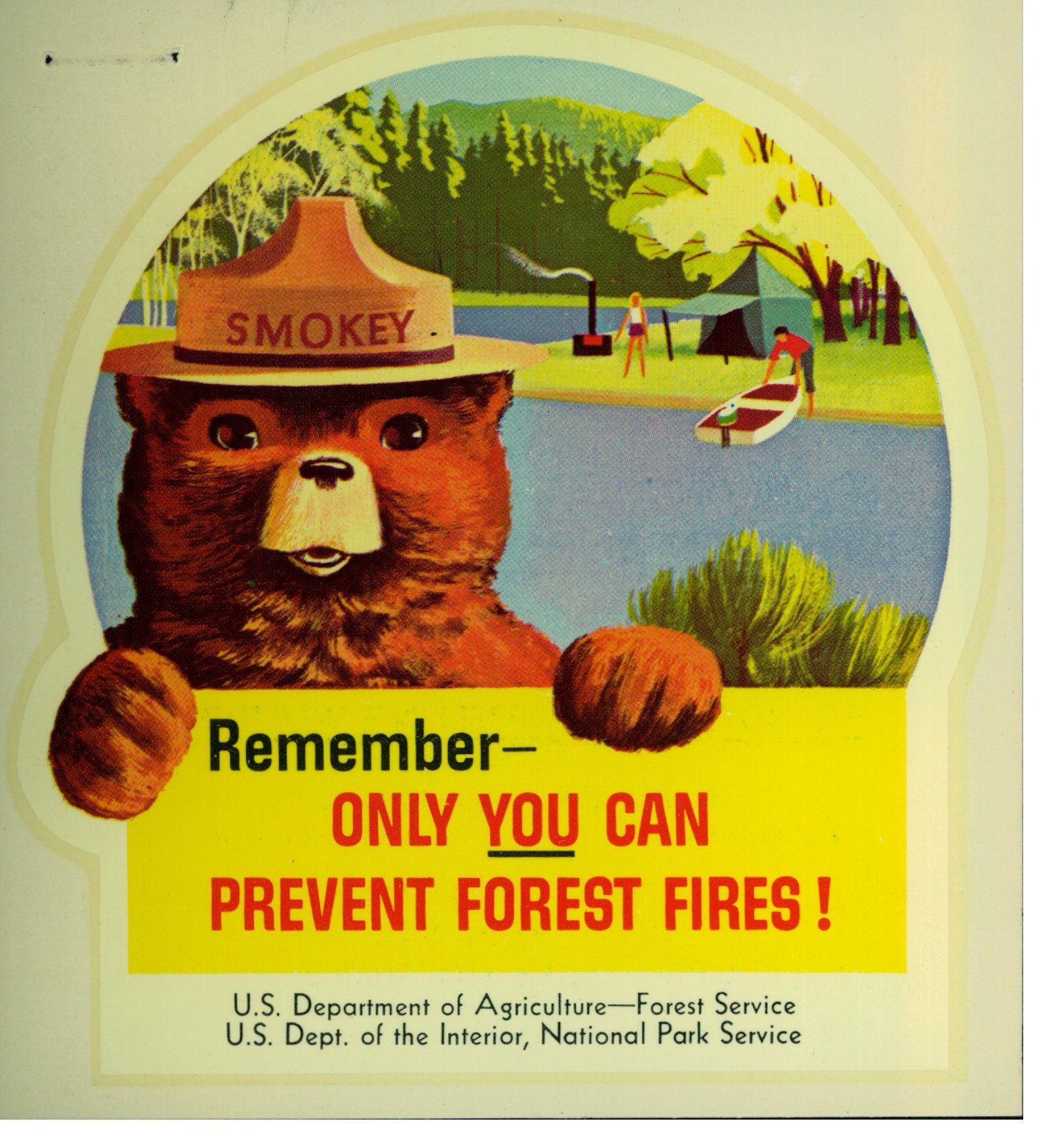
this is why the old Smokey Bear slogan has always been a little strange. yes, please extinguish the campfire. do not launch fireworks into crispy grass. personal responsibility remains available at no additional charge. but “only you” was never literally true. preventing a landscape-scale disaster is collective work, performed by public institutions before, during, and long after the flames appear.
the bleak version of the slogan is not that individual choices do not matter. it is that government can cut the system, point at the individual, and call the transfer of risk “responsibility.” Smokey is still wearing the hat. apparently he is also covering three vacancies, processing his own travel voucher, and waiting for procurement to approve a shovel.