a joke about yard-work simulators became an unfortunately complete survey of gaming’s most specific genre, just before the free prologue arrives. Read more
i reposted this because it is, technically, a joke, and also, technically, an accurate status report on where the simulator genre currently stands.
The Simpsons predicted that we would have Yard Work Simulators, but they didn’t predict that we would go Beyond Yard Work Simulators.
Beyond Yardwork Simulator is a real, upcoming Steam game from developer JoyDev and publisher PlayWay, a studio whose back catalog reads less like a release slate and more like a to-do list nobody ever crossed items off of. you mow, pressure-wash, weed, and sort trash in exchange for cash you then spend renovating your own house, one increasingly specific chore at a time, per the official Steam page.
a free prologue covering the first three jobs arrives Sep 9, per the Prologue’s Steam listing. the full game does not have a date beyond “2026,” which, generously, leaves PlayWay all the runway it needs to eventually announce Beyond Beyond Yardwork Simulator.
Screenshot: Beyond Yardwork Simulator, via Steam; used for commentary.
i say all of this as someone who has spent measurable years of my one life running a digital farm in Story of Seasons and Harvest Moon without once, personally, touching a lawnmower that exists in three dimensions. Beyond Yardwork Simulator is aimed at exactly my demographic: people who will lovingly manage a fictional flower bed for forty hours and describe an actual flower bed as not my problem. the genre understands its audience. it is not judging me. it is, at most, gently billing me two thousand imaginary dollars per job.
and it is a genre, not a one-off bit. Beyond Yardwork Simulator is arriving into a field that already has Lawn Mowing Simulator, whose real sequel, Lawn Mowing Simulator 2, lands Sep 23 with licensed Kubota, SCAG, and STIGA equipment, per its own Steam page. PC Gamer, surveying the field, noted there is also a separate game called Lawn Care Simulator, and that it exists twice, which the outlet delivered with exactly the tired disbelief the situation deserves, per PC Gamer’s coverage.
Screenshot: Beyond Yardwork Simulator, via Steam; used for commentary.
somewhere there was a pitch meeting that ended with the sentence “we have done the yard, now let us transcend it,” and somebody funded it, and here we are, well over a thousand likes into a joke about the Simpsons being insufficiently prescient. i will be downloading the free prologue the day it exists, not because my actual yard needs anything, but because it does not have one to need anything about, and that, per the entire thesis of the genre, is exactly the point.
an Arkansas censorship law has turned ordinary library use into a maze of age zones, checkout bans, and criminal-risk management. Read more
i reposted this because the list of new rules at the Craighead County Jonesboro Public Library reads less like library policy and more like terms of supervised release.
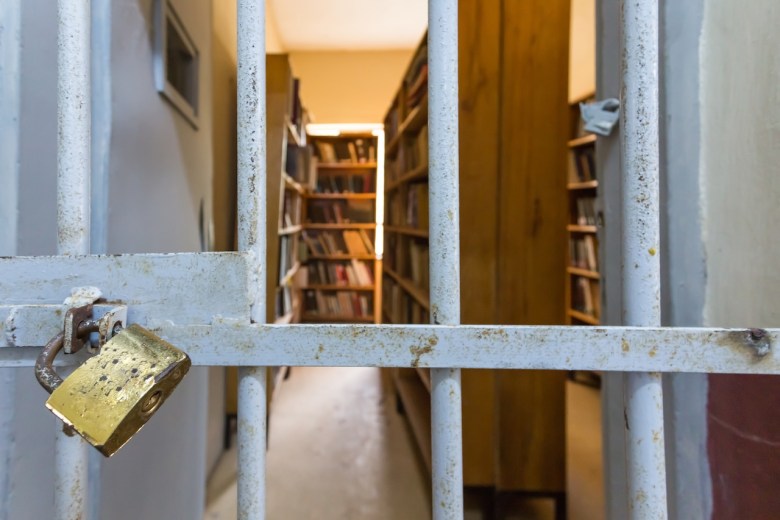
Jesus Christ: after a recent ruling by the Eighth Circuit that allowed Act 372 to take effect, an Arkansas county has banned all children from checking out any books in the adult section, bringing home any DVDs, or using the self-checkout kiosk in its public libraries.
minors cannot use the self-checkout kiosks. children under 13 are limited to the children’s collection. teenagers can use the children’s and teen sections, but not the adult collection. nobody under 18 may check out a DVD. minors are also barred from entering or buying anything from the Friends of the Library bookstore.
the state has not technically replaced the library card with an ankle monitor. it has merely arranged the experience so that borrowing a movie, browsing outside your assigned age habitat, or purchasing an old paperback requires adult intervention. freedom has been preserved in the sense that there are still books inside the building.
these changes follow the Eighth Circuit’s July 30, 2026, decision allowing Arkansas to enforce Act 372. the law exposes librarians and booksellers to criminal liability for furnishing material deemed “harmful to minors,” and it gives local governing bodies final authority over challenged library material. a federal district judge had blocked the law as unconstitutionally vague and overbroad; the appeals court reversed that judgment.
the Arkansas Times reported on September 3 that libraries were already redesigning ordinary circulation around the possibility that a librarian might be charged. Independence County stopped minors from checking out manga and adult graphic novels. in Pulaski County, the outgoing director of the Central Arkansas Library System urged the board to minimize employees’ exposure to prosecution.
this is the part censorship advocates get to pretend is administrative. nobody has to march through the stacks with a cardboard box labeled FORBIDDEN IDEAS. you threaten the person behind the desk with criminal charges, then let the institution calculate how small it needs to become to feel safe.
the chilling effect is not a side effect. it is the product.
i understand that libraries organize material by age. a picture book, a young-adult novel, and a tax manual are trying to do different jobs. but a useful library is not a set of sealed departments. it is one of the few places where curiosity is allowed to make an unscheduled turn without first becoming a purchase.
a 12-year-old can wander from mythology into archaeology. a teenager can look up the novel referenced in a movie, read a cookbook, or discover that the adult shelf contains both James Baldwin and fourteen books about fixing a deck. sometimes the great danger is literature. sometimes it is home improvement.
the Craighead County library’s own history says its regional system gives patrons access to more than 164,000 physical items, plus a large digital collection. that is what public infrastructure looks like when it trusts people: abundance, shared access, and room to find something nobody thought to assign you.
Act 372 turns that trust inside out. the child is treated as a liability, the librarian as a potential defendant, and the shelf as evidence waiting for a prosecutor to develop an opinion.
parental rights, except for everyone else’s parents
supporters sell laws like this as parental control, but the practical result is government control applied to every family at once. a parent who wants their teenager to browse the adult collection cannot make that choice through the teenager’s library card. a family that permits DVDs cannot reverse the blanket ban. the state has defended parental authority by preempting it.
EveryLibrary has called for Arkansas to repeal and replace Act 372, arguing that libraries already have collection policies, challenge procedures, and ways for parents to guide their own children. that is the boring answer because boring answers are usually what functional public institutions use: professional standards, due process, and individual families making individual decisions.
the exciting answer is threatening librarians until the self-checkout machine becomes contraband.
the Eighth Circuit opinion explains what the law permits. the policies now appearing around Arkansas show what it produces. the distance between those two documents is where censorship likes to claim it did nothing.
meanwhile, children may continue enjoying the library in the approved biome, during authorized browsing, with an adult nearby to operate the dangerous machinery.
the voter-registration reminder has finally accepted that democracy may occasionally require a patriotic jockstrap. Read more
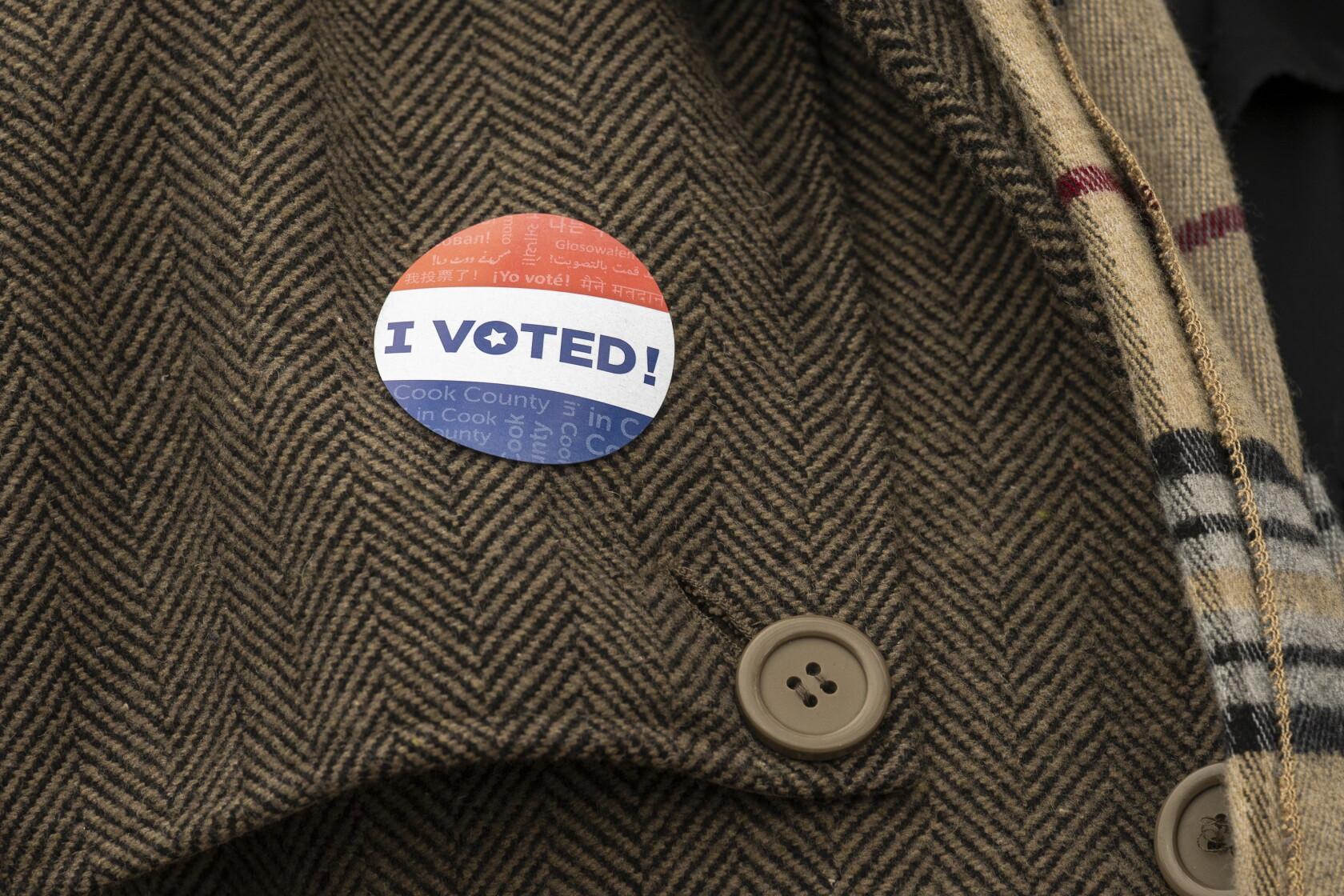
there are many ways to remind people to check their voter registration. you can make a sober infographic. you can deploy a clipboard. or, as this Tumblr post correctly concludes, you can put the reminder next to a man in a patriotic jockstrap. democracy contains multitudes, apparently.
the useful part remains extremely useful. Vote.gov will route you to your state’s registration and status tools. in Alabama, the general election is November 3, 2026, and registration closes during the fourteen days before an election. “i will do it later” is therefore a deadline wearing a fake mustache.
the original post had already collected 190 notes by early Saturday afternoon. this is not a controlled experiment, but it does suggest civic engagement may improve when it briefly acknowledges that voters have bodies, interests, and internet connections.
so, yes: check your Alabama registration, make a plan, and then return to the important national discourse about whether the stars-and-stripes jockstrap is legally business casual.
the correct decision is not complicated. Dreyer’s says to throw the affected bars away or return them for a full refund. there have been no reported injuries, and i would like to continue contributing to that statistic.
unfortunately, the human brain did not evolve around nationwide frozen-dessert recalls. it evolved around scarcity, attachment, and standing in front of an open freezer thinking, “but i paid for those.”
first, check the boxes
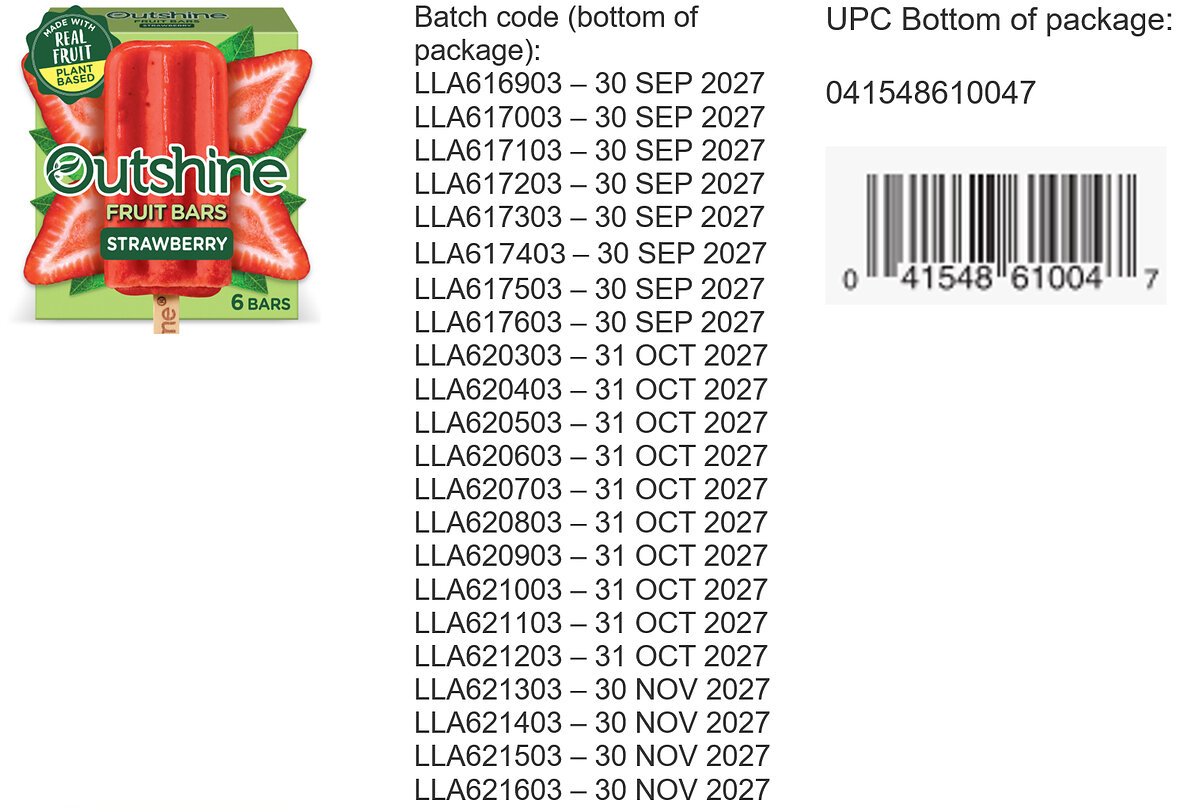
one of five recalled flavors, wearing the color of a warning label that has been trying to seem fun. product image: Outshine / PR Newswire.
the August 16 recall notice from Dreyer’s covers specific batches of five Outshine flavors: Strawberry, Grape, Watermelon, Black Cherry, and Tangerine. it applies to the six-count boxes of 2.5-ounce paddle bars distributed nationwide.
it does not cover every Outshine product. the useful part is on the bottom of the box: compare the UPC, batch code, and best-before date with the company’s list. the affected UPCs are 041548610047 for Strawberry, 041548244044 for Grape, 041548413624 for Watermelon, 041548000121 for Black Cherry, and 041548612041 for Tangerine.
the batch list is long enough that i am not going to make anyone trust a transcription from a personal blog when the original recall notice exists. use the company table. this is one of the rare situations where “go read the spreadsheet” is an act of care.
the sunk cost is approximately one popsicle
watermelon remains refreshing; the possibility of glass has been less well received. product image: Outshine / PR Newswire.
if the codes match, the bars are not a challenge, a dare, or a chance to develop a new texture vocabulary. return them or dispose of them. anyone worried about an injury should contact a healthcare provider.
i know this. i also know that throwing away unopened food feels wrong in a way that can briefly overpower the much more relevant wrongness of possibly swallowing glass. the product has crossed from “food” into “object i purchased,” and apparently my sense of stewardship remains active after its culinary career has ended.
this is sunk-cost fallacy with freezer burn. keeping the boxes cannot recover the money. eating the bars cannot vindicate the purchase. it can only convert a recall notice into a medical anecdote, and i already have enough stories that begin with “in retrospect.”
a refund is the available third path
the recall says affected products can be returned to the place of purchase for a full refund. this is useful because my brain has framed the situation as a choice between wasting food and becoming afraid of dessert forever. there is, in fact, a boring administrative option. boring administrative options save lives.
so the boxes are leaving the freezer. not because i have conquered irrational attachment, but because i have been reminded there may be paperwork that lets me keep both my money and the structural integrity of my mouth.
sometimes growth is just finally accepting that a frozen fruit bar should not have a risk profile.
living alone is freedom, privacy, and discovering that the person responsible for making you lunch is somehow you again. Read more
there are a lot of luxuries associated with living alone. the thermostat becomes a direct democracy with one voter. the television is never mysteriously left on a channel showing men discussing golf. every horizontal surface can temporarily become a place where mail lives.
then lunchtime arrives, and the republic collapses.
you know what sucks the most about being an adult who lives alone? having to always make yourself foodi love cooking but would love for someone to make me lunch right now instead is, i guess, what i'm saying
i posted this because i was hungry, tired, and confronting the deeply unfair fact that being an adult who lives alone means the person responsible for making me lunch is, once again, me. apparently this was not a private grievance. within a few hours, more than a hundred people had liked it, several had reposted it, and the replies had become a small support group for people who would happily cook a beautiful dinner but cannot be expected to manufacture enthusiasm for a sandwich at 12:47 p.m.
the meal is not the hard part
i like cooking. this is important because otherwise the obvious solution would be “you do not like cooking,” and we could all go home, except i am already home, which is the problem.
the exhausting part is being the entire food department. i decide what sounds good, notice what is missing, make the list, buy the ingredients, remember the ingredients exist, cook them before they become a damp historical record, portion the leftovers, wash the dishes, and later discover that the container i confidently labeled “lunch” contains half an onion and no lunch.
when another person makes you food, even something ordinary, the meal arrives carrying a tiny amount of care. somebody noticed you would need to eat before you became irrationally angry at a drawer. they made a decision on your behalf. they performed several boring steps, and then handed you the result. the grilled cheese is not valuable because you lack the technical credentials to melt cheddar. it is valuable because, for fifteen minutes, you were not the project manager of your own continued existence.
independence has a lot of administrative fees
living alone is often described as either perfect freedom or a haunting black-and-white sequence from an antidepressant commercial. mostly, it is neither. mostly, it is nice, punctuated by moments when you would like another person to be in charge of one extremely small thing.
not your finances. not your emotional future. just lunch.
this is one of the quieter things people miss when they live by themselves: not constant company, but ambient care. a cup of coffee already started. somebody asking whether you want anything while they are up. leftovers saved because another person remembered you liked them. these gestures are so small that they barely register when they happen, and so large that their absence can become the entire shape of an afternoon.
the standard advice is meal prep, which is practical, sensible, and emotionally identical to receiving a calendar invitation from your past self. i support meal prep. i have also opened a neatly organized container on wednesday and felt personally managed by the version of me who made it on sunday.
delivery solves a different problem. it gets food to the house, sometimes by showing a tiny bicycle circle making choices no human driver would make. but ordering does not quite reproduce the feeling either. the app has not been thinking about me. the app would sell the same pad thai to a raccoon with a valid credit card.
make somebody lunch
the response to my post made the request feel less like loneliness and more like a broadly neglected form of friendship. we have made dinner into an occasion and brunch into a municipal festival, but lunch remains a clerical task performed near a keyboard.
maybe “can i make you lunch?” should be a more common social offer. not a dinner party, not a reservation, and not an event requiring shoes that hurt. just come over. i have bread, you have soup, and between us we can briefly create a household where neither person has to do every job.
until then, i will continue cooking for one, which is still cooking for somebody. unfortunately, that somebody is an unreliable supervisor who keeps wandering into the kitchen, opening the refrigerator, and acting surprised that no staff have arrived.
Mike Huckabee tried to turn cherry tomatoes, seedless watermelons, GPS, cell phones, and USB drives into a geopolitical loyalty test. The inventions… Read more
I reblogged a post fact-checking Mike Huckabee’s claim that people who oppose Israel should surrender a small pile of modern conveniences, including cell phones, car navigation, USB drives, cherry tomatoes, and seedless watermelons. Apparently the produce aisle is part of the diplomatic corps now.
The clip comes from a speech Huckabee gave at the Tel Aviv Stock Exchange’s Atlas Award ceremony in May. He told Israel’s critics, in effect, that rejecting the country should mean giving up everything it had supposedly invented. The list has continued circulating because it is an unusually pure example of a familiar political maneuver: take a complicated history, put little national flags next to each object, and then present grocery shopping as a binding referendum on foreign policy.
There are two problems here. The obvious one is that several claims are wrong. The more interesting one is that even the claims containing a piece of truth do not prove what Huckabee wants them to prove.
the watermelon has declined citizenship
Seedless watermelon. Photo by Scott Ehardt, public domain, via Wikimedia Commons.
The modern seedless watermelon was developed from triploid breeding work by Japanese plant scientist Hitoshi Kihara beginning in the late 1930s. The National Watermelon Promotion Board traces it to Kihara’s research in Japan, and the University of Illinois Extension explains the chromosome trick that makes the fruit mostly sterile.
Israel has absolutely done important agricultural research. That does not cause Professor Kihara to vanish in a puff of patriotic PowerPoint transitions.
the cherry tomato contains a smaller, more annoying truth
Cherry tomatoes existed centuries before the state of Israel. Tomato domestication reaches back through Indigenous agriculture in the Americas; the historical record is complicated, but it is not hiding a surprise origin story in a Jerusalem laboratory. A USDA-indexed review describes the competing South American and Mexican domestication histories, while a scholarly history of the specific Israeli claim found references to cherry-shaped tomatoes going back hundreds of years.
Israeli scientists Nachum Kedar and Haim Rabinowitch did make an important contribution. They bred varieties with better flavor, longer shelf life, and qualities that made cherry tomatoes easier to sell commercially. Hebrew University’s own profile of Kedar’s work emphasizes long shelf life, taste, and disease resistance. That is real work. It is just not the same sentence as “invented cherry tomatoes.”
This is how the myth stays alive: a meaningful improvement gets promoted into immaculate conception because “helped turn an existing crop into a global supermarket product” will not fit on the bumper sticker.
the USB drive has several fathers and would like them to stop fighting
USB flash drive. Photo by Dori, public domain, via Wikimedia Commons.
The USB flash drive is the claim where the corrective reblog also becomes too tidy. Israel’s M-Systems filed a 1999 patent for a USB-based flash disk, and Dov Moran is often credited as one of its inventors. Singapore’s Trek 2000 was the first company known to sell a product under the ThumbDrive name. IBM engineer Shimon Shmueli submitted a competing invention disclosure, and China’s Netac filed its own patent claim. IEEE Spectrum and the National Library Board of Singapore both tell the story as a genuine dispute, not a clean national trophy presentation.
And the object itself depended on Japanese flash memory, the multinational development of the USB standard, semiconductor manufacturing across countries, and years of engineering that do not become less important because one patent arrived first.
innovation is a terrible loyalty oath
Car navigation is the same sort of category error. The underlying GPS network is a U.S.-owned system operated by the U.S. Space Force. Japanese automakers pioneered early in-car navigation systems. Israeli-founded Waze later made an enormous contribution to turn-by-turn, traffic-aware navigation. “Car navigation” is not one invention sitting in a glass case with one flag behind it. It is a stack.
Cell phones are a stack, too. So are computers, medical tests, crops, and nearly every other thing politicians like to assign to a country when they need history to perform a little unpaid public relations.
But suppose Huckabee’s entire list were accurate. Suppose one country had single-handedly invented every object on it, plus the air fryer and the little plastic table that keeps pizza boxes from touching the cheese. That still would not settle a political argument about what a government is doing now. A useful invention is not a moral gift card that can be redeemed against criticism forever.
My phone can contain Israeli technology, American technology, Japanese technology, Chinese manufacturing, Taiwanese chips, and code written by somebody in Poland who has not slept since Tuesday. None of those facts requires me to outsource my conscience to the supply chain.
The most honest version of this story is also the least useful for propaganda: people in different places built on one another’s work, sometimes cooperatively, sometimes competitively, and usually messily. The watermelon is Japanese science grown from an African crop. The tomato is Indigenous American agriculture reshaped by breeders around the world. The USB drive emerged from overlapping claims across Israel, Singapore, China, Japan, and the United States.
Huckabee wanted a shopping list of reasons criticism should stop. What he accidentally assembled was a pretty good argument against treating human knowledge as national property.
Source note: The speech was delivered in May 2026; contemporary context is available from Middle East Eye. Featured image: official 2025 portrait by the U.S. Embassy in Israel, public domain, via Wikimedia Commons.
about twenty minutes into Untold: Raygun — Breaking Badly, i posted that the documentary was teetering on the edge between documentary and… Read more
about twenty minutes into Untold: Raygun — Breaking Badly, i posted that the documentary was teetering on the edge between documentary and mockumentary despite being 1000% earnest. this is still the most accurate review i can offer. the movie is not making fun of Rachael Gunn. the movie would be horrified to learn that laughter has entered the building.
watching the raygun documentary and it's teetering on the edge of mockumentary and documentary even though it's definitely 1000% earnest
Netflix has assembled all the customary prestige-documentary furniture: low lighting, slow-motion rehearsal footage, a carefully wounded score, and interviews framed as if somebody is about to reveal where the bodies are buried. then Raygun explains that her Olympic routine was a radical expression of creativity, and the film presents the kangaroo hop with the solemnity of the Zapruder film.
nobody involved appears to understand why this feels funny. this makes it much funnier.
the documentary wants a hero’s journey; the footage keeps requesting a wellness check
Breaking Badly, released on Netflix on September 1, reconstructs Gunn’s path from Australian academic to Olympic breaker to the internet’s designated main character for several exhausting weeks in 2024. the broad facts are strange enough without enhancement. she qualified for the first Olympic breaking competition, lost every battle without receiving a judge’s vote, became globally recognizable for several unconventional moves, and then watched the usual machinery convert public bewilderment into conspiracies, abuse, and mythology.
some of that mythology was plainly false. the Australian Olympic Committee rejected claims that Gunn or her husband manipulated the qualifying process, and the misogynistic intensity of the pile-on was grotesque. “that performance was not Olympic caliber” and “this woman secretly rigged an international sporting body” are different statements. the internet placed them in a blender because nuance has never driven engagement quite as efficiently as accusing a stranger of organized dance fraud.
Rachael Gunn competes in breaking at the Paris 2024 Olympics. Photo: Elsa/Getty Images, via KQED; used for commentary.
the documentary is strongest when it deals with that aftermath. becoming a meme means millions of people inherit a tiny, flattened version of you, and they are all permitted to improvise. Gunn was mocked, impersonated, lied about, and treated as a public resource. no reasonable person deserves that. unfortunately, the film seems to believe acknowledging the cruelty requires us to stop noticing anything else.
sympathy and criticism are allowed to share a studio apartment
this is where the accidental mockumentary starts producing its own lighting. Breaking Badly repeatedly treats the choices as “Raygun was a misunderstood visionary” or “Raygun deserved the abuse.” i decline both packages. she did not deserve harassment, threats, invented scandals, or a permanent lease inside everybody’s worst joke. she also gave a strikingly poor performance on the largest possible stage and became the most visible representative of an art form whose actual best practitioners were standing several feet away.
The Guardian’s review identifies the question the film keeps circling without touching: what does it mean that a dorky white academic became the global face of a Black and brown art form while breakers with far greater technical skill remained comparatively anonymous? Netflix is very interested in whether Raygun belongs. it is much less interested in who disappears when the camera answers yes.
Logistx and Raygun during the women’s breaking round robin in Paris. Photo: Frank Franklin II/AP, via Deseret News; used for commentary.
Gunn’s stated emphasis on originality over technical precision is not inherently ridiculous. art needs people willing to look strange. i run a personal blog in 2026; clearly i am not opposed to performing outside the market-tested definition of dignity. but originality is not a coupon that waives execution, context, or criticism. sometimes the brave new thing does not work. sometimes all three judges agree.
Netflix keeps sanding away the thing that made the story interesting
the most revealing version of the Raygun story is messy: a committed but limited competitor reached the Olympics through a legitimate, underdeveloped qualification system; her unusual routine became funny out of context and not entirely unfunny within it; the world responded with criticism, misogyny, conspiracies, and disproportionate cruelty; and the resulting fame elevated her above the breaking culture she sincerely admired. no single person is required to be villain, victim, fraud, and folk hero at all times.
ABC’s review describes an unprepared athlete overwhelmed by the scale of the Olympics. that is more human, and more interesting, than the polished resilience product Netflix is trying to sell. unprepared people wander into important rooms every day. most of us simply have the courtesy to do it at work, where the footage belongs to Microsoft Teams and will die unseen.
instead, Breaking Badly keeps arranging the story into inspirational poses. the score swells. a lesson approaches. Raygun talks about authenticity. somewhere, a documentarian gently lowers a fog machine. the film is so committed to restoring her dignity that it accidentally removes her complexity, which feels like another form of turning a person into a meme, only this one has tasteful color grading.
watch the trailer and observe the seriousness entering the room
i am glad Gunn got to tell her side of the story. i am also fascinated by a documentary that believes telling her side means every uncomfortable contradiction must be escorted off the premises. the result is earnest enough to demand respect, strange enough to generate laughter, and controlled enough that the laughter becomes the most honest audience response available.
it is not a mockumentary. it just keeps stepping on the same rake with excellent production values.