
CHANNEL ARCHIVE

film

Dispatches, commentary, and media logs from the open web.

  • phantom thread: excellent taste, terrible terms

    phantom thread: excellent taste, terrible terms

    Reynolds Woodcock’s great advantage is that his controlling temperament arrives wrapped in beautiful work. In Paul Thomas Anderson’s Phantom Thread, the celebrated… Read more

    Reynolds Woodcock’s great advantage is that his controlling temperament arrives wrapped in beautiful work. In Paul Thomas Anderson’s Phantom Thread, the celebrated London dressmaker has a carefully ordered life until Alma becomes his lover and disrupts it.

    The attraction here is not a claim that Reynolds is secretly queer. It is the familiar spectacle of male authority made desirable through craft. He knows what looks right. The trouble begins when that expertise starts sounding like the right to decide everything else.

    The craft behind the illusion deserves its own credit. Focus’s costume featurette identifies Mark Bridges as the costume designer and notes that the department created more than fifty original wardrobe pieces. Reynolds’s authority is fictional; the labor making it convincing is not. A story about one exacting male genius is also the work of a department.

    Daniel Day-Lewis and another man examine fabric and materials on a worktable in a Phantom Thread production photograph.

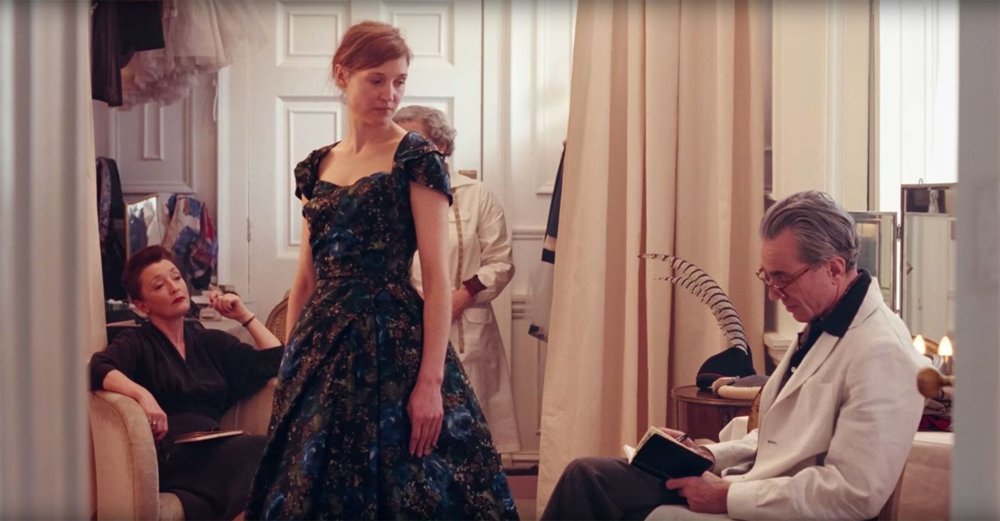
    The supporting images let that distinction stay concrete. The worktable photograph shows fabric, tools and hands rather than a solitary genius floating above production. The fitting scene gives Reynolds an exacting position beside Alma’s dress, with the mirror doubling the arrangement. It is an elegant picture of attention—and an easy visual language for control.

    There is a difference between admiring somebody’s skill and agreeing to live inside his preferred composition. A dress can be fitted. A partner is not a fitting problem. That distinction gives this gothic romance its teeth without requiring anyone to mistake its central man for boyfriend advice.

    Reynolds Woodcock adjusts a pale dress on Alma in front of a mirror in Phantom Thread.

    Focus describes the film as a story of power struggles, and that is a better entry point than treating the clothes as luxury wallpaper. The beauty is part of the argument. When a man’s world looks this immaculate, resisting it can appear unreasonable before he has even opened his mouth.

    Desire does not always need a leather jacket. Sometimes it arrives with a tape measure and an absolutely exhausting opinion.

    Explore the film at Focus Features.

    Image credits: Phantom Thread publicity and production photographs via Focus Features. Limited visual excerpts for criticism of costume, craft and framing; copyright remains with the respective rights holders.
  • 2
    tom ripley wants the man and the expense account

    tom ripley wants the man and the expense account

    In The Talented Mr. Ripley, attraction comes with an excellent travel budget. Anthony Minghella’s 1999 film places Tom Ripley beside Dickie Greenleaf,… Read more

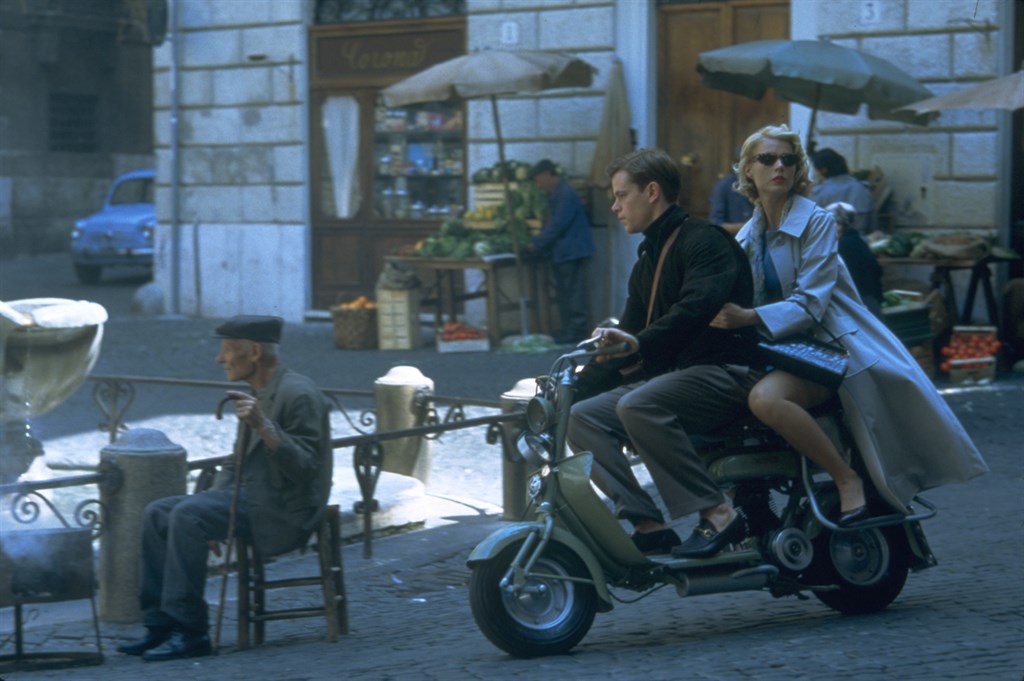
    In The Talented Mr. Ripley, attraction comes with an excellent travel budget. Anthony Minghella’s 1999 film places Tom Ripley beside Dickie Greenleaf, a wealthy American enjoying Italy on his father’s money. Tom wants Dickie. He also wants the life in which being Dickie appears so effortless.

    That overlap is more unsettling than a simple unrequited crush. Wanting someone and wanting to be someone can look remarkably similar from a distance: study his clothes, learn his tastes, arrange to be where he is. The difference becomes harder to ignore when admiration starts behaving like a claim of ownership.

    Matt Damon as Tom Ripley, wearing glasses and looking over his shoulder.

    Paramount’s synopsis explicitly identifies both Tom’s attraction and his envy. Neither needs to be reduced to a diagnosis of queer desire. The film’s useful discomfort is more specific: what happens when intimacy is confused with admission to a better class of life?

    Jude Law’s Dickie is the invitation; Matt Damon’s Tom is the person reading the fine print. The seduction includes beauty, but also leisure, money and the apparent freedom not to explain yourself.

    The poster makes that imbalance visible before the story begins: Tom’s face dominates the foreground while Dickie and Marge occupy the warmer, apparently easier world behind him. It sells proximity and separation in the same image.

    The Talented Mr. Ripley poster, with Tom’s face in the foreground and Dickie and Marge behind him.

    A handsome man is one thing. A handsome man who seems exempt from consequences is a considerably more dangerous sales pitch.

    Film details from Paramount. The linked synopsis contains major spoilers.

    Image credits: official still and poster, Miramax; Tom Ripley still, Paramount+. © their respective rights holders.

    Fediverse Reactions
  • 2
    rock hudson’s best accessory was being enormous and gentle

    rock hudson’s best accessory was being enormous and gentle

    Rock Hudson’s romantic appeal was more than a jawline. Gentleness, clothing and screen performance did their share. Read more

    thirst, with footnotes · no. 2

    Rock Hudson had the kind of face that makes a studio publicity department look overstaffed. But a jaw is not a performance. The interesting part is what he did with the rest of the picture.

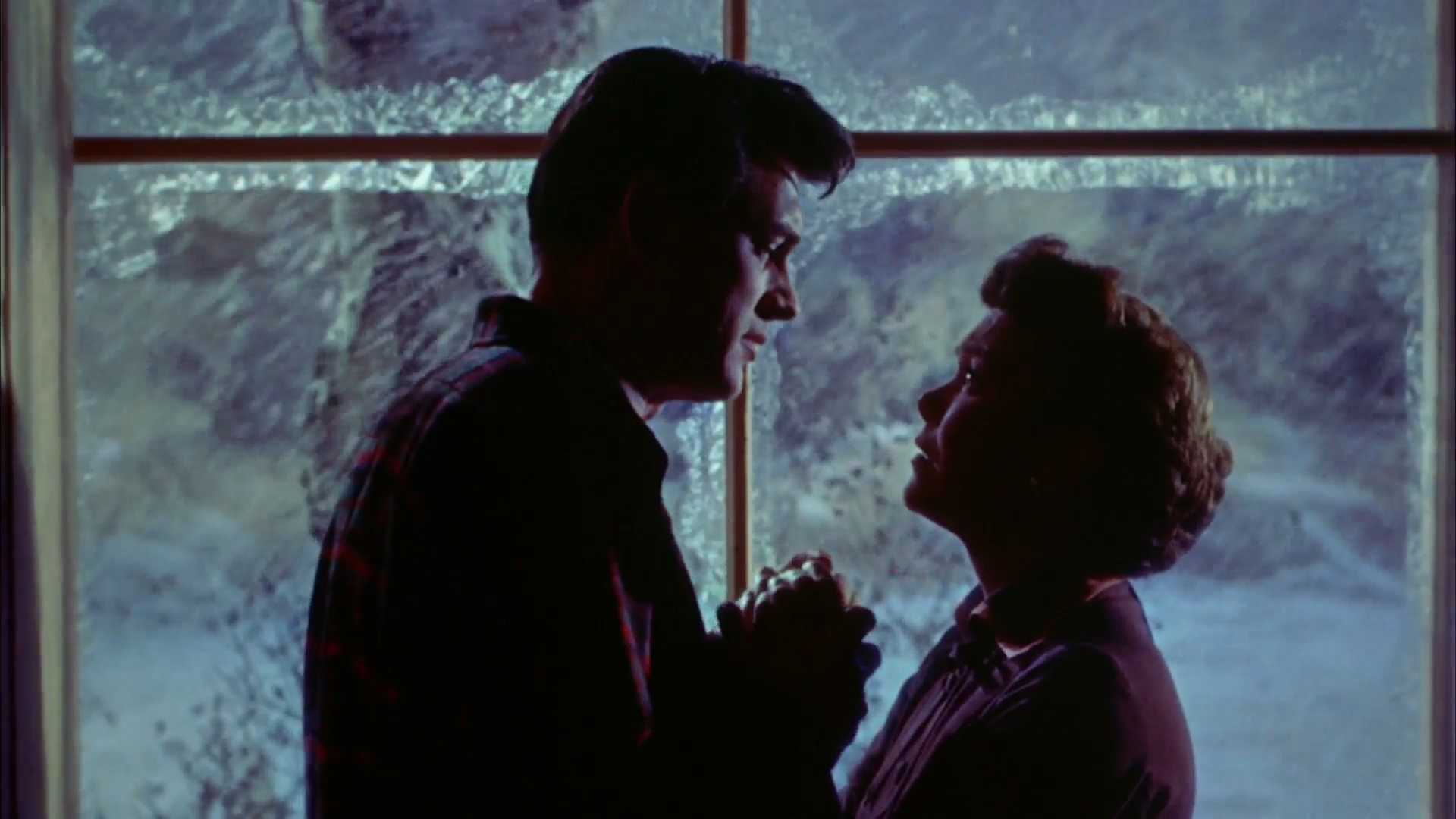
    In its account of Hudson’s 1950s melodramas, the BFI identifies a particularly potent combination: masculinity and gentleness. That is a better starting point than treating him as a walking monument. In Douglas Sirk’s All That Heaven Allows, his romantic appeal is not simply that he occupies considerable space. It is that his presence offers an alternative to the social world pressing in around Jane Wyman’s character.

    The film’s premise is easy to describe without spoiling its progress: a widow falls for her younger gardener, and other people develop an exhausting interest in the arrangement. The Criterion Collection’s synopsis places class and conformity at the heart of the opposition. Hudson’s body is therefore not neutral decoration. It belongs to the man the surrounding community would prefer she did not choose.

    That gives the clothes something to do. Relaxed, practical-looking clothing makes a different offer from the formal codes of respectability around the couple. The fantasy is not merely “handsome man.” It is a handsome man who seems capable of existing outside a committee. For a film filled with scrutiny, the possibility of not performing for the neighbors is practically an aphrodisiac.

    This is also why a publicity portrait cannot tell the whole story. Edward T. Estabrook’s 1953 photograph, published in Photoplay, gives us the controlled construction of a star: the face, the hair, the arrangement of light. It is an excellent object to look at. A movie adds duration, response and the possibility that the impressive-looking man might actually listen.

    Studio portrait of Rock Hudson photographed by Edward T. Estabrook in1953.

    There is a temptation to discuss Hudson entirely through the distance between his public screen image and his private life. His history matters, but making every performance a puzzle with one biographical solution diminishes the work. A gay audience does not need to pretend the heterosexual romances are secretly different plots in order to find pleasure in them. Looking at the leading man is already permitted. The camera has gone to some trouble to assist.

    The useful comparison is with Pillow Talk, his 1959 comedy with Doris Day. A different genre asks a different service from the same screen presence. The sculpted, reliable-looking exterior can carry romantic reassurance in one film and become part of a comic performance of confidence in another. The appeal is not a fixed property stored in the cheekbones. It is shaped by the scene.

    Doris Day and Rock Hudson in a frame from the 1959 Pillow Talk trailer.

    That is the enduring argument for Hudson as a heartthrob rather than a handsome historical document: beauty gets him into the frame; modulation makes him worth staying with.

    The shoulders are persuasive. The gentleness closes the deal.

    sources

    BFI: Hudson’s 1950s melodramas.

    Criterion: All That Heaven Allows.

    Universal: Pillow Talk.

    Edward T. Estabrook’s 1953 portrait and reuse record.

    Image credits: Featured: Universal Pictures, All That Heaven Allows trailer (1955), public domain in the United States (no copyright notice). Portrait: Edward T. Estabrook, Photoplay (December1953), public domain in the United States (copyright not renewed). Film image: Universal International, Pillow Talk trailer (1959), public domain in the United States (no copyright notice). Reproductions via Wikimedia Commons.

    Fediverse Reactions
  • 1

    very excited for werwulf

    Read more

    The official trailer for Robert Eggers’ Werwulf starring Aaron Taylor-Johnson, Willem Dafoe and Lily-Rose Depp is here 👀 🐺In theaters December 25. Add to your watchlist ➡️ boxd.it/SC72

    — Letterboxd (@letterboxd.social) 2026-06-29T12:12:48.482Z
    Fediverse Reactions