Category: TV

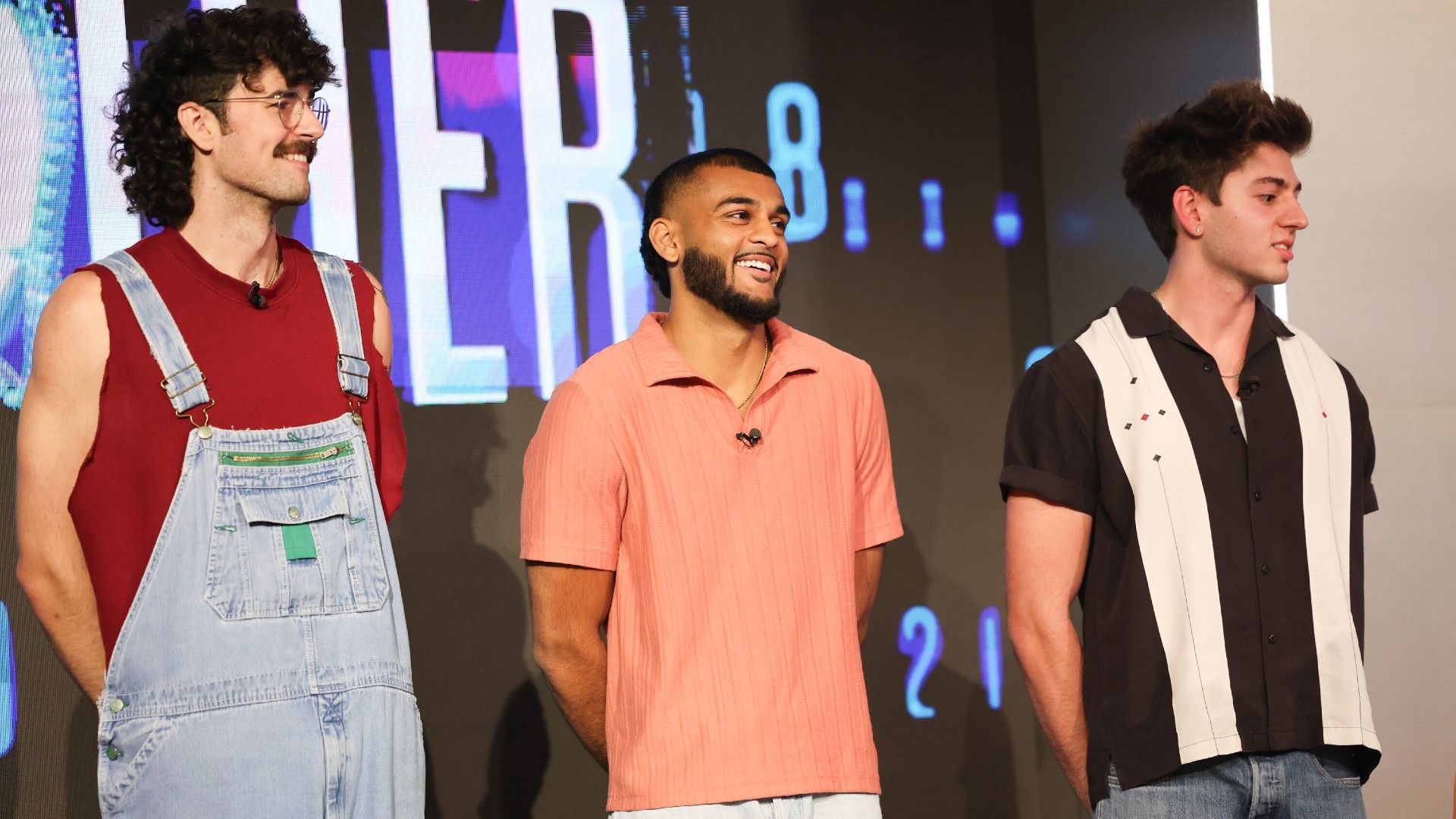
  • Drew picked dad over big sis, and BB28 has its final three

    Drew picked dad over big sis, and BB28 has its final three

    Drew evicted Dee, kept Rick, and sent Taylor, Drew, and Rick to the final three. yay or boo, whichever you prefer. Read more →

    episode spoilers for Big Brother 28 through the final-four eviction on Thursday, September 24.

    Taylor won the HOH that guaranteed her a chair at the end. Drew won the veto that turned the other two chairs into his personal seating chart. then he evicted Dee, kept Rick, and gave us a final three that can be greeted with either “yay” or “boo” without changing the punctuation.

    what happened

    The entire final-four round happened inside Thursday’s two-hour episode. Taylor beat Dee and Drew for HOH, then nominated both of them. Drew won the veto, used it on himself, and forced Rick Devens onto the block beside Dee.

    That made Drew the only voter. He chose to evict Dee, ending the Icons pair and sending Taylor, Drew, and Rick to the final three. Big Brother Network’s final-four results confirm the whole sequence, which is useful because the episode compressed an HOH, nominations, veto, veto meeting, eviction, and several years of emotional aging into two hours.

    Big Brother 28 finalist Drew Campbell wearing a black-and-white striped shirt
    Drew Campbell. Photo: Evan Mulling/CBS, via Parade.

    Drew finally made the move

    Drew spent weeks close enough to the Icons that every decision became a referendum on whether he was playing with them or merely decorating their alliance. He voted out Yash over Dee. He absorbed the jury’s suspicion. He kept insisting there was a point at which loyalty would become timing.

    This was that point, because it could not be any later. Dee could not retaliate, nominate him, or win one more competition. Drew gets to walk into finale night saying that when one vote could finally remove the season’s most established strategic pair, he cast it.

    The complication is that he kept Rick. Cutting Dee breaks the pair, but it does not remove the veteran story from the final three. Rick has survived being visible, targeted, nominated, twist-afflicted, and occasionally dressed like a Morpheus vampire. that is not a small résumé to sit beside at the end.

    Big Brother 28 finalist Rick Devens wearing a blue suit jacket and looking upward
    Rick Devens. Photo: Robert Voets/CBS, via Parade.

    Taylor won exactly enough power to lose control

    Taylor’s HOH was enormous because it guaranteed safety at final four. It was also structurally rude: after she nominated Dee and Drew, the veto winner controlled everything else. Drew won, saved himself, selected the replacement nominee by default, and cast the only eviction vote.

    So Taylor got the thing she needed most—a final-three seat—and then had to watch someone else decide who would occupy the other two. crying with Taylor was not an overreaction. it was the correct amount of crying for winning power in a format designed to immediately explain the limits of your power.

    yay or boo, whichever you prefer

    yay or boo whichever you prefer

    — schweg, (@schwegler.lol) 2026-09-25T01:49:39.188Z

    This final three has three usable stories. Taylor fought her way into the room after losing allies and being treated like a convenient pawn. Drew waited until the last possible vote to prove that waiting was strategy rather than fear. Rick arrived as the obvious returning-player threat and is somehow still inside the building.

    It also has three obvious objections. Taylor may need the final HOH more than either man. Drew may have waited so long that the jury remembers the hesitation better than the move. Rick may be the person everyone spent the season identifying as dangerous and then repeatedly declining to remove.

    The final HOH will decide which two of them face the jury at the 90-minute finale on Thursday, October 1, at 8/7c. Until then: yay. boo. both remain valid and, frankly, rotational.

    Photo attribution: official CBS promotional portraits, used editorially via Parade.

  • Is Matt Mathews funny or just racist?

    Bob explores the shift in how comedians gain fame today, contrasting the traditional path of honing jokes in clubs with the modern… Read more →

    Bob explores the shift in how comedians gain fame today, contrasting the traditional path of honing jokes in clubs with the modern influencer model where an audience is built first through viral content.

    Source: Is Matt Mathews funny or just racist? – Bob The Drag Queen

  • the traitors: new blood has turned vibes into forensic evidence

    the traitors: new blood has turned vibes into forensic evidence

    twenty-two civilians entered a Scottish castle and immediately began converting mumbling, posture, and dog-groomer intuition into probable cause. Read more →

    spoilers for the two-episode premiere of The Traitors: New Blood.

    i started The Traitors: New Blood cold, having zoned out during enough introductions that several contestants were temporarily named “that guy,” “the redheaded woman,” and “the dog groomer who reads vibes.” this turned out to be an entirely appropriate way to watch a show where twenty-two strangers immediately begin converting posture, mumbling, and whether somebody seems too helpful into forensic evidence.

    to Me? these are all nobodies, at least #TheTraitorsUS #NewBlood starting now; starting coldpacking a bowl; making popcorn

    — schweg, (@schwegler.lol) 2026-09-20T02:02:17.288Z

    NBC’s civilian version keeps Alan Cumming, the Scottish castle, the missions, the breakfast theater, and the professionally unnecessary cover songs. It replaces the familiar reality stars with twenty-two “everyday Americans” selected from more than 80,000 applicants, all competing for as much as $250,000. “everyday” is doing some work there. these are people who applied to spend several weeks accusing strangers of murder on network television. they have simply not yet acquired franchise branding.

    everyone arrived knowing what kind of show this is

    the celebrity seasons come with useful baggage. you know who is used to performing, who has a public feud, and who will mistake being loud for being correct because you watched them do it on another show for eleven years. New Blood removes that shorthand, but it does not give us innocents. the cast already understands the grammar of reality television: announce a strategy, identify a vibe, form a theory before breakfast, and say “fact-based” while standing near very few facts.

    Arisa Thomas poses at the round table on The Traitors: New Blood
    Arisa Thomas on The Traitors: New Blood. Photo: NBC.

    Arisa, a dog groomer, says in her official bio that she plans to use her “golden retriever energy” to seem trustworthy. on television this becomes a person professionally associated with reading animal behavior now reading the room for treason. which is ridiculous, obviously, except that the entire program is built on people assigning legal weight to eye contact. she may be the most formally qualified person there.

    not the dog groomer vibe reader #TheTraitorsUS

    — schweg, (@schwegler.lol) 2026-09-20T03:15:35.334Z

    conversation is now a crime scene

    the premiere’s best early conflict comes from the kind of half-heard sentence that destroys a group chat and, apparently, a Scottish breakfast. a mumbled remark about feeling bad picking Kim becomes evidence because another player heard something more suspicious. i would absolutely get banished this way. i mumble, revise sentences while saying them, and sometimes expect the second half of a thought to retroactively repair the first. this is not compatible with a game where twenty-one people are waiting to turn a preposition into probable cause.

    Kim Daily poses at the round table on The Traitors: New Blood
    Kim Daily on The Traitors: New Blood. Photo: NBC.

    Kim was my immediate favorite, which lasted until the next immediate opinion. Jay managed to make me alternate between liking and disliking him sentence by sentence. Kriste became the person i wanted banished before i had assembled a responsible case, which means i was participating correctly. the show’s central mechanic is not deduction. it is deciding that an impression feels factual and then shopping backward for supporting documentation.

    Do I like Jay or hate Jay? Every other sentence I change my mind #TheTraitorsUS

    — schweg, (@schwegler.lol) 2026-09-20T02:48:30.013Z

    the civilians make the machinery easier to see

    without celebrities, there is nowhere for the edit to borrow a personality from. the premiere has to teach us who everyone is while simultaneously asking us to distrust the lesson. the accomplice duel is a smart answer: it immediately gives two players a private relationship with the game, lets everyone else begin inventing explanations, and gives the episode a cliffhanger because i always forget this show considers emotional closure a streaming-platform feature.

    what surprised me is how little star power the format needs. Alan still enters every room like the castle has summoned him. the missions remain enormous devices constructed to make adults crawl through mud in wool. the soundtrack is still a collection of pop songs being performed by a haunted wedding band. the production supplies grandeur; the players only need to supply bad information with confidence.

    after two episodes, i do not know everyone’s name, i have changed my mind about Jay several times, i like Kim, and i want Kriste banished for reasons i would not submit to a court. in other words, The Traitors: New Blood works. the cast may be new, but the human impulse to call a vibe “fact-based” arrived fully trained.

    The Traitors: New Blood airs Thursdays at 8 p.m. ET on NBC and streams the next day on Peacock. Cast and schedule details via NBC.

  • mahna mahna remains a complete operating system

    a man in a green suit begins with one little noise, two pink creatures answer him, and television becomes briefly perfect. Source:… Read more →

    a man in a green suit begins with one little noise, two pink creatures answer him, and television becomes briefly perfect.

    Source: YouTube

  • the housewives anniversary trip is a hostile group project with luggage

    the housewives anniversary trip is a hostile group project with luggage

    seven veteran Housewives, five cities, one traveling jurisdictional dispute, and Teresa waiting patiently for the next euphemism to receive technical support. Read more →

    there are television shows with plots, and then there are television shows where seven women who have each spent years learning how to seize a scene are placed on a bus and asked to celebrate institutional history.

    ultimate girls trip roaring 20th might be the best tv show I’ve ever seen? just everyone hating everyone and about every 16 minutes they have to explain a sex euphemism to teressa

    — schweg, (@schwegler.lol) 2026-09-14T05:03:14.953Z

    The Real Housewives Ultimate Girls Trip: Roaring 20th may be the best version of the second thing Bravo has ever made. everyone hates everyone, every city supplies a new ceremonial reason to reopen an old wound, and approximately every sixteen minutes somebody has to explain a sex euphemism to Teresa Giudice.

    this is not a criticism. this is the format achieving consciousness.

    the trip has no neutral territory

    The seven Roaring 20th cast members pose together in colorful vacation clothes and sunglasses aboard a boat.
    The Roaring 20th cast takes the anniversary trip on the road. Photo: Bravo.

    The season’s official structure is a tour through the franchise’s history: Orange County, Beverly Hills, Atlanta, Miami, and New York. Bravo describes the core cast as seven “franchise-defining” Housewives—Lisa Barlow, Porsha Williams, Kyle Richards, Luann de Lesseps, Vicki Gunvalson, Teresa Giudice, and Gizelle Bryant—with other familiar faces appearing along the route.

    on paper, this is an anniversary celebration. onscreen, it is a traveling jurisdictional dispute. every stop gives somebody home-field advantage and everybody else a fresh opportunity to resent it. nostalgia arrives carrying a seating chart.

    the casting is almost mathematically hostile. these are not seven people selected because they will naturally bond. they are seven people selected because each believes, with years of supporting footage, that she understands how a Housewives scene is supposed to work. put them together and every lunch becomes a writers’ room where nobody has agreed who is showrunner.

    everyone is producing, including the person denying she is producing

    episode six, “Cockies and Conversation,” is where the machinery becomes especially visible. the Miami stop includes an argument about Lisa being late, another argument about whether Lisa talks to bloggers, Vicki’s gastrointestinal situation, Luann interrupting a toast about sisterhood, and Porsha repeatedly trying to redirect traffic like the only crossing guard assigned to an eight-lane intersection.

    Lisa Barlow speaks with other Housewives during episode six of The Real Housewives Ultimate Girls Trip: Roaring 20th.
    Lisa Barlow during “Cockies and Conversation.” Photo: Bravo, via Vulture.

    Vulture’s recap describes the cast as reaching the point in a vacation where everyone is exhausted and patience has become a limited natural resource. that exhaustion is exactly why the episode works for me. nobody has enough energy left to pretend these conversations are spontaneous, but everybody still has enough professional instinct to keep the scene alive.

    Gizelle introduces an accusation. Lisa rejects the premise. Teresa locates Lisa almost immediately when she leaves to cry. Luann enters each silence like she has been summoned by a small bell only she can hear. Vicki tries to deliver a toast while the room behaves as though the toast is a public comment period.

    the show is not hiding the labor of reality television anymore. it is letting us watch seven veteran employees conduct an increasingly hostile peer review.

    Teresa is the audience, somehow

    Teresa’s role in all of this is essential because she keeps reacting to language like it has arrived without documentation. somebody says something filthy. the group pauses. Teresa processes the phrase. a colleague provides technical support. television resumes.

    after twenty years of Housewives, this is the kind of ritual the franchise can now build around itself. the joke is not simply that Teresa does not know a euphemism. the joke is that everyone else knows she will not know it, the editors know we know, and the explanation becomes a tiny recurring ceremony. oral history, but make it deeply unhelpful.

    the anniversary works because nobody can behave at it

    Bravo’s official language promises nostalgia, heartfelt revelations, effortless humor, and “larger-than-life dynamics.” that is accurate in the same way “weather event” is accurate. the appeal is not that the women gather to honor twenty years of television with dignity. the appeal is that dignity keeps booking a later flight.

    Roaring 20th understands that the Housewives legacy is not a collection of isolated iconic moments. it is a workplace culture. alliances, grudges, catchphrases, self-production, selective memory, and the unshakable belief that the other person should apologize first have all been standardized across franchises.

    so yes, everyone is hating everyone. the trip keeps moving. Teresa will require another definition shortly. this may be the finest commemorative programming the institution could have produced.


    Sources and image attribution: Bravo’s official Roaring 20th first look; Vulture’s episode-six recap. Promotional and episode imagery from Bravo, used editorially for commentary.

  • streaming has turned watching tv into unpaid market research

    streaming has turned watching tv into unpaid market research

    streaming has trained viewers to treat every premiere like a performance review—and every show they love like an unpaid internship. Read more →

    last night, four days after The Paper dropped its entire second season, I started watching because I wanted to. I also started watching because some small, unpaid Peacock employee living inside my brain had begun shouting that the show needed my numbers immediately.

    why do I feel forced to watch streaming shows i like within the first week they’re out for n fear that low first week numbers will cause the algorithm to cancel it?

    — schweg, (@schwegler.lol) 2026-09-14T00:30:53.244Z

    this is a strange new relationship with television. I am no longer simply deciding whether I feel like watching a show. I am being asked, or at least gently haunted, to demonstrate that the show deserves to continue existing.

    the premiere is now a performance review

    The Paper released all ten season-two episodes on Peacock on September 9. That is convenient if you want to spend a weekend at the Toledo Truth Teller. It is less convenient if your preferred television schedule is “eventually, after I finish the other eleven things everyone released on Thursday.”

    A weekly show can slowly become part of your life. A binge release arrives like a pallet on the loading dock. Please process the complete shipment while it is still considered culturally fresh.

    Netflix engagement report graphic with a collage of streaming titles
    Netflix’s 2026 engagement report artwork. Image: Netflix.

    Streamers do not all disclose the same decision-making formula, and one household pressing play four days late is not a tiny executioner standing beside a cancellation button. Still, the industry has trained us to understand viewing as a vote. In its July 2026 engagement report, Netflix described engagement around the moment someone chooses a title and stays to watch; it reported more than 97 billion hours watched in the first half of the year.

    The numbers get enormous very quickly. Nielsen’s 2026 midyear streaming report ranks successful shows in billions of minutes and describes a new class of originals through their measured viewing. That is useful industry data. It also means viewers now encounter television surrounded by the language of quarterly results.

    Nielsen chart ranking the top overall streaming titles by minutes viewed in the first half of 2026
    Nielsen’s top overall streaming titles for the first half of 2026. Image: Nielsen.

    fandom has become an unpaid internship

    If you like a small comedy, a queer show, a weird genre series, or anything else that does not arrive pre-certified as a global event, watching can feel less like leisure and more like constituent services. You watch early. You let the credits run. You tell friends. You make a post. You consider putting “stakeholder engagement” on LinkedIn.

    The platform does not need to send a push notification saying this program’s continued employment depends on you. We have seen enough beloved shows vanish after one or two seasons to write the notification ourselves.

    And because the actual renewal calculus is private, there is no moment when the assignment is complete. Was starting within four days fast enough? Do I need to finish this weekend? Does rewatching help? Was pausing to make dinner an act of industrial sabotage?

    I would like to return to merely watching television

    I do not want every show I like to become a civic obligation. I want to watch The Paper because Sabrina Impacciatore is doing something ungovernable on my television, not because I have appointed myself to Peacock’s programming committee.

    But I did start season two. four days after release. while publicly complaining about feeling forced to start season two.

    the algorithm will be pleased to note that its employee remains highly engaged.

    Images from Peacock/NBCUniversal, Netflix, and Nielsen, used editorially.

  • Yash traded Drew the veto for two promises and a future problem

    Yash traded Drew the veto for two promises and a future problem

    after roughly twelve to fourteen hours, Yash handed Drew the #BB28 veto in exchange for safety promises. this should age calmly and… Read more →

    live-feed spoilers for Big Brother 28 through Sunday morning, September 13.

    Yash and Drew stayed attached to a movie-promo lie detector until approximately the end of time, and then Yash traded the veto away for two promises. this is the kind of decision that looks either visionary or deeply embarrassing depending on which thirty seconds of Thursday you freeze-frame.

    no deal made in a pressure cooker-like comp has Ever backfired, lol

    — schweg, (@schwegler.lol) 2026-09-13T09:58:47.218Z

    what happened

    Yash’s Week 10 nominations were Barrett, Drew, and Melody. Dee and Devens joined them in the final veto draw, and the competition turned into an endurance marathon that ran somewhere in the neighborhood of twelve to fourteen hours.

    Hamsterwatch’s September 12 live-feed recap has the drop order as Dee, Melody, Devens, and Barrett, leaving Drew and Yash. At roughly 2:48 a.m. Pacific, Yash accepted Drew’s pitch and dropped, making Drew the veto winner.

    Yash Patel and Drew Campbell seated with other houseguests in the Big Brother 28 living room
    Yash Patel and Drew Campbell with fellow houseguests. Photo: CBS, via AOL.

    In exchange, Drew promised:

    • not to vote Taylor out if she is on the block Thursday
    • not to nominate Yash during Drew’s next HOH, either initially or as a replacement nominee, even if keeping that promise means sacrificing Melody

    the deal is stranger than it first sounds

    Yash is already HOH, so the veto did not offer him personal safety. It offered control. Because Dee’s BB Bribe protects Dee and Devens from a Yash nomination this week, Drew using the veto on himself appears to leave Taylor as the only available replacement nominee.

    So Yash effectively allowed the sequence that puts Taylor on the block, then bought a promise from Drew not to evict her. very normal. structurally elegant. no loose wires visible anywhere.

    But the deal makes more sense if Yash believed Drew was going to outlast him anyway. Dropping without a deal gives Drew the veto and Yash nothing. Dropping with a deal gives Yash one vote protecting Taylor and possible safety during a future Drew HOH. The question is not whether the deal was perfect. The question is whether Yash sold something he was already about to lose.

    Big Brother 28 houseguest Drew Campbell in a black-and-white striped shirt
    Drew Campbell. Photo: CBS, via Parade.

    Drew got the cleaner end of it

    Drew gets immediate safety, the power to force a replacement nominee, and a deal that asks him to protect Yash only during his next HOH. The Taylor promise matters this week, but it is still just one vote in a week where the final nominees are not settled until the Block Buster is over.

    The most interesting clause is Melody. Drew reportedly agreed that Yash’s safety would hold even if Melody had to go up instead. That is a future loyalty test Yash may never need to collect, but Drew agreed to it while exhausted and inches from winning the veto outright. contracts signed inside endurance competitions should probably come with a three-business-day rescission period.

    if Yahs felt he could have stayed in it much longer, he wouldn’t have taken the deal—or at least that Better be what a DR says on Wednesday

    — schweg, (@schwegler.lol) 2026-09-13T10:09:53.547Z

    For now, Drew has the veto, Yash has two promises, and Taylor has the privilege of possibly touching the block as part of someone else’s protection plan. My final-seven rankings already needed revision; they have now filed the paperwork themselves.

    Photo attribution: CBS promotional and episode imagery, used editorially via AOL and Parade.

  • #BB28: the final 7, ranked after tonight’s eviction

    After tonight’s #BB28 eviction, there are seven left, and my rankings are now Barrett, Taylor, Melody, Drew, Devens, Yash, and Dee. this… Read more →

    after tonight’s eviction, we are officially down to seven, which means i can no longer pretend these rankings are provisional in any meaningful way. they are still emotional, reactive, occasionally petty, and almost certainly going to age badly, but at least there are fewer people to be wrong about now.

    as always, this is not a power ranking. this is a deeply scientific measurement of who is currently contributing the most to my enjoyment of .

    1

    Barrett Pfeiffer

    Barrett

    somewhere between “i Might like him” and now, this apparently became a full investment. not necessarily the cleanest path through the game, but consistently one of the people i actually want to watch do things.

    2

    Taylor Brown

    Taylor

    an absolutely wild climb from my early-season “she’s fine, probably?” position. she has somehow become one of the people i most trust to make the room she’s in more interesting.

    3

    Melody Morris

    Melody

    from “still not clear on who this is” to third place is, frankly, the kind of character arc i appreciate. she has had one of the better late-season rises for me.

    4

    Drew Campbell

    Drew

    still irritatingly likable. i have spent basically the entire season waiting for that to stop being true, and here we are at seven.

    5

    Rick Devens

    Devens

    still good vibes, still solid television, still occupying a strange lane where i enjoy him without ever becoming fully Devens-pilled.

    6

    Yash Patel

    Yash

    i have, against all odds, moved beyond the haircut note. character development for both of us.

    7

    Dee Valladares

    Dee

    the funniest possible endpoint after starting the season at number one. i do not dislike her, exactly. i have simply reached the point where everyone else left is currently giving me more.

    so that’s the seven. Barrett at the top, Dee at the bottom, and a truly irresponsible amount of room for this to change before i have even finished emotionally processing tonight’s episode.

  • liz lemon remains extremely well-documented

    a complete record of the human experience, if the human experience had three coffees, a sandwich, and absolutely no room for feedback. Read more →

    a complete record of the human experience, if the human experience had three coffees, a sandwich, and absolutely no room for feedback.

    Source: YouTube

  • your mom sucks is all the booking you need

    your mom sucks is all the booking you need

    professional wrestling is at its best when the entire story can be explained to a child in one sentence and the child… Read more →

    professional wrestling is at its best when the entire story can be explained to a child in one sentence and the child is already furious before you finish.

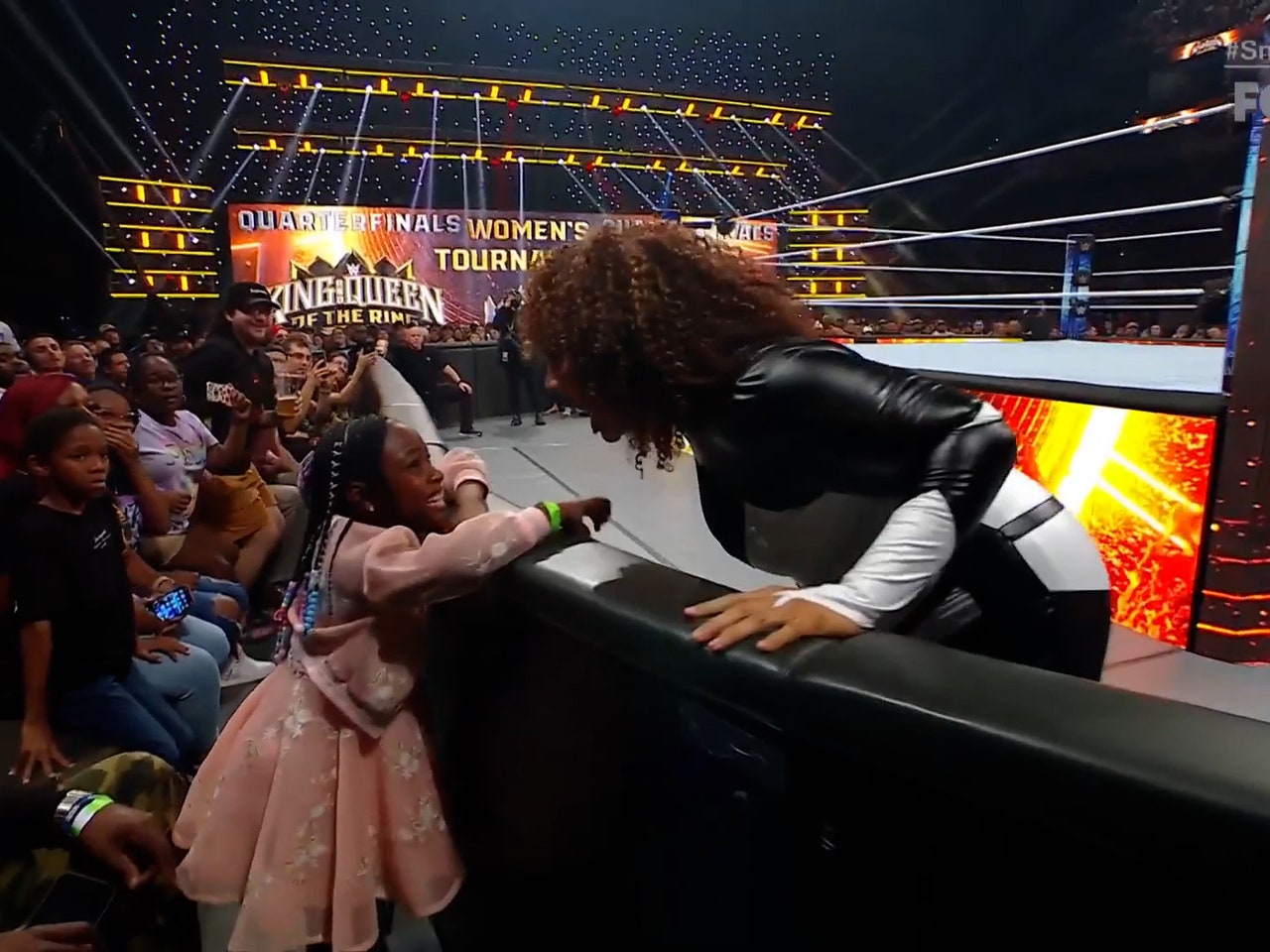
    this clip from the May 17, 2024 SmackDown is eleven seconds long. Nia Jax walks over to Jade Cargill’s daughter, Bailey, and tells her that her mom sucks. Bailey objects, correctly. Jade gets off the floor and superkicks Nia. we have a villain, a victim, a personal stake, a comeback, and a cathartic act of violence. prestige television has spent eight episodes accomplishing less.

    Nia Jax tells Bailey that her mom sucks; Jade Cargill responds. WWE SmackDown, May 17, 2024, preserved via ruinedchildhood on Tumblr; used for commentary.

    the barricade is not a wall

    the thing I love is that Bailey does not look like a performer who has been inserted into an angle. she looks like a kid who has just received inaccurate information about her mother and would like the record corrected immediately. Nia understands the assignment, because the assignment is being mean enough to make a child hate you without making the child actually afraid of you.

    Social post reading, your mom sucks, followed by six loudly crying emoji.
    Reaction post preserved in the originating Tumblr reblog; used for commentary.

    wrestling crowds are not audiences in the normal sense. the barricade separates them from the match physically, but the whole art form depends on pretending it does not separate them narratively. people boo, chant, argue with referees, warn wrestlers about someone sneaking up behind them, and occasionally discover that their mother is now part of the show.

    most entertainment asks you to sit quietly while trained professionals manufacture a feeling. wrestling gives you a folding chair, sells you a foam finger, and asks you to help. the audience is the laugh track, the Greek chorus, the focus group, and, on the right night, an unpaid supporting cast with excellent seats.

    your mom’s enemy has been superkicked

    Social post observing that your mom’s enemy insulting her and then getting superkicked is a top-five moment in a child’s life.
    Reaction post preserved in the originating Tumblr reblog; used for commentary.

    the reply calling this a top-five moment in Bailey’s life is probably right. children rarely get such clean emotional bookkeeping. somebody insults your mom, your mom stands up, and that person is immediately kicked in the face while several thousand people cheer. there is no waiting for HR, no carefully worded group text, and no six-month process of realizing that the best revenge is living well. the revenge is a superkick. it arrives before the sentence has fully cleared the air.

    Jade was disqualified from the Queen of the Ring match, which is also perfect. the rules say she lost. every other available form of human judgment says she won. the tournament continued, Nia eventually became Queen of the Ring, and Bailey got permanent evidence that her mother will abandon a bracket to defend her honor.

    this is why I keep coming back to wrestling even when the booking is nonsense and the weekly shows are approximately nine hours long. occasionally, the enormous corporate production machine stumbles into something so small, legible, and human that it becomes the whole point: a heel says “your mom sucks,” a kid says “no,” and mom handles it.

    the match and ringside confrontation took place during Jade Cargill vs. Nia Jax in the Queen of the Ring quarterfinal on WWE SmackDown, May 17, 2024. FOX Sports has the match highlight.