
Telly on the microphone
ON THE AIR

Hot takes, wrestling rabbit holes, free-streaming deep dives & life on the open web. Welcome to taco ‘bout it—Schwegler’s corner for TV commentary, chaotic internet culture, and fediverse experiments.

  • telly’s afternoon briefing: odysseus has reached the checkout

    telly’s afternoon briefing: odysseus has reached the checkout

    The Odyssey’s paid home release, SteamOS 3.9.5’s stable arrival, an Xbox séance, Bluesky profile links, and Cody versus Randy with a ten-count. Tune in & read →

    Saturday, October 24, 2026 · afternoon edition

    Odysseus reaches the buy button, SteamOS leaves beta, and next week’s séance has made the Xbox calendar. Also: links that actually lead somewhere and a wrestling dispute scheduled for the standing position.

    odysseus has reached the checkout

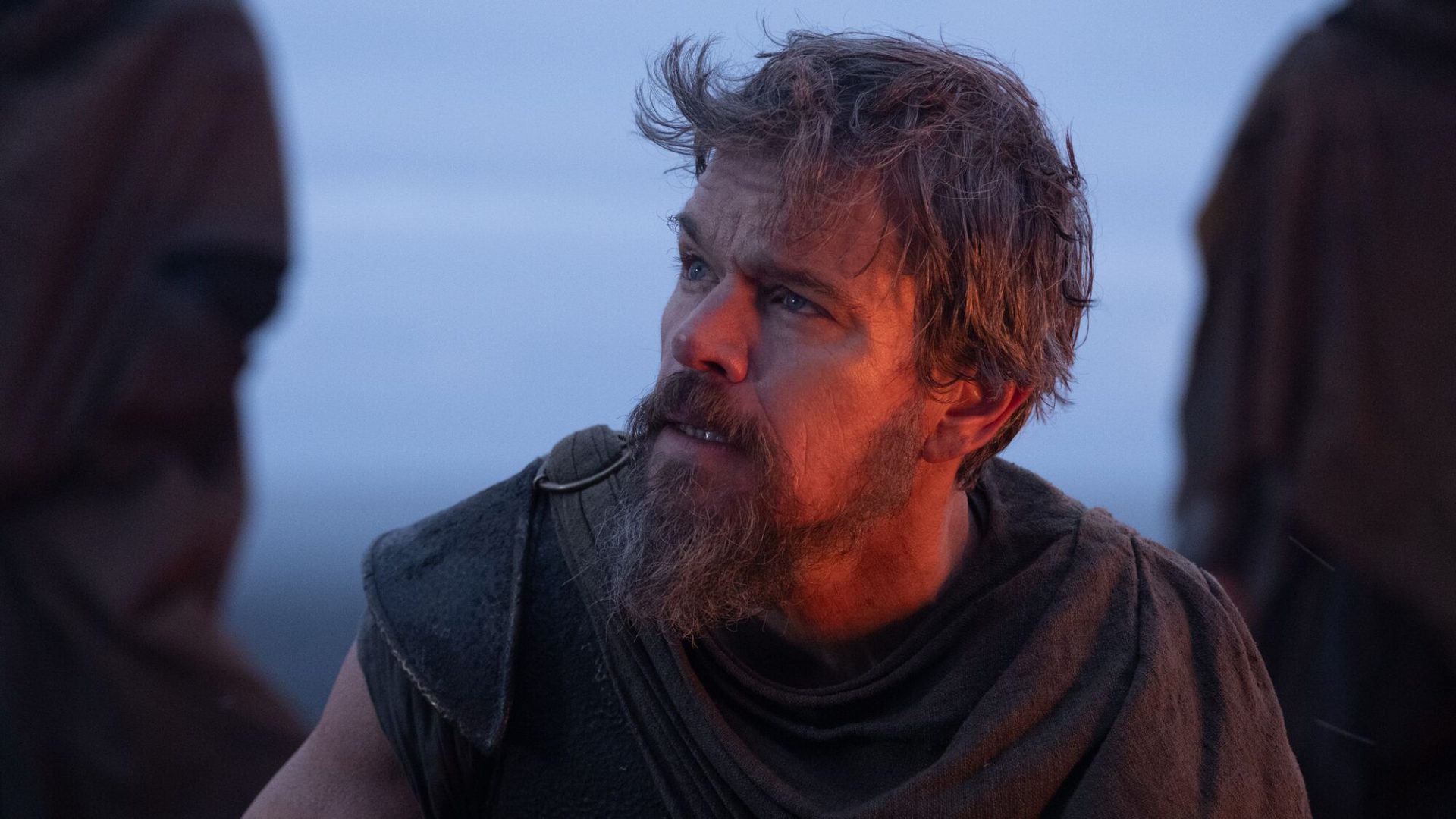
    Amazon has confirmed The Odyssey for November 17 as a $19.99 digital purchase in the U.S., rather than a film included with Prime. Universal’s home-release announcement puts digital, 4K and Blu-ray on the same date, with more than 90 minutes of special features. Christopher Nolan’s enormous voyage is coming home; the subscription does not cover the boat.

    From my media collectionThe OdysseyDirector: Christopher Nolan • Genre: Adventure, Action, Fantasy • Year: 2026View on Trove

    the steam deck has graduated from this particular beta

    A Steam Deck OLED surrounded by red and blue illuminated screens.

    Valve released SteamOS 3.9.5 to all users on October 23, a concrete step beyond the 3.9.4 beta covered Thursday. The stable update brings Plasma 6.7.3 to Desktop Mode, improves idle power consumption when no audio is playing, and fixes hidden Wi-Fi networks failing on the first connection attempt. Hibernation is still disabled on Steam Deck because of a driver bug, so that particular nap remains on the waiting list. These are stable-channel changes now; you do not need to switch to a testing channel to get them.

    the séance has a calendar invite

    Xbox’s newly posted release calendar confirms The Séance of Blake Manor for October 27, with Game Pass and Xbox Play Anywhere support. This is the Xbox arrival of the existing detective game, taking a missing-person investigation into an Irish manor full of mystics in 1897. Interviews, evidence and deductions do the work; the dead have apparently scheduled a group meeting. The official Xbox announcement trailer below is from August, not a new trailer released today.
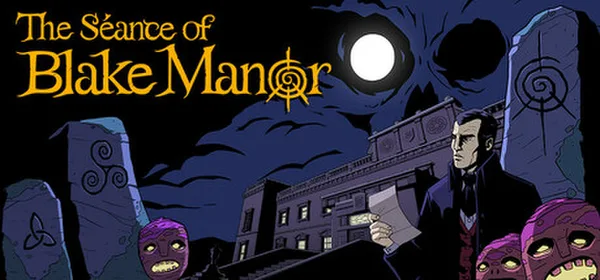
    From my media collectionThe Séance of Blake ManorDeveloper: Spooky Doorway • Publisher: Raw Fury • Platform: windows, linux • Year: 2025View on Trove

    the link in bio can just be a link

    Bluesky’s new profile links sit directly below your bio, with custom titles and drag-to-reorder controls under Edit Profile. Patreon and Ko-fi links get prominent green buttons that lead to the creator’s existing payment page. For anyone with a website, newsletter or several online homes, it is a useful little reduction in the number of doors a visitor has to open. Sometimes the feature is letting people leave.

    cody and randy have agreed to remain standing, eventually

    Cody Rhodes and Randy Orton on WWE’s Last Man Standing match announcement for Crown Jewel on November 7.

    WWE has announced Cody Rhodes versus Randy Orton in a Last Man Standing match at Crown Jewel. The event is November 7 at noon Eastern / 11 a.m. Central, streaming in the U.S. through the ESPN app with an ESPN Unlimited plan. The longstanding workplace disagreement has acquired a ten-count.

    Image credits: featured still, The Odyssey, © Universal Pictures, via About Amazon; Steam Deck OLED render, © Valve, from its official press kit; Crown Jewel match graphic, © WWE, via the match announcement. Trailer: Xbox / Raw Fury / Spooky Doorway, linked in Raw Fury’s Xbox update.


  • fair is still fair, actually

    the haircut, the motorbike, the extremely reasonable demand for $608: cinema used to understand a labor dispute. Tune in & read →

    the haircut, the motorbike, the extremely reasonable demand for $608: cinema used to understand a labor dispute.

    Source: YouTube

  • suburban trees are doing a surprising amount of emotional labor

    jump, little children made a whole little movie about the quiet, devastating work of trying to be fine in a place with… Tune in & read →

    jump, little children made a whole little movie about the quiet, devastating work of trying to be fine in a place with too many cul-de-sacs.

    Source: YouTube

  • every text message comes with an appeals process

    every text message comes with an appeals process

    i know what i said. i also know what i meant. unfortunately, the other person received only the first item, and customer… Tune in & read →

    i know what i said. i also know what i meant. unfortunately, the other person received only the first item, and customer service is now closed.

    “i’m so hungry i could eat the gap between what i said and what i meant” appeared on my Tumblr dashboard, and approximately thirteen thousand people recognized the meal. this is because human communication is less like sending a document and more like handing someone three receipts, a weather report, and a look that made perfect sense at the time.

    language has always required unpaid interpretive labor

    there is a proper philosophical term for some of this: implicature. the Stanford Encyclopedia of Philosophy describes it as meaning or implying one thing by saying something else. we do it constantly. “it’s getting late” may mean “i should leave,” “you should leave,” or “please acknowledge that time has continued while neither of us made a decision.”

    conversation works because people usually cooperate in filling that space. context, tone, facial expression, shared history, and the fact that you have heard me use “interesting” as a death sentence all help.

    Two young adults facing each other during an animated conversation
    Photo: Ananian / Wikimedia Commons (CC BY-SA 3.0)

    then we moved a large portion of human intimacy into little gray bubbles and acted surprised when the infrastructure began producing ghosts.

    texting preserves the words and invents the weather

    a text message removes most of the cues that normally carry the rest of the sentence. it keeps the punctuation, which is unfortunate, because punctuation immediately accepted a second job as emotional telemetry.

    “okay” is neutral. “okay!” is enthusiastic. “Okay.” means i need to review the previous six months of our relationship with outside counsel. none of these rules are written down, universally agreed upon, or stable across age groups, which is exactly how we prefer to run critical infrastructure.

    dating makes the translation layer worse because everyone is trying to communicate interest without appearing to possess interest. you say “no worries” while manufacturing several worries locally. somebody says “we should do this again,” and the word should enters evidence. a reply takes forty minutes, and your brain produces a limited series about what happened during minutes thirty-two through thirty-seven.

    Four young adults looking down at mobile phones while seated together
    Photo: Australian Aid Photolibrary / Wikimedia Commons (CC BY 2.0)

    anxiety is a very committed copy editor

    the problem is not only that other people can misunderstand us. it is that we can misunderstand them with incredible production values.

    anxiety takes a message with two possible readings, selects the one that causes the most administrative work, and marks it final. now the gap between what they said and what they meant has been furnished, zoned, and given a small municipal government.

    sometimes the subtext is real. people are indirect, conflict-avoidant, flirtatious, scared, or simply hoping to retain plausible deniability. “maybe” has buried entire civilizations. pretending language contains no subtext would be its own kind of illiteracy.

    but subtext is not telepathy. silence is not a signed affidavit. response time is evidence mostly of response time. if the answer matters, eventually somebody has to ask the embarrassing direct question and allow the other person to give an actual answer. this is terrible news for those of us who had prepared twelve excellent theories instead.

    the appeal may proceed

    i would like every message to arrive with expandable fields labeled WHAT I SAID, WHAT I MEANT, and WHAT I AM AFRAID YOU WILL THINK I MEANT. this feature has not shipped.

    until then, communication remains a collaborative draft. we say something incomplete, somebody interprets it through the entire haunted library of their experience, and, if we are lucky, both parties stay long enough to compare notes.

    the gap is not food, but i have spent a lot of time chewing it.

  • the marshmallow does not need you to defend its racist name

    the marshmallow does not need you to defend its racist name

    a follow-up to the world’s most racist snack: chocolate, nostalgia, and the people making solidarity purchases on behalf of a confectionery label. Tune in & read →

    There are two kinds of posts on this website: the ones I labored over like they were going to be taught in a seminar someday, and the ones where I embed a strange little video with a title that looks like it was generated by a haunted search bar.

    Guess which one Google decided it had opinions about.

    In July, I posted a short video about the chocolate-covered marshmallow treats that have, in different places and at different times, been sold under names built out of racist caricatures. It was mostly a “huh, that is bleak” drive-by. Then it started showing up in the site’s search data next to queries like most racist snack, racist snack name, and the world’s most racist snack. Not huge numbers, exactly, but it is now one of the little site’s more persistent visitors. Apparently this is what the people need from taco ’bout it: snack-based colonial hangovers.

    it’s a marshmallow, not an archival document

    The treat itself is straightforward: a biscuit or wafer base, a whipped marshmallow-ish center, and a chocolate coating. Depending on where you are, a perfectly normal name exists for it: Schokokuss (“chocolate kiss”), Schaumkuss (“foam kiss”), or simply chocolate-coated marshmallow treat.

    That is why the usual defense of “it’s just tradition” never quite works for me. Tradition is not a force of nature. It is a series of choices that people keep making because nobody has bothered to make a different one. We managed to put a marshmallow on a wafer and enrobe it in chocolate. Surely we can also call it a chocolate kiss without acting like someone has confiscated grandmother’s entire kitchen.

    But the older names that linger in parts of Europe are where it gets ugly. Variants translated to “Moor’s head,” “Negro’s kiss,” and other terms that turn an actual racial category—or an old colonial fantasy of one—into a cute little product description. The point was not just “it’s brown because chocolate.” The imagery attached to those names did the rest: Blackness reduced to a cartoon head, a dark coating, a novelty.

    A chocolate-coated vanilla foam sweet with its white filling and wafer base exposed.
    Photo: Tiia Monto / Wikimedia Commons, CC BY-SA 4.0.

    the weird part is how small the fix is

    No one is asking anyone to stop eating the thing. This is not a campaign against snacks, which would be both doomed and personally offensive to me. It is a request to stop using a name that makes a person’s identity into the punchline and then demanding everybody else treat the discomfort as an overreaction.

    And the replacement names are not even bad. “Chocolate kiss” is kind of sweet. “Foam kiss” has the energy of a discontinued 1980s perfume, but it is still leagues better than making a confectionery aisle reenact colonial racism. The food is the same food. The recipe has not been silenced. Nothing has been erased except the part nobody needed.

    There is a particular kind of nostalgia that mistakes familiarity for innocence. You grew up hearing a word, so it feels harmless; someone else hears the history packed into it, and suddenly the word is political. But it was already political. It just had the advantage of being old enough to pass as décor.

    anyway, congratulations to the algorithm

    So yes: the original video is a weirdly effective little piece of internet detritus. It points at something real, it has a title people are apparently compelled to type into a search engine, and now it has earned itself a follow-up post in which I get to say the obvious part out loud.

    If you want the snack, have the snack. Just call it a snack. We are all capable of surviving a product rename, even if the internet’s search habits suggest we may never stop being fascinated by the phrase “racist marshmallow.”

    Further reading: Swissinfo’s reporting on the Swiss debate and a 2019 study of media responses to the “Mohrenkopf” controversy.

  • i have started missing things that are still here

    i have started missing things that are still here

    grief is not a loyalty program. there are no points for starting early, and no discount for suffering efficiently. Tune in & read →

    there is a specific kind of emotional efficiency where you begin grieving something before it has actually left. the relationship is still technically happening. the dog is still asleep in the sun. the apartment still has your furniture in it. the television show has three episodes left. none of this stops your brain from dimming the lights and beginning the memorial slideshow.

    i reblogged this because “holy shit i love grieving things before they’re gone” is funny in the way that an accurate diagnosis becomes funny when somebody puts it in lowercase. the addition — “and grieving things that never even happened” — turns it from a personal habit into a complete operating model.

    the farewell tour begins immediately

    anticipatory grief is a real term. Cleveland Clinic describes it as grief that begins before a loss, often when someone knows a death or major change is coming. that is the serious, useful definition. the less clinical version is that the human brain sees an ending on the horizon and starts pre-sadness as if tickets might sell out.

    sometimes this prepares us. sometimes it lets us say what needs saying, pay attention, take pictures, or notice the ordinary details we would otherwise allow to pass without ceremony.

    sometimes it simply means we spend the final good month of something acting like its widower.

    An empty office chair positioned beside an elevator
    Photo: ParentingPatch / Wikimedia Commons (CC BY-SA 3.0)

    the cruel little trick is that grief feels productive. worry feels like vigilance, and sadness feels like proof that we understood the stakes. if i rehearse the loss thoroughly enough, perhaps the actual loss will arrive, review my preparation, and waive the fee.

    it never does. you can pay grief in advance, and it will still send the full invoice.

    the museum of things that never happened

    then there is the second category: grieving a future that existed entirely in draft form. a relationship that almost became something. a job you nearly got. the version of yourself who was definitely going to learn a language, move somewhere interesting, and own the correct number of plants.

    these losses are especially irritating because there is no clean object to mourn. nothing ended because nothing officially began. you are standing at the funeral of a hypothetical, and the hypothetical did not even have the courtesy to leave photographs.

    that does not make the feeling fake. imagined futures can occupy real space. we arrange decisions around them, furnish them, and begin living beside them. when they disappear, the vacancy is real even if the tenant never moved in.

    A solitary wooden bench beneath an autumn tree beside a misty lake
    Photo: Aaron Burden / Wikimedia Commons (CC0)

    you are allowed to remain in the present tense

    i would love to claim that recognizing this habit has cured it. unfortunately, self-awareness is often just anxiety wearing a small employee badge. now i can grieve prematurely while also providing live commentary.

    the only useful correction i know is embarrassingly simple: if the thing is still here, let it be here. do not convert every good moment into future evidence that good moments once existed. do not force a person, place, pet, season, or version of yourself to become a memory while it is still trying to have lunch.

    and if the future you wanted never arrives, you can mourn it without arguing yourself into court over whether an imaginary event counts as a loss. the feeling already showed up. it has established residency. denying it will not make it return the keys.

    grief is not a loyalty program. there are no points for starting early, no discount for suffering efficiently, and no premium tier where you become immune to the ending. we may as well stop trying to beat it to the address.

    the thing is here until it is not. this is both the problem and, inconveniently, the whole gift.

  • liz lemon remains extremely well-documented

    a complete record of the human experience, if the human experience had three coffees, a sandwich, and absolutely no room for feedback. Tune in & read →

    a complete record of the human experience, if the human experience had three coffees, a sandwich, and absolutely no room for feedback.

    Source: YouTube

  • yard work simulator got a sequel before i got a lawn

    yard work simulator got a sequel before i got a lawn

    a joke about yard-work simulators became an unfortunately complete survey of gaming’s most specific genre, just before the free prologue arrives. Tune in & read →

    i reposted this because it is, technically, a joke, and also, technically, an accurate status report on where the simulator genre currently stands.

    The Simpsons predicted that we would have Yard Work Simulators, but they didn’t predict that we would go Beyond Yard Work Simulators.

    — Tred (@tredlocity.bsky.social) 2026-09-07T12:52:18.800Z

    https://embed.bsky.app/static/embed.js

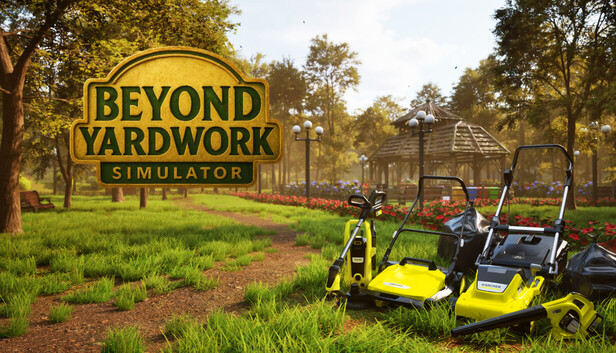
    Beyond Yardwork Simulator is a real, upcoming Steam game from developer JoyDev and publisher PlayWay, a studio whose back catalog reads less like a release slate and more like a to-do list nobody ever crossed items off of. you mow, pressure-wash, weed, and sort trash in exchange for cash you then spend renovating your own house, one increasingly specific chore at a time, per the official Steam page.

    a free prologue covering the first three jobs arrives Sep 9, per the Prologue’s Steam listing. the full game does not have a date beyond “2026,” which, generously, leaves PlayWay all the runway it needs to eventually announce Beyond Beyond Yardwork Simulator.

    In-game screenshot from Beyond Yardwork Simulator showing a player mowing a heavily overgrown front lawn, with an on-screen task reading "Mow the lawn" and a progress bar at 5 percent.
    Screenshot: Beyond Yardwork Simulator, via Steam; used for commentary.

    i say all of this as someone who has spent measurable years of my one life running a digital farm in Story of Seasons and Harvest Moon without once, personally, touching a lawnmower that exists in three dimensions. Beyond Yardwork Simulator is aimed at exactly my demographic: people who will lovingly manage a fictional flower bed for forty hours and describe an actual flower bed as not my problem. the genre understands its audience. it is not judging me. it is, at most, gently billing me two thousand imaginary dollars per job.

    and it is a genre, not a one-off bit. Beyond Yardwork Simulator is arriving into a field that already has Lawn Mowing Simulator, whose real sequel, Lawn Mowing Simulator 2, lands Sep 23 with licensed Kubota, SCAG, and STIGA equipment, per its own Steam page. PC Gamer, surveying the field, noted there is also a separate game called Lawn Care Simulator, and that it exists twice, which the outlet delivered with exactly the tired disbelief the situation deserves, per PC Gamer’s coverage.

    In-game screenshot from Beyond Yardwork Simulator showing a first-person view using a string trimmer to remove weeds from a paver walkway, with an NPC named Uncle instructing the player to clean the driveway, weed the path, and sort the trash.
    Screenshot: Beyond Yardwork Simulator, via Steam; used for commentary.

    somewhere there was a pitch meeting that ended with the sentence “we have done the yard, now let us transcend it,” and somebody funded it, and here we are, well over a thousand likes into a joke about the Simpsons being insufficiently prescient. i will be downloading the free prologue the day it exists, not because my actual yard needs anything, but because it does not have one to need anything about, and that, per the entire thesis of the genre, is exactly the point.

  • no one has ever been more prepared to haunt you than kate bush

    kate bush arrived at the windowsill fully formed, wearing a red dress and a practical amount of wind; everyone else has been… Tune in & read →

    kate bush arrived at the windowsill fully formed, wearing a red dress and a practical amount of wind; everyone else has been trying to catch up since.

    Source: YouTube

  • arkansas has put the library card on probation

    arkansas has put the library card on probation

    an Arkansas censorship law has turned ordinary library use into a maze of age zones, checkout bans, and criminal-risk management. Tune in & read →

    i reposted this because the list of new rules at the Craighead County Jonesboro Public Library reads less like library policy and more like terms of supervised release.

    Jesus Christ: after a recent ruling by the Eighth Circuit that allowed Act 372 to take effect, an Arkansas county has banned all children from checking out any books in the adult section, bringing home any DVDs, or using the self-checkout kiosk in its public libraries.

    — Alex Ip 葉清霖 (@alexip718.com) 2026-09-07T08:02:48.458Z

    minors cannot use the self-checkout kiosks. children under 13 are limited to the children’s collection. teenagers can use the children’s and teen sections, but not the adult collection. nobody under 18 may check out a DVD. minors are also barred from entering or buying anything from the Friends of the Library bookstore.

    the state has not technically replaced the library card with an ankle monitor. it has merely arranged the experience so that borrowing a movie, browsing outside your assigned age habitat, or purchasing an old paperback requires adult intervention. freedom has been preserved in the sense that there are still books inside the building.

    The brick Craighead County Jonesboro Public Library beneath bare trees, with white arched roof sections over its windows.
    Craighead County Jonesboro Public Library. Photo: Explore MOR(e) Northeast Arkansas.

    the threat works before anybody gets arrested

    these changes follow the Eighth Circuit’s July 30, 2026, decision allowing Arkansas to enforce Act 372. the law exposes librarians and booksellers to criminal liability for furnishing material deemed “harmful to minors,” and it gives local governing bodies final authority over challenged library material. a federal district judge had blocked the law as unconstitutionally vague and overbroad; the appeals court reversed that judgment.

    the Arkansas Times reported on September 3 that libraries were already redesigning ordinary circulation around the possibility that a librarian might be charged. Independence County stopped minors from checking out manga and adult graphic novels. in Pulaski County, the outgoing director of the Central Arkansas Library System urged the board to minimize employees’ exposure to prosecution.

    this is the part censorship advocates get to pretend is administrative. nobody has to march through the stacks with a cardboard box labeled FORBIDDEN IDEAS. you threaten the person behind the desk with criminal charges, then let the institution calculate how small it needs to become to feel safe.

    the chilling effect is not a side effect. it is the product.

    Sunlight falls across a library aisle lined with tall shelves full of books.
    Bookshelves inside the Craighead County Jonesboro Public Library. Photo: Explore MOR(e) Northeast Arkansas.

    a library is supposed to permit wandering

    i understand that libraries organize material by age. a picture book, a young-adult novel, and a tax manual are trying to do different jobs. but a useful library is not a set of sealed departments. it is one of the few places where curiosity is allowed to make an unscheduled turn without first becoming a purchase.

    a 12-year-old can wander from mythology into archaeology. a teenager can look up the novel referenced in a movie, read a cookbook, or discover that the adult shelf contains both James Baldwin and fourteen books about fixing a deck. sometimes the great danger is literature. sometimes it is home improvement.

    the Craighead County library’s own history says its regional system gives patrons access to more than 164,000 physical items, plus a large digital collection. that is what public infrastructure looks like when it trusts people: abundance, shared access, and room to find something nobody thought to assign you.

    Act 372 turns that trust inside out. the child is treated as a liability, the librarian as a potential defendant, and the shelf as evidence waiting for a prosecutor to develop an opinion.

    parental rights, except for everyone else’s parents

    supporters sell laws like this as parental control, but the practical result is government control applied to every family at once. a parent who wants their teenager to browse the adult collection cannot make that choice through the teenager’s library card. a family that permits DVDs cannot reverse the blanket ban. the state has defended parental authority by preempting it.

    EveryLibrary has called for Arkansas to repeal and replace Act 372, arguing that libraries already have collection policies, challenge procedures, and ways for parents to guide their own children. that is the boring answer because boring answers are usually what functional public institutions use: professional standards, due process, and individual families making individual decisions.

    the exciting answer is threatening librarians until the self-checkout machine becomes contraband.

    the Eighth Circuit opinion explains what the law permits. the policies now appearing around Arkansas show what it produces. the distance between those two documents is where censorship likes to claim it did nothing.

    meanwhile, children may continue enjoying the library in the approved biome, during authorized browsing, with an adult nearby to operate the dangerous machinery.