

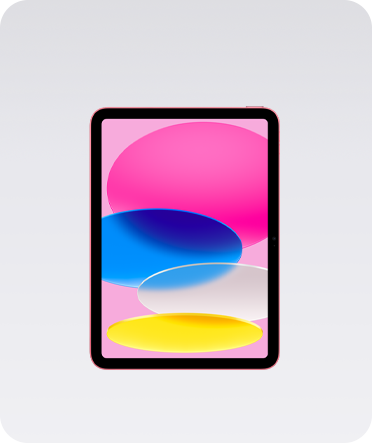
Apple sells four kinds of iPad, which sounds like a product line until you look at the prices and realize it is two different stores sharing a hallway.
At one end, there is a $449 tablet that can handle school, streaming, email, video calls, notes, games, drawing, and most of the other things people mean when they say they want a tablet. At the other, there is a $1,199 slab with a laptop-class chip and a display engineered for people who have opinions about black levels.
Both are easy to recommend. The middle has been asked to prepare a presentation.
the cheap one is not a punishment
Apple’s current lineup starts with the 11-inch iPad at $449. It has the A16 chip, a Liquid Retina display, 128GB of storage at the base price, a landscape front camera, USB-C, and support for a keyboard and Apple Pencil.
That is not the iPad you buy while apologizing to yourself. It is the iPad most people should buy.
The screen is not laminated. The chip is not part of Apple’s M-series. The accessory situation contains the usual light administrative cruelty. But none of those facts change the basic experience of opening a browser, watching a movie, reading a comic, playing a game, or moving three apps around while pretending the fourth one is not where the missing document went.
A cheap Android tablet can be cheaper. A good Android tablet can be more flexible, especially for emulation, file management, or anyone who prefers Android on principle. But the base iPad remains irritatingly complete. It is the rare entry-level Apple product where the compromises mostly wait until after you have started doing something unusually specific.
the Air is where the explanation begins
The 11-inch iPad Air starts at $749. The extra $300 buys the M4 chip, a laminated display with P3 color, faster connectivity, Apple Pencil Pro support, and a device with much more performance than ordinary tablet work can currently threaten.

This is the sensible upgrade. It is lighter than the word Pro, more powerful than the word Air has any right to imply, and available in 11- and 13-inch sizes. If you draw, edit video, keep a tablet for years, or simply notice display lamination every time your Pencil touches glass, the Air makes a coherent case.
The problem is not that the Air is bad. The problem is that rationality has terrible merchandising. If the $449 iPad already does everything you need, $300 is a lot to spend on things you may appreciate but cannot turn into a dramatic sentence. If you are already willing to spend serious-computer money, the Pro is standing nearby wearing a much better screen and looking impossibly thin.
The Air is the correct answer for a large group of people. It just arrives with homework.
the expensive one is not pretending to be practical
The 11-inch iPad Pro starts at $1,199. According to Apple’s comparison page, it pairs the M5 chip with an Ultra Retina XDR display, ProMotion, Thunderbolt and USB 4, and the option for nano-texture glass on higher-capacity models. The 13-inch version moves farther into “please discuss this with your accountant” territory.

It is absurd. It is also probably the best tablet on the market if “best” means the fastest hardware, the strongest display, the thinnest design, and the fewest compromises inside the category.
Whether iPadOS can justify all of that hardware is the question Apple has been answering with increasingly elaborate window-management demonstrations. But the device itself is not confused. It is a luxury object that can also edit five streams of 4K ProRes footage, which is at least more useful than most luxury objects.
the lineup makes sense if you stop asking it to be one lineup
One reply to my post recommended a Surface Pro for school because it can move between tablet and laptop jobs without asking the buyer to choose which kind of computer they are allowed to own. That is the more useful framing. This is less a contest between spec sheets than a question about what problem the object is supposed to solve.
The base iPad is a very good appliance. The iPad Pro is a very good obsession. The Air lives between them, collecting the people who know exactly which base-model limitation will annoy them but cannot produce a professional reason to spend $1,199.
Apple did not build one tablet line. It built the cheapest decent tablet and the best expensive tablet, then placed a perfectly reasonable product between them to handle customer-service escalations.




leave a reply