CHANNEL ARCHIVE

personal essay

Dispatches, commentary, and media logs from the open web.

  • why would i let 20-year-old me review my life

    why would i let 20-year-old me review my life

    he had more friends, a better city, and absolutely none of the information. i’m willing to hear his concerns. Read more

    somebody asked whether 20-year-old you would be impressed or disappointed by you today. i gave it some thought, which was my first mistake.

    20-year-old me had more friends. probably more fun. lived in a city i liked better. he had fairly high expectations of a future somewhere gay-friendly, with a social life that did not require quite so much deliberate effort.

    so, sure. show him the current situation and he’d probably have some complaints.

    but why the fuck would i listen to that 20-year-old dickhead?

    20 y/o me had way more friends and probably more fun and lived in a better city and had pretty high expectations of a future in a gay-friendly city, so he'd probably be mad at me, but, then again, why the fuck would i listen to that 20 year old dickhead?

    — schweg, (@schwegler.lol) 2026-09-17T19:43:56.389Z
    https://embed.bsky.app/static/embed.js
    A street scene in downtown Athens, Georgia, looking toward the University of Georgia Arch in 2008.
    downtown Athens in 2008, close to the period the question sent me back to. Richard Chambers / source. Public domain

    i say that with affection. i was him. i remember enough of what he wanted to know that it wasn’t stupid. wanting friends, belonging, interesting work, and a place where being gay feels ordinary is a pretty reasonable set of requests. i haven’t stopped wanting those things.

    what i object to is giving him the final say about how well i’ve done. he was making a prediction. he wasn’t agreeing to live through everything that happened next and then submit a report.

    he did not have the full itinerary

    when i started listing what 2009 me hadn’t experienced yet, the list got long quickly. friendships falling apart. the company behind a dream job shutting down. moving back to the hometown we’d left when i was ten. eventually ending up in Alabama. becoming my mother’s caregiver. losing her. the pandemic.

    i’ve already written some of that history in “My Lost Decade.” i don’t need to repeat the whole thing here. but i do need it to count when i’m being asked to compare the life i imagined with the one i have.

    there’s a remarkable amount of missing information in “would younger you be proud?” younger me hadn’t tried to hold his life together under those circumstances. he hadn’t even heard of most of the circumstances. he had a lot of opinions, of course. that part came installed.

    if i asked an actual 20-year-old to assess my life, i’d probably explain what had happened before taking his disappointment personally. apparently, when the 20-year-old is me, i’m supposed to skip that step and accept the review.

    A panoramic photograph of downtown Montgomery, Alabama, with buildings spread across the skyline.
    Montgomery: a place the earlier version of the plan did not account for. Chris Pruitt / source. CC BY-SA 3.0.

    i can miss that life without owing it an apology

    the comparison is tempting because some of what i miss is real. i don’t want to pretend that every difficult thing improved me or that every turn was secretly taking me somewhere better. sometimes something good ended. sometimes i made a bad choice. sometimes the available choices were all pretty shitty.

    i can miss the friends, the city, and the feeling that there was plenty of time without concluding that my current life is evidence against me.

    i also don’t have to turn surviving into an inspirational job. there doesn’t need to be a lesson attached to everything i lost. i would happily have learned several of those lessons in a less thorough manner.

    what i want is a fairer comparison. the person i was at twenty could imagine the future, but he couldn’t know what living it would cost or what would become important along the way. i know more now. not everything, obviously. enough to have earned a vote.

    i wrote recently about never quite feeling like a finished adult. this is a different problem: treating an unfinished younger person’s expectations as if they were binding instructions.

    some of those expectations are still useful. i’d like more connection. i’d like more fun. i can take those wishes seriously today without first agreeing that i’ve let somebody down.

    so yes, 20-year-old me can tell me what he misses. i might agree with quite a lot of it.

    then he can listen for a while. he has seventeen years to catch up on.

    Featured image: Tichnor Brothers Collection / Boston Public Library / source. Public domain

  • five years is not a deadline for missing someone

    five years is not a deadline for missing someone

    my mother would have turned 65 this week. grief has reviewed the calendar and declined to recognize the five-year performance target. Read more

    wednesday would have been my mom’s 65th birthday.

    the sentence is simple enough. the feeling has apparently declined to remain within the assigned scope.

    i have spent the last few days moving between missing her and being angry at myself for still being this affected after half a decade of “healing.” five years sounds like enough time to have completed something. there should be a certificate. perhaps a small badge i can attach to my shirt that says processed one major loss, please proceed normally.

    wednesday would have been my mom's 65th birthday and i am cycling between feeling sad and also being mad at myself for feeling sad after half a decade of 'healing'

    — schweg, (@schwegler.lol) 2026-09-21T20:10:03.129Z

    i posted that thought on Bluesky, and people replied with the thing i can believe when it applies to anybody except me: grief does not have a deadline. one person said five years is nothing. another told me to be kind to myself.

    reasonable advice. deeply inconvenient.

    A scattered collection of old black-and-white portrait photographs.
    Mr Cup / Fabien Barral / Unsplash

    healing is not an uninstall button

    i think part of the problem is the way we talk about healing as if it were a project with an end state. you do the work. you learn the lessons. eventually the loss becomes a tasteful line item in your personal history, and the emotional department stops opening tickets about it.

    that has not been my experience.

    i am not as wrecked as i was five years ago. that matters. i can remember my mother without every memory immediately collapsing into the fact that she died. i can write about her angry power-walking playlist and let the memory be funny. i can hear “You Oughta Know” and picture a specific woman being specifically pissed off, rather than treating her entire life as a preface to losing her.

    that is healing, i think. not becoming somebody who no longer hurts, but becoming somebody who has more room around the hurt.

    the trouble is that birthdays are very good at finding the room.

    the calendar keeps making plans for people who are gone

    a birthday is not an abstract reminder. it arrives with a number attached. sixty-five. a whole age she did not get to be. the calendar presents it like an appointment i forgot to cancel, then acts surprised when i have feelings about the empty slot.

    there are other dates, obviously. the day she died. holidays. the ordinary anniversaries that do not announce themselves until i notice what month it is. but a birthday carries a different kind of alternate timeline. i can imagine the cards, the cake, the jokes about senior discounts, and whatever opinion she would have developed about being sixty-five.

    none of that means the previous five years did not count. it means wednesday counts, too.

    Two empty wooden chairs beside a wall, crossed by warm sunlight and shadow.
    Greg Rosenke / Unsplash

    i do not need to grade this

    being mad at myself for being sad is an attempt to turn grief into a performance review. surely, after this much time, i should be more efficient. surely the same date should not be able to surprise me again. surely i have received sufficient training.

    but grief is not evidence that i failed to heal correctly. it is evidence that the relationship still has consequences. my mother mattered while she was here, and her absence remains capable of mattering now. five years did not revoke that.

    i wrote before that grief is not a loyalty program. apparently it is also not continuing education. i do not earn a cleaner response by logging enough hours.

    so, on wednesday, i am going to try not to evaluate the sadness while i am having it. i can miss her. i can be irritated that i have to miss her. i can laugh about the playlist and feel terrible about the age she never reached, possibly within the same five minutes.

    the feeling does not need to demonstrate progress before it is allowed in.

    she would have been sixty-five. i wish she had gotten to complain about it.

    Featured image: Dasha Kroti / Unsplash. Body images are credited in their captions. All three photographs are used under the Unsplash License.

  • my mom’s angry playlist has two songs and no skips

    my mom’s angry playlist has two songs and no skips

    The Bitch Is Back. You Oughta Know. apparently i inherited a very specific approach to emotional regulation. Read more

    i started making a playlist of songs my mom used to listen to when she got pissed off, and so far it has two entries: “The Bitch Is Back” and “You Oughta Know.”

    a short playlist. a clear position.

    making a playlist of songs my mom used to listen to when she would get pissed off about something and so far it's just- The Bitch is Back- You Oughta Know

    — schweg, (@schwegler.lol) 2026-09-16T14:13:20.451Z

    somebody replied that “You Oughta Know” had been their big breakup song and that i was making them feel old. my mom was born in 1961. she was simply a big fan of angry power walking to Jagged Little Pill. the album had applications beyond its original target demographic.

    Jagged Little Pill album cover, with layered photographs of Alanis Morissette against a green background.

    i love that this is a detail i get to keep about her. not a grand statement about what she taught me, or a polished anecdote with a meaningful ending. just my mom being pissed off and putting on Alanis. extremely recognizable. no additional explanation necessary.

    sometimes the song should also be mad

    “You Oughta Know” does not arrive with a calming suggestion. it gets directly into being furious and stays there long enough to make a point. i can understand why someone would want that in her ears while walking with purpose.

    there’s a kind of relief in a song that doesn’t ask you to be the reasonable person yet. maybe you will be reasonable later. perhaps there is a perfectly good explanation. for the next few minutes, however, Alanis is available to argue.

    and then there’s Elton.

    Caribou album cover: Elton John in a tiger-striped shirt and dark trousers against a blue mountain backdrop.

    “The Bitch Is Back” has a different kind of swagger. even the title announces that we have moved past the discussion portion of the afternoon. i appreciate the confidence of a song that introduces itself like somebody has been waiting nervously for its return.

    those two songs together tell me more about the playlist i want than padding it out to a respectable length would. i’m remembering what she actually listened to. i don’t need to manufacture a definitive thirty-track portrait of her because an app has space for more tracks.

    she gets to be funny in the memory, too

    i’ve written about using playlists to say things. this one is a little different. i’m not trying to send a carefully coded message. i’m trying to hang on to a detail that makes me hear her as a person.

    when you miss someone, there’s a temptation to make every memory gentle enough to put on a sympathy card. but i don’t only miss an abstract, saintly version of my mother. i miss a specific woman who could be annoyed, funny, and ready to put on a song about it.

    the angry power walking belongs in the record. so does the fact that remembering it makes me laugh.

    i might remember another song later. for now, two is enough. you could put this playlist on repeat and have a very efficient disagreement with the entire neighborhood.

    Featured image: livepict.com / source. CC BY-SA 3.0.

  • adulthood remains three years away at all times

    adulthood remains three years away at all times

    every age eventually becomes the age when you were obviously a baby. this is inconvenient for anyone waiting to feel finished. Read more

    the most reliable feature of adulthood is that it remains about three years away at all times.

    i reblogged this little age ladder because it explains a process that has apparently been running in the background of my entire life. at 12, nine-year-old you was embarrassing. at 15, twelve-year-old you was a child. at 18, fifteen-year-old you had only recently acquired knees. then the increments break down, because every current version of you insists that this time the paperwork is final.

    it never is.

    there is no adult loading screen

    Lit candles spelling Happy Birthday across the top of a cake.
    the numbers change; the loading screen does not. photo: Ed g2s / Wikimedia Commons, CC0.

    i am 37, an age that sounded fully structural when i was 23. surely by 37 a person has stopped improvising. surely he wakes up already knowing which container lid fits, what day the recycling goes out, and whether an ache is an injury or just weather.

    instead, competence arrives in oddly specific departments. you can be the person everyone calls when a complicated thing breaks, then spend ten minutes searching for the phone that is currently playing a podcast into your hand. adulthood is less a promotion than an expanding set of permissions accompanied by no useful documentation.

    psychologists have tried to give some structure to this. the American Psychological Association describes “emerging adulthood” as roughly ages 18 through 29, a stretch shaped not only by development, but by housing, work, education, relationships, and an economy that has made several traditional milestones feel like luxury upgrades. researchers have also started talking about “established adulthood” from about 30 to 45: the alleged rush hour when work, care, money, health, and identity all decide they need to merge into the same lane.

    this is reassuring mostly because science has confirmed that everybody is busy and confused.

    the milestones keep moving because the person does

    Cardboard moving boxes stacked together in a room, ready for another life milestone.
    the unfinished person has acquired a new place to put the boxes. photo: Dr. Shaym Peesapati / Wikimedia Commons, CC BY-SA 4.0.

    we are taught to imagine adulthood as a row of fixed markers: graduate, move out, partner up, buy something with a roof, become mysteriously interested in grout. but milestones do not create a finished person. they just give the unfinished person somewhere new to put the boxes.

    every few years, i look back and discover that a previous version of me was doing his best with absolutely prehistoric information. sometimes he was cringe. sometimes he was scared. sometimes he made choices current me would like to appeal. he was also the only available employee.

    the useful part of realizing you never reach a final form is that nobody else does, either. the 24-year-old who seemed impossibly composed was probably just wearing a coat. the 45-year-old giving advice may be excellent at exactly one kind of Tuesday. your parents, bosses, doctors, and favorite authors are all operating from a save file that contains some baffling early decisions.

    you do not have to disown every earlier draft

    growth is real. so is the temptation to prove it by prosecuting every younger version of yourself. i would like to retire from that job.

    maybe maturity is not finally becoming the person who knows what he is doing. maybe it is becoming less shocked that you do not, asking better questions, apologizing faster, and extending a little backdated mercy to the kid who thought adulthood would arrive all at once.

    he was wrong, obviously. embarrassing. practically an infant.

  • the movie you loved at 20 gets a vote forever

    the movie you loved at 20 gets a vote forever

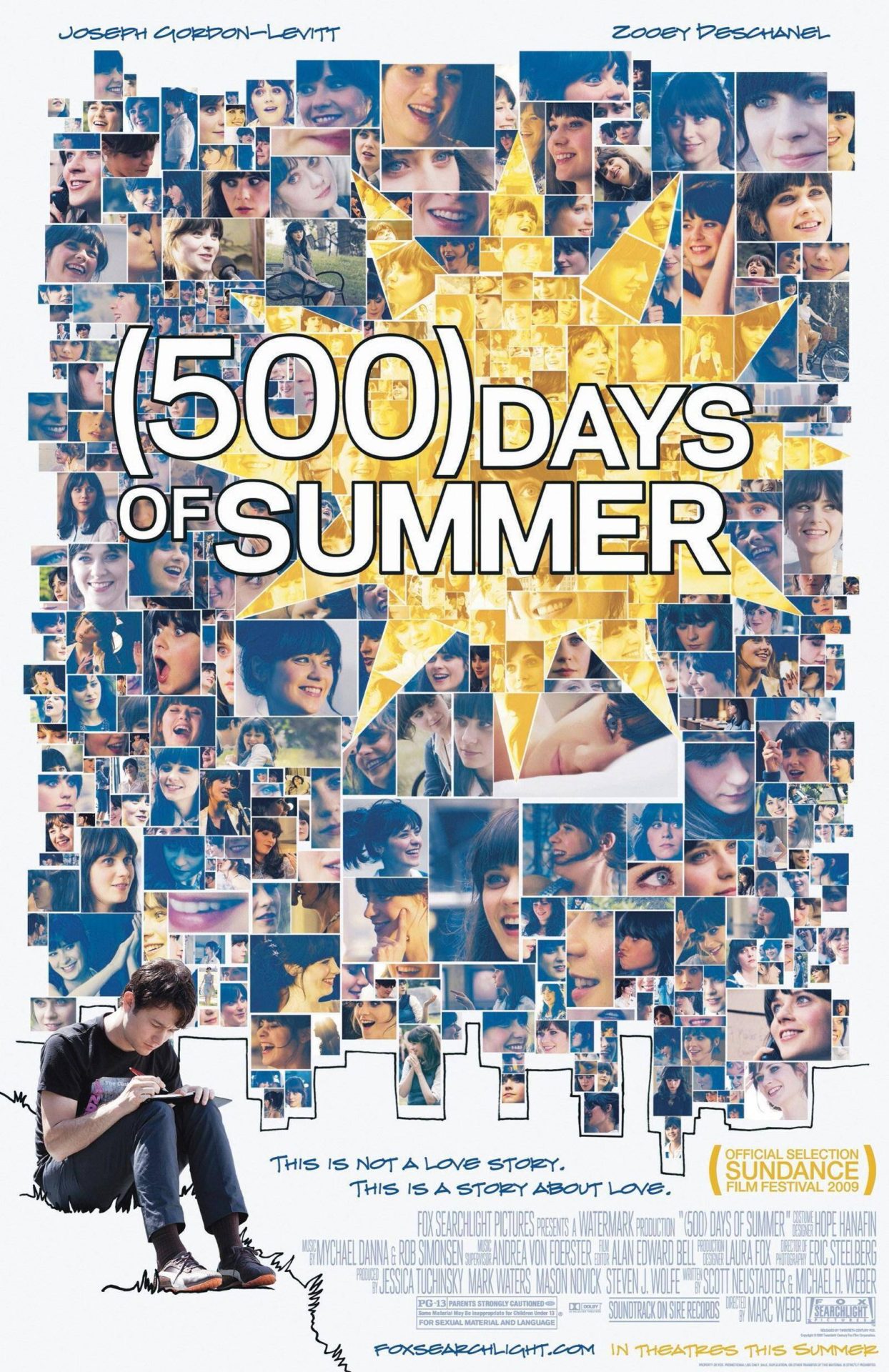
    in 2009, (500) Days of Summer felt precision-engineered for being 20. revisiting it now means seeing both the movie and the person… Read more

    there are two ways to answer “what was your favorite movie when you were 20?”

    you can name the movie from that year you currently believe is the best, after another seventeen years of watching films, acquiring opinions, and becoming the sort of person who knows when a director is “interrogating” something. or you can answer honestly and identify the movie that got you then.

    for me, in 2009, that movie was (500) Days of Summer.

    Without saying your age, what is your favorite movie that came out when you were 20 years old?

    — schweg, (@schwegler.lol) 2026-09-02T20:05:54.482Z
    the question was “favorite movie released when you were 20,” not “please submit your revised adult canon after several rounds of peer review.”

    a movie precision-engineered for being 20 in 2009

    (500) Days of Summer arrived carrying nearly every signifier that could activate a 20-year-old in 2009: the Smiths, greeting-card melancholy, architecture as an abandoned dream, Zooey Deschanel’s bangs, Joseph Gordon-Levitt in narrow ties, nonlinear editing, and an elaborate Hall & Oates dance number presented as an emotional weather report.

    Joseph Gordon-Levitt as Tom and Zooey Deschanel as Summer facing one another in a scene from (500) Days of Summer.
    Tom and Summer, framed exactly as a 20-year-old’s certainty would prefer. Promotional still from the official trailer. © Searchlight Pictures; reproduced for commentary under fair use.

    it did not merely have a soundtrack. it had a soundtrack that seemed designed to be imported into iTunes, burned onto a CD for somebody you were pretending not to be in love with, and then listened to while staring out the passenger-side window like your suburb had been photographed by an unusually sympathetic cinematographer.

    the movie understood that being 20 means your feelings are both completely ordinary and, somehow, the first time they have ever occurred in human history. everybody has been rejected. nobody has been rejected with this particular Regina Spektor song playing.

    the embarrassing luxury of identifying with tom

    the first time through, it is remarkably easy to accept Tom’s version of events. he is sad, he has excellent taste according to a very specific 2009 rubric, and the movie is literally assembled from his memories. the camera gives his disappointment production design. even his depression has an aesthetic department.

    Summer writes on Tom’s arm while they sit together on a park bench surrounded by greenery.
    A memory Tom has effectively color-corrected before presenting it to the jury. Film still via ComingSoon.it. © Searchlight Pictures; reproduced for commentary under fair use.

    but the film tells you, repeatedly, that he is unreliable. Summer says what she wants. Tom hears what he hopes she will eventually want after enough exposure to his personality. he mistakes shared music taste for metaphysical compatibility, which is a deeply 20-year-old error and, regrettably, not one that expires automatically at 21.

    watching it now, the “expectations versus reality” sequence feels less like a clever formal trick and more like the whole thesis arriving with labels. Tom is not devastated because Summer secretly promised him a future. he is devastated because he treated his imagined future like a contract she had failed to honor.

    your favorite then does not have to be your favorite now

    this is where the social-media prompt became more interesting than a simple list of 2009 releases. there are movies from that year I may rank higher now. that is not quite the same question.

    a favorite movie is sometimes a time capsule with a runtime. it preserves who you were when you encountered it: which jokes landed, which clothes looked aspirational, which flaws in a protagonist still read as romantic damage instead of a warning label, and which songs could make an ordinary elevator ride feel like destiny had finally started paying attention.

    revisiting that movie is not a test you pass by having the correct updated opinion. you are allowed to notice what aged badly, what you misunderstood, and what remains annoyingly effective. critical distance is useful, but it does not need to arrive carrying bolt cutters.

    the film survived its own aesthetic

    late-aughts indie culture has become easy to parody because it was already halfway to parody while it was happening. there were birds on things. every apartment had a vintage typewriter owned by someone who did not type. men believed that liking the Smiths qualified as emotional availability.

    (500) Days of Summer contains all of that, but it has lasted because its structure is smarter than its accessories. memory is nonlinear. heartbreak is an editor who keeps cutting back to the scene that supports its preferred argument. eventually, if you are lucky, the footage gets recut.

    at 20, I saw a stylish movie about the devastation of wanting someone who did not want the same thing. now I see a movie about the danger of confusing your narration with reality. both readings were sitting there. I was simply seated closer to one of them.

    the official Searchlight trailer, featuring enough late-aughts romantic fatalism to power several American Apparel stores.

    so, yes: my answer is still (500) Days of Summer. not necessarily because it would win a carefully administered ranking today, but because “favorite movie when I was 20” belongs partly to the 20-year-old who answered it first.

    unfortunately, he gets a vote.