Tag: Montgomery

  • dating apps think every gay man lives twelve minutes from a tapas bar

    dating apps think every gay man lives twelve minutes from a tapas bar

    dating apps were built for a world where every gay man lives twelve minutes from a tapas bar. outside the metro, the… Read more →

    i asked what dating app works best for gay men in a place where the population density of out gay men is very low. i got an answer almost immediately, although it was not the name of an app: apparently the apps work best when you already live near enough gay men that you could have found one while looking for brunch.

    ⚠️ Attention ⚠️ I need to ask the audience. What’s the best dating app for gay men in an area where the population density of out gay men is very low?Tinder is hit and miss here and I get a lot of “oh you’re 45 miles away how are we gonna hook up” like idk I was in a dating app not a hookup app?

    — schweg, (@schwegler.lol) 2026-09-27T16:02:41.981Z

    in Montgomery, Tinder is hit or miss. Hinge mostly shows me men in Atlanta. Facebook Dating can produce profiles but not, apparently, replies. Coffee Meets Bagel once looked at the surrounding geography and told me there was nobody close enough to show me at all. nothing says “put yourself out there” like software returning an empty set.

    dating apps sell compatibility, chemistry, values, prompts, attachment styles, astrological signs, and whatever personality category can be expressed through six photographs and a sentence about tacos. outside a major city, their most important feature is still population density. the algorithm can weigh every preference i have. it cannot manufacture a gay man on the correct side of a two-hour round trip.

    proximity has been doing all the work

    the standard dating-app experience quietly assumes a metropolitan abundance: enough people nearby to make rejection cheap, enough roads or transit to make meeting casual, enough queer public life that “45 miles away” sounds like a filter problem instead of the next available option.

    An aerial view of a rural community, church, fields, and a winding two-lane road
    A rural community organized along a winding road. Photo: Alex Reynolds / Unsplash.

    that assumption is easy to mistake for a neutral interface. it is not. the cards keep arriving, so the system feels infinite. swipe left; there will be another person. let a conversation die; there will be another match. set the radius tighter; there will still be a city inside it. the app teaches people to treat human beings as abundant because the city made them abundant first.

    outside that density, the same design becomes mean in a very specific way. it does not say, “the available population is small because you are queer in a place where fewer people are out, visible, nearby, and using this particular product.” it just stops showing people. scarcity arrives dressed as feedback.

    straight people in small towns obviously encounter distance too. the difference is that queer dating starts with a smaller pool, then subtracts everyone who is unavailable, closeted, unsafe, incompatible, looking for something else, or using a different app. by the time software applies the normal preference filters, it has occasionally filtered the state down to three men and one of them is visiting from Nashville.

    dating should not require a regional planning commission

    one man on Tinder recently reacted to our 45-mile distance with, “how are we gonna hook up?” fair question, if hooking up is the assignment. i thought i had opened a dating app. this is one of the other ways sparse geography distorts the product: distance stops being a preference and becomes the entire relationship format. a nearby hookup may be practical. a date 45 miles away requires calendars, gasoline, and the confidence that this stranger is worth passing several exits for.

    A long empty highway stretching toward distant mountains under a wide sky
    Distance is not an abstract filter when it is this much road. Photo: Yifu Wu / Unsplash.

    no app can fix the number of gay men in central Alabama. an app could at least stop pretending every user lives in a neighborhood where five miles contains a complete romantic ecosystem. it could treat travel tolerance as more than a radius slider. it could distinguish “far away but open to planning” from “close enough to come over.” it could show drive time instead of drawing a circle that means very different things depending on whether it contains subway stops or soybean fields.

    mostly, it could be honest about what it is measuring. when Hinge shows me Atlanta, that is not a daring expansion of my dating life. it is a relocation suggestion. when Coffee Meets Bagel says there is nobody nearby, that is not evidence that i have failed at being appealing. the software has reached the edge of its map and decided to make the blank space feel personal.

    i still want to know whether one app handles this better. maybe somebody has built a small-town queer dating miracle and hidden it from me. but the larger problem cannot be solved by downloading the correct icon. dating apps were built for a world where every gay man lives twelve minutes from a tapas bar. out here, the algorithm did not reject me. it ran out of gay men before it ran out of road.
  • why would i let 20-year-old me review my life

    why would i let 20-year-old me review my life

    he had more friends, a better city, and absolutely none of the information. i’m willing to hear his concerns. Read more →

    somebody asked whether 20-year-old you would be impressed or disappointed by you today. i gave it some thought, which was my first mistake.

    20-year-old me had more friends. probably more fun. lived in a city i liked better. he had fairly high expectations of a future somewhere gay-friendly, with a social life that did not require quite so much deliberate effort.

    so, sure. show him the current situation and he’d probably have some complaints.

    but why the fuck would i listen to that 20-year-old dickhead?

    20 y/o me had way more friends and probably more fun and lived in a better city and had pretty high expectations of a future in a gay-friendly city, so he'd probably be mad at me, but, then again, why the fuck would i listen to that 20 year old dickhead?

    — schweg, (@schwegler.lol) 2026-09-17T19:43:56.389Z
    https://embed.bsky.app/static/embed.js
    A street scene in downtown Athens, Georgia, looking toward the University of Georgia Arch in 2008.
    downtown Athens in 2008, close to the period the question sent me back to. Richard Chambers / source. Public domain

    i say that with affection. i was him. i remember enough of what he wanted to know that it wasn’t stupid. wanting friends, belonging, interesting work, and a place where being gay feels ordinary is a pretty reasonable set of requests. i haven’t stopped wanting those things.

    what i object to is giving him the final say about how well i’ve done. he was making a prediction. he wasn’t agreeing to live through everything that happened next and then submit a report.

    he did not have the full itinerary

    when i started listing what 2009 me hadn’t experienced yet, the list got long quickly. friendships falling apart. the company behind a dream job shutting down. moving back to the hometown we’d left when i was ten. eventually ending up in Alabama. becoming my mother’s caregiver. losing her. the pandemic.

    i’ve already written some of that history in “My Lost Decade.” i don’t need to repeat the whole thing here. but i do need it to count when i’m being asked to compare the life i imagined with the one i have.

    there’s a remarkable amount of missing information in “would younger you be proud?” younger me hadn’t tried to hold his life together under those circumstances. he hadn’t even heard of most of the circumstances. he had a lot of opinions, of course. that part came installed.

    if i asked an actual 20-year-old to assess my life, i’d probably explain what had happened before taking his disappointment personally. apparently, when the 20-year-old is me, i’m supposed to skip that step and accept the review.

    A panoramic photograph of downtown Montgomery, Alabama, with buildings spread across the skyline.
    Montgomery: a place the earlier version of the plan did not account for. Chris Pruitt / source. CC BY-SA 3.0.

    i can miss that life without owing it an apology

    the comparison is tempting because some of what i miss is real. i don’t want to pretend that every difficult thing improved me or that every turn was secretly taking me somewhere better. sometimes something good ended. sometimes i made a bad choice. sometimes the available choices were all pretty shitty.

    i can miss the friends, the city, and the feeling that there was plenty of time without concluding that my current life is evidence against me.

    i also don’t have to turn surviving into an inspirational job. there doesn’t need to be a lesson attached to everything i lost. i would happily have learned several of those lessons in a less thorough manner.

    what i want is a fairer comparison. the person i was at twenty could imagine the future, but he couldn’t know what living it would cost or what would become important along the way. i know more now. not everything, obviously. enough to have earned a vote.

    i wrote recently about never quite feeling like a finished adult. this is a different problem: treating an unfinished younger person’s expectations as if they were binding instructions.

    some of those expectations are still useful. i’d like more connection. i’d like more fun. i can take those wishes seriously today without first agreeing that i’ve let somebody down.

    so yes, 20-year-old me can tell me what he misses. i might agree with quite a lot of it.

    then he can listen for a while. he has seventeen years to catch up on.

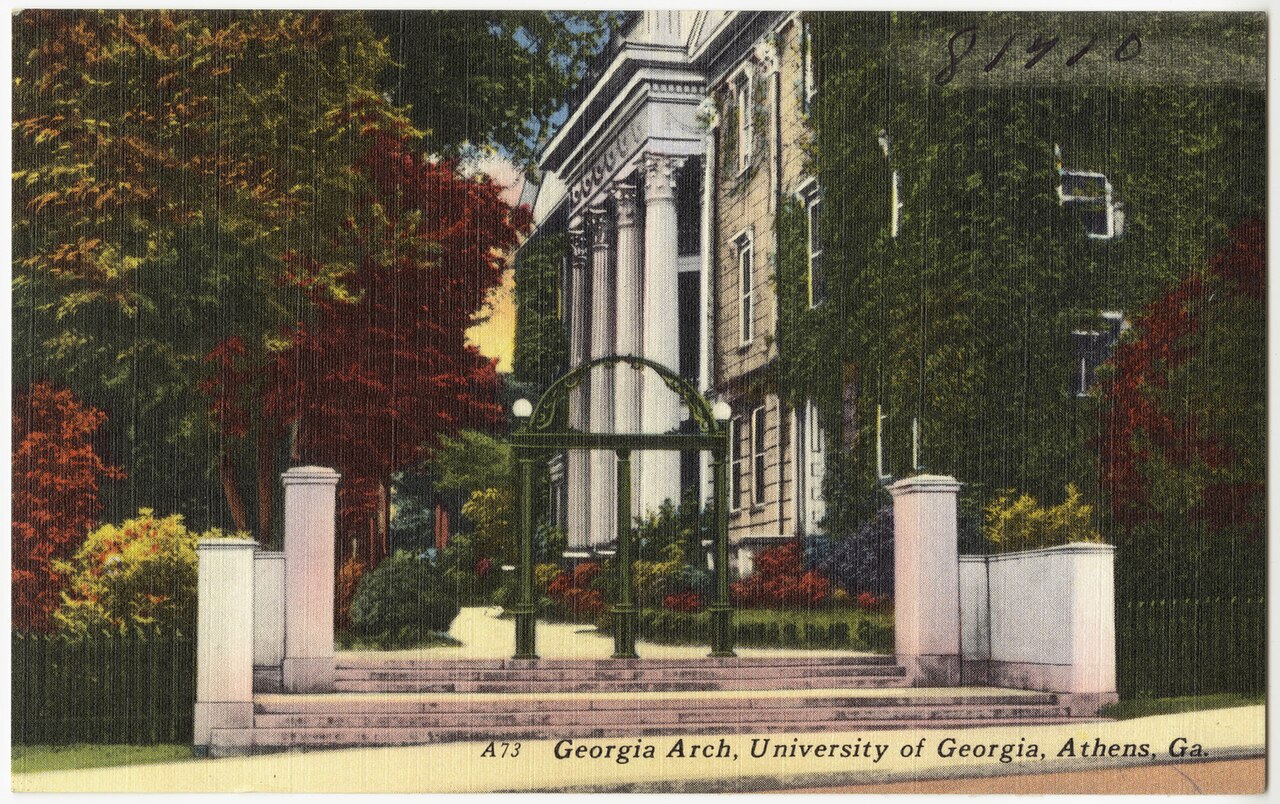
    Featured image: Tichnor Brothers Collection / Boston Public Library / source. Public domain

  • Montgomery is talking about suicide prevention. we should listen.

    Montgomery is talking about suicide prevention. we should listen.

    A new WSFA report puts Suicide Prevention Month in very local terms: Montgomery families living with grief, bullying, and the work of… Read more →

    If you need support right now: call or text 988 to reach the Suicide & Crisis Lifeline. LGBTQ+ young people can also contact The Trevor Project by calling 1-866-488-7386, texting START to 678-678, or using online chat.

    there is a version of suicide-prevention messaging that stays safely abstract: a ribbon, a statistic, a phone number, a sentence about checking on your friends. all useful. all very easy to nod at and keep scrolling.

    then there is the version where the people telling you to pay attention live down the road.

    WSFA spoke with two Montgomery women this week about the losses that pushed them into suicide-prevention advocacy. Angela Jackson described the shame and isolation that followed a suicide in her family. Monique Davis talked about her son, Jamari Terrell Williams, who died in 2017 at age 10 after being bullied.

    Jamari loved to dance. Davis told WSFA that classmates treated him as different because of it, and that difference became a target.

    that detail lands hard because “different” is one of those words adults can make sound harmless after the fact. kids know exactly how it gets weaponized.

    A young person speaks on the phone in a cozy bedroom while a trusted friend sits nearby holding a warm mug.
    sometimes support is not a slogan. sometimes it is staying nearby while somebody makes the call.

    “different” should not become a warning label

    yesterday i wrote about why queer and trans kids deserve to grow old. this is not the same story, and i do not want to flatten Jamari’s life into an identity the reporting does not give him.

    but there is an obvious point of contact: children who get marked as different are often asked to absorb an astonishing amount of cruelty while the adults around them debate whether the cruelty technically meets the threshold for intervention.

    Jamari’s mother did not leave that debate where she found it. she created the Jamari Terrell Williams Foundation, which works with schools, churches, city officials, and community groups to fight bullying and prevent suicide. Alabama’s student-harassment law was renamed for Jamari in 2018 and expanded protections around bullying, including cyberbullying.

    the foundation’s message is wonderfully uncomplicated: it is okay to be different.

    A diverse group of young adults laugh together while painting a colorful bench in a community garden.
    the future we are trying to protect is mostly ordinary: friends, community, bad haircuts, errands, and getting to be here for all of it.

    the local part matters

    WSFA also reports that Alabama loses at least two people to suicide on an average day, and that nearly 840 Alabamians died by suicide in 2024. those numbers are large enough to become scenery if you let them.

    the reason local stories matter is that they turn the scenery back into people.

    a mother in Montgomery is still saying her son’s name. a city employee is talking openly about grief she once felt ashamed to discuss. a foundation here is still going into schools and churches telling kids that being different is not a problem to solve.

    and this Saturday, Montgomery Parks and Recreation is hosting a Suicide Awareness Resource Fair from 4 to 6 p.m., connecting people with counselors, mental-health professionals, information, and community resources.

    that is what “check on your people” looks like when it stops being a caption and becomes infrastructure.

    call. text. ask the second question. take bullying seriously before it becomes somebody else’s origin story for advocacy.


    Resources: Call or text 988 for free, confidential crisis support 24/7. Learn more about the Jamari Terrell Williams Foundation. LGBTQ+ young people can contact The Trevor Project 24/7.