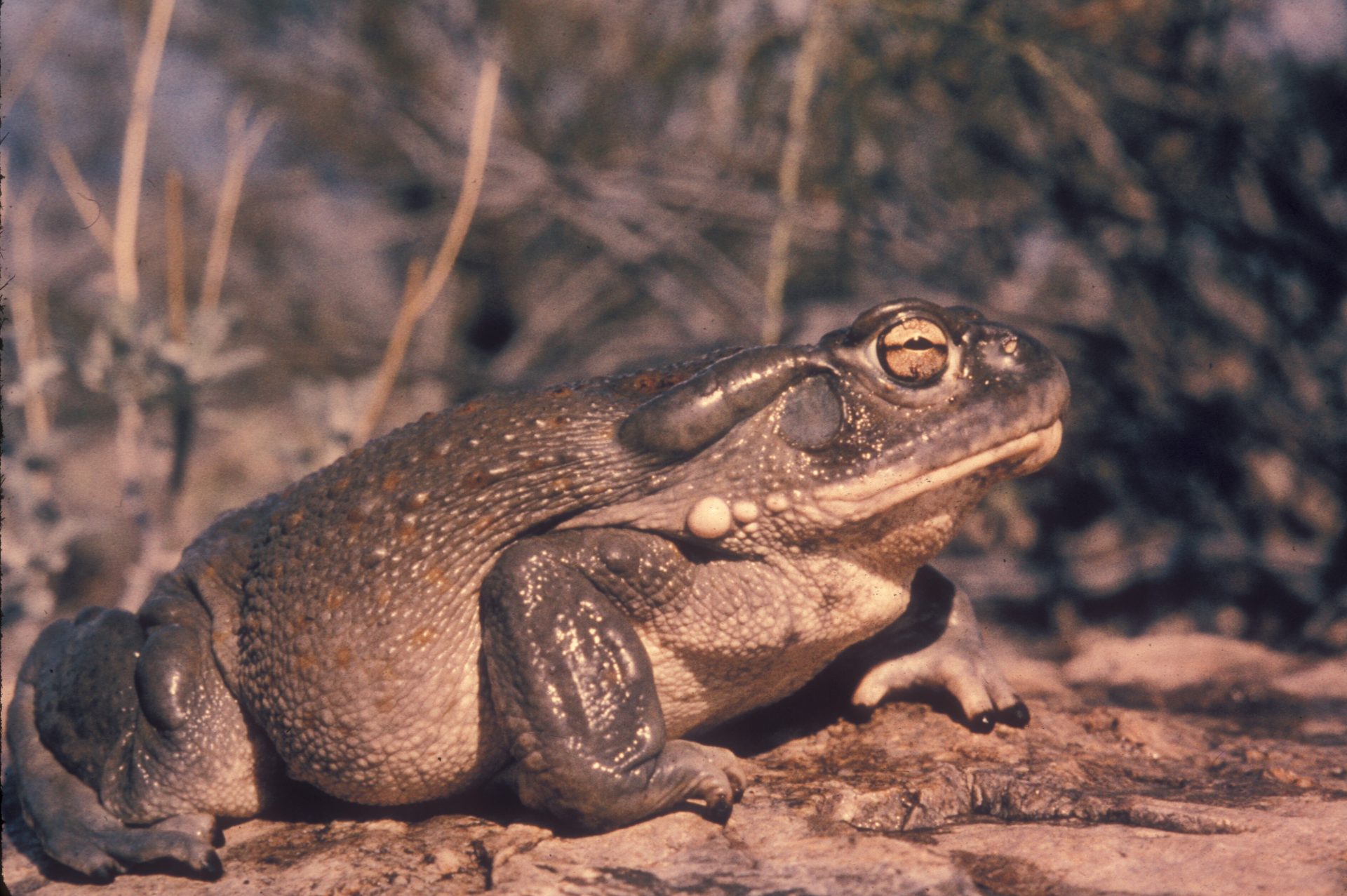

somewhere in the Sonoran Desert, a toad has been informed that it may be the future of treating depression. the toad, which has no medical degree and was frankly busy sitting in the dirt, would like to be excluded from this narrative.
a Popular Science story on a new psychedelic nasal spray is the sort of headline that makes me briefly believe the universe is running a very elaborate improv show. a toad-inspired antidepressant. administered through your nose. possibly effective after one dose. at some point the writers’ room needs to explain what genre we’re in.
but buried underneath the amphibian comedy is actual good news, and a reason to be suspicious of the way we package it.
first, no toads were employed in this trial
the compound is called mebufotenin, or 5-MeO-DMT. it occurs naturally in the defensive secretions of the Sonoran Desert toad, but the drug tested here was made synthetically in a lab. nobody needed to go outside and squeeze an unwilling amphibian. this is both scientifically practical and, from the toad’s perspective, probably a major workplace improvement.
in a randomized phase 2b trial published in JAMA on October 26, 193 adults with treatment-resistant depression received one of three nasal-spray doses under clinical supervision, with psychological support. everyone had already tried at least two antidepressant treatments without adequate relief. this was not an experiment involving people who felt a bit sad because the weather was bad.
four weeks later, depression scores had fallen by an average of 11.1 points in the 12-milligram group, compared with 5.5 points in the tiny-dose comparison group, on a 60-point clinical scale. the adjusted difference was 5.3 points. the smaller 8-milligram group actually saw a 12.5-point average drop. benefits over the comparator were still detectable at the end of eight weeks.
that is genuinely promising. it is not the same thing as proving one nose-squirt cures depression forever. the comparison group also received a very low dose of the drug, not a completely inert placebo, and the researchers have not established what happens after eight weeks.

finally, a psychedelic that respects your calendar
one reason psychedelic therapy is difficult to scale is that a treatment session can commandeer your day. somebody has to supervise the experience, somebody has to make sure you’re safe afterward, and somebody has to pay for all of that time. the fantasy that every struggling person can take an entire workday to have a medically supervised revelation is very beautiful. it is also extremely American in the sense that nobody has explained who is covering their shift.
with this drug, most participants receiving the two active doses were judged ready for discharge within two hours. important footnote: the trial protocol still kept people at the clinic for at least four hours. ready to leave is not the same thing as actually being sent home. even so, a shorter psychedelic experience could eventually make treatment easier to provide than longer sessions with other psychedelics.
and here’s the thing: depression treatment does not have to be spiritually picturesque to count. i do not require a rebirth, a vision quest, or an encounter with my inner child wearing a tiny hat. i want treatments that work, evidence that survives scrutiny, and clinics people can actually get to.
the toad would prefer the synthetic version
the Sonoran Desert toad uses its secretions to defend itself. people seeking the psychedelic have collected or harassed the animals, adding pressure to wild populations. UC Berkeley’s Center for the Science of Psychedelics describes the animal-welfare and conservation concerns around collecting those secretions.
a 2026 ecological and historical analysis goes further: it questions marketing that portrays contemporary toad-secretion ceremonies as an uninterrupted ancient tradition, and argues that laboratory-made 5-MeO-DMT can eliminate the need to disturb living toads. you can respect Indigenous communities and traditions without accepting every modern wellness entrepreneur’s origin story at face value.

i like that the molecule can be drawn on a piece of paper and manufactured without involving its original, deeply unenthusiastic spokesperson. science is allowed to take inspiration from nature without turning nature into a retail supply chain.
please do the part where we prove it works
this was a relatively small, company-funded trial, with the sponsor involved in study design and analysis. people and clinicians could often guess who had received a psychedelic dose, which complicates blinding. some participants stopped existing antidepressants to enter the study. and the adverse effects weren’t imaginary: headache, nausea, nasal discomfort, transient blood-pressure increases, anxiety, and, in one participant receiving the highest dose, severe panic attacks were reported. these are reasons for careful trials and oversight, not for getting creative with the wildlife.
larger phase 3 trials need to test safety, durability, and whether these results hold up in a broader population. this nasal spray is experimental, not an approved at-home depression treatment. and if it does eventually work, access and affordability will matter at least as much as the very cool animal anecdote in the press release.
because i would love for this to become another real option for people who haven’t gotten relief from existing treatments. i would love even more for it to become an option they can afford. the breakthroughs that matter are the ones that make it out of a journal, through an actual care system, and into people’s lives.
meanwhile, please leave the toad alone. he has already contributed enough.
sources: the clinical trial in JAMA; Popular Science’s reporting; UC Berkeley’s 5-MeO-DMT background; and the 2026 conservation analysis.
image credits: featured Sonoran Desert toad photograph by Saguaro National Park Service (U.S. public domain); illustrative nasal-spray photograph by NIAID (CC BY 2.0; it does not show the experimental drug); 5-MeO-DMT structure by Nynyny (public domain).