

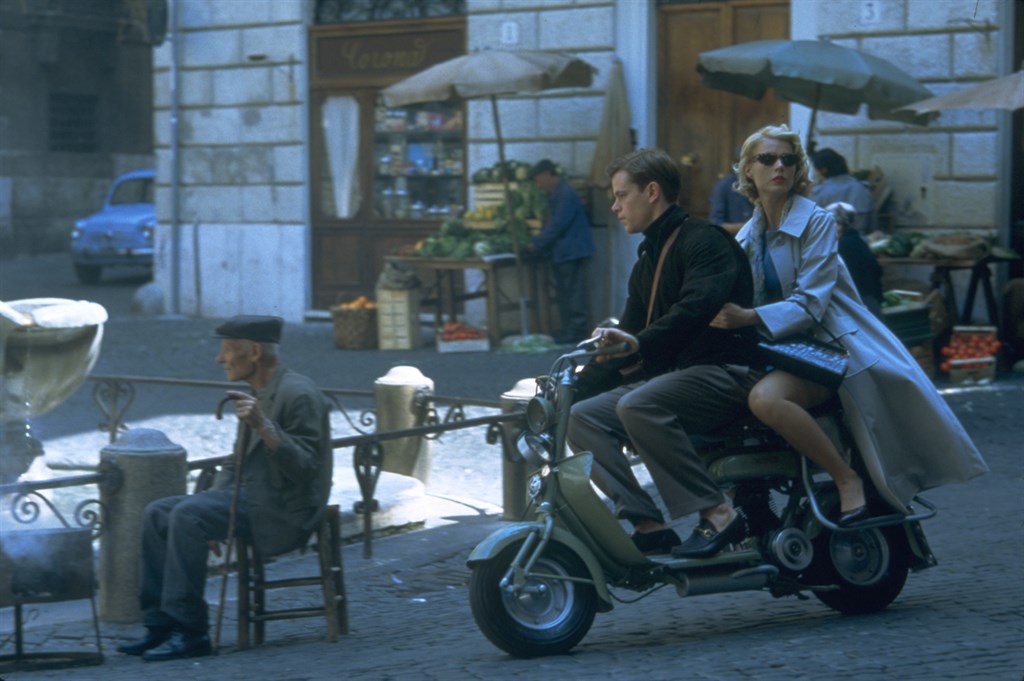

In The Talented Mr. Ripley, attraction comes with an excellent travel budget. Anthony Minghella’s 1999 film places Tom Ripley beside Dickie Greenleaf, a wealthy American enjoying Italy on his father’s money. Tom wants Dickie. He also wants the life in which being Dickie appears so effortless.
That overlap is more unsettling than a simple unrequited crush. Wanting someone and wanting to be someone can look remarkably similar from a distance: study his clothes, learn his tastes, arrange to be where he is. The difference becomes harder to ignore when admiration starts behaving like a claim of ownership.

Paramount’s synopsis explicitly identifies both Tom’s attraction and his envy. Neither needs to be reduced to a diagnosis of queer desire. The film’s useful discomfort is more specific: what happens when intimacy is confused with admission to a better class of life?
Jude Law’s Dickie is the invitation; Matt Damon’s Tom is the person reading the fine print. The seduction includes beauty, but also leisure, money and the apparent freedom not to explain yourself.
The poster makes that imbalance visible before the story begins: Tom’s face dominates the foreground while Dickie and Marge occupy the warmer, apparently easier world behind him. It sells proximity and separation in the same image.

A handsome man is one thing. A handsome man who seems exempt from consequences is a considerably more dangerous sales pitch.
Film details from Paramount. The linked synopsis contains major spoilers.
Image credits: official still and poster, Miramax; Tom Ripley still, Paramount+. © their respective rights holders.

