
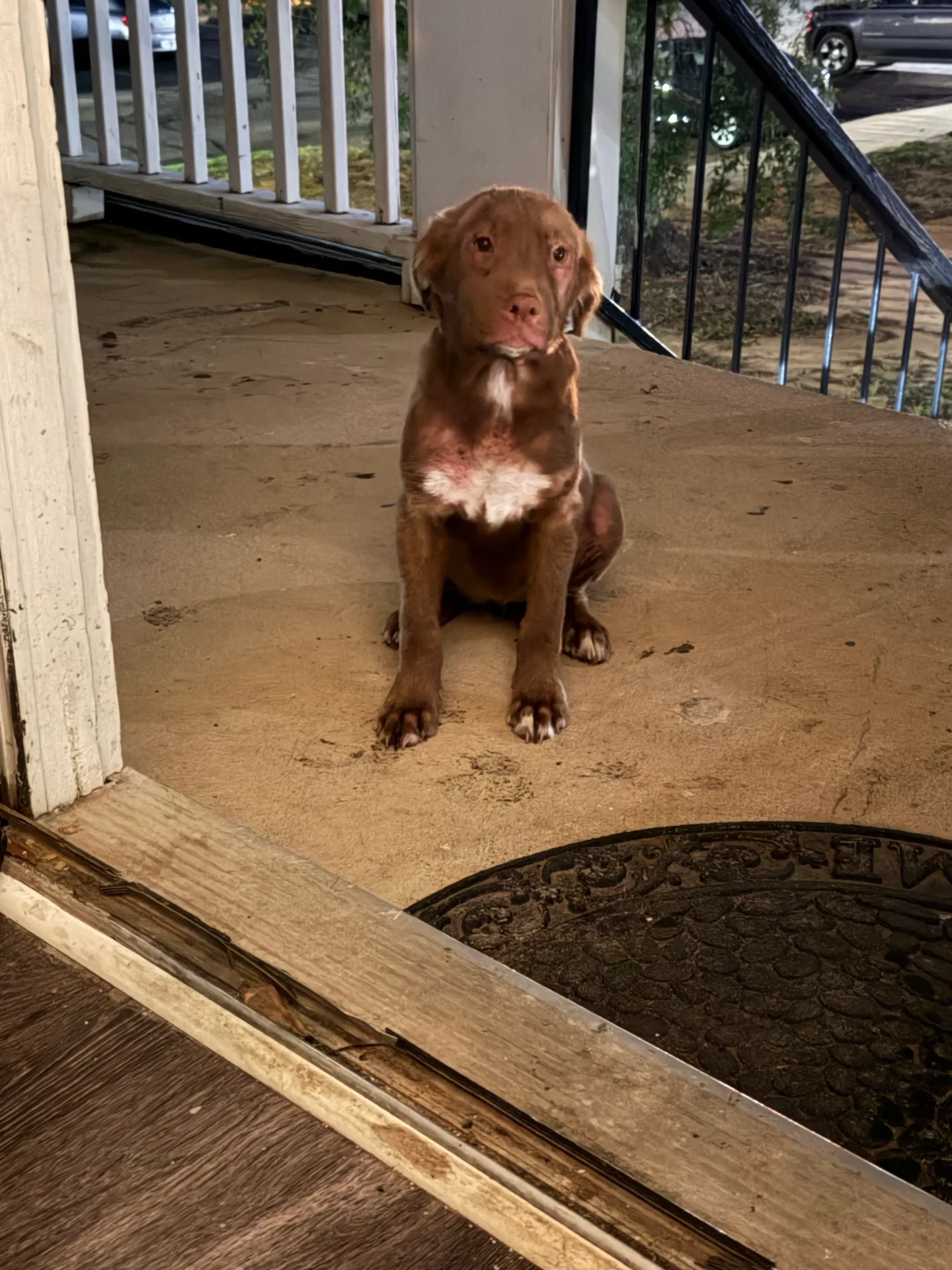
a dog appeared on my doorstep last night and immediately turned compassion into an operations problem.
she looked like a light-brown lab mix. no visible owner. no little instruction card explaining whether she had escaped a yard, been dumped, or had simply selected my porch as tonight’s least-bad option.
i did what panic allows: filled out the humane society’s form, sat outside with her, and wished very hard that wishing came with a scanner, a kennel, a veterinary budget, and office hours.
it does not. this is the rude part of kindness. the feeling arrives all at once. the infrastructure does not.
the first job is not adoption
finding a dog does not instantly make you the dog’s forever person. the first job is smaller and more urgent: keep everybody safe long enough to make the next call.
if the animal is injured, acting aggressively, standing in traffic, or otherwise unsafe to approach, call local animal control or an emergency veterinary clinic instead of trying to become an improvised action hero. a scared dog can bite. a well-meaning stranger can make a frightened dog run farther. love is not improved by adding an avoidable emergency.
if the dog can be contained safely, offer water and a quiet place away from traffic, children, and your own animals. check for an ID tag without forcing contact. take clear photos. write down exactly where and when the dog appeared. these are not glamorous acts, but they are the beginning of a handoff.

there is probably a person already having the worst night
a dog without a person in view is not necessarily a dog without a person. collars break. gates fail. fireworks happen. somebody may be refreshing neighborhood groups every thirty seconds while the dog is sitting three streets away looking like she has never participated in a plan.
a veterinary office or shelter can scan for a microchip. if a number is found, the AAHA Universal Pet Microchip Lookup can identify which registry should have the owner’s contact information. the chip itself is not GPS; it is a tiny clue with paperwork attached, assuming the paperwork stayed current.
the ASPCA recommends contacting local animal control, veterinary hospitals, municipal and private shelters, and rescue groups. it also tells people who find an animal to contact their local shelter for guidance. that is important because the shelter is where many owners are going to look, even if the finder is able to keep the dog temporarily.
post the same clear photo and location in neighborhood groups and local lost-pet networks. file a found report with the public shelter. ask whether the shelter offers a finder-to-foster option, what its stray-hold policy is, and whether it can scan the dog without requiring immediate surrender. “call the shelter” and “leave the dog there” are not the same instruction.

“no-kill” is not a magic word
one reply warned me not to involve a government-run shelter unless i could confirm it was no-kill. i understand the fear inside that advice. shelter outcomes vary enormously, capacity matters, and asking questions before transferring an animal is responsible.
but “no-kill” is not a promise that no animal is ever euthanized, and “municipal” is not a synonym for death sentence. Best Friends Animal Society uses a 90 percent save-rate benchmark when it labels a shelter no-kill. the label describes an outcome threshold, not the ownership structure of the building and not the complete circumstances of the dog in front of you.
a blanket instruction to avoid the public shelter can also remove the dog from the system her owner is most likely to check. the useful questions are local and specific: what happens at intake? how long is the stray hold? can the finder foster? which rescues pull from this shelter? is the facility over capacity today? the answers matter more than the sign outside.
kindness needs a handoff
the part that made me cry was not only that the dog might need help. it was the sudden belief that helping meant i personally had to become the entire institution: owner, rescuer, foster, fundraiser, veterinarian, transportation department, and emotional-support porch furniture.
that is too much for one person, which is why the checklist matters. contain if safe. photograph. scan. report. call. ask what happens next. keep the dog visible to the systems her family will use to find her. none of those steps guarantees a clean ending, but together they make one more possible.
update: the handoff happened
by 10:06 Wednesday morning, the logistics had done their job: she was safely at the humane society. i am going to keep watching for her adoption listing and share it once she is available. the ending is not that one person suddenly acquired unlimited money and a surprise dog. it is that the next part of the system showed up.
Featured and first body photos by Andrew, originally posted to Bluesky. Additional image from the ASPCA’s lost-pet guidance, used with attribution for commentary and public-interest reporting.