CHANNEL ARCHIVE

Peacock

Dispatches, commentary, and media logs from the open web.

  • the traitors: new blood has turned vibes into forensic evidence

    the traitors: new blood has turned vibes into forensic evidence

    twenty-two civilians entered a Scottish castle and immediately began converting mumbling, posture, and dog-groomer intuition into probable cause. Read more

    spoilers for the two-episode premiere of The Traitors: New Blood.

    i started The Traitors: New Blood cold, having zoned out during enough introductions that several contestants were temporarily named “that guy,” “the redheaded woman,” and “the dog groomer who reads vibes.” this turned out to be an entirely appropriate way to watch a show where twenty-two strangers immediately begin converting posture, mumbling, and whether somebody seems too helpful into forensic evidence.

    to Me? these are all nobodies, at least #TheTraitorsUS #NewBlood starting now; starting coldpacking a bowl; making popcorn

    — schweg, (@schwegler.lol) 2026-09-20T02:02:17.288Z

    NBC’s civilian version keeps Alan Cumming, the Scottish castle, the missions, the breakfast theater, and the professionally unnecessary cover songs. It replaces the familiar reality stars with twenty-two “everyday Americans” selected from more than 80,000 applicants, all competing for as much as $250,000. “everyday” is doing some work there. these are people who applied to spend several weeks accusing strangers of murder on network television. they have simply not yet acquired franchise branding.

    everyone arrived knowing what kind of show this is

    the celebrity seasons come with useful baggage. you know who is used to performing, who has a public feud, and who will mistake being loud for being correct because you watched them do it on another show for eleven years. New Blood removes that shorthand, but it does not give us innocents. the cast already understands the grammar of reality television: announce a strategy, identify a vibe, form a theory before breakfast, and say “fact-based” while standing near very few facts.

    Arisa Thomas poses at the round table on The Traitors: New Blood
    Arisa Thomas on The Traitors: New Blood. Photo: NBC.

    Arisa, a dog groomer, says in her official bio that she plans to use her “golden retriever energy” to seem trustworthy. on television this becomes a person professionally associated with reading animal behavior now reading the room for treason. which is ridiculous, obviously, except that the entire program is built on people assigning legal weight to eye contact. she may be the most formally qualified person there.

    not the dog groomer vibe reader #TheTraitorsUS

    — schweg, (@schwegler.lol) 2026-09-20T03:15:35.334Z

    conversation is now a crime scene

    the premiere’s best early conflict comes from the kind of half-heard sentence that destroys a group chat and, apparently, a Scottish breakfast. a mumbled remark about feeling bad picking Kim becomes evidence because another player heard something more suspicious. i would absolutely get banished this way. i mumble, revise sentences while saying them, and sometimes expect the second half of a thought to retroactively repair the first. this is not compatible with a game where twenty-one people are waiting to turn a preposition into probable cause.

    Kim Daily poses at the round table on The Traitors: New Blood
    Kim Daily on The Traitors: New Blood. Photo: NBC.

    Kim was my immediate favorite, which lasted until the next immediate opinion. Jay managed to make me alternate between liking and disliking him sentence by sentence. Kriste became the person i wanted banished before i had assembled a responsible case, which means i was participating correctly. the show’s central mechanic is not deduction. it is deciding that an impression feels factual and then shopping backward for supporting documentation.

    Hitch concentrates while writing on a clipboard with a pencil. Reaction: taking notes.

    Do I like Jay or hate Jay? Every other sentence I change my mind #TheTraitorsUS

    — schweg, (@schwegler.lol) 2026-09-20T02:48:30.013Z

    the civilians make the machinery easier to see

    without celebrities, there is nowhere for the edit to borrow a personality from. the premiere has to teach us who everyone is while simultaneously asking us to distrust the lesson. the accomplice duel is a smart answer: it immediately gives two players a private relationship with the game, lets everyone else begin inventing explanations, and gives the episode a cliffhanger because i always forget this show considers emotional closure a streaming-platform feature.

    what surprised me is how little star power the format needs. Alan still enters every room like the castle has summoned him. the missions remain enormous devices constructed to make adults crawl through mud in wool. the soundtrack is still a collection of pop songs being performed by a haunted wedding band. the production supplies grandeur; the players only need to supply bad information with confidence.

    after two episodes, i do not know everyone’s name, i have changed my mind about Jay several times, i like Kim, and i want Kriste banished for reasons i would not submit to a court. in other words, The Traitors: New Blood works. the cast may be new, but the human impulse to call a vibe “fact-based” arrived fully trained.

    The Traitors: New Blood airs Thursdays at 8 p.m. ET on NBC and streams the next day on Peacock. Cast and schedule details via NBC.
  • streaming has turned watching tv into unpaid market research

    streaming has turned watching tv into unpaid market research

    streaming has trained viewers to treat every premiere like a performance review—and every show they love like an unpaid internship. Read more

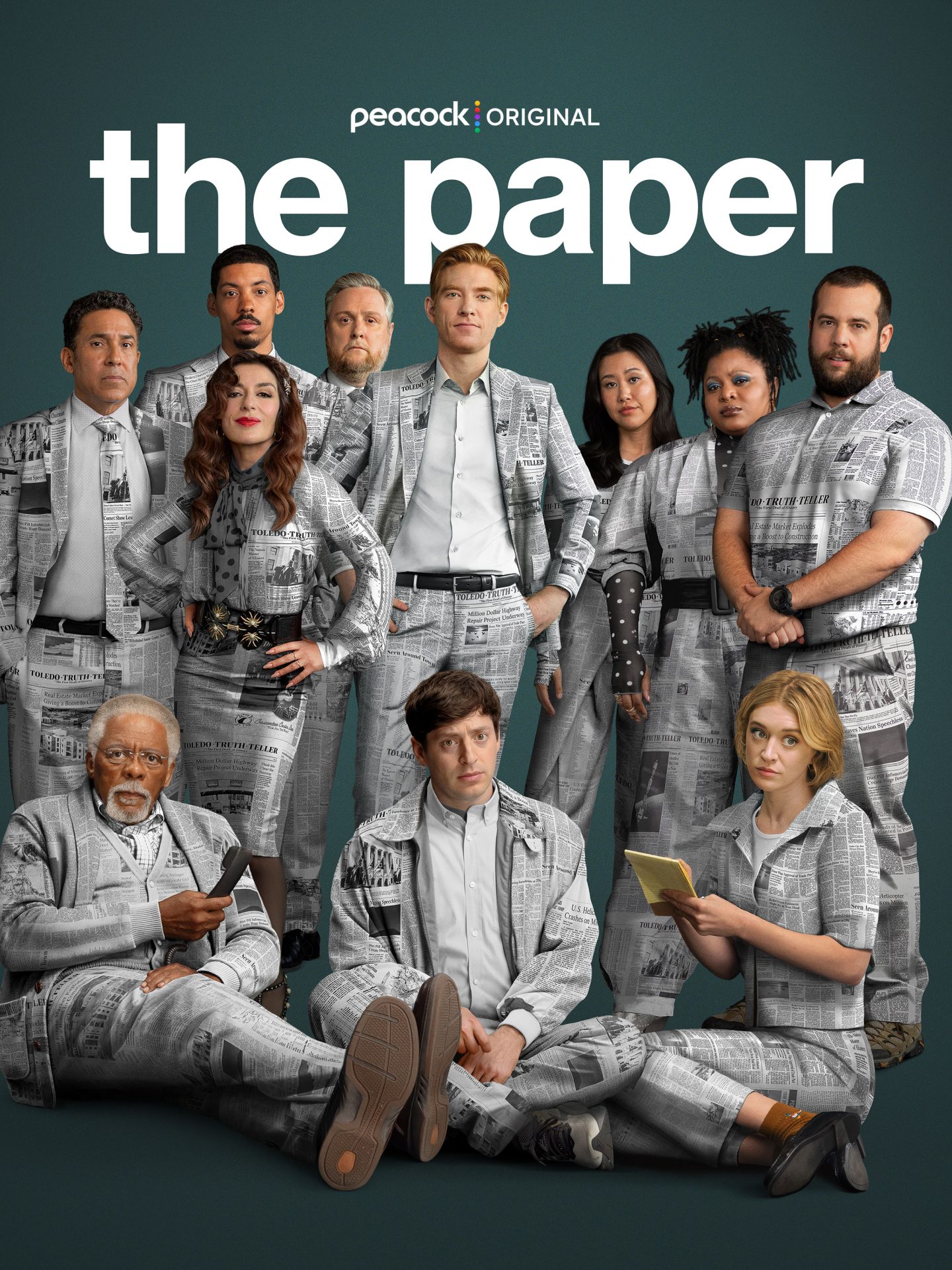
    last night, four days after The Paper dropped its entire second season, I started watching because I wanted to. I also started watching because some small, unpaid Peacock employee living inside my brain had begun shouting that the show needed my numbers immediately.

    why do I feel forced to watch streaming shows i like within the first week they’re out for n fear that low first week numbers will cause the algorithm to cancel it?

    — schweg, (@schwegler.lol) 2026-09-14T00:30:53.244Z

    this is a strange new relationship with television. I am no longer simply deciding whether I feel like watching a show. I am being asked, or at least gently haunted, to demonstrate that the show deserves to continue existing.

    the premiere is now a performance review

    The Paper released all ten season-two episodes on Peacock on September 9. That is convenient if you want to spend a weekend at the Toledo Truth Teller. It is less convenient if your preferred television schedule is “eventually, after I finish the other eleven things everyone released on Thursday.”

    A weekly show can slowly become part of your life. A binge release arrives like a pallet on the loading dock. Please process the complete shipment while it is still considered culturally fresh.

    Netflix engagement report graphic with a collage of streaming titles
    Netflix’s 2026 engagement report artwork. Image: Netflix.

    Streamers do not all disclose the same decision-making formula, and one household pressing play four days late is not a tiny executioner standing beside a cancellation button. Still, the industry has trained us to understand viewing as a vote. In its July 2026 engagement report, Netflix described engagement around the moment someone chooses a title and stays to watch; it reported more than 97 billion hours watched in the first half of the year.

    The numbers get enormous very quickly. Nielsen’s 2026 midyear streaming report ranks successful shows in billions of minutes and describes a new class of originals through their measured viewing. That is useful industry data. It also means viewers now encounter television surrounded by the language of quarterly results.

    Nielsen chart ranking the top overall streaming titles by minutes viewed in the first half of 2026
    Nielsen’s top overall streaming titles for the first half of 2026. Image: Nielsen.

    fandom has become an unpaid internship

    If you like a small comedy, a queer show, a weird genre series, or anything else that does not arrive pre-certified as a global event, watching can feel less like leisure and more like constituent services. You watch early. You let the credits run. You tell friends. You make a post. You consider putting “stakeholder engagement” on LinkedIn.

    The platform does not need to send a push notification saying this program’s continued employment depends on you. We have seen enough beloved shows vanish after one or two seasons to write the notification ourselves.

    And because the actual renewal calculus is private, there is no moment when the assignment is complete. Was starting within four days fast enough? Do I need to finish this weekend? Does rewatching help? Was pausing to make dinner an act of industrial sabotage?

    I would like to return to merely watching television

    I do not want every show I like to become a civic obligation. I want to watch The Paper because Sabrina Impacciatore is doing something ungovernable on my television, not because I have appointed myself to Peacock’s programming committee.

    But I did start season two. four days after release. while publicly complaining about feeling forced to start season two.

    the algorithm will be pleased to note that its employee remains highly engaged.

    Images from Peacock/NBCUniversal, Netflix, and Nielsen, used editorially.