
Telly on the microphone
ON THE AIR

Hot takes, wrestling rabbit holes, free-streaming deep dives & life on the open web. Welcome to taco ‘bout it—Schwegler’s corner for TV commentary, chaotic internet culture, and fediverse experiments.

  • mike huckabee would like custody of the produce aisle

    mike huckabee would like custody of the produce aisle

    Mike Huckabee tried to turn cherry tomatoes, seedless watermelons, GPS, cell phones, and USB drives into a geopolitical loyalty test. The inventions… Tune in & read →

    I reblogged a post fact-checking Mike Huckabee’s claim that people who oppose Israel should surrender a small pile of modern conveniences, including cell phones, car navigation, USB drives, cherry tomatoes, and seedless watermelons. Apparently the produce aisle is part of the diplomatic corps now.

    The clip comes from a speech Huckabee gave at the Tel Aviv Stock Exchange’s Atlas Award ceremony in May. He told Israel’s critics, in effect, that rejecting the country should mean giving up everything it had supposedly invented. The list has continued circulating because it is an unusually pure example of a familiar political maneuver: take a complicated history, put little national flags next to each object, and then present grocery shopping as a binding referendum on foreign policy.

    There are two problems here. The obvious one is that several claims are wrong. The more interesting one is that even the claims containing a piece of truth do not prove what Huckabee wants them to prove.

    the watermelon has declined citizenship

    A halved seedless watermelon showing red flesh with only small pale undeveloped seeds
    Seedless watermelon. Photo by Scott Ehardt, public domain, via Wikimedia Commons.

    The modern seedless watermelon was developed from triploid breeding work by Japanese plant scientist Hitoshi Kihara beginning in the late 1930s. The National Watermelon Promotion Board traces it to Kihara’s research in Japan, and the University of Illinois Extension explains the chromosome trick that makes the fruit mostly sterile.

    Israel has absolutely done important agricultural research. That does not cause Professor Kihara to vanish in a puff of patriotic PowerPoint transitions.

    the cherry tomato contains a smaller, more annoying truth

    Red cherry tomatoes arranged in a clear plastic produce package
    Cherry tomatoes. Photo by Evan-Amos, CC0, via Wikimedia Commons.

    Cherry tomatoes existed centuries before the state of Israel. Tomato domestication reaches back through Indigenous agriculture in the Americas; the historical record is complicated, but it is not hiding a surprise origin story in a Jerusalem laboratory. A USDA-indexed review describes the competing South American and Mexican domestication histories, while a scholarly history of the specific Israeli claim found references to cherry-shaped tomatoes going back hundreds of years.

    Israeli scientists Nachum Kedar and Haim Rabinowitch did make an important contribution. They bred varieties with better flavor, longer shelf life, and qualities that made cherry tomatoes easier to sell commercially. Hebrew University’s own profile of Kedar’s work emphasizes long shelf life, taste, and disease resistance. That is real work. It is just not the same sentence as “invented cherry tomatoes.”

    This is how the myth stays alive: a meaningful improvement gets promoted into immaculate conception because “helped turn an existing crop into a global supermarket product” will not fit on the bumper sticker.

    the USB drive has several fathers and would like them to stop fighting

    A small silver-and-black USB flash drive viewed from above
    USB flash drive. Photo by Dori, public domain, via Wikimedia Commons.

    The USB flash drive is the claim where the corrective reblog also becomes too tidy. Israel’s M-Systems filed a 1999 patent for a USB-based flash disk, and Dov Moran is often credited as one of its inventors. Singapore’s Trek 2000 was the first company known to sell a product under the ThumbDrive name. IBM engineer Shimon Shmueli submitted a competing invention disclosure, and China’s Netac filed its own patent claim. IEEE Spectrum and the National Library Board of Singapore both tell the story as a genuine dispute, not a clean national trophy presentation.

    And the object itself depended on Japanese flash memory, the multinational development of the USB standard, semiconductor manufacturing across countries, and years of engineering that do not become less important because one patent arrived first.

    innovation is a terrible loyalty oath

    Car navigation is the same sort of category error. The underlying GPS network is a U.S.-owned system operated by the U.S. Space Force. Japanese automakers pioneered early in-car navigation systems. Israeli-founded Waze later made an enormous contribution to turn-by-turn, traffic-aware navigation. “Car navigation” is not one invention sitting in a glass case with one flag behind it. It is a stack.

    Cell phones are a stack, too. So are computers, medical tests, crops, and nearly every other thing politicians like to assign to a country when they need history to perform a little unpaid public relations.

    But suppose Huckabee’s entire list were accurate. Suppose one country had single-handedly invented every object on it, plus the air fryer and the little plastic table that keeps pizza boxes from touching the cheese. That still would not settle a political argument about what a government is doing now. A useful invention is not a moral gift card that can be redeemed against criticism forever.

    My phone can contain Israeli technology, American technology, Japanese technology, Chinese manufacturing, Taiwanese chips, and code written by somebody in Poland who has not slept since Tuesday. None of those facts requires me to outsource my conscience to the supply chain.

    The most honest version of this story is also the least useful for propaganda: people in different places built on one another’s work, sometimes cooperatively, sometimes competitively, and usually messily. The watermelon is Japanese science grown from an African crop. The tomato is Indigenous American agriculture reshaped by breeders around the world. The USB drive emerged from overlapping claims across Israel, Singapore, China, Japan, and the United States.

    Huckabee wanted a shopping list of reasons criticism should stop. What he accidentally assembled was a pretty good argument against treating human knowledge as national property.


    Source note: The speech was delivered in May 2026; contemporary context is available from Middle East Eye. Featured image: official 2025 portrait by the U.S. Embassy in Israel, public domain, via Wikimedia Commons.

  • the raygun documentary keeps waiting for the joke to introduce itself

    the raygun documentary keeps waiting for the joke to introduce itself

    about twenty minutes into Untold: Raygun — Breaking Badly, i posted that the documentary was teetering on the edge between documentary and… Tune in & read →

    about twenty minutes into Untold: Raygun — Breaking Badly, i posted that the documentary was teetering on the edge between documentary and mockumentary despite being 1000% earnest. this is still the most accurate review i can offer. the movie is not making fun of Rachael Gunn. the movie would be horrified to learn that laughter has entered the building.

    watching the raygun documentary and it's teetering on the edge of mockumentary and documentary even though it's definitely 1000% earnest

    — schweg, (@schwegler.lol) 2026-09-03T18:14:51.435Z

    Netflix has assembled all the customary prestige-documentary furniture: low lighting, slow-motion rehearsal footage, a carefully wounded score, and interviews framed as if somebody is about to reveal where the bodies are buried. then Raygun explains that her Olympic routine was a radical expression of creativity, and the film presents the kangaroo hop with the solemnity of the Zapruder film.

    nobody involved appears to understand why this feels funny. this makes it much funnier.

    the documentary wants a hero’s journey; the footage keeps requesting a wellness check

    Breaking Badly, released on Netflix on September 1, reconstructs Gunn’s path from Australian academic to Olympic breaker to the internet’s designated main character for several exhausting weeks in 2024. the broad facts are strange enough without enhancement. she qualified for the first Olympic breaking competition, lost every battle without receiving a judge’s vote, became globally recognizable for several unconventional moves, and then watched the usual machinery convert public bewilderment into conspiracies, abuse, and mythology.

    some of that mythology was plainly false. the Australian Olympic Committee rejected claims that Gunn or her husband manipulated the qualifying process, and the misogynistic intensity of the pile-on was grotesque. “that performance was not Olympic caliber” and “this woman secretly rigged an international sporting body” are different statements. the internet placed them in a blender because nuance has never driven engagement quite as efficiently as accusing a stranger of organized dance fraud.

    Raygun performs in a green-and-gold Australian tracksuit during the women’s breaking round robin at the Paris 2024 Olympics.
    Rachael Gunn competes in breaking at the Paris 2024 Olympics. Photo: Elsa/Getty Images, via KQED; used for commentary.

    the documentary is strongest when it deals with that aftermath. becoming a meme means millions of people inherit a tiny, flattened version of you, and they are all permitted to improvise. Gunn was mocked, impersonated, lied about, and treated as a public resource. no reasonable person deserves that. unfortunately, the film seems to believe acknowledging the cruelty requires us to stop noticing anything else.

    sympathy and criticism are allowed to share a studio apartment

    this is where the accidental mockumentary starts producing its own lighting. Breaking Badly repeatedly treats the choices as “Raygun was a misunderstood visionary” or “Raygun deserved the abuse.” i decline both packages. she did not deserve harassment, threats, invented scandals, or a permanent lease inside everybody’s worst joke. she also gave a strikingly poor performance on the largest possible stage and became the most visible representative of an art form whose actual best practitioners were standing several feet away.

    The Guardian’s review identifies the question the film keeps circling without touching: what does it mean that a dorky white academic became the global face of a Black and brown art form while breakers with far greater technical skill remained comparatively anonymous? Netflix is very interested in whether Raygun belongs. it is much less interested in who disappears when the camera answers yes.

    American breaker Logistx performs a headspin while Australia’s Raygun watches during their Paris 2024 Olympic battle.
    Logistx and Raygun during the women’s breaking round robin in Paris. Photo: Frank Franklin II/AP, via Deseret News; used for commentary.

    Gunn’s stated emphasis on originality over technical precision is not inherently ridiculous. art needs people willing to look strange. i run a personal blog in 2026; clearly i am not opposed to performing outside the market-tested definition of dignity. but originality is not a coupon that waives execution, context, or criticism. sometimes the brave new thing does not work. sometimes all three judges agree.

    Netflix keeps sanding away the thing that made the story interesting

    the most revealing version of the Raygun story is messy: a committed but limited competitor reached the Olympics through a legitimate, underdeveloped qualification system; her unusual routine became funny out of context and not entirely unfunny within it; the world responded with criticism, misogyny, conspiracies, and disproportionate cruelty; and the resulting fame elevated her above the breaking culture she sincerely admired. no single person is required to be villain, victim, fraud, and folk hero at all times.

    ABC’s review describes an unprepared athlete overwhelmed by the scale of the Olympics. that is more human, and more interesting, than the polished resilience product Netflix is trying to sell. unprepared people wander into important rooms every day. most of us simply have the courtesy to do it at work, where the footage belongs to Microsoft Teams and will die unseen.

    instead, Breaking Badly keeps arranging the story into inspirational poses. the score swells. a lesson approaches. Raygun talks about authenticity. somewhere, a documentarian gently lowers a fog machine. the film is so committed to restoring her dignity that it accidentally removes her complexity, which feels like another form of turning a person into a meme, only this one has tasteful color grading.

    watch the trailer and observe the seriousness entering the room

    i am glad Gunn got to tell her side of the story. i am also fascinated by a documentary that believes telling her side means every uncomfortable contradiction must be escorted off the premises. the result is earnest enough to demand respect, strange enough to generate laughter, and controlled enough that the laughter becomes the most honest audience response available.

    it is not a mockumentary. it just keeps stepping on the same rake with excellent production values.

    Featured image: Rachael Gunn in Untold: Raygun — Breaking Badly. Image: Netflix; used for commentary.

    Sources include Netflix, The Guardian, ABC News Australia, and KQED. Details reflect information available September 3, 2026.

  • if you call yourself a golden retriever, people may say sit

    if you call yourself a golden retriever, people may say sit

    dating apps reward us for turning ourselves into instantly legible archetypes. unfortunately, metaphors are package deals. Tune in & read →

    the funniest thing about calling yourself a golden retriever on a dating app is that you are asking strangers to take a metaphor seriously, but only in the flattering directions.

    you would like us to picture loyal, upbeat, affectionate, and delighted to see us. sure. lovely. but dogs also bark, need supervision, eat things that are not food, and occasionally have to be told to get off the furniture. metaphors are not à la carte.

    dating profiles are tiny branding exercises

    a dating profile gives you a few photographs, a handful of prompts, and just enough room to construct a version of yourself that can be understood before someone’s thumb gets impatient. naturally, we reach for shorthand. adventurous. sarcastic. fluent in movie quotes. golden retriever.

    the phrase usually means a partner who is warm, loyal, social, and openly enthusiastic. The Knot’s definition emphasizes supportiveness and devotion, while a 2024 TIME essay puts the trope in a larger family of internet labels that try to describe men by how they orient themselves toward a partner. both are nicer than “i own three quarter-zips and become emotionally unavailable during football season,” which is presumably why the dog won.

    A fluffy golden retriever puppy standing in a grassy yard.
    Golden retriever puppy photographed by Scott, via Wikimedia Commons, licensed CC BY 2.0.

    the trouble starts when a label stops describing a vibe and begins functioning as a character reference. “golden retriever” can become a way to announce that you are safe, uncomplicated, and emotionally available without demonstrating any of those qualities. it is the dating-app equivalent of a restaurant describing itself as a neighborhood institution before the neighborhood has had a chance to vote.

    maybe you really are cheerful and affectionate. excellent. the world needs more of that. but if your entire self-description rests on being playfully doglike, you cannot act scandalized when somebody playfully uses a dog verb. you opened this kennel.

    every archetype comes with terms and conditions

    internet dating archetypes are appealing because they make personality feel sortable. the golden retriever goes with the black cat. the extrovert adopts the introvert. one person talks to the waiter, and the other knows when it is time to leave the party. a relationship becomes a two-panel comic that can be understood without anyone having to explain their actual needs.

    sometimes that shorthand is accurate, and sometimes it is just a costume with good search-engine optimization. real people do not remain on brand. the sunny one gets tired. the mysterious one wants reassurance. the allegedly low-maintenance one has, in fact, developed several maintenance requirements.

    A wet golden retriever sitting on a sandy beach beside blue water.
    Wet golden retriever photographed by Tsumugii, via Wikimedia Commons, licensed CC BY-SA 4.0.

    that does not make the labels useless. it just means they are introductions, not warranties. “golden retriever energy” can tell me that you aspire to be kind, enthusiastic, and present. wonderful. now comes the part where you have to behave that way when you are bored, annoyed, embarrassed, or asked to bark.

    the reblog works because it completes the transaction. if you put a dog breed in the brochure, somebody is eventually going to test the product. sit. stay. communicate directly about your feelings. apparently one of these commands is much harder than the others.

  • happy beyoncé day; attendance requires the extended mix

    happy beyoncé day; attendance requires the extended mix

    Beyoncé turned 45, B’Day turned 20, and the only responsible observance is the six-minute version of “Get Me Bodied.” A holiday with… Tune in & read →

    today is Beyoncé’s birthday, which means it is also the annual day when i remember that “Get Me Bodied” contains its own calendar reminder.

    happy Beyoncé day; hope you listened to Get Me Bodied (Extended Mix) to celebrate

    — schweg, (@schwegler.lol) 2026-09-04T23:15:23.788Z

    there are celebrity birthdays, and then there are holidays with choreography. September 4 belongs in the second category. you do not need decorations. you do not need a themed cocktail. you need the extended mix, enough floor space to make one or two irresponsible choices, and the willingness to follow instructions delivered at club volume.

    this year the observance is unusually tidy: Beyoncé turned 45 on September 4, 2026, while B’Day turned 20. the album was released on her 25th birthday, because even in 2006 Beyoncé understood that the cleanest way to receive a present is to give everybody else homework.

    Beyoncé performing beneath bright stage lights during the Formation World Tour in 2016
    Beyoncé on the Formation World Tour, May 16, 2016. Photo by Kevin Edwards, CC BY 2.0, via Wikimedia Commons.

    the extended mix is not optional

    the regular album version of “Get Me Bodied” is very good. this is not its day.

    the extended mix is the version that turns the song from a single into a municipal event. it keeps finding more song after a normal song would have politely gone home. Beyoncé calls out moves, the room becomes a line dance with better posture, and Kelly Rowland, Michelle Williams, and Solange appear in the video like the world’s most overqualified birthday committee.

    six minutes is exactly the correct length because the point is not efficiency. the point is escalation. “Get Me Bodied” begins as a request and ends as a small government with mandatory physical education.

    Beyoncé’s official “Get Me Bodied (Extended Mix)” video, featuring Kelly Rowland, Michelle Williams, and Solange.

    it is also a nearly perfect summary of B’Day: urgent, percussive, slightly bossy, and entirely uninterested in behaving like background music. the album sounds as though every instrument has been told there are only ten minutes left before the venue charges overtime. even the slower moments feel like somebody is about to kick open a door.

    twenty years later, the album is still yelling correctly

    the 20th anniversary arrived with a new 31-track deluxe edition, including previously unreleased material and several versions of “Get Me Bodied.” People reported the release on September 4, along with Tina Knowles’s birthday tribute to her daughter. it is a very Beyoncé solution to an anniversary: do not merely remaster the old thing; make the old thing expand until it requires its own filing system.

    Beyoncé singing into a microphone during her I Am Tour performance in Vancouver
    Beyoncé performing in Vancouver during the I Am Tour. Photo by Jenn Lowther, CC BY 2.0, via Wikimedia Commons; cropped and brightness adjusted by J.ébey.

    anniversary editions can feel like archival housekeeping: here are the demos, here is the booklet, please purchase the object again in a slightly more rectangular box. B’Day does not really lend itself to tasteful archival distance. the album is still too sweaty. “Déjà Vu” still arrives already in motion. “Ring the Alarm” still sounds like the alarm has developed a personal grievance. “Upgrade U” remains a performance review delivered over horns.

    and “Get Me Bodied” still works because it never pretends dancing is spontaneous. it gives you the instructions. pat your weave. tick. fight the feeling. tick. do the Naomi Campbell walk. the song knows that sometimes freedom requires a checklist.

    so, happy Beyoncé day. if you listened to the short version, the holiday board has reviewed your paperwork and found it incomplete. please report to the extended mix, where attendance will be taken by name, birthday, and ability to drop down low and sweep the floor with it.


    sources and media: People’s September 4, 2026 report on Beyoncé’s 45th birthday and the B’Day 20th-anniversary deluxe edition; Beyoncé’s official video via YouTube; Creative Commons image credits and licenses appear with each photo.

  • your mom sucks is all the booking you need

    your mom sucks is all the booking you need

    professional wrestling is at its best when the entire story can be explained to a child in one sentence and the child… Tune in & read →

    professional wrestling is at its best when the entire story can be explained to a child in one sentence and the child is already furious before you finish.

    this clip from the May 17, 2024 SmackDown is eleven seconds long. Nia Jax walks over to Jade Cargill’s daughter, Bailey, and tells her that her mom sucks. Bailey objects, correctly. Jade gets off the floor and superkicks Nia. we have a villain, a victim, a personal stake, a comeback, and a cathartic act of violence. prestige television has spent eight episodes accomplishing less.

    Nia Jax tells Bailey that her mom sucks; Jade Cargill responds. WWE SmackDown, May 17, 2024, preserved via ruinedchildhood on Tumblr; used for commentary.

    the barricade is not a wall

    the thing I love is that Bailey does not look like a performer who has been inserted into an angle. she looks like a kid who has just received inaccurate information about her mother and would like the record corrected immediately. Nia understands the assignment, because the assignment is being mean enough to make a child hate you without making the child actually afraid of you.

    Social post reading, your mom sucks, followed by six loudly crying emoji.
    Reaction post preserved in the originating Tumblr reblog; used for commentary.

    wrestling crowds are not audiences in the normal sense. the barricade separates them from the match physically, but the whole art form depends on pretending it does not separate them narratively. people boo, chant, argue with referees, warn wrestlers about someone sneaking up behind them, and occasionally discover that their mother is now part of the show.

    most entertainment asks you to sit quietly while trained professionals manufacture a feeling. wrestling gives you a folding chair, sells you a foam finger, and asks you to help. the audience is the laugh track, the Greek chorus, the focus group, and, on the right night, an unpaid supporting cast with excellent seats.

    your mom’s enemy has been superkicked

    Social post observing that your mom’s enemy insulting her and then getting superkicked is a top-five moment in a child’s life.
    Reaction post preserved in the originating Tumblr reblog; used for commentary.

    the reply calling this a top-five moment in Bailey’s life is probably right. children rarely get such clean emotional bookkeeping. somebody insults your mom, your mom stands up, and that person is immediately kicked in the face while several thousand people cheer. there is no waiting for HR, no carefully worded group text, and no six-month process of realizing that the best revenge is living well. the revenge is a superkick. it arrives before the sentence has fully cleared the air.

    Jade was disqualified from the Queen of the Ring match, which is also perfect. the rules say she lost. every other available form of human judgment says she won. the tournament continued, Nia eventually became Queen of the Ring, and Bailey got permanent evidence that her mother will abandon a bracket to defend her honor.

    this is why I keep coming back to wrestling even when the booking is nonsense and the weekly shows are approximately nine hours long. occasionally, the enormous corporate production machine stumbles into something so small, legible, and human that it becomes the whole point: a heel says “your mom sucks,” a kid says “no,” and mom handles it.

    the match and ringside confrontation took place during Jade Cargill vs. Nia Jax in the Queen of the Ring quarterfinal on WWE SmackDown, May 17, 2024. FOX Sports has the match highlight.

  • oblivion remastered faithfully restored the part where the corpse disappears

    oblivion remastered faithfully restored the part where the corpse disappears

    I bought Oblivion Remastered on Switch 2 for the soothing combination of open-world wandering and half-watching television. The game responded by misplacing… Tune in & read →

    i bought The Elder Scrolls IV: Oblivion Remastered on Switch 2 because it was on sale, and because an open-world game is ideal for the deeply sophisticated activity of playing a video game while also half-watching television.

    Cyrodiil is big, familiar, and pleasantly indifferent to whether i am paying full attention. i can wander into a cave, pick up seventeen objects i do not need, forget why i entered the cave, and still feel as though i accomplished something. this is basically wellness.

    playing the oblivion remaster and, there’s a quest-breaking bug in one of the mage guild recommendation quests? lovely

    — schweg, (@schwegler.lol) 2026-09-04T20:03:36.747Z

    then i reached the Cheydinhal Mages Guild recommendation quest, which asks you to recover the Ring of Burden from Vidkun’s body at the bottom of a well. simple enough, except the body was not there.

    the game had misplaced its corpse.

    The hero of Oblivion Remastered looking across a sunlit Cyrodiil landscape on Nintendo Switch 2
    Official Bethesda promotional screenshot for the Nintendo Switch 2 version of Oblivion Remastered, used for commentary.

    please allow three business days for the dead man to regenerate

    apparently the proposed cure is to leave town and sleep or wait for three in-game days so the environment can reset. this is less a quest solution than an instruction to take a short vacation until the deceased remembers his appointment.

    **apparently** the body in the well shows up if I go into another town and sleep or wait for 3 days so it regenerates the environment but I skipped it and hope by the time I come back the body is there 🤞

    — schweg, (@schwegler.lol) 2026-09-04T20:14:36.530Z

    i skipped the recommendation for now. i am hoping that when i return, Vidkun will be in the well, the ring will be on Vidkun, and the Mages Guild will stop evaluating my application through a scavenger hunt run by a broken municipal coroner.

    the best part is that this is not fresh 2026 jank. it is heritage jank. players were documenting the disappearing-body problem back in 2006, when a Nexus forum thread traced it to the game cleaning up Vidkun’s corpse after several days because it was not marked as permanent. the UESP discussion likewise notes that the body may disappear after three in-game days.

    Bethesda’s own support page says the missing Vidkun and Ring of Burden problem was addressed in patch 1.1 for the original game. two decades later, players of the remaster have reported the same basic failure again. the new version restored the textures, lighting, foliage, and apparently the corpse’s right to vanish without notice.

    Sheogorath seated amid the surreal scenery of the Shivering Isles in Oblivion Remastered
    Official Bethesda promotional screenshot for the Nintendo Switch 2 version of Oblivion Remastered, used for commentary.

    on pc, reality has an edit button

    if i were playing on PC, i could probably use a console command, edit a save, or install a mod built by somebody who got tired of waiting for Bethesda to put the dead man back. on Switch 2, i have portability, suspend mode, and the pure console experience of being trapped inside the official version of reality.

    this is where the famous Bethesda charm stops being charming for a minute. a guard walking into a wall is atmosphere. an apple vibrating itself off a table is environmental storytelling. a required quest object ceasing to exist is the game turning to you and saying, with total confidence, “have you considered not advancing?”

    i still love Oblivion. that is part of why this is funny, and part of why it is annoying. the game’s instability has always been tangled up with its enormous ambition: every person has a schedule, every object has physics, and every corpse apparently has somewhere else to be. remastering it without fully taming that chaos may be faithful, but there is faithful, and then there is reissuing the same administrative error in high definition.

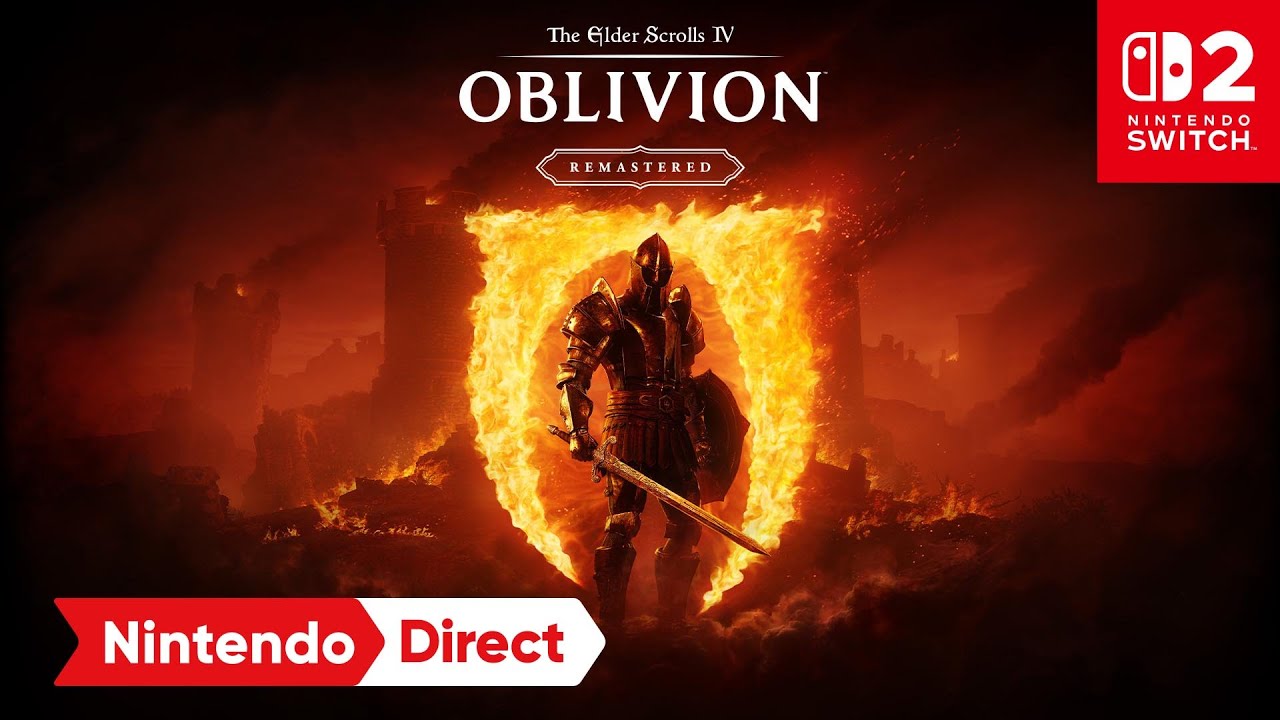
    Nintendo’s official trailer for Oblivion Remastered on Switch 2.

    for now, i will go do other quests and let Cheydinhal marinate. perhaps three days from now, the well will repopulate. perhaps the ring will return. perhaps i will become the only Mages Guild applicant rejected because the dead guy missed his appointment.


    sources and media: Bethesda’s August 11, 2026 Switch 2 launch announcement and screenshots; Bethesda support on the original Ring of Burden bug; contemporaneous 2006 Nexus discussion; and UESP community documentation. Promotional images are attributed in their captions and used for commentary.

  • the biggest shoplifters have payroll departments

    the biggest shoplifters have payroll departments

    when a poor person takes from a rich institution, we call the police. when a rich institution takes from a worker, we… Tune in & read →

    I reblogged a post this morning that gets at one of capitalism’s better magic tricks: poor people are expected to conduct an ethics seminar before taking anything from the rich, while rich people can take money from workers repeatedly, call it a payroll issue, and make everyone wait two pay periods for an update.

    The point is not that every act of theft becomes morally pure when the victim owns a boat. The point is that we use the word theft very selectively. If somebody walks out of a store with laundry detergent, local television has security footage by six. If an employer edits timecards, withholds tips, demands unpaid work before clock-in, misclassifies employees, or simply does not pay overtime, the language becomes soft enough to nap on.

    It is an “error.” A “discrepancy.” A “compliance matter.” Possibly an exciting opportunity to contact a human-resources portal that replies from an address named NOREPLY.

    Bar chart comparing estimated wage theft losses with robbery, burglary, larceny, and motor vehicle theft losses using 2012 data
    A historical comparison using 2012 FBI and Economic Policy Foundation data. Chart by Guest2625, via Wikimedia Commons, licensed CC BY-SA 3.0.

    the crime becomes paperwork when the thief owns the paperwork

    Wage theft covers a lot of ordinary employer behavior: paying less than minimum wage, denying overtime, making people work off the clock, taking tips, using illegal deductions, or labeling somebody an independent contractor because payroll discovered a fun costume for an employee. None of this requires a dramatic heist. Usually it requires a manager, a scheduling system, and confidence that the worker cannot afford to fight back.

    The scale is not theoretical. The U.S. Department of Labor’s Wage and Hour Division says it recovered more than $259 million in back wages for 176,957 workers in fiscal year 2025. That is only what one federal division recovered through enforcement. It is not an estimate of everything taken, and it does not include every worker who never knew, never reported it, or decided losing the job would be worse than losing the money.

    The average recovery was $1,465 per worker. For somebody living paycheck to paycheck, that is not an abstract line on a labor economist’s spreadsheet. It is rent, medication, groceries, a car repair, or the small emergency fund that keeps one bad week from becoming six bad months.

    Fast food workers and supporters marching for higher wages, paid sick days, and union rights in Saint Paul
    Fast food workers striking in Saint Paul in 2016. Photo by Fibonacci Blue, via Wikimedia Commons, licensed CC BY 2.0.

    we moralize downward and administrate upward

    Our cultural response is upside down. Petty theft by poor people becomes a referendum on social collapse. Theft from workers becomes a seminar about how difficult it is to run a small business. Apparently the moral seriousness of taking money decreases as the quality of the accounting software improves.

    This is why the original post lands. The wealthy do not need to snatch cash from your hand. They can take fifteen minutes from every shift, deny a break, shave a commission, hold a final paycheck, or write a policy that makes the theft look automatic. The money still leaves one person and benefits another. It has merely passed through a respectable interface.

    And when a worker objects, the burden reverses immediately. Did you document it? Do you have the schedule? Did you save the messages? Can you prove the manager knew? Are you prepared to keep working beside the person you reported? The employer controls the records, the workplace, and the paycheck, but the employee is assigned a side quest called Evidence.

    The Department of Labor explains that workers may be able to recover back pay, liquidated damages, attorney’s fees, and court costs under federal law. Those remedies matter. So do unions, stronger state enforcement, meaningful penalties, and treating retaliation as the threat it actually is. A right that can only be exercised by somebody with spare time, legal knowledge, and another job lined up is less sturdy than the brochure suggests.

    We do not have to settle every philosophical question about property before noticing the obvious hierarchy. When a poor person takes from a rich institution, we call the police. When a rich institution takes from a poor person, we ask whether they have opened a ticket.

  • the x-men are a load-bearing interest

    the x-men are a load-bearing interest

    some fandoms are things you enjoy. others quietly become part of the structure holding every version of you together. Tune in & read →

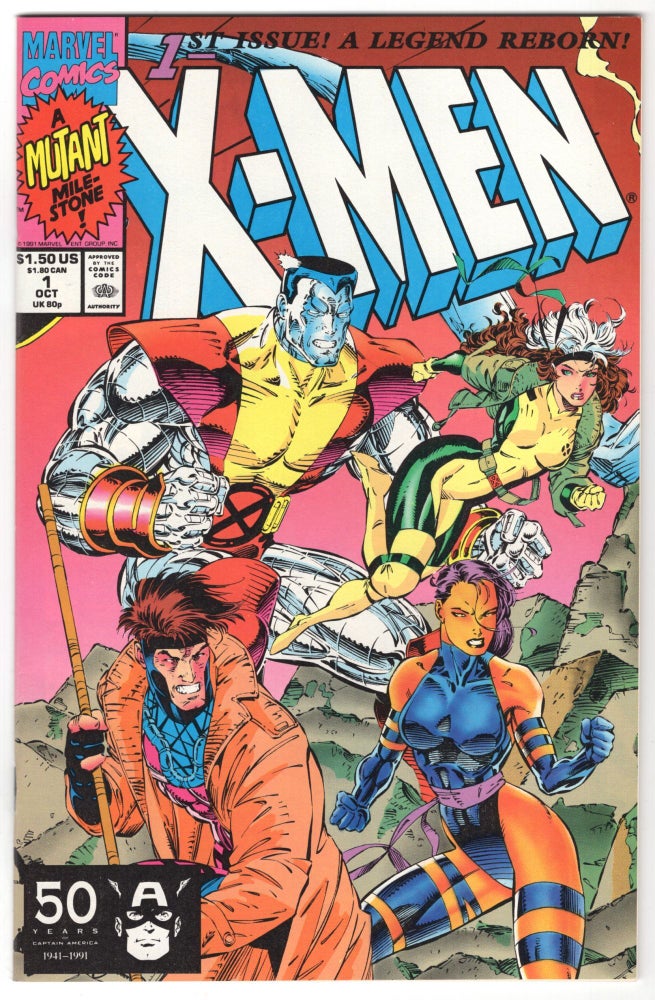
    I reposted a Bluesky post tonight that said, “X-Men has been the most consistent interest in my life.” It is a very efficient sentence. Nine words, and suddenly I am thinking about the strange little handful of interests that stop being things you like and become part of the load-bearing structure of your personality.

    X-Men has been the most consistent interest in my life.

    — van cartier (@christopherxci.blacksky.app) 2026-09-02T23:36:18.811Z

    The X-Men are unusually good at becoming that kind of interest. They are less a single story than a municipal transit system: enormous, occasionally unreliable, redesigned every few years, and somehow still able to take you back to the same place.

    continuity is not the point

    Trying to explain X-Men continuity is how normal conversations become hostage situations. There are alternate timelines, cloned people, cloned people who did not initially know they were clones, children who are older than their parents, deaths that function more like extended vacations, and at least one island that is also a person. The official history is technically knowable, in the same sense that the tax code is technically knowable.

    Magik walks past anti-mutant protesters holding signs that read “God Hates Muties” and “Magik Was Here”
    Comic panel shared by van cartier on Bluesky; Marvel artwork, used for commentary.

    But continuity is not really what keeps people around. The return is. You can disappear for five years, come back through a cartoon, a movie, a comic run, or one extremely specific Tumblr gifset, and the essential machinery is still there. A group of people has been told that something fundamental about them makes them dangerous. They respond by building a home together, putting on coordinated outfits, and developing interpersonal problems of almost military complexity.

    That premise travels. It can be a civil-rights allegory, a queer text, a family drama, a workplace comedy in which the workplace keeps exploding, or an excuse for Wolverine to stand in a forest looking like someone has interrupted the worst cigarette break of his life. Sometimes it is all five before lunch.

    the story changes when you do

    The durable childhood interests are rarely the ones that remain frozen. Usually, they survive because you keep discovering a different entrance.

    When you are young, the X-Men can be about powers, costumes, giant robots, and the objectively correct belief that Storm is the coolest person in any room. Later, the same stories start looking like arguments about respectability, chosen family, assimilation, political exhaustion, and what people owe a society that keeps announcing its intention to destroy them.

    As a gay person, none of that requires particularly strenuous decoding. The franchise has never mapped neatly onto one real minority experience, and it gets clumsy whenever it tries to behave as though it does. Still, the emotional grammar is familiar: disclosure as risk, family as something you may have to assemble yourself, public acceptance that vanishes the second people become frightened, and the endless demand that the marginalized person remain calm enough to deserve survival.

    You can meet that story before you have language for yourself, then return after you do. The characters have not necessarily become more sophisticated. You have. They were simply patient enough to wait.

    X-Men ’97 promotional artwork with Wolverine, Cyclops, Storm, Rogue, Beast, Gambit, Jubilee, and Jean Grey
    X-Men ’97 promotional artwork, © Marvel/Disney, used for commentary. Image via SDP Noticias.

    a franchise can be a storage device

    Long-running fiction accumulates versions of its audience along with versions of its characters. A particular theme song stores the room where you first heard it. A costume design stores the age when you decided someone looked impossibly cool. A revival stores the slightly unsettling discovery that your childhood is now an intellectual property strategy.

    X-Men ’97 understood this better than most nostalgia projects. It did not merely put the old action figures back on the shelf and wait for applause. It returned to the visual and emotional vocabulary people remembered, then allowed time to have happened. The result felt familiar without pretending familiarity was sufficient. This is apparently a radical concept in franchise management.

    Marvel Animation’s official X-Men ’97 trailer.

    That matters because consistency does not mean consuming every issue, seeing every movie opening weekend, or maintaining a working knowledge of which body Professor Xavier currently occupies. There are years when an interest is central, and years when it sits quietly in the background. It still becomes a way of keeping track of yourself.

    I think that is what made the skeet land. “Most consistent” does not mean unchanged. It means the thing kept finding a version of you who could use it.

    the things that stay are allowed to be messy

    A lifelong fandom is not an endorsement of every choice made under its logo. God knows the X-Men have supplied enough bad movies, baffling retcons, aborted metaphors, and stories where nobody appears to have asked whether women should be allowed one uninterrupted afternoon.

    The affection survives because it is bigger than approval. You can love the basic proposition, argue with its execution, ignore an era entirely, and come back when somebody remembers why the whole thing worked. That is a healthier relationship to culture than the modern demand that everything you enjoy also function as a flawless public statement about your moral character.

    Some interests are favorites. Some are phases. A few become personal infrastructure: not always visible, not always fashionable, but still quietly holding up part of the building.

    The X-Men are especially suited to that job. Reinvention is already built into the premise. The roster changes, the school relocates, the dead return, the future becomes terrible in a slightly different way, and everyone tries again.

    Honestly, there are worse things to carry forward.

  • you can just stop buying the wizard stuff

    you can just stop buying the wizard stuff

    loving what a story meant to you does not require an eternal pipeline of purchases, reboots, merchandise, and increasingly strained excuses. Tune in & read →

    I never got into Harry Potter. This was not an act of moral courage. I read some of the first book as a kid, did not like it, and stopped. The Sorting Hat failed to assign me a house because I had already wandered off to look at the X-Men again.

    That means I do not have the same nostalgia to untangle that a lot of people do. I understand why the books matter to them. They found the series at exactly the age when a fictional world can become load-bearing, and it followed them through childhood, adolescence, midnight release parties, movies, friendships, and the period when every personality quiz on the internet needed to know whether you were a Hufflepuff.

    i never got into Harry Potter because I didn’t like the first book and never finished it as a kid. BUT, even if I did like it back then it’s not that hard to just not consume media that directly pays for the creator’s bigoted activism to continue to do massive harm

    — schweg, (@schwegler.lol) 2026-09-03T10:49:43.910Z

    But “this mattered to me” and “I must continue buying every new thing made from it” are two different sentences. They have been stapled together by an entertainment industry that would very much prefer nobody notice the seam.

    The seven British-edition Harry Potter books arranged together
    Photo by Mo HH92, via Wikimedia Commons, licensed CC BY-SA 3.0.

    the old books are not asking for more money

    Nobody is coming into your house to confiscate the battered paperbacks you already own. Nobody can retroactively remove the friends you made through fandom, the comfort you found in the story, or the fan fiction that was probably doing more interesting things with the premise anyway. Memory is not a subscription service. It does not stop working when you decline to purchase the reboot.

    The current franchise, however, is a business. New books, games, licensed merchandise, theme-park trips, and television adaptations are transactions. J.K. Rowling remains publicly connected to the Wizarding World, and her own website describes her as a campaigner on sex and gender issues. It also promotes her privately funded legal organization, which finances cases intended to establish and enforce “sex-based rights.” That is not an inference assembled from a haunted corkboard. The fund says what it does on its own website.

    So the familiar defense that buying one game or watching one new series is too indirect to matter feels increasingly unserious. Of course one purchase does not single-handedly finance a court case. That is how mass consumer products work. No individual soda purchase builds an entire bottling plant either, but Coca-Cola has somehow managed to acquire several.

    A transgender Pride flag flying outdoors against the sky
    Photo by the UK Foreign and Commonwealth Office, via Wikimedia Commons, licensed CC BY 2.0.

    there are ways to keep the memory without feeding the machine

    Keep the books you have. Borrow them from the library. Buy a used copy if you absolutely need one. Read old fanfic. Rewatch the DVD that has been sitting in a storage tote since the Obama administration. Those choices are materially different from preordering the newest deluxe edition and then explaining that your money is merely symbolic.

    More importantly, let the fondness be historical. We already do this with thousands of things. A childhood restaurant closes, a television show ends, a band breaks up, or a website disappears because somebody forgot to renew the domain. We are capable of loving what something was without demanding an eternal pipeline of branded content. In fact, adulthood is mostly discovering that everything you loved has either ended or been purchased by private equity.

    I do not think people have to perform a public ritual of shame because they once loved Harry Potter. I do think the insistence that a beloved childhood property must remain an active consumer identity forever is a little bleak. The story already happened. You got what you needed from it. The memories are yours, and the corporation cannot repossess them.

    You can just stop buying the wizard stuff.