• streaming has turned watching tv into unpaid market research

    streaming has turned watching tv into unpaid market research

    streaming has trained viewers to treat every premiere like a performance review—and every show they love like an unpaid internship. Read more →

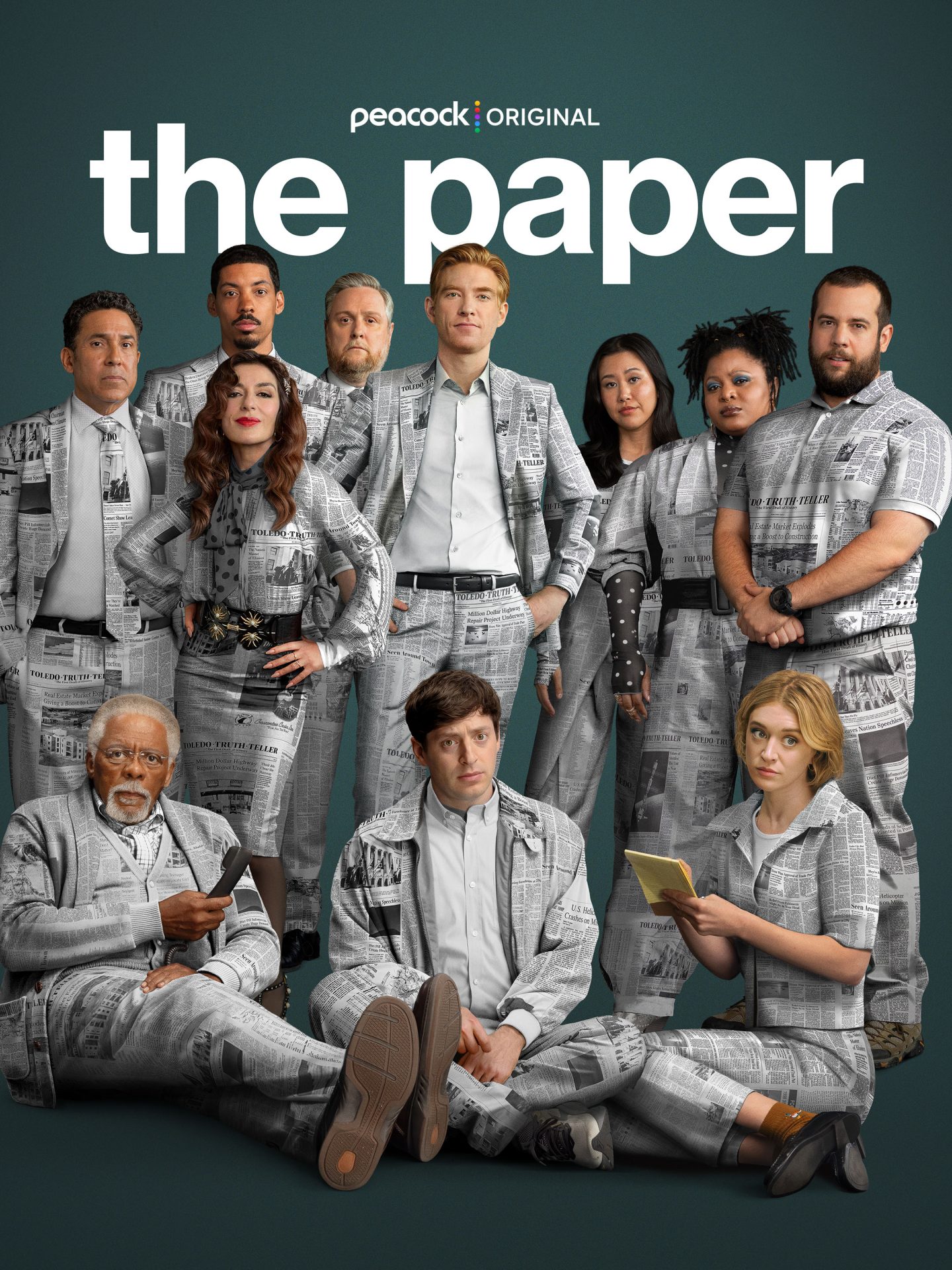
    last night, four days after The Paper dropped its entire second season, I started watching because I wanted to. I also started watching because some small, unpaid Peacock employee living inside my brain had begun shouting that the show needed my numbers immediately.

    why do I feel forced to watch streaming shows i like within the first week they’re out for n fear that low first week numbers will cause the algorithm to cancel it?

    schweg, (@schwegler.lol) 2026-09-14T00:30:53.244Z

    this is a strange new relationship with television. I am no longer simply deciding whether I feel like watching a show. I am being asked, or at least gently haunted, to demonstrate that the show deserves to continue existing.

    the premiere is now a performance review

    The Paper released all ten season-two episodes on Peacock on September 9. That is convenient if you want to spend a weekend at the Toledo Truth Teller. It is less convenient if your preferred television schedule is “eventually, after I finish the other eleven things everyone released on Thursday.”

    A weekly show can slowly become part of your life. A binge release arrives like a pallet on the loading dock. Please process the complete shipment while it is still considered culturally fresh.

    Netflix engagement report graphic with a collage of streaming titles
    Netflix’s 2026 engagement report artwork. Image: Netflix.

    Streamers do not all disclose the same decision-making formula, and one household pressing play four days late is not a tiny executioner standing beside a cancellation button. Still, the industry has trained us to understand viewing as a vote. In its July 2026 engagement report, Netflix described engagement around the moment someone chooses a title and stays to watch; it reported more than 97 billion hours watched in the first half of the year.

    The numbers get enormous very quickly. Nielsen’s 2026 midyear streaming report ranks successful shows in billions of minutes and describes a new class of originals through their measured viewing. That is useful industry data. It also means viewers now encounter television surrounded by the language of quarterly results.

    Nielsen chart ranking the top overall streaming titles by minutes viewed in the first half of 2026
    Nielsen’s top overall streaming titles for the first half of 2026. Image: Nielsen.

    fandom has become an unpaid internship

    If you like a small comedy, a queer show, a weird genre series, or anything else that does not arrive pre-certified as a global event, watching can feel less like leisure and more like constituent services. You watch early. You let the credits run. You tell friends. You make a post. You consider putting “stakeholder engagement” on LinkedIn.

    The platform does not need to send a push notification saying this program’s continued employment depends on you. We have seen enough beloved shows vanish after one or two seasons to write the notification ourselves.

    And because the actual renewal calculus is private, there is no moment when the assignment is complete. Was starting within four days fast enough? Do I need to finish this weekend? Does rewatching help? Was pausing to make dinner an act of industrial sabotage?

    I would like to return to merely watching television

    I do not want every show I like to become a civic obligation. I want to watch The Paper because Sabrina Impacciatore is doing something ungovernable on my television, not because I have appointed myself to Peacock’s programming committee.

    But I did start season two. four days after release. while publicly complaining about feeling forced to start season two.

    the algorithm will be pleased to note that its employee remains highly engaged.

    Images from Peacock/NBCUniversal, Netflix, and Nielsen, used editorially.
  • the group chat is a municipal service

    the group chat is a municipal service

    somebody has to announce they have arrived, somebody has to react with a heart, and somebody has to send the screenshot. Read more →

    the group chat is where adulthood quietly moved its public square. not the glamorous parts, obviously. the group chat is largely weather complaints, grocery photos, and the collective management of a restaurant reservation nobody wanted to make.

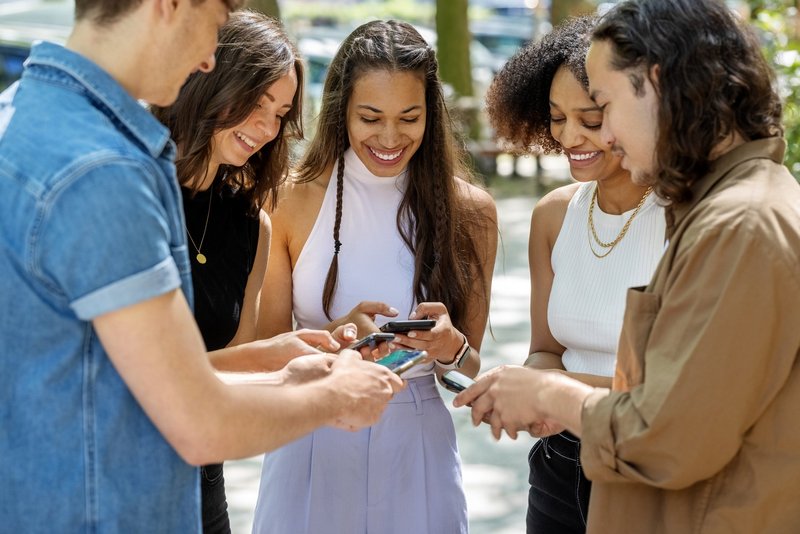
    Friends talking around a phone
    Image: HealthX

    it still performs essential services. it witnesses a bad day. it confirms that a suspicious text is suspicious. it keeps a small but functional archive of jokes that would otherwise have evaporated the moment they were said.

    there is always a person who posts the news, a person who posts the meme about the news, and a person who arrives six hours later with a very sincere question that was answered directly above them. democracy survives anyway.

    Friends standing outdoors with phones
    Image: GB News

    maybe that is why i am protective of it. the group chat asks very little: show up when you can, say something strange, and do not make the shared calendar a hostage situation.

  • the local file has better bedside manner

    the local file has better bedside manner

    the cloud keeps promising my movie collection is safe, then asks me to download it before i can watch it. Read more →

    the modern arrangement for owning a video is very polite until you ask it to behave like ownership. the file is in the cloud. the cloud is everywhere. the cloud will absolutely need several minutes alone with the file before it can show it to you.

    External hard drive on a desk
    Image: Xataka

    this is why a local library still feels faintly revolutionary. not because i am trying to recreate a server room in my apartment, although any external hard drive immediately develops the emotional gravity of a server room. it is because pressing play should not begin a negotiation.

    i like a service that remembers where i was, offers subtitles, and does not make me think about codecs. i also like knowing that the thing i saved is still there if a licensing deal, a redesign, or a very confident progress bar changes its mind.

    Portable Seagate external drives
    Image: Seagate

    the local file is not glamorous. it is just sitting there, ready when asked. frankly, that is more intimacy than most platforms offer.

  • Yash traded Drew the veto for two promises and a future problem

    Yash traded Drew the veto for two promises and a future problem

    after roughly twelve to fourteen hours, Yash handed Drew the #BB28 veto in exchange for safety promises. this should age calmly and… Read more →

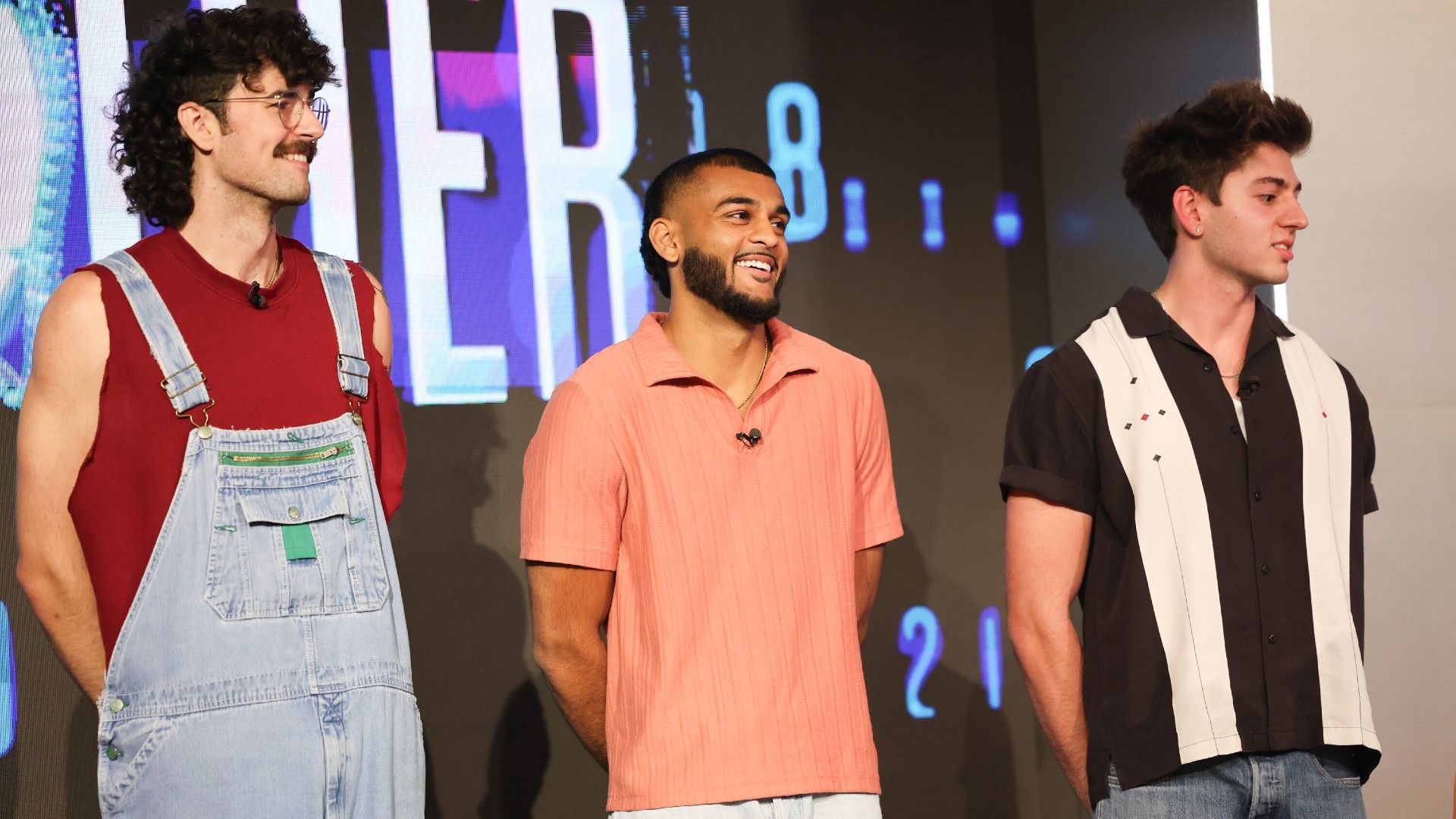
    live-feed spoilers for Big Brother 28 through Sunday morning, September 13.

    Yash and Drew stayed attached to a movie-promo lie detector until approximately the end of time, and then Yash traded the veto away for two promises. this is the kind of decision that looks either visionary or deeply embarrassing depending on which thirty seconds of Thursday you freeze-frame.

    no deal made in a pressure cooker-like comp has Ever backfired, lol

    schweg, (@schwegler.lol) 2026-09-13T09:58:47.218Z

    what happened

    Yash’s Week 10 nominations were Barrett, Drew, and Melody. Dee and Devens joined them in the final veto draw, and the competition turned into an endurance marathon that ran somewhere in the neighborhood of twelve to fourteen hours.

    Hamsterwatch’s September 12 live-feed recap has the drop order as Dee, Melody, Devens, and Barrett, leaving Drew and Yash. At roughly 2:48 a.m. Pacific, Yash accepted Drew’s pitch and dropped, making Drew the veto winner.

    Yash Patel and Drew Campbell seated with other houseguests in the Big Brother 28 living room
    Yash Patel and Drew Campbell with fellow houseguests. Photo: CBS, via AOL.

    In exchange, Drew promised:

    • not to vote Taylor out if she is on the block Thursday
    • not to nominate Yash during Drew’s next HOH, either initially or as a replacement nominee, even if keeping that promise means sacrificing Melody

    the deal is stranger than it first sounds

    Yash is already HOH, so the veto did not offer him personal safety. It offered control. Because Dee’s BB Bribe protects Dee and Devens from a Yash nomination this week, Drew using the veto on himself appears to leave Taylor as the only available replacement nominee.

    So Yash effectively allowed the sequence that puts Taylor on the block, then bought a promise from Drew not to evict her. very normal. structurally elegant. no loose wires visible anywhere.

    But the deal makes more sense if Yash believed Drew was going to outlast him anyway. Dropping without a deal gives Drew the veto and Yash nothing. Dropping with a deal gives Yash one vote protecting Taylor and possible safety during a future Drew HOH. The question is not whether the deal was perfect. The question is whether Yash sold something he was already about to lose.

    Big Brother 28 houseguest Drew Campbell in a black-and-white striped shirt
    Drew Campbell. Photo: CBS, via Parade.

    Drew got the cleaner end of it

    Drew gets immediate safety, the power to force a replacement nominee, and a deal that asks him to protect Yash only during his next HOH. The Taylor promise matters this week, but it is still just one vote in a week where the final nominees are not settled until the Block Buster is over.

    The most interesting clause is Melody. Drew reportedly agreed that Yash’s safety would hold even if Melody had to go up instead. That is a future loyalty test Yash may never need to collect, but Drew agreed to it while exhausted and inches from winning the veto outright. contracts signed inside endurance competitions should probably come with a three-business-day rescission period.

    if Yahs felt he could have stayed in it much longer, he wouldn’t have taken the deal—or at least that Better be what a DR says on Wednesday

    schweg, (@schwegler.lol) 2026-09-13T10:09:53.547Z

    For now, Drew has the veto, Yash has two promises, and Taylor has the privilege of possibly touching the block as part of someone else’s protection plan. My final-seven rankings already needed revision; they have now filed the paperwork themselves.

    Photo attribution: CBS promotional and episode imagery, used editorially via AOL and Parade.

  • sleep is a mandatory meeting i cannot attend

    sleep is a mandatory meeting i cannot attend

    sleep is essential, automatic, and apparently unavailable whenever the brain notices you are counting on it. Read more →

    i reblogged “sleep is not normal to want and impossible to achieve” because it is the cleanest available description of a system that becomes less cooperative the more urgently you need it.

    sleep is supposedly the passive activity. you lie down, close your eyes, and stop participating. this would be very convenient if the brain did not interpret “please stop participating” as a request for the complete director’s commentary on every awkward interaction since middle school.

    during the day, i can want sleep with the uncomplicated intensity of a Victorian child staring through a bakery window. then bedtime arrives, the product is available, and suddenly my body would like to review tomorrow’s calendar, my long-term prospects, one noise the air conditioner made in 2024, and whether i have ever been normal in a grocery store.

    A woman lies awake in bed at night with her eyes open, resting her head on one hand.
    Photo: National Heart, Lung, and Blood Institute, National Institutes of Health.

    the official definition is almost offensively polite. the National Heart, Lung, and Blood Institute describes insomnia as trouble falling asleep, staying asleep, or getting good-quality sleep even when there is enough time and the right environment. yes, thank you, that is the administrative summary. the lived version is negotiating with a pillow as if it has access to a lever marked UNCONSCIOUS.

    the CDC says adults ages 18 through 60 generally need at least seven hours, which is useful information in the same way a weather alert saying “avoid getting wet” is useful while your car floats past the mailbox. knowing the target and reaching it are not the same project.

    sleep advice also has a particular tone. keep a schedule. make the room cool and quiet. avoid caffeine late in the day. turn off electronics before bed. all reasonable. all delivered as though i have not already transformed the bedroom into a controlled laboratory where the only uncontrolled variable is the patient.

    Cover of the NHLBI booklet Your Guide to Healthy Sleep, featuring an illustration of a person sleeping beneath a night sky.
    Your Guide to Healthy Sleep, via the National Heart, Lung, and Blood Institute.

    and then there is the final indignity: trying harder is not a useful sleep position. you cannot clench your way into unconsciousness. every check of the clock becomes an unsolicited progress report. six hours remaining. five hours and thirty-eight minutes remaining. congratulations, you have unlocked arithmetic.

    this is not me issuing medical advice from underneath a blanket. persistent sleep problems are worth discussing with a healthcare professional, especially because poor sleep can interfere with attention, memory, mood, and daily life. it is merely an acknowledgment that sleep occupies a strange category: essential maintenance that must happen naturally, on schedule, under observation, without you appearing to care too much.

    perfectly normal. no notes. see everyone again tonight for the mandatory meeting i remain unable to attend.

  • a party photograph became a painting, and then became a memory again

    a party photograph became a painting, and then became a memory again

    Jordan Sullivan’s American Communion turns one 1998 Galveston balcony photograph into a small argument about memory, community, and what a camera preserves… Read more →

    i stopped on American Communion because the painting looks like a memory that has already decided what it means.

    Eight hotel balconies stack into a rough grid. People lean over railings, look up, look down, and occupy the architecture like the building has briefly agreed to become part of the party. In the upper-right corner, a man reaches down to pour a drink into a cup held up from the balcony below. It is an absurdly precise form of community service.

    Painting of Black partygoers leaning across stacked hotel balconies, with a man pouring a drink into a woman’s raised cup below
    Jordan Sullivan, American Communion, acrylic on canvas, 2026. Shown for commentary; image via the artist and the originating Tumblr thread.

    Then the Tumblr thread supplies the photograph.

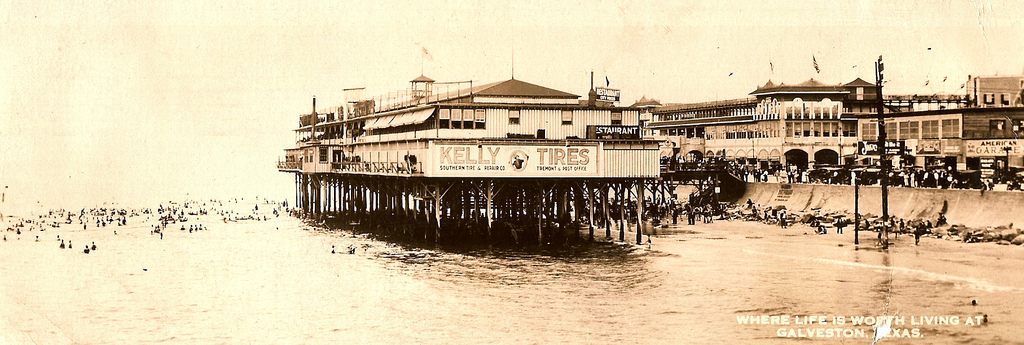
    The source image was taken at the Kappa Beach Party in Galveston in 1998. The balconies are there, the people are there, and the cross-floor beverage delivery is there. Sullivan did not invent the composition so much as recognize that a snapshot had been quietly carrying one around for nearly three decades.

    The post had passed 51,000 notes when it reached me, and i think part of the response comes from the satisfying click between image and origin. The painting feels mythic; the photograph says, no, somebody really did this. Somebody looked over a railing, assessed the distance, and decided gravity could help with hospitality.

    Eight hotel balconies in two columns, with Black partygoers leaning over the railings; a man on an upper balcony pours a drink into a woman’s raised cup below
    The 1998 Galveston Kappa Beach Party photograph that inspired American Communion. The photographer is not identified in the circulating archival post; image reproduced for commentary via Tumblr.

    a photograph is not the opposite of a painting

    Sullivan changes the scene. In the photograph, a group of younger women occupy the lower balcony. In the painting, the raised cup belongs to one older woman. Faces soften into color and gesture. The hotel becomes less a particular building than a vertical neighborhood that exists for exactly one pour.

    That is not a failure of documentary accuracy. It is the work. The photograph records who was there; the painting asks what the exchange can hold after the names are gone.

    Sullivan describes American Communion as part of his ongoing American Psychosis series. His broader portfolio repeatedly turns found-looking American scenes into something between evidence, dream, and indictment. This one lands differently. The title makes a tiny party maneuver sound sacramental, and the painting earns it. The cup passes through open air like a secular ritual: i have enough, you are within reach, hold still.

    the internet is also an archive, unfortunately

    The Tumblr commentary frames the original as an iconic image in Black conversations about ’90s nostalgia and socializing before phones. That context matters more than my own recognition of the scene. I did not attend this party, and nostalgia is not improved by pretending every viewer owns it equally.

    I also do not want to make the photograph perform the usual anti-phone morality play. Cameras were already present; that is why the moment survived. People in 1998 were not more authentic because the upload button had not yet been installed in every pocket. They were simply living before each gesture arrived with a distribution plan.

    The important difference may be that this image feels observed instead of produced. Nobody appears to be demonstrating community for an audience. The photographer caught a social system already operating: balconies became porches, strangers became neighbors, and one plastic cup briefly became infrastructure.

    The thread also exposes the internet’s strange archival bargain. The photograph can circulate widely enough to inspire a painting, prompt recognition, and bring thousands of people into a shared memory. It can do all of that while the photographer’s name falls away. Preservation without provenance is still a kind of loss.

    There are more formal archives around the edges. An account devoted to the Kappa Beach Party’s history dates the event to 1982. Galveston’s own historical foundation documents a much longer Black relationship with the island’s waterfront, including the segregated beach, Black-owned businesses that served visitors, and the people who fought to open public accommodations. The 1998 party did not materialize on an empty strip of sand. It belonged to a place with a deep, contested history of who was allowed to gather, rest, and be visible there.

    American Communion does not explain all of that, and it should not have to. It gives one ordinary, ridiculous, generous gesture enough weight to survive another format. A photograph became a painting, the painting sent people back to the photograph, and the internet briefly remembered that reposting can be more than moving an image around.

    Sometimes it is how a picture finds its story again.


    sources: originating Tumblr thread; Jordan Sullivan; artist portfolio; Galveston Historical Foundation’s Black history archive.

  • the backlog is not a moral failing, it is a library

    the backlog is not a moral failing, it is a library

    a backlog is only embarrassing if you believe every game you own is waiting beside the door with a tiny clipboard. Read more →

    there is a specific kind of guilt that arrives when you open a game library and see the little grid of unfinished things. not a dramatic guilt. nobody is injured. it is more like the feeling of owning three unread books and briefly suspecting you have committed a crime against literature.

    White PocketGo handheld console in use
    Image: PCWorld

    i am trying to reject the premise that a backlog is a to-do list. a to-do list is where i put things that will make somebody send another email. a game library is where i put worlds i may want to visit when the actual one has asked a little too much of me.

    the Steam Deck is especially good at this distinction. it does not make a game into homework just because it is portable. it lets a forty-minute wandering session be enough. a game can be a place you return to, not a project plan with an estimated completion date.

    MCON mobile game controller in a YouTube thumbnail
    Image: ShortCircuit on YouTube

    there are games i will finish, games i will quit with affection, and games i will keep installed because i like knowing they are nearby. that is not failure. that is a library doing its job.

  • millennials are processing 9/11 normally, by which i mean posting

    millennials are processing 9/11 normally, by which i mean posting

    twenty-five years after 9/11, millennials are commemorating the formative trauma of our youth in the most emotionally healthy way available to us:… Read more →

    i was twelve when 9/11 happened, which puts me in a very specific millennial demographic: old enough to remember that day as an actual day, and young enough that basically the entire rest of my life happened inside the world it built.

    twenty-five years later, the internet has commemorated this in the most emotionally healthy way available to us: an absolutely deranged posting cycle.

    there is something very millennial about the speed with which a foundational trauma became a set of reusable cultural objects. the school television. the president getting whispered to. the airport. the flag graphics. the phrase “never forget.” the exact kind of cable-news lower third that can still make your nervous system briefly sit up straight.

    and then, because we had to keep living for another quarter-century, all of that eventually became material.

    https://bsky.app/profile/britculpsapp.bsky.social/post/3k75ttdfjgw2f

    the joke is not that 9/11 was funny

    the joke is that we spent twenty-five years being told there was one correct emotional register for it while almost everything built around that grief became progressively stranger.

    there was the genuine horror, and then there was the political mythology. there was mourning, and then there were wars, surveillance, airport security theater, commemorative merchandise, campaign speeches, corporate remembrance posts, and every public figure in america discovering that “9/11” could be inserted into a sentence whenever the sentence needed instant moral weight.

    eventually the solemnity itself became part of the thing being processed.

    President George W. Bush leans toward an Air Force One window while speaking by telephone on September 11, 2001.
    President George W. Bush speaks with Vice President Dick Cheney aboard Air Force One, Sept. 11, 2001. White House photo by Eric Draper; public domain. Source.

    Google's 9/11 Homepage Design Stirs Controversy

    The Onion (@theonion.com) 2026-09-11T14:00:40.782481218Z

    The Onion understood this almost immediately. satire after 9/11 worked because the national mood was already surreal: normal life had stopped, everyone was scared, and at the same time people still had jobs, errands, television, bad relationships, and a powerful biological need to care about stupid bullshit again.

    that tension never really went away. it just got old enough to develop back pain.

    we also got twenty-five years of consequences

    millennial 9/11 humor is dark because the history after 9/11 was dark. we watched a catastrophe become a permission slip for things that were supposed to be temporary and then simply became the furniture: the Patriot Act, the forever-war mentality, suspicion as public policy, and the idea that taking your shoes off for a flight was somehow a civic sacrament.

    President George W. Bush stands with Vice President Dick Cheney and Condoleezza Rice in a White House emergency briefing room on September 11, 2001.
    President George W. Bush, Vice President Dick Cheney, Condoleezza Rice, and staff in the Presidential Emergency Operations Center, Sept. 11, 2001. White House photo; public domain. Source: George W. Bush Presidential Library.

    so yes, a lot of the jokes are tasteless. some are aggressively stupid. several require the kind of background knowledge that makes you realize your youth is now a historical period with archival footage.

    but i do not think the existence of the jokes means people forgot what happened. for millennials, it can mean almost the opposite. you do not build this much elaborate nonsense around something that left no mark.

    https://bsky.app/profile/slclunk.com/post/3m7qrtc4ia22g

    history becomes folklore faster than anybody wants

    there are adults now who were born after 9/11. there are younger adults who know it primarily through documentaries, politics, memes, old news clips, and the fact that every millennial can suddenly become somebody’s grandfather and tell you exactly where the classroom television was positioned.

    that is maybe the strangest part of the 25th anniversary. this thing that still feels like the dividing line between “before” and “after” in my own memory is becoming history in the normal way history does: flattened, remixed, misremembered, made into jokes, rediscovered by people who were not there, and occasionally explained very badly by those of us who were.

    none of that makes the dead less dead, or the grief less real. it just means the living kept being alive afterward, which is unfortunately a very messy condition.

    anyway, happy 25th anniversary to the event that permanently changed airport shoes, american politics, and millennial brain chemistry.

  • Montgomery is talking about suicide prevention. we should listen.

    Montgomery is talking about suicide prevention. we should listen.

    A new WSFA report puts Suicide Prevention Month in very local terms: Montgomery families living with grief, bullying, and the work of… Read more →

    If you need support right now: call or text 988 to reach the Suicide & Crisis Lifeline. LGBTQ+ young people can also contact The Trevor Project by calling 1-866-488-7386, texting START to 678-678, or using online chat.

    there is a version of suicide-prevention messaging that stays safely abstract: a ribbon, a statistic, a phone number, a sentence about checking on your friends. all useful. all very easy to nod at and keep scrolling.

    then there is the version where the people telling you to pay attention live down the road.

    WSFA spoke with two Montgomery women this week about the losses that pushed them into suicide-prevention advocacy. Angela Jackson described the shame and isolation that followed a suicide in her family. Monique Davis talked about her son, Jamari Terrell Williams, who died in 2017 at age 10 after being bullied.

    Jamari loved to dance. Davis told WSFA that classmates treated him as different because of it, and that difference became a target.

    that detail lands hard because “different” is one of those words adults can make sound harmless after the fact. kids know exactly how it gets weaponized.

    A young person speaks on the phone in a cozy bedroom while a trusted friend sits nearby holding a warm mug.
    sometimes support is not a slogan. sometimes it is staying nearby while somebody makes the call.

    “different” should not become a warning label

    yesterday i wrote about why queer and trans kids deserve to grow old. this is not the same story, and i do not want to flatten Jamari’s life into an identity the reporting does not give him.

    but there is an obvious point of contact: children who get marked as different are often asked to absorb an astonishing amount of cruelty while the adults around them debate whether the cruelty technically meets the threshold for intervention.

    Jamari’s mother did not leave that debate where she found it. she created the Jamari Terrell Williams Foundation, which works with schools, churches, city officials, and community groups to fight bullying and prevent suicide. Alabama’s student-harassment law was renamed for Jamari in 2018 and expanded protections around bullying, including cyberbullying.

    the foundation’s message is wonderfully uncomplicated: it is okay to be different.

    A diverse group of young adults laugh together while painting a colorful bench in a community garden.
    the future we are trying to protect is mostly ordinary: friends, community, bad haircuts, errands, and getting to be here for all of it.

    the local part matters

    WSFA also reports that Alabama loses at least two people to suicide on an average day, and that nearly 840 Alabamians died by suicide in 2024. those numbers are large enough to become scenery if you let them.

    the reason local stories matter is that they turn the scenery back into people.

    a mother in Montgomery is still saying her son’s name. a city employee is talking openly about grief she once felt ashamed to discuss. a foundation here is still going into schools and churches telling kids that being different is not a problem to solve.

    and this Saturday, Montgomery Parks and Recreation is hosting a Suicide Awareness Resource Fair from 4 to 6 p.m., connecting people with counselors, mental-health professionals, information, and community resources.

    that is what “check on your people” looks like when it stops being a caption and becomes infrastructure.

    call. text. ask the second question. take bullying seriously before it becomes somebody else’s origin story for advocacy.


    Resources: Call or text 988 for free, confidential crisis support 24/7. Learn more about the Jamari Terrell Williams Foundation. LGBTQ+ young people can contact The Trevor Project 24/7.