• 2
    uncmaxxing: becoming playground equipment with dignity

    uncmaxxing: becoming playground equipment with dignity

    being the fun uncle is mostly controlled irresponsibility, available attention, and discovering that your lower back has become deeply conservative. Read more →

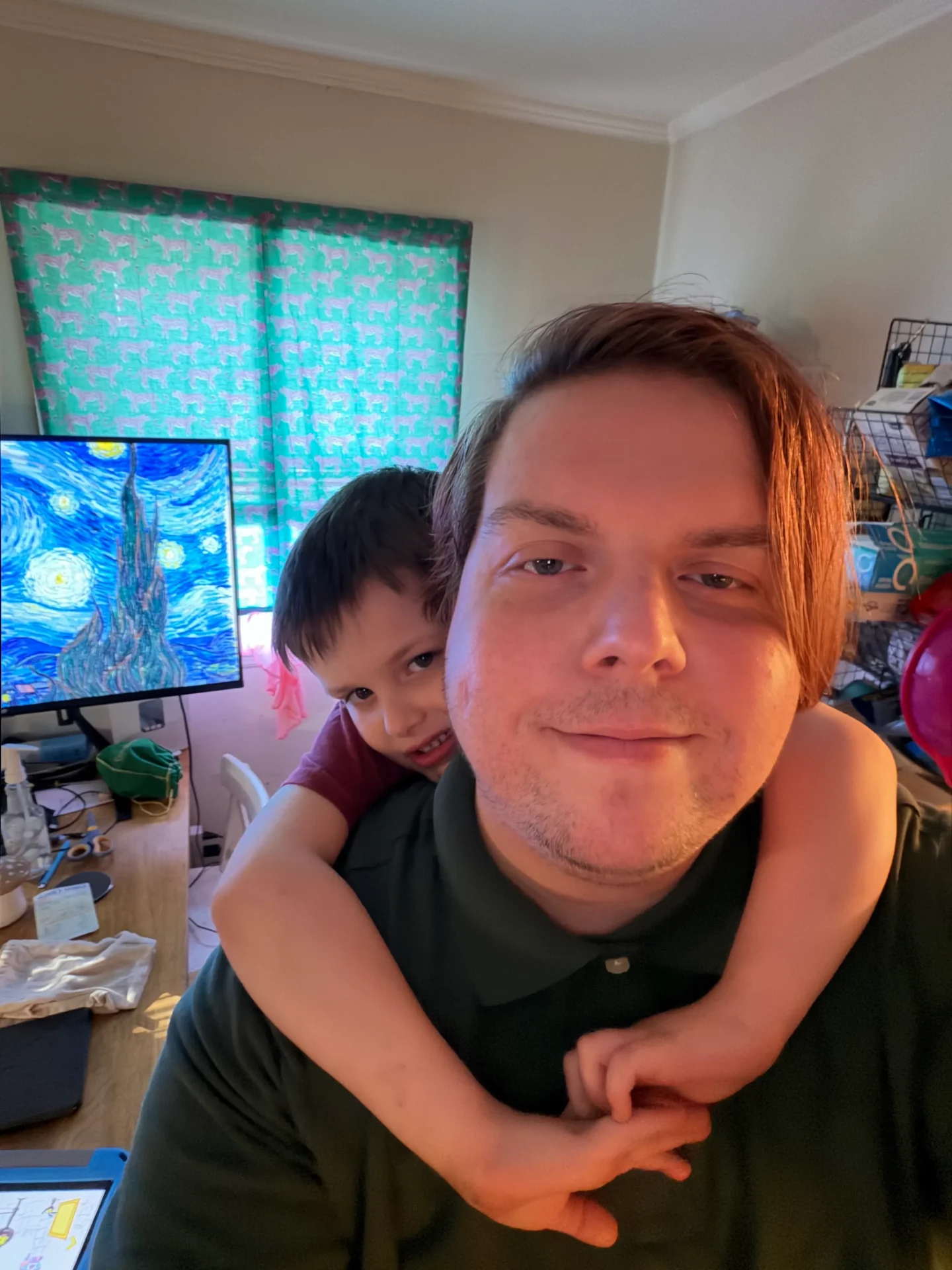
    there is a particular moment in adulthood when you realize you have become furniture.

    not metaphorically. i mean a small child has looked at your back, performed several calculations involving leverage and the complete absence of fear, and decided you are now part of the climbing wall.

    : apparently the final form of having a nephew is becoming playground equipment.

    children do not recognize personal space as a legal concept

    my nephew Sam hanging off my back in the kitchen is not an unusual event so much as the natural outcome of being within grabbing distance. children do not ask whether you are prepared to become a ride. they simply begin boarding.

    this is one of the stranger pleasures of being an uncle. parents have to maintain civilization. they are responsible for meals, bedtimes, school forms, shoes that have somehow vanished while still being inside the house, and the ongoing investigation into why everything is sticky. an uncle can arrive, make the situation louder, get climbed like a moderately stable tree, and then leave before anyone has to locate a matching pair of socks.

    it is an excellent system, especially for the uncle.

    Two adults and two children sit around a coffee table playing a board game together.
    Family play does not need an objective beyond everyone agreeing to the same small, temporary world. Photo by Bill Branson for the National Cancer Institute, via Wikimedia Commons. Public domain.

    the fun uncle is mostly controlled irresponsibility

    people talk about being the “fun uncle” like it requires gifts, elaborate outings, or a convertible purchased during a manageable midlife crisis. mostly, it seems to require being willing to participate in whatever bit a child has started without immediately asking where the bit is going.

    the answer is usually nowhere. this is the beauty of it.

    adults are forever trying to make activities produce something. the walk should count as exercise. the hobby should become a side hustle. the photograph should be optimized for a platform. even relaxing has developed performance metrics. did you hydrate? did you practice mindfulness? did you extract the maximum restorative value from sitting completely still?

    a kid will spend twenty minutes repeatedly falling off the same cushion because the fall made a funny noise once. this is a far more honest relationship with leisure.

    An adult and child sit together at a table while the child draws with colored pencils.
    Sometimes “being available” is simply treating a child’s current project like the important briefing it clearly is. Photo by Nenad Stojkovic, licensed CC BY 2.0.

    being remembered as available

    i do not remember every toy I had as a child, and I definitely do not remember which adults bought most of them. I remember who was willing to get on the floor. I remember the adults who listened to an explanation that made no sense and responded as though I had presented a complicated but potentially viable infrastructure proposal.

    that is probably the actual job. not performing childhood enthusiasm perfectly, but making room for it. being the adult who can be interrupted by a very urgent report about a bug, a cartoon, or an object found under the couch. being someone whose attention does not always have to be earned by doing something impressive.

    it is easy to forget how much power adults have over the atmosphere in a room. we decide whether something is annoying, embarrassing, too loud, too weird, or worth joining. sometimes the kindest possible response is to accept that you have been assigned the role of mountain and crouch down a little so the smaller person can get a better grip.

    uncmaxxing has terrible ergonomics

    none of this means my spine has endorsed the arrangement.

    being an uncle in your late thirties introduces a widening gap between your emotional willingness to roughhouse and your lower back’s deeply conservative interpretation of the same proposal. the child sees a beloved relative. the lumbar region sees an OSHA violation.

    still, there are worse ways to discover that you are no longer young than having someone assume you are strong, safe, and probably willing to make a ridiculous noise when they climb aboard.

    I can work with that.


    originally inspired by a moment posted on Bluesky. The embedded photograph includes alt text on the source post.

  • 2
    i miss websites that were allowed to be weird

    i miss websites that were allowed to be weird

    The old web was often ugly, broken, and deeply inconvenient. It also looked like somebody lived there. Keep the competence; bring back… Read more →

    i miss websites that were allowed to be weird.

    not “the old internet was better,” exactly. the old internet was frequently worse in ways we have either forgotten or converted into charming anecdotes because nobody wants to remember waiting three minutes for a midi file to load. pages broke if you looked at them from the wrong browser. navigation was a scavenger hunt. half the images were red x’s. somebody would choose yellow text on a tiled photograph of lightning and then make you live with their decision.

    Geocities was not good design. that was the point.

    it was a place where people made websites because they wanted a place for their Sailor Moon GIF collection, or an exhaustive explanation of why one particular episode of Star Trek pissed them off, or photographs of every frog figurine they had acquired since 1987. the page did not need to become a business. it did not need a content strategy. it needed a starfield background, a guestbook, and perhaps a tiny animated wizard pointing toward the links page.

    the web used to look like somebody lived there

    the thing i miss is not dial-up, browser incompatibility, or having to guess whether “enter” was hidden inside the spinning skull. i miss the evidence of a person making choices without asking whether those choices scaled.

    a personal homepage could be pink because the person liked pink. it could have twelve sections because they had twelve interests. it could open with a 900-word argument about captain janeway and then direct you to a page of adopted digital pets. none of this was coherent in the modern branding sense, but it was perfectly coherent as a person.

    you could tell when someone had learned a new trick because suddenly every heading had a drop shadow. you could tell when they found a GIF archive because the page began moving like a slot machine during an earthquake. you could tell what they cared about because they had spent six evenings arranging it into nested tables for an audience that may have consisted of their cousin, two people from a message board, and themselves at the public library.

    this is, frankly, a healthier audience model than most of us have now.

    A colorful desktop workbench holds an HTML editor, magical-girl GIF folders, linked pixel hearts, a guestbook, and an angrily annotated starship sketch.
    A page did not need a market. It needed one person who cared too much and had learned just enough HTML to become dangerous.

    bad design can still be honest design

    we tend to talk about those pages as ugly, and many of them were. they were also legible in a way the modern web often is not. not legible as in “the contrast passed an accessibility audit”—it absolutely did not—but legible as an artifact of somebody’s attention.

    the glittering rose divider meant something. the painstaking shrine to a minor anime character meant something. even the page that played “my heart will go on” without consent was making a recognizable human choice, albeit one that should have been prosecuted at the hague.

    today, even personal sites arrive wearing business casual. there is the large tasteful photograph, the sentence explaining who i am and what value i provide, the pill-shaped button, the three cards, the newsletter box, and the footer containing several tiny legal obligations. everything has excellent spacing. everything loads properly. everything looks prepared to ask whether i have fifteen minutes for a quick introductory call.

    the modern web is dramatically more competent and somehow looks like six websites.

    A factory conveyor belt produces six identical polished webpages while one crooked, colorful handmade page escapes on a cable.
    The modern web is dramatically more competent and somehow looks like six websites.

    competence became a dress code

    this did not happen because designers became boring. designers got very good, browsers became less adversarial, phones turned every layout into a negotiation, and accessibility finally began receiving something closer to the attention it always deserved. a modern site has to work across an absurd range of screens, input methods, network conditions, and human needs. there are good reasons not to construct your navigation from eight unlabeled GIFs of gemstones.

    but somewhere between “please let people use the website” and “please make every website a frictionless conversion surface,” competence became a dress code.

    templates lowered the barrier to making something functional, which is good. platforms then replaced most of the decisions with defaults, which is convenient. recommendation systems rewarded whatever could be understood immediately, which is efficient. eventually we arrived at a web where enormous numbers of people technically publish all day without ever making a place of their own.

    we post inside rooms where the landlord chose the paint, the furniture, the maximum number of characters, and which of our friends are allowed to see us. then the landlord moves the furniture every six months because engagement is down.

    the problem is not that every person should learn html and hand-code a shrine to their favorite wrestler. the problem is that the available tools increasingly treat personality as something to pour into a slot after the structure has already been decided.

    i do not want the inconvenience back

    nostalgia becomes useless the second it starts lying. the old web was not a democratic garden where everybody had equal access and corporations politely stayed outside the gate. hosting cost money. technical knowledge mattered. search was inconsistent. harassment existed. accessibility was often treated as an exotic rumor. plenty of people never got to participate at all.

    i do not want to restore the internet from a backup dated 1998. i want the current web—with responsive layouts, readable type, alt text, fast connections, useful standards, and buttons that behave like buttons—to loosen its tie.

    keep the competence. bring back the permission.

    make a page that exists because you own seventeen pictures of the same cat asleep in different containers. write the definitive case against one episode of a television show that ended twenty years ago. use a color that a brand strategist would describe as “challenging.” add a links page for no reason except that you like those links and would like them to continue existing somewhere.

    this is also why i keep returning to the idea that a personal website should contain too many subjects and have a name you need to explain. the mess is not a preliminary stage before the site discovers its niche. the mess is the biography.

    the handmade web is still here

    the weird web never vanished completely. it moved into small blogs, fan wikis, neocities pages, handcrafted portfolios, strange little tools, newsletter archives, and personal domains updated whenever their owners remember the password. you still find pages that feel less like publications and more like being invited into somebody’s bedroom while they explain the complete taxonomy of a thing you had not thought about since 2004.

    those pages are not valuable because they are retro. they are valuable because they are specific.

    specificity is what the six-websites web keeps sanding off. it cannot be reliably templated because it lives in the unnecessary choices: the odd title, the overlong sidebar, the tiny collection nobody searched for, the joke that makes sense to four readers, and the page made solely because its author woke up furious at commander chakotay.

    i would like more of that. not a worse internet. not a slower internet. just an internet where a website can look like somebody got excited and stayed up too late.

  • 2
    god forbid a bitch own a weird little website

    god forbid a bitch own a weird little website

    A personal site can still be a garden, junk drawer, clubhouse, and tiny act of resistance against the feed. Read more →

    “god forbid a bitch name his blog whimsically”

    god forbid a bitch name his blog whimsically

    schweg, (@schwegler.lol) 2026-08-29T21:00:42.603Z

    i posted that as a joke, but it is also the entire operating theory behind tacobout.online

    a personal website should have a name you have to explain. it should contain at least three subjects a growth consultant would beg you to split into separate brands. it should occasionally look like somebody opened a junk drawer and installed an rss feed in it

    the vertical is a lie

    platforms want a clean answer to “what do you post about?” because clean answers are easier to package. tech account. politics account. reality tv account. music account. gay little pop-culture account. choose a lane, feed the recommendation engine, become legible to the machine

    but a person is not a vertical. a person is twenty-seven browser tabs, one of them playing audio from somewhere, three of them technically research, and at least one open because the headline made you mad six hours ago

    in the space of two days this site went from Big Brother strategy pathology to an ATProto moderation tool, Geese marketing discourse, krishnacore, and an Avengers multiverse collision. that is not editorial confusion. that is what a brain looks like when nobody has forced it into a content calendar

    Close photograph of a pale pink hibiscus bloom and unopened bud against green leaves and a brick wall.
    The camera roll and the personal blog share a basic instinct: save the small, specific thing before the feed swallows it.

    the camera roll and the blog are cousins

    this flower has been sitting in my IMG library for years. it does not have a discourse attached to it. it does not need a hot take, an affiliate link, or a call to action. i liked it enough to save it

    that is still one of the best reasons to put anything on the internet

    the camera roll says: this happened in front of me and i wanted another look. the personal blog says: this passed through my head and i wanted somewhere it would not immediately disappear. both are ways of refusing the feed’s insistence that whatever is newest is whatever matters

    ownership is not the same thing as audience

    Bluesky and Mastodon are better than most platforms at letting posts point outward. rss is still sitting there, unbothered and useful, waiting for everybody to remember it never asked an algorithm for permission. open protocols make it possible to build small, nosy tools when a social platform is missing exactly one fact you want to know

    that is how i ended up building a client-side ATProto tool for checking which of your mutuals already block an account. sometimes a post explains a thought. sometimes a post has buttons and performs set intersection

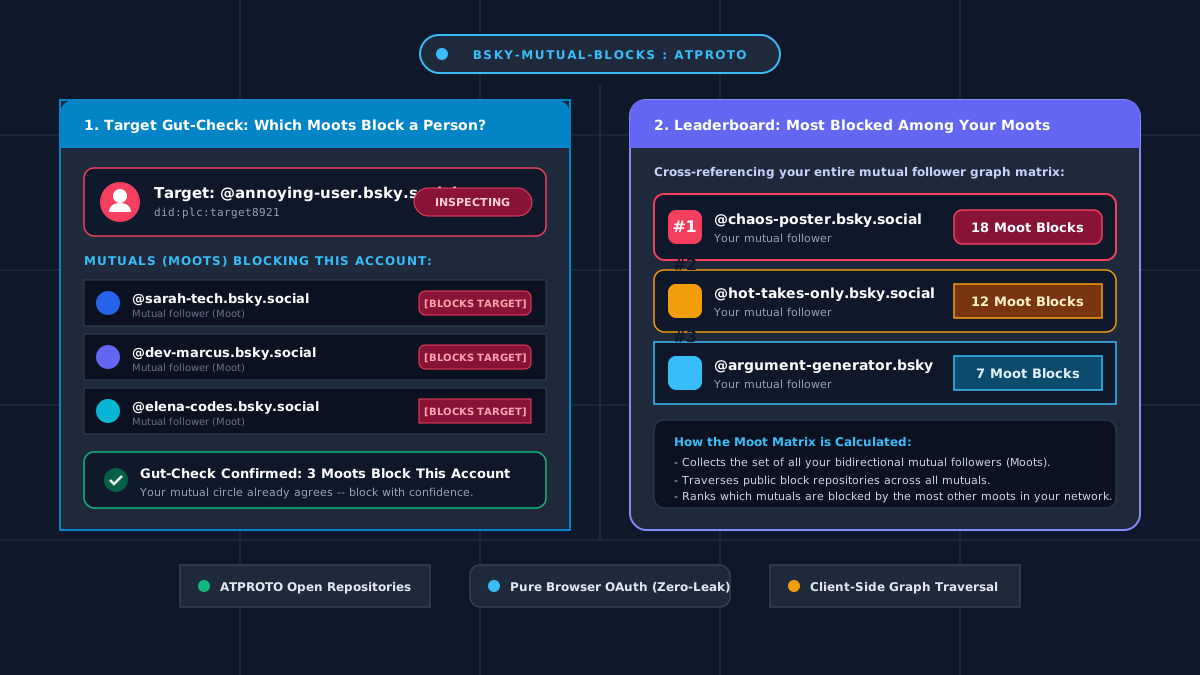
    Modern flat vector illustration showing bsky-mutual-blocks: gut-checking target accounts against mutual followers and ranking the most-blocked mutuals among your moots on ATProto.
    Small tools are personal posts with inputs: a hyperfixation made clickable.

    none of that makes the domain a fortress. owning a site does not mean pretending the social web is beneath you; it means having a home to return to after visiting everybody else’s apartments

    the feeds are where the conversation happens. the site is where the conversation gets furniture

    the weird name is the point

    there is no conversion funnel here. no promise that every post will reinforce a niche. the same person can care about open protocols, reality-show social strategy, queer pop culture, old songs, labor, games, movies, and whether the kitchen happens to be clean at the same time the pantry is full

    that mess is not a failure to brand the self. it is the self

    so yes, the blog is named tacobout.online. god forbid a bitch own a weird little corner of the internet and put a whimsical sign over the door

  • 2
    two patron saints of being too much: dolly parton and tim curry

    two patron saints of being too much: dolly parton and tim curry

    Dolly Parton and Tim Curry died on the same day at 80. Their careers looked nothing alike, but both made glorious excess… Read more →

    it is an almost offensively neat piece of cosmic bookkeeping: Dolly Parton and Tim Curry both died on tuesday, august 25, both at 80. the news arrived in separate waves, as if the universe wanted to make sure we had time to feel each floor drop out from under us

    Dolly died in Nashville after a brief battle with cancer. Tim died at his home in Los Angeles; his manager did not disclose a cause. two separate losses, one awful day

    on paper, they do not make an obvious pair. Dolly was a mountain songwriter who built a rhinestone republic out of country music, movie stardom, dirty jokes, sharp business instincts, and millions of children’s books. Tim was a Cheshire-born actor whose career ran from the royal court to Rocky Horror, Clue, It, Muppet Treasure Island, and enough voice roles to quietly occupy half our childhoods

    but for queer people—and really for anybody who has ever been told to turn the volume down—they spoke two dialects of the same language: too much is not a character flaw

    two different dialects of “too much”

    Dolly never pretended the hair grew that way. the construction was part of the honesty. she could show you every seam in the image, make the joke before you did, and then land a song so emotionally precise it rearranged the furniture in your chest

    the wigs, nails, rhinestones, body jokes, and deliberately impossible silhouette were not camouflage. they were authorship. Dolly understood that artifice can be the route to truth when you are the person choosing it. drag performers recognized that immediately, and Dolly recognized them right back

    her allyship was not flawless political branding assembled by committee. it was the same stubborn hospitality that ran through her work and her philanthropy: nobody gets turned away from the family table for being gay, poor, rural, loud, overdressed, undereducated, or otherwise inconvenient. the Human Rights Campaign’s remembrance gets at why that mattered

    Tim’s version of permission was less front-porch welcome and more castle door flung open at midnight. Frank-N-Furter was dangerous, selfish, funny, erotic, cruel, magnetic, and gloriously impossible to file into a respectable little box. the performance did not ask permission to blur gender, desire, comedy, horror, and rock music. it simply arrived in heels and took over the room

    Vibrant concert stage illuminated with sparkling lights and theatrical glow
    Camp is not the opposite of sincerity. sometimes it is the lighting rig that lets sincerity survive.

    camp was never the opposite of sincerity

    this is the part people who distrust camp always miss. exaggeration does not flatten feeling; it can make enough room for feeling to breathe

    Dolly’s camp said the wig is fake and the love is not. Tim’s camp said the castle is ridiculous and the desire is real. both used spectacle to smuggle tenderness past people who might have rejected it in plain clothes

    neither of them became beloved by sanding off the strange parts. they became beloved because the strange parts were delivered with total craft. Dolly could make a punchline, a feminist workplace anthem, and a devastating farewell song sound like they came from the same honest mouth because they did. Tim could turn a board-game murder mystery, a sewer clown, a cartoon pollutant, and a pirate into distinct species of theatrical delight because he never treated “genre” as an excuse to phone it in

    the permission slip remains

    celebrity grief is weird. we do not know these people, but we know the rooms their work made inside us. we know which version of ourselves first walked into those rooms and what became possible there

    for some people Dolly was proof that poor, rural, feminine, funny, sexual, devout, ambitious, and generous could all inhabit one body without canceling each other out. for some people Tim was the first adult on a screen who made gender trouble look less like a diagnosis and more like a party

    Empty theater stage with two director chairs, rhinestone heels and microphone, wildflowers, red velvet gloves, bow tie, film reel, and open book.
    The audience leaves; the permission they gave us to be louder, stranger, kinder, and more ourselves does not.

    losing both on the same day feels less like a tidy cultural coincidence than somebody dimmed two completely different spotlights at once

    the world is not suddenly less queer, less kind, or less gloriously overdecorated. they helped make sure of that. but it is, for the moment, a little less brightly lit

  • 2
    1,000 episodes later: broken microphones, bitter streams, and the glorious mess of the big brother battle royale

    1,000 episodes later: broken microphones, bitter streams, and the glorious mess of the big brother battle royale

    Big Brother Battle Royale marked 1,000 episodes with Janelle Pierzina, returning alumni, broken feeds, bitter drama, and $10,000 for PCRF. Read more →

    if you told me ten years ago that Big Brother would celebrate its 1,000-episode milestone by cramming over twenty former houseguests into a three-hour livestream speedrun hosted by janelle pierzina on chatbcc and YouTube, i would have asked which corner of reality tv purgatory you escaped from.

    and yet, on august 28, the #BBBR (Big Brother Battle Royale) happened. it was chaotic, technically compromised, wildly overbooked, and completely unfiltered—which is to say, it was the exact kind of messy spectacle that makes this franchise so endlessly entertaining when production isn’t micromanaging every diary room confessional to death.

    between pre-game roster drops, bitter post-season rivalries spilling into side-streams, and audio that sounded like it was being beamed from a tin can at the bottom of the mariana trench, it was pure comfort food for the feed-deprived.

    Clean flat vector illustration of an oversized crossed-out RSVP clipboard next to a dual-monitor setup displaying a houseguest arguing on an eviction feed alongside a reactionary webcam livestream with chat bubbles.
    Between forgotten RSVPs, last-minute cast overbooking, and split-screen watch parties, the drama started long before the opening comp.

    pre-game musical chairs and the livestreamed grudge match

    the comedy started well before the opening buzzer. chatbcc apparently booked the event like an airline overselling a holiday weekend flight. to fix the numbers, joseph abdin, kelley jorgensen, leah peters, and tommy bracco volunteered to step aside pre-game (with chatbcc kicking $1,000 to each of their charities as a thank-you, which is actually a classy move). then christie murphy dropped for family matters, while morgan pope and holly allen got trimmed from the final sheet.

    meanwhile, BB27 winner ashley hollis admitted on social media that she just forgot to rsvp until the last minute, before getting added back alongside a late-arrival wave featuring porsche briggs, ovi kabir, kyland young, and derek frazier.

    naturally, the ashley vs. morgan feud didn’t take the night off. while morgan wasn’t in the game, she fired up a reaction watch stream to give running commentary on the carnage. and karma moved at lightning speed: ashley got targeted immediately in round 1, became the first boot of the night, and traded parting shots with cory wurtenberger on her way out the door while twitter and reddit collectively lost their minds. you truly cannot script reality tv alumni pettiness.

    Modern flat art depicting a stylized chateau memory wall with five nominated player keys, a floating golden veto necklace, and a houseguest passionately presenting a charity plea chart while another alumnus walks past with a cocktail tray.
    Five-person nomination blocks, clutch vetoes, and houseguests campaigning on the virtue of their charities made the in-game rounds delightfully chaotic.

    the chateau of chaos: five-way blocks and charity pitch warfare

    once the games actually kicked off, the pacing was pure adrenaline. kyland young took the opening head of chateau (hoc) and immediately chose violence by nominating four former winners—taylor hale, rachel reilly, josh martinez, and ashley hollis—plus derek frazier for good measure. no easing in, just straight-up alumni hunting.

    the absolute peak comedy of the night came during the final 5. rachel reilly, doing what rachel reilly does best, gave an impassioned, high-octane campaign speech to hoc taylor hale explaining in meticulous detail why her charity was so important and needed to stay. the catch? everyone in the final five was playing for a charity. the sheer absurdity of trying to out-virtue the rest of the block for survival had chat rolling.

    Taylor told Rachel "I'm not taking a duo to final 5."

    Whit (@whitless256.bsky.social) 2026-08-29T01:48:55.125Z

    add in elissa slater pulling out vintage clutch comp energy with a key veto win, plus cliff hogg casually wandering into frame throughout the stream serving drinks to alumni like an unbothered cruise director, and the game itself delivered everything you want from an exhibition format.

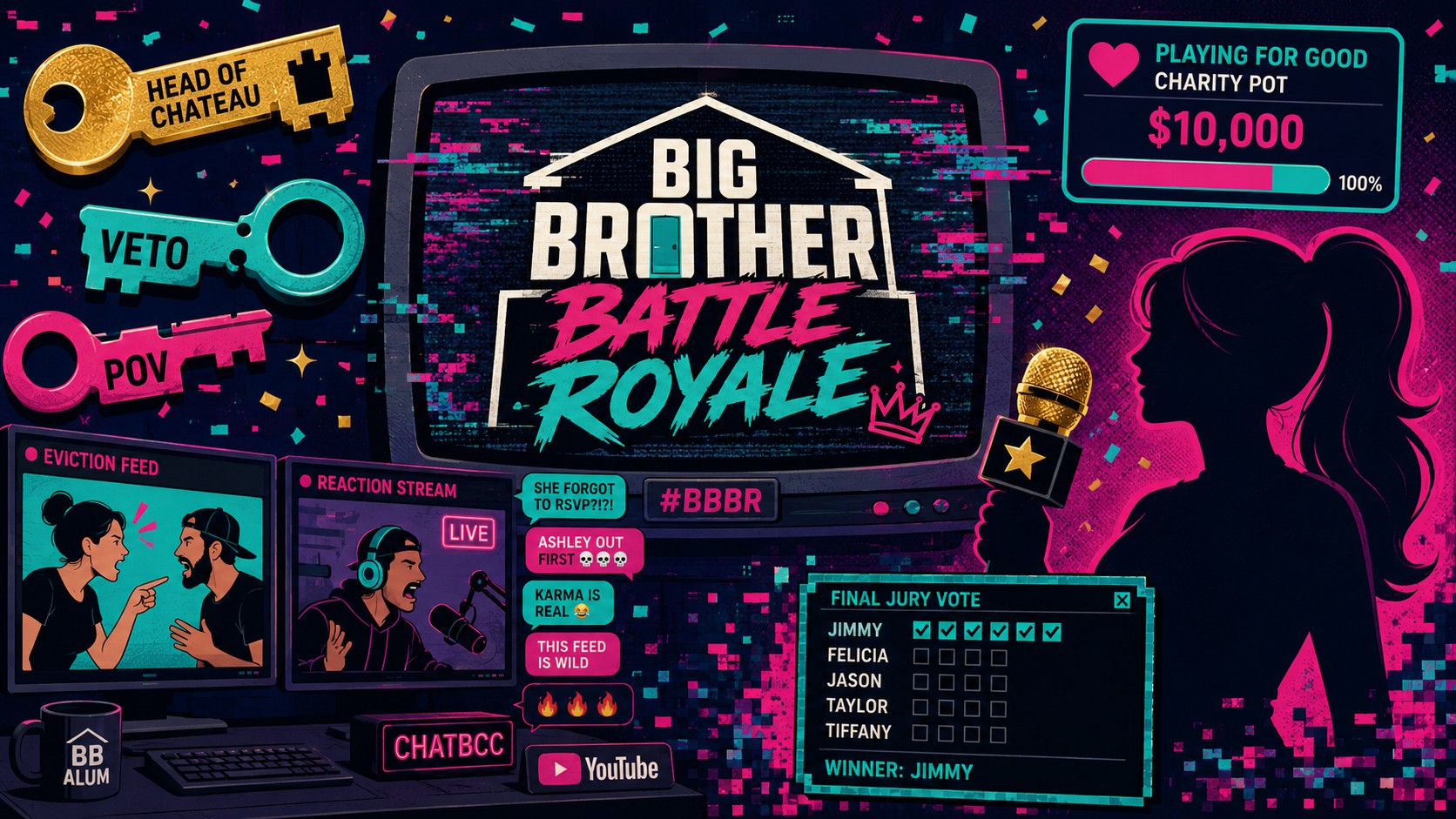
    Flat illustration showing an oversized $10,000 charity check made out to PCRF, framed by retro geometric audio feedback waves, confetti, and a computer interface showing the final jury tally.
    Despite digital feed hiccups and echoing mics, Jimmy sealed the jury vote to send $10,000 to the Palestine Children’s Relief Fund.

    scuffed feeds, holy water, and a ten-grand check

    was the production technically polished? absolutely not. reddit had a field day breaking down the echoing audio, digitized mic feedback, desynced camera feeds, and random stream lag. but honestly, in a franchise that often suffers from over-sanitized, over-rehearsed television edits, there is something deeply charming about watching twenty reality vets scramble through a slightly scuffed indie stream. it felt raw, live, and genuinely spontaneous.

    when the dust settled, jimmy heagerty (BB27) navigated the final gauntlet and locked down the jury vote against a stacked finale group featuring felicia cannon, jason de puy, taylor hale, and tiffany mitchell.

    best of all, the $10,000 grand prize went directly to the Palestine Children's Relief Fund (PCRF), a result that received widespread praise across social media and the Big Brother community on Reddit. a great cause, top-tier alumni chaos, and a fittingly weird way to honor 1,000 episodes of the show we all complain about all summer and still can't stop watching.

    🚨 THE AFTERPARTY BUS LEAVES IN 5 MINUTES, EVERYONE HURRY

    allison 🎀🔮🧸 #bb28 (@jurymgmt.bsky.social) 2026-08-29T02:20:55.300Z

    sources and further reading

  • 2

    tim curry commits fully to being sexy pollution

    Tim Curry’s “Toxic Love” from FernGully remains an absurdly committed lesson in how destruction sells itself as appetite. Read more →

    there are villain songs, and then there is Tim Curry spending three and a half minutes making petrochemical extraction sound like the hottest bad decision of your life

    FernGully: The Last Rainforest did not need to give pollution a velvet voice, a smoke body, a limber little set of hips, and one of the most committed vocal performances ever smuggled into a children’s movie. it chose excellence anyway

    “Toxic Love” works because the movie understands something most environmental messaging is too polite to say: destruction rarely arrives looking like destruction. it arrives selling appetite. it tells you the machine is progress, the poison is convenience, and wanting more is the same thing as being alive

    then Tim Curry rolls every syllable around like it owes him rent and turns the whole argument into cabaret. no visible actor, no wink at the camera, just a voice so physical you can practically see the raised eyebrow

    damn sexy pollution, indeed

  • 2
    the bored strategist: when having power leads to self-sabotage

    the bored strategist: when having power leads to self-sabotage

    there is a very specific, tragicomic pathology that infects reality competition frontrunners the second their position becomes too comfortable: boredom. a look… Read more →

    there is a very specific, tragicomic pathology that infects reality competition frontrunners the second their position becomes too comfortable: boredom.

    Modern flat illustration of a lone reality TV player pacing an empty room at 3 AM near a glowing cyan fish tank, imagining an overcomplicated floating gold and red chess game that leads to a trapdoor beneath them.
    When power and sensory deprivation collide, frontrunners often invent complex moves that engineer their own downfall.

    in a game like big brother, logic dictates that when you hold all the cards, have the numbers locked, and your target is dead in the water by monday afternoon, you should simply sit down, eat your slop, and shut your mouth until thursday night. but human beings—especially isolated, paranoid, reality-competition humans trapped in a soundstage with no phones, no clocks, no books, and zero outside stimulation—are fundamentally incapable of sitting on their hands when they have power.

    instead, they start pacing the hoh room at 3:00 am, staring into the fish tank, and inventing 4d chess moves until they successfully orchestrate their own execution.

    Dee gets so bored that I think she’s gonna somehow figure out how to blindside herself this week

    schweg, (@schwegler.lol) 2026-08-21T12:12:46.916Z

    the sensory deprivation trap: when stillness feels like danger

    the root of almost every catastrophic overplay isn’t arrogance; it’s sensory deprivation mixed with acute restlessness. when you strip away every normal distraction and force sixteen hyper-competitive people to live in an insulated pressure cooker, doing nothing feels unnatural—even dangerous.

    if tuesday and wednesday pass with zero conflict, the power-holder’s brain inevitably short-circuits. “why is everyone so calm? are they plotting behind my back? is this straightforward 7–1 eviction too easy? what if i fake-nominate my closest ally to test their loyalty? what if i pull off a five-step blindside just to keep everyone on their toes?”

    Flat vector illustration of a clockless soundstage enclosed in an hourglass, showing a frantic player silhouette connecting tangled red conspiracy yarn that leads into a blanket fortress in the corner.
    Without clocks, phones, or outside stimuli, even total game security begins to look like an impending ambush.

    the hall of fame: when houseguests implode

    this is how simple, textbook weeks turn into self-inflicted greek tragedies. a strategist gets so profoundly bored with their own dominance that they start manufacturing puzzles just to prove they can solve them.

    audrey middleton: the 4 am blanket caucus

    audrey in bb17 is the patron saint of superfans who enter the house playing at 100 mph while everyone else is still unpacking their swimsuits. by day four, she had formed a nine-person alliance, sneaked around the house counting random background objects for hypothetical comps, and held 4:00 am bedside interrogations like a paranoid mafia don.

    when you sprint through an entire summer’s worth of strategic capital in 96 hours, there’s nowhere left to go except retreating under a blanket in the have-not room eating omelettes while the entire house unceremoniously backdoors you.

    haleigh broucher: the bathtub spiral & the noble suicide

    Haleigh Broucher headshot from Big Brother 20

    few moments in modern live feeds rival haleigh’s chaotic, red-wine-soaked hoh reign in bb20. after winning the hacker competition, instead of letting level six twist in the wind or allowing her secret power to do its job, haleigh spent an evening in the bathtub convincing herself that “honesty” was the optimal game move.

    she called an emergency house meeting to publicly confess she was the hacker to clear bayleigh’s name—instantly painting a massive target on her back, detonating her own alliance’s cover, and handing tyler crispen the easiest defensive layup of his life.

    dustin erikstrup: the pawn who volunteered into oblivion

    Dustin Erikstrup (BB8) right before one of the most famous blindsides in reality TV history.

    if you want the undisputed gold standard of hubris meets boredom, look no further than dustin in big brother 8. sitting pretty in the dominant late night crew alliance, dustin got so smug about his untouchable social standing that he volunteered to sit on the block next to evel dick just to prove how beloved he was.

    he was so convinced he held all the cards that he practically walked himself up to the gallows. when julie chen read the 4–2 vote and his jaw hit the floor, it gave us one of the most iconic blindside reaction faces in reality television history.

    modern parallels: dee valladares and the bb28 itch

    Dee stands behind Barrett menacingly in the BB28 pantry

    we are watching this exact phenomenon play out in real time right now in big brother 28. dee entered the summer in an enviable power position alongside devens and the early vet alliance. but as the weeks drag on, the itch to constantly orchestrate, pull strings, and micromanage every conversation has turned into pure paranoia.

    from offering rejected bb bribes to yash (who hilariously told her to keep her pocket change) to over-calculating blockbuster scenarios on a wednesday afternoon, dee is actively building the very trapdoor she’s going to fall through. when you can’t tolerate a quiet house, you end up handing your rivals the exact blueprint to take you out.

    narrative catharsis and the janelle principle

    from a viewer’s perspective, there is no narrative payoff sweeter than watching a runaway power-holder dismantle their own game out of pure, fidgety restlessness.

    Modern minimalist illustration of a confident contestant standing on an eviction pedestal while pulling a lever that opens a trapdoor beneath their own feet.
    From bathtub confessions to volunteering as a pawn, the bored frontrunner often builds the exact mechanism of their own eviction.

    when a dominant alliance plays disciplined, feeds get dry, episodes turn into rote procedural slogs, and viewers start praying for a lightning strike. but when that frontrunner over-engineers a move and hands the opposition an opening? that’s pure television magic.

    I just hope whoever wins HoH is pissed enough at Dee to quote Janelle

    schweg, (@schwegler.lol) 2026-08-27T03:03:43.815Z

    nothing revitalizes a season faster than an underdog taking power on the heels of a massive blunder, stepping up to the microphone, and channeling peak janelle pierzina energy (“bye bye, bitches!”) directly into the face of a bewildered former frontrunner.

    the discipline of doing nothing

    great gameplay is usually boring gameplay. the players who actually walk away with the $750,000 check are almost always the ones who master the discipline of doing absolutely nothing when doing nothing is the optimal move.

    Split-panel flat vector graphic comparing chaotic hands dropping scattered puzzle pieces on the left against a calm figure sitting still with hands folded over a secured gold key on the right.
    The most lucrative move in modern social strategy games is often the discipline to sit still and say nothing.

    the tragedy—and the entertainment—of the “bored strategist” is that they’d rather be dramatically wrong than quietly safe. they want to be the mastermind authoring every chapter of the season, forgetting that the easiest way to get written out of the script is trying to write too much of it at once.

  • 2
    the art of the block: building an atproto tool for gut-checking your next block

    the art of the block: building an atproto tool for gut-checking your next block

    A lightweight, client-side ATProto browser tool for Bluesky that lets you gut-check target accounts against your mutual followers and explore a moot… Read more →

    There is a very specific gut-check that happens when you come across a chaotic account or bad-faith actor on your timeline. Before hitting the block button, you almost instinctively wonder: is it just me, or have my mutuals already blocked this person?

    Naturally, as someone who spends entirely too much time thinking about social graph mechanics and relational data structures, I wanted a clean, reliable way to answer that question. I wanted to see which of my mutual followers (“moots”) are blocking a specific target account—and discover the broader moderation consensus across my network. To make that happen, I built a small tool.

    Enter bsky-mutual-blocks: a lightweight, client-side browser app built on Bluesky and ATProto that lets you gut-check target accounts against your mutual follower network and explore a live moot block leaderboard.

    Modern flat vector illustration showing bsky-mutual-blocks: gut-checking target accounts against mutual followers and ranking the most-blocked mutuals among your moots on ATProto.
    bsky-mutual-blocks visualizes which mutual followers block a target account and ranks which moots have the most blocks from other moots.

    the beauty of open protocols (and why this works)

    On traditional siloed platforms, analyzing moderation consensus across your social circle is essentially impossible. Data is locked behind proprietary servers, rate limits are punitive, and moderation actions are treated like state secrets.

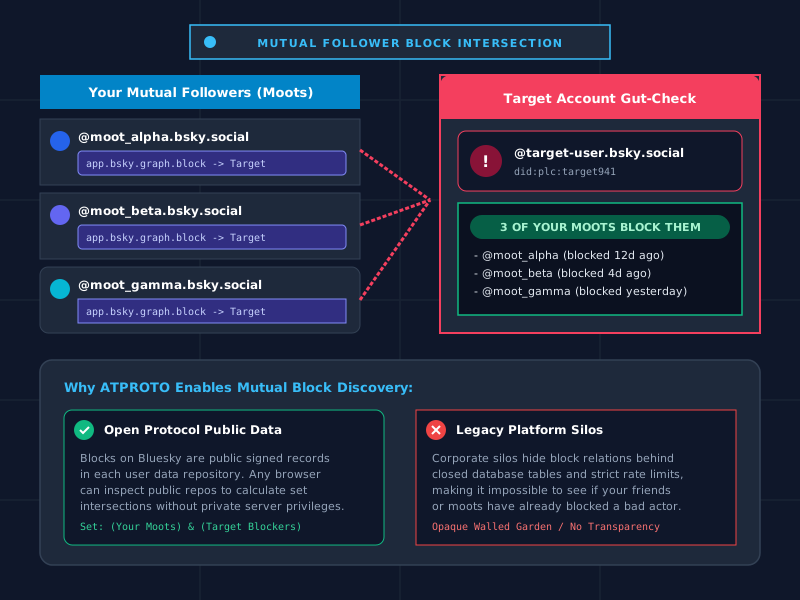
    Bluesky and the AT Protocol completely change the paradigm. Because user repositories on ATProto are publicly discoverable collections of structured, signed data—including app.bsky.graph.block and follow records—you don’t need privileged backend access to inspect public network topology.

    When you want to gut-check a target account, the client identifies your mutual followers (bidirectional follows) and crawls their public block records. If multiple people in your trusted circle have already created signed block records pointing at that target’s DID, that overlap is revealed through transparent, client-side set intersection.

    Flat vector graphic showing ATProto public repository traversal for checking which mutual followers block a target account versus legacy platform data silos.
    Public signed records in ATProto repositories allow client-side set intersection to reveal which mutuals block a given account.

    how it’s built & what it actually does

    I designed the app to be fast, privacy-preserving, zero-maintenance, and centered around two primary workflows:

    1. target gut-check

    Search any Bluesky handle or DID to see which of your mutual followers are currently blocking that account. It provides instant context before you block, follow, or reply, allowing you to leverage the collective moderation wisdom of your trusted network.

    2. moot block leaderboard

    Beyond individual lookups, the client can analyze your entire mutual graph to calculate which accounts hold the highest block counts across your moots, ranking network-wide block consensus in real-time.

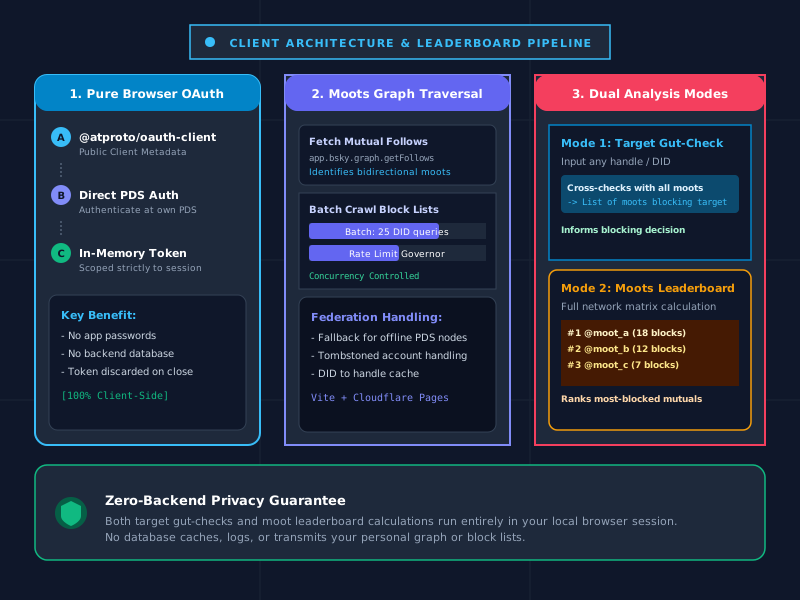
    pure browser OAuth (@atproto/oauth-client-browser)

    Nobody should have to hand over app passwords or account credentials to third-party tools. Using ATProto’s official browser OAuth flow with public client metadata, authentication happens directly against your own PDS (Personal Data Server). The session token lives solely in your browser memory and is discarded when you disconnect.

    Vite + Cloudflare Pages architecture

    The entire project is built with TypeScript and bundled with Vite, deployed as a static application on Cloudflare Pages (wrangler.jsonc). There is no backend server, no intermediary proxy, and no central database storing your social connections.

    Architecture diagram showing browser OAuth flow, batched ATProto graph traversal, target gut-checking, and moot block leaderboard calculation.
    Client-side architecture of bsky-mutual-blocks illustrating pure browser OAuth, batched block crawling, and the dual analysis pipeline.

    key technical takeaways

    PDS Federation & DID Resolution: Translating user handles into persistent DIDs (via plc.directory or HTTPS DNS) and querying decentralized repositories requires robust fallback handling for custom domains, federated PDS hosts, and deleted accounts.

    Concurrent Batching & Rate Limits: Traversing block records across dozens or hundreds of mutual followers sequentially in the browser would quickly trigger AppView rate limits. Chunking requests into controlled concurrent batches keeps traversal fast while avoiding 429 throttling.

    Client-Side Privacy by Default: Because all graph traversal and set comparisons execute locally in the user’s browser, there is zero risk of logging, tracking, or leaking who you search or who your mutuals block.

    wrap-up

    Building on ATProto highlights what makes open social protocols exciting: open schemas, verifiable user data, and the ability to build lightweight, single-purpose tools that empower users to understand their network dynamics on their own terms.

    Check out the live tool at bsky-mutual-blocks.pages.dev, or inspect the open-source codebase on GitHub: schwegler/bsky-mutual-blocks.

  • 2
    #bb28: m&m dye, house micro-aggressions, and the impending blockbuster chaos

    #bb28: m&m dye, house micro-aggressions, and the impending blockbuster chaos

    Catching up on Big Brother 28 after a theme CPU glitch: calling out the house micro-aggressions, Angela’s M&M dye art, Drew’s veto… Read more →

    so, if you noticed the tumbleweeds rolling through here over the last month and change, no, i didn’t abandon ship—my theme decided to start chewing through cpu cycles like it had a personal vendetta against my server. but we are back online just in time for the absolute circus currently unfolding inside the Big Brother 28 house.

    when i last posted on july 17th, we were in the golden era of absurdity: eggela had officially hatched, the tool shed was consolidating power with the smug certainty of people who think day 10 alliances last until finale night, and we were all just trying to figure out how many tools could fit in one metaphorical shed before the roof collapsed. fast forward six weeks, and the vibes in the house have shifted from goofy summer camp chaos to messy, uncomfortable, and deeply fractured warfare.

    angela’s m&m dye art and the lingering tool shed hangover

    first, we have to talk about the sheer unhinged brilliance of angela painting with water mixed with m&m dye using what appeared to be a makeup brush. total, unadulterated icon behavior. say what you want about her game, but the chaotic diy innovation is why we watch feeds. meanwhile, the lingering smugness from the early vet alliance—especially dee and devens acting like they held a monopoly on common sense—has steadily soured into pure paranoia. dee gets so bored in that house that i genuinely think she’s going to figure out a way to blindside herself before jury even hits. whoever wins the next hoh needs to be pissed enough at her to quote janelle verbatim.

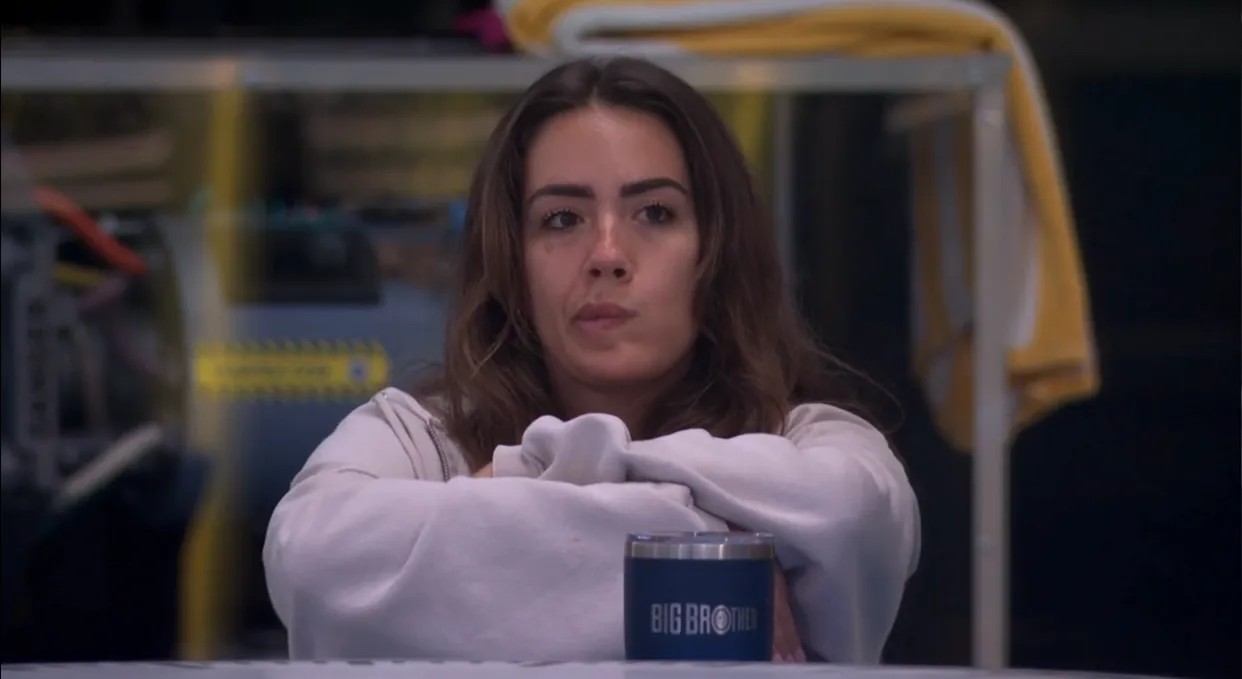
    Barrett, confused in the BB28 house.
    Barrett was at a cross-roads this week.

    the subtle micro-aggressions and uncomfortable house dynamics

    as entertaining as the gameplay pivots can be, we also need to call out the darker undertones that have crept into the house dynamics over the past few weeks. it’s become exhausting watching the subtle micro-aggressions, coded dismissiveness, and casual othering that keep cropping up on the feeds. whenever someone outside the dominant clique tries to assert themselves or play the game, they’re met with immediate tone policing, exaggerated claims of feeling “threatened” or “uncomfortable,” and double standards that never apply to the majority alliance.

    it’s that classic Big Brother social pathology where isolating someone socially gets justified as “pure game,” while the actual rhetoric used in private conversations crosses the line into micro-invalidations and passive-aggressive hostility. the lack of self-awareness from players who preach good vibes while actively marginalizing others is infuriating to watch on the live feeds. recognizing implicit bias and checking your own behavior shouldn’t stop at the front door of the studio lot.

    drew blowing up the house, thog’s sudden galaxy brain, and the bbbb nightmare

    on the game front, drew went and detonated everything at the veto ceremony, leaving us with a blockbuster nomination lineup that has everyone losing their minds. the fact that drew got distracted (classic) and ended up on the block next to mal and taylor is peak bb28. and watching mallory try to convince drew to throw the block buster was almost impressive in how overtly cruel it was—like, wouldn’t him throwing his own game prove he actually wants you to stay?? mal is stressing out on wednesday over thoughts meant for friday, spiraling into total green dinosaur screaming territory.

    Dee stands behind Barrett menacingly in the BB28 pantry.
    Dee stands behind Barrett menacingly in the BB28 pantry.

    and then there’s thog (haley). i spent the first month convinced she could truly do no right in my eyes, but suddenly she’s out here exhibiting actual tactical perception? her read on barrett’s pitch—noticing that if they only approach her as the swing for one specific scenario, they already have the others locked down—was legitimately sharp. not thog having the best read in the room?!

    gameplay philosophy: talk to people, clean the damn kitchen

    as we head into the live eviction, the bbbb scenarios are pure chaos. if mal wins, fap has to publicly pick “not drew,” firming up the house lines. if taylor wins, fap picks mal, drew walks, and sides lock in. if drew wins, we get a messy vote where mal goes and yash is forced to pivot again (which he will). usually i root for the specific outcome that causes maximum drama, but this week every single path leads to a different brand of mess.

    my only real gripes right now? first, production giving us zero hints about the incoming twist in the promo email (terrified of what nonsense they’re about to drop on us). second, everyone spending all day hyperventilating about being lied to in a game built entirely around lying—stop agonizing and go talk to people! and finally, the state of that house. people are doing dirty stuff on food prep surfaces again. forget physical comps; the next blockbuster should literally just be a timed dishwashing challenge.