
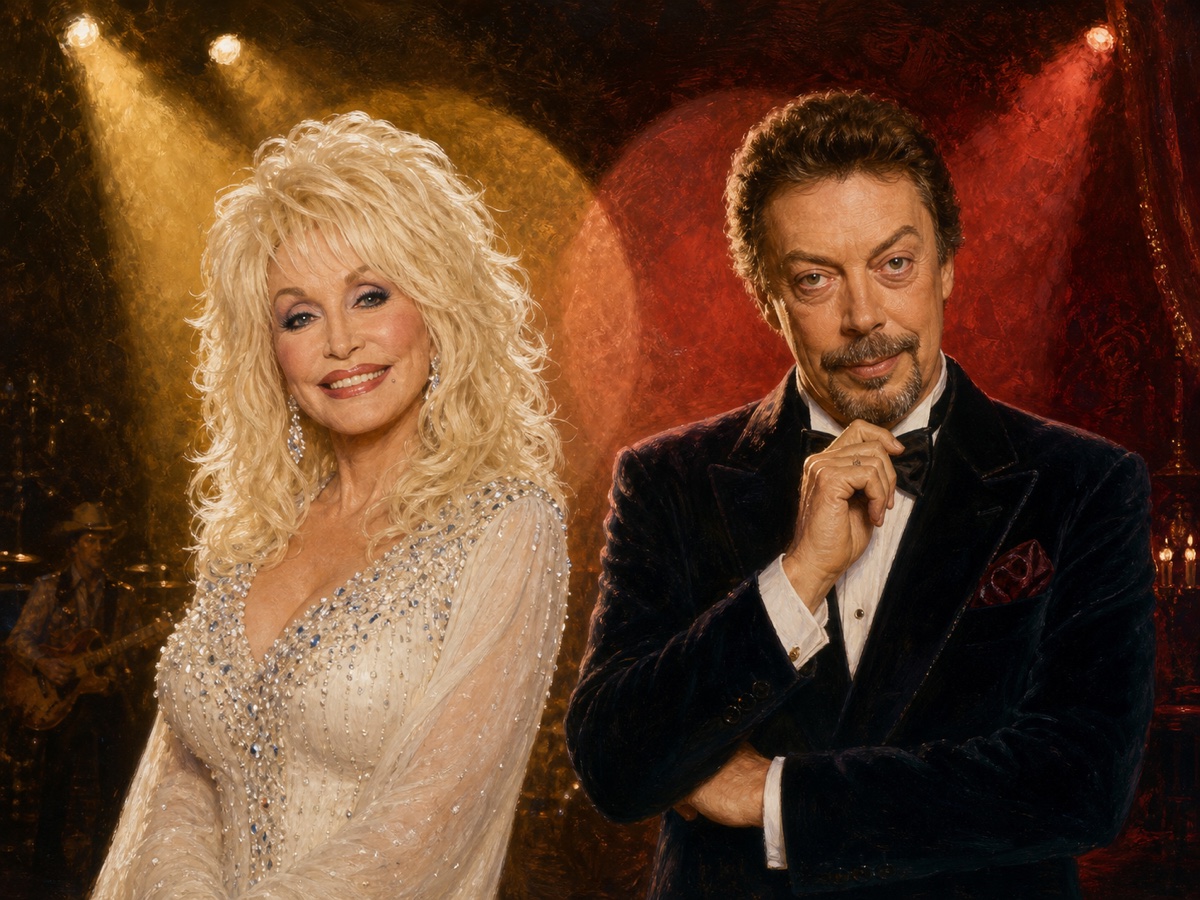
it is an almost offensively neat piece of cosmic bookkeeping: Dolly Parton and Tim Curry both died on tuesday, august 25, both at 80. the news arrived in separate waves, as if the universe wanted to make sure we had time to feel each floor drop out from under us
Dolly died in Nashville after a brief battle with cancer. Tim died at his home in Los Angeles; his manager did not disclose a cause. two separate losses, one awful day
on paper, they do not make an obvious pair. Dolly was a mountain songwriter who built a rhinestone republic out of country music, movie stardom, dirty jokes, sharp business instincts, and millions of children’s books. Tim was a Cheshire-born actor whose career ran from the royal court to Rocky Horror, Clue, It, Muppet Treasure Island, and enough voice roles to quietly occupy half our childhoods
but for queer people—and really for anybody who has ever been told to turn the volume down—they spoke two dialects of the same language: too much is not a character flaw
two different dialects of “too much”
Dolly never pretended the hair grew that way. the construction was part of the honesty. she could show you every seam in the image, make the joke before you did, and then land a song so emotionally precise it rearranged the furniture in your chest
the wigs, nails, rhinestones, body jokes, and deliberately impossible silhouette were not camouflage. they were authorship. Dolly understood that artifice can be the route to truth when you are the person choosing it. drag performers recognized that immediately, and Dolly recognized them right back
her allyship was not flawless political branding assembled by committee. it was the same stubborn hospitality that ran through her work and her philanthropy: nobody gets turned away from the family table for being gay, poor, rural, loud, overdressed, undereducated, or otherwise inconvenient. the Human Rights Campaign’s remembrance gets at why that mattered
Tim’s version of permission was less front-porch welcome and more castle door flung open at midnight. Frank-N-Furter was dangerous, selfish, funny, erotic, cruel, magnetic, and gloriously impossible to file into a respectable little box. the performance did not ask permission to blur gender, desire, comedy, horror, and rock music. it simply arrived in heels and took over the room

camp was never the opposite of sincerity
this is the part people who distrust camp always miss. exaggeration does not flatten feeling; it can make enough room for feeling to breathe
Dolly’s camp said the wig is fake and the love is not. Tim’s camp said the castle is ridiculous and the desire is real. both used spectacle to smuggle tenderness past people who might have rejected it in plain clothes
neither of them became beloved by sanding off the strange parts. they became beloved because the strange parts were delivered with total craft. Dolly could make a punchline, a feminist workplace anthem, and a devastating farewell song sound like they came from the same honest mouth because they did. Tim could turn a board-game murder mystery, a sewer clown, a cartoon pollutant, and a pirate into distinct species of theatrical delight because he never treated “genre” as an excuse to phone it in
the permission slip remains
celebrity grief is weird. we do not know these people, but we know the rooms their work made inside us. we know which version of ourselves first walked into those rooms and what became possible there
for some people Dolly was proof that poor, rural, feminine, funny, sexual, devout, ambitious, and generous could all inhabit one body without canceling each other out. for some people Tim was the first adult on a screen who made gender trouble look less like a diagnosis and more like a party

losing both on the same day feels less like a tidy cultural coincidence than somebody dimmed two completely different spotlights at once
the world is not suddenly less queer, less kind, or less gloriously overdecorated. they helped make sure of that. but it is, for the moment, a little less brightly lit